
window.dataLayer = window.dataLayer || []; function gtag(){dataLayer.push(arguments);} gtag('js', new Date()); gtag('config', 'UA-206511945-1');
Search
Categories
Uncategorized

Barbershop Appointment Scheduling Software: The 2026 Management Guide

You are halfway through a precision skin fade when the shop phone rings for the third time this hour. You can’t step away to answer it, so the call goes to voicemail, and another potential client likely moves on to the shop down the street. It’s a frustrating cycle that costs you money and breaks your creative flow. Most shop owners agree they would rather spend their time behind the chair than acting as a full-time receptionist or chasing down last-minute no-shows. You didn’t open your doors to spend all day on the phone.

The good news is that your technology should be doing the heavy lifting for you. This 2026 guide will show you how the right barbershop appointment scheduling software can act as a silent business partner, handling your logistics while you focus on your craft. We’ll explore how to eliminate scheduling gaps, automate your payments and tips, and manage complex commission structures for your team. You will discover how to build a professional online presence that works 24/7, ensuring your calendar stays full even while you sleep.

Key Takeaways

  • Shift from simple digital calendars to a comprehensive business engine to eliminate manual booking errors and recover lost revenue.
  • Understand the critical role of specialized booth and chair renter management in maintaining fair and transparent accounting across your entire team.
  • Evaluate the true value of professional barbershop appointment scheduling software compared to basic apps that often hide high transaction fees and lack human support.
  • Master the transition to new technology with a clear strategy for auditing client data and optimizing your service menu with precise buffer times.
  • Build your shop’s future on a foundation of trust by partnering with a human-centric management provider that offers decades of industry expertise.

Beyond the Paper Book: Why Barbershops Need Specialized Scheduling in 2026

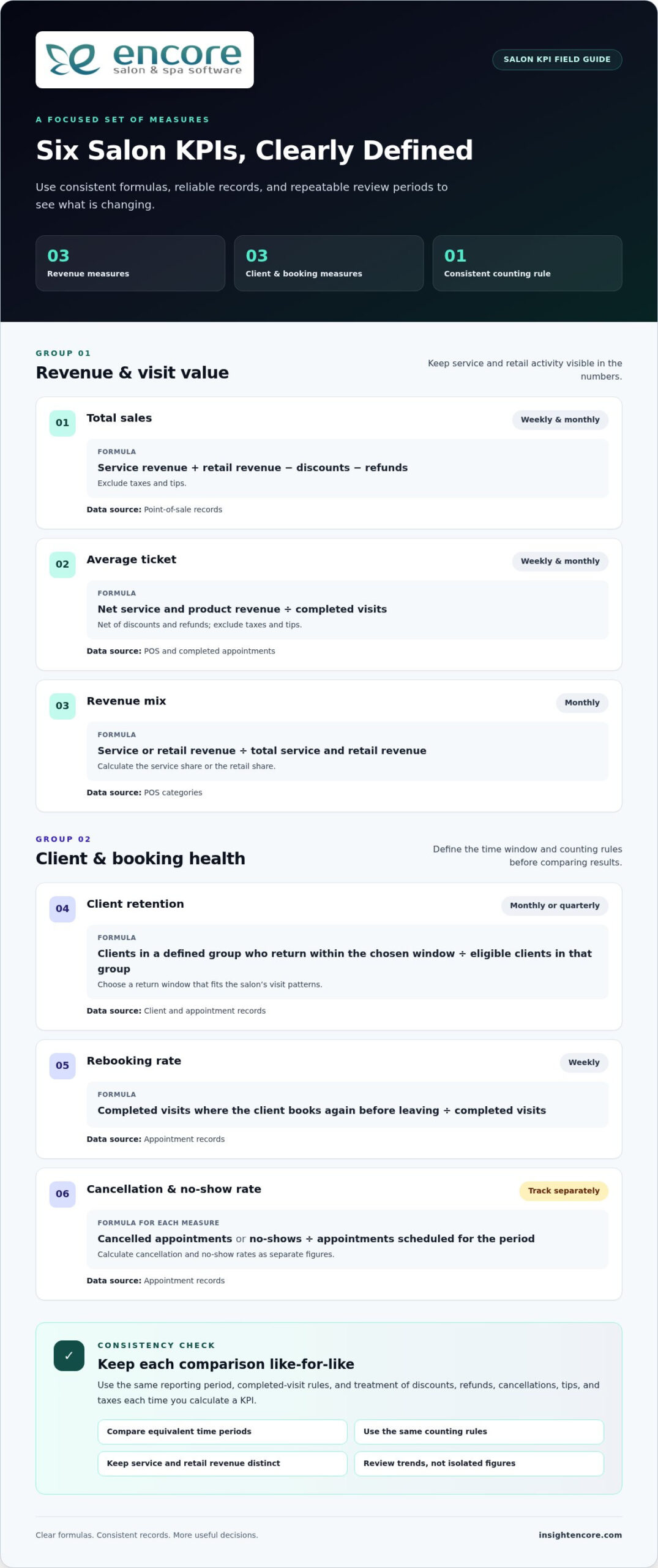
The traditional paper book was once the heart of the shop. It sat on the counter, filled with crossed-out names and scribbled phone numbers. But in 2026, that book is a liability. Modern barbershop appointment scheduling software has evolved into a comprehensive business engine that powers your entire operation. It’s no longer just a digital calendar; it’s the central hub where your marketing, payments, and client relationships live.

Broadly speaking, appointment scheduling software allows businesses to manage their time more effectively, but for a barber, it does much more. It eliminates the “cost of chaos” by preventing double-bookings and ensuring your revenue remains predictable. By automating administrative tasks, you can finally focus on “reclaiming the chair” and doing the work you actually love. Today’s clients don’t want to wait for business hours to book. They expect 24/7 self-service. If they think about a haircut at 11 PM on a Sunday, they want to book it right then. If you aren’t available digitally, you’re invisible to a massive segment of the market.

The Evolution of the Modern Barbering Business

The industry has shifted away from the “walk-in and wait” culture. Clients value their time, and they want the certainty of an appointment. Modern barbershop management is the intersection of craft and digital efficiency. This digital approach also builds your brand identity. A sleek booking interface tells clients you are a professional who respects their time and invests in a high-quality experience. It moves you from being just another shop on the corner to a premium destination.

The Real Cost of No-Shows and Last-Minute Gaps

Let’s look at the numbers. Based on a median ticket price of $34, losing just two clients a week to no-shows means you’re leaving over $3,400 on the table every year. That’s a significant hit to your bottom line that you can’t afford to ignore. Automated reminders act as a professional barrier against forgetfulness, prompting clients to confirm or reschedule before it’s too late. Beyond the money, there is a psychological benefit. Walking into a shop with a full, organized calendar boosts barber morale and creates an atmosphere of success that clients can feel the moment they walk through the door. Using barbershop appointment scheduling software ensures that your most valuable asset, your time, is never wasted.

Essential Features for Modern Barbers: From Booth Renting to Retail Management

Choosing the right barbershop appointment scheduling software involves more than just picking a pretty interface. It requires a tool that understands the specific financial flow of a busy shop. For many owners, the biggest headache isn’t the haircut itself. It’s the administrative tangle of managing different revenue streams while keeping the atmosphere professional. When introducing new technology to your team, focusing on features that solve daily friction points is the fastest way to get everyone on board.

A truly modern system bridges the gap between the chair and the front desk. Integrated POS systems allow you to transition a client from a finished fade to a completed transaction in seconds. This isn’t just about speed; it’s about accuracy. By using detailed client profiles, you can track hair history, specific clipper settings, and even personal preferences. These small details turn a one-time visitor into a loyal regular who feels seen. Plus, with integrated processing, you can easily manage tips, which in this industry typically range between 16% and 20% of the ticket value.

Managing Independent Barbers and Chair Renters

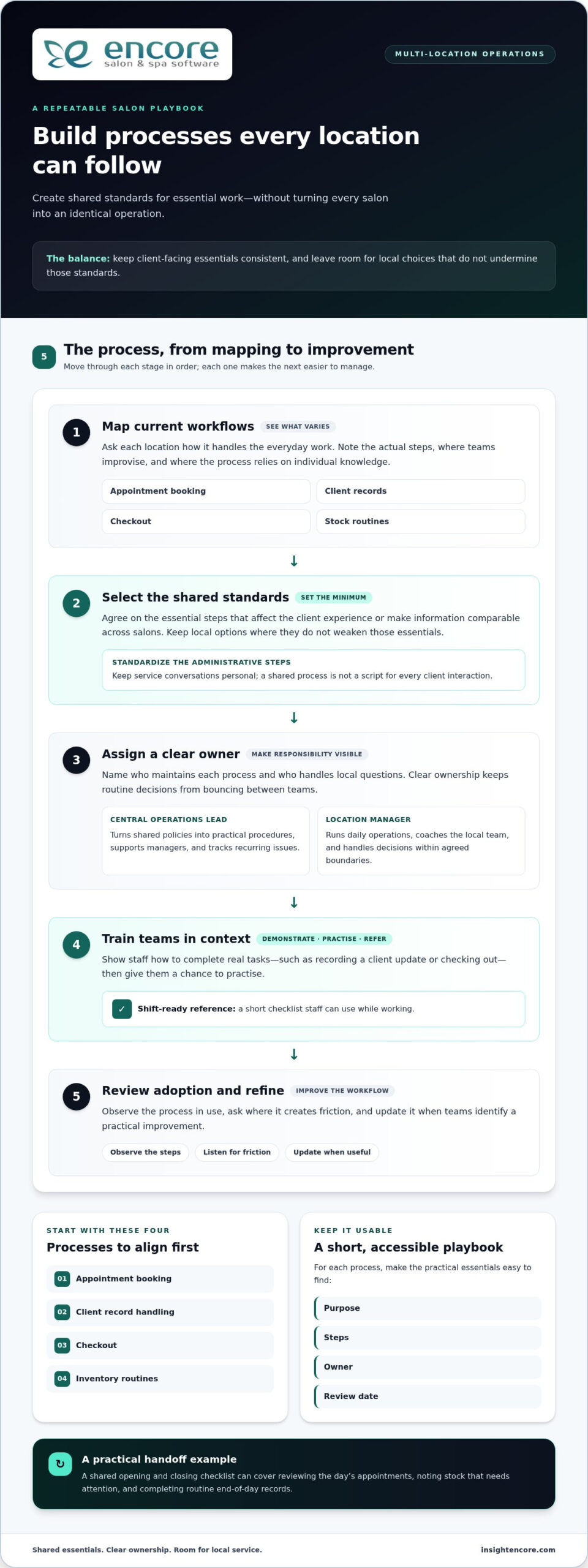
Most generic booking apps fail because they assume every barber is a standard employee. We know the reality of the industry is often different. Your software needs to handle the complexity of booth and chair renters with ease. This means generating separate payouts and individual reporting so each barber can see their own progress without compromising shop-wide data. With Encore Salon Software, you can set specific permissions. This allows individual barbers to manage their own calendars on their phones while you maintain total oversight of the shop’s performance. It creates a culture of autonomy and trust.

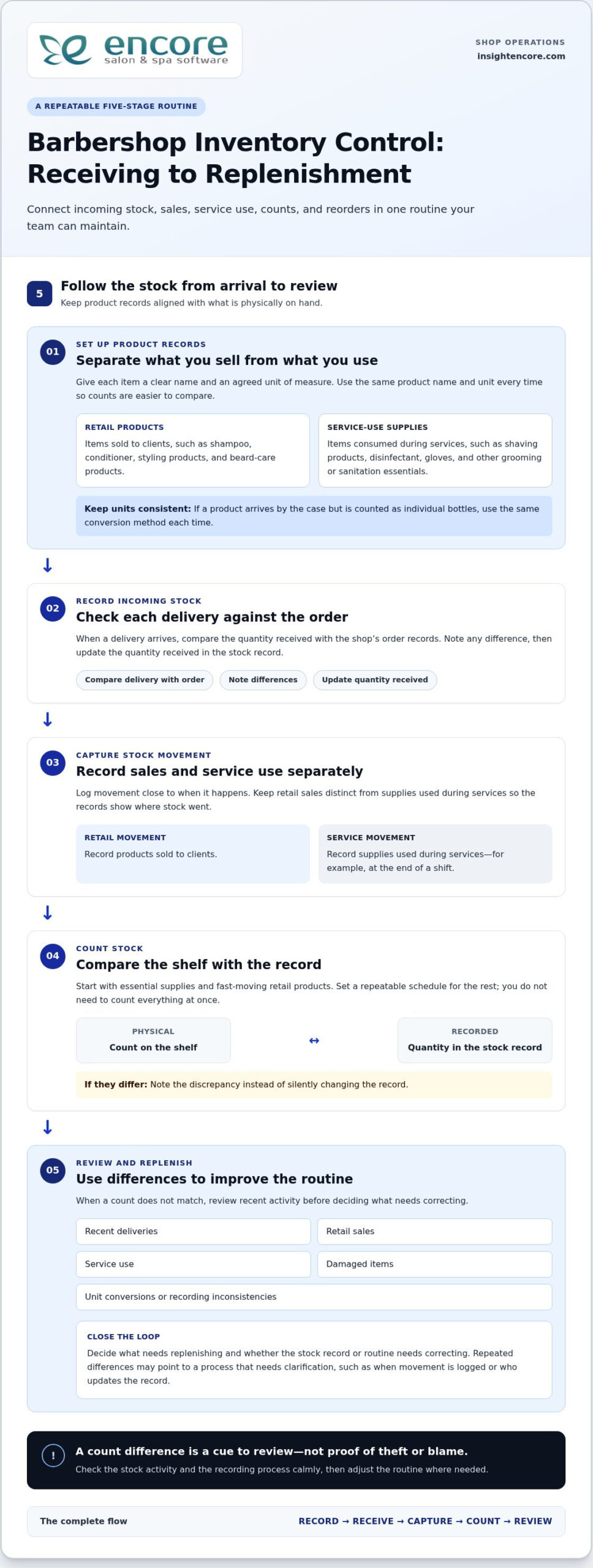
Barbershop Inventory Control for Retail and Professional Use

Profits aren’t just made through services. They are often found on your retail shelves. Effective barbershop appointment scheduling software must include robust inventory tracking. You need to know exactly how many neck strips, blades, and shave creams you have in your back-bar at all times. Running out of professional supplies mid-day is a disaster you can easily avoid with automated low-stock alerts.

Similarly, managing your retail stock for pomades and beard oils is crucial for boosting your margins. Automated alerts ensure you never miss a sale because a product wasn’t on the shelf. If you’re ready to see how these features can transform your daily grind, you can see our specialized features in action to find the perfect fit for your shop. Finally, don’t overlook automated marketing. You shouldn’t have to spend your Monday nights texting clients to fill a slow Tuesday. Smart systems identify gaps in your schedule and reach out to regulars who are due for a trim, keeping your chairs full without the manual effort.

Evaluating the Options: Simple Booking Apps vs. Comprehensive Management Suites

Choosing the right barbershop appointment scheduling software often feels like a choice between a quick fix and a long-term investment. Many shops start with “free” or low-cost booking apps, thinking they’re saving money. However, these basic tools often hide their true costs in high transaction fees or a total lack of human support when things go wrong. You shouldn’t have to wait three days for an email response when your calendar is frozen on a busy Friday. Professional tools provide the reliability you need to keep your doors open and your chairs full.

Professional management suites provide a unified experience that basic apps can’t match. One major advantage is Integrated Credit Card Processing. Instead of juggling third-party hardware that may or may not sync with your bookings, an all-in-one system ensures your finances and your schedule are always in the same place. In 2026, data ownership is also a top priority. You need to know that your client list belongs to you, not the software provider, and that your shop’s data is secure and accessible from any device. Basic apps often create data silos, making it nearly impossible to get a clear picture of your shop’s health.

When a Basic App Is No Longer Enough

You know it’s time to upgrade when you feel the weight of “app fatigue.” This happens when you use one tool for booking, another for your marketing emails, and a third for your taxes. It’s exhausting. A modern shop requires cloud-based reliability that allows you to check your numbers from home or on the go. If you’re spending more time syncing data between apps than you are talking to your clients, your current system is failing you. Moving to a comprehensive suite eliminates these gaps and brings your entire business into a single, easy-to-use platform.

Calculating the True ROI of Professional Software

Don’t just look at the monthly subscription price. The real ROI comes from the hours you save and the extra revenue you generate. Features like automated loyalty programs and digital gift cards create immediate cash flow and keep regulars coming back. When you view your software as a profit center rather than an expense, the choice becomes clear. You can explore our Pricing and Value page to see how a professional suite pays for itself through increased efficiency and reduced administrative stress. Investing in the right barbershop appointment scheduling software isn’t just about a digital calendar. It’s about giving your business the foundation it needs to scale without the headache of disconnected tools.

Barbershop Appointment Scheduling Software: The 2026 Management Guide

How to Implement New Scheduling Software Without Disrupting Your Shop Flow

Changing your business systems shouldn’t feel like a gamble. You’ve built your shop on solid relationships, and you don’t want technology to get in the way of that. A smooth transition to new barbershop appointment scheduling software is all about preparation. By following a steady, logical path, you can switch tools without losing a single booking or frustrating your team. It’s about moving from a state of potential stress to a feeling of organized control.

The first step is auditing your current client list. This is the perfect time to clean up your data by removing inactive profiles and ensuring phone numbers are accurate. Once your data is ready for migration, focus on your service menu. Set clear durations for every cut and shave, but don’t forget to include buffer times. If a skin fade takes 30 minutes, add a 10-minute buffer for sanitizing your station and resetting your tools. This prevents a “domino effect” where one late client ruins the entire afternoon.

Before going live, ensure 100% adoption through team training. Spend a morning walking everyone through the interface. Finally, launch your online portal to your clients. Offering a small introductory incentive, like a discount on their first online booking, is a great way to shift behavior quickly and get your calendar filled without you picking up the phone.

Staff Buy-In: Making the Transition Smooth

Some barbers may worry that new software feels like micromanagement. You can overcome this by framing the change as a tool for empowerment. Show the team how the system automatically tracks their commissions and tips, saving them from doing manual math at the end of a long shift. When they see that the software actually helps them earn more through repeat bookings and automated reminders, they’ll become your biggest advocates. For more leadership advice, explore these Barbershop management tips for new owners.

Client Communication: Introducing the New Booking Portal

Use your new automated marketing tools to announce the upgrade. Send a blast text or email to your regulars explaining how much easier their lives are about to become. You can also use social media to drive excitement. A simple script like, “Skip the phone tag! Book your next fresh cut in 30 seconds through our new portal. Link in bio!” works wonders. For long-time clients who still prefer to call, don’t worry. Your staff can easily enter their details manually into the barbershop appointment scheduling software, keeping your digital records perfect while maintaining that personal touch.

Start your stress-free transition today

Scaling Your Shop with Encore’s Barbershop Management Solution

Growing a business is about more than just adding chairs. It’s about building a foundation that can support your ambition without crumbling under administrative pressure. While many software giants offer cold, one-size-fits-all platforms, Encore provides a human-centric alternative designed specifically for the unique culture of the barbershop. Built on the 30-plus-year history of Syntec Business Systems, our barbershop appointment scheduling software offers the reliability of an industry veteran with the innovation required for 2026.

Scaling effectively requires tools that turn a single visit into a lifelong habit. Features like integrated gift cards and automated loyalty programs are essential for retention. These aren’t just “add-ons”; they’re revenue drivers that help you maintain a steady cash flow even during slower seasons. When your technology works as hard as you do, you can finally move from a state of constant hustle to one of organized control. It’s time to stop fighting with your tools and start using them to build your legacy.

A Partner, Not Just a Provider

In a world increasingly dominated by AI chatbots and delayed email tickets, we believe in the power of human connection. You deserve talk-to-real-people support when you have a question about your shop’s data. Our team acts as a dedicated mentor, helping you navigate the system so it fits your specific shop layout and workflow. We offer deep customization options because we know no two shops are identical. If you’re ready for a system that adapts to you, contact our team for a personalized walkthrough that addresses your specific goals.

Future-Proofing Your Business for 2026 and Beyond

The industry is moving fast. To stay competitive, your shop must adopt modern trends like mobile-first payments and high-security standards. Encore evolves alongside these changes, ensuring your business never falls behind. A critical part of this is having integrated Credit Card Processing that meets 2026 security protocols while keeping fees transparent. By unifying your payments and bookings, you protect your data and provide a seamless experience for your clients. You’ve done the hard work of mastering your craft. Let us handle the technical heavy lifting so you can focus on the next level of your success.

Try Encore Now

Take the Next Step Toward a Stress-Free Shop

You have seen how the right technology can transform your daily grind from a series of interruptions into a steady flow of creative work. By moving beyond the paper book and embracing a system that handles everything from chair rentals to retail inventory, you are not just buying a tool; you are investing in your peace of mind. The transition does not have to be overwhelming when you have a partner that understands the specific culture of your business.

Choosing barbershop appointment scheduling software shouldn’t feel like a risk. With Encore, you are backed by decades of expertise dating back to 1991. Our platform brings your marketing, loyalty programs, and POS together in one place, ensuring you have the specialized support needed for both employees and independent booth renters. You have done the hard work of building your brand. Now it’s time to let your software do the heavy lifting.

Ready to streamline your shop? Try Encore Now

We are here to help you build the future of your shop with confidence and clarity. Your success is our priority, and we look forward to helping you grow.

Frequently Asked Questions

Is barbershop scheduling software worth the monthly cost for a solo barber?

Yes, it is absolutely worth the investment for a solo barber because it acts as a virtual assistant that never sleeps. Instead of pausing a cut to answer the phone or returning voicemails late at night, you can let your clients book themselves 24/7. This ensures you never miss a lead while you are behind the chair. It also helps you maintain a professional image that builds trust with new guests.

How does barbershop software handle booth renters who pay a flat weekly fee?

Our specialized module for chair and booth renters is designed for this exact scenario. The software can track flat weekly rent payments while allowing each barber to manage their own individual schedule and client records. This creates a clear boundary between the shop owner’s oversight and the barber’s independent business. It simplifies your accounting by keeping rent records and service data in one secure, organized place.

Can I migrate my client data from a different app or a paper book?

You can certainly migrate your data to ensure a smooth transition. If you are moving from another digital app, we can often help you import your existing client lists and contact information. For those moving from a paper book, it requires a bit of manual entry to get started, but it’s a one-time task that sets the foundation for years of organized growth. This cleanup process helps you remove inactive profiles.

Does the software work on both iPads and Android devices?

Yes, the system is designed to be flexible and works seamlessly across various hardware. Whether your shop uses iPads at the front desk or your barbers prefer to check their schedules on Android phones, the cloud-based nature of the platform keeps everyone synced in real-time. This cross-platform accessibility ensures that you can manage your business from the shop, your home, or even while you are on the go.

How do automated reminders actually reduce no-shows?

Automated reminders reduce no-shows by providing a gentle, professional nudge to clients before their appointment. These messages often include a confirmation link, which requires the client to actively commit to the time slot. By giving them an easy way to reschedule or cancel ahead of time, you can fill those gaps with other waiting clients. It removes the “I forgot” excuse and sets clear expectations for the value of your time.

What happens if my internet goes down? Can I still access my schedule?

If your shop’s internet goes down, you can still access your data using mobile data on a smartphone or tablet. Since the information is stored securely in the cloud, it is not tied to a single physical location or local network. You can quickly switch to a hotspot to view your upcoming appointments or check out a client. This level of reliability ensures that your shop stays operational regardless of local connection issues.

Can I sell gift cards and retail products through the scheduling app?

Yes, selling gift cards and retail products is a core feature of high-quality barbershop appointment scheduling software. The system includes an integrated inventory management tool that tracks your stock levels for pomades, oils, and back-bar supplies. You can process these sales at the same time as the service checkout, making it easy to boost your average ticket price. Digital gift cards can also be sold 24/7 through your online booking portal.

Is it possible to set different prices for different barbers in the same shop?

You can easily set different price points for different barbers based on their experience or seniority. This tiered pricing structure allows you to charge more for a master barber while keeping standard rates for junior staff. The barbershop appointment scheduling software handles these variations automatically during the booking and checkout process. It ensures that every transaction is accurate and that your team is compensated fairly for their specific skill level.

Disclaimer

This article is general in nature and may contain errors, please verify all claims with your sales rep

Categories
Uncategorized

15 Creative Barbershop Loyalty Program Ideas to Boost Retention in 2026

Did you know that 90% of consumers in 2026 say a loyalty program directly influences their decision to stick with a brand? For a busy shop, that is the difference between a chair that stays full and a schedule riddled with gaps. You likely already know the frustration of watching a first-time walk-in leave, wondering if you will ever see them again. Managing physical punch cards is messy, prone to fraud, and gives you zero data on who your best clients actually are. It is hard to grow when you are constantly chasing new leads instead of nurturing the ones you have.

It’s time to move past the "buy ten, get one free" era. This guide will show you how to transform one-time visitors into lifelong regulars using a strategic, automated system. We have compiled 15 creative barbershop loyalty program ideas to help you increase visit frequency and drive retail sales through Encore Salon & Spa Software. You will learn how to build a program that runs itself, allowing you to focus on the craft while your system handles the retention. From tiered rewards to data-driven re-engagement, these strategies will give you the organized control you need to thrive.

Key Takeaways

  • Meet modern client expectations by replacing outdated paper punch cards with a reliable, digital-first system.
  • Capture valuable customer data from the very first visit by offering immediate incentives for profile creation.
  • Increase your average ticket size by using loyalty milestones to introduce clients to high-quality retail products.
  • Discover 15 innovative barbershop loyalty program ideas that leverage automated re-engagement to fill gaps in your schedule.
  • Eliminate manual frustration by using Encore Barber Software to sync your rewards program directly with your POS and booking.

Why Loyalty Programs are the Backbone of Barbershop Growth in 2026

A great loyalty program isn’t just a way to give things away. It’s a strategic engine designed to increase how often a client visits and how much they spend when they arrive. In 2026, the global barbershop market is valued at over $20 billion. With that growth comes competition. You need a way to stand out. While you might wonder what is a loyalty program? in a modern context, it’s essentially a data-driven tool that replaces the "hope and pray" method of retention.

The 2026 landscape has shifted. Digital-first expectations are the norm. Paper punch cards are a liability because they’re messy, easily lost, and provide no data. When you use digital barbershop loyalty program ideas, you gain a "Predictable Revenue" model. This data tells you exactly who is coming in and when. It allows you to forecast staffing needs and inventory levels with precision. Effective barbershop loyalty program ideas focus on immediate gratification, ensuring clients feel the value of their visit before they even leave the chair.

Building a sense of belonging is the secret sauce. Psychology shows that exclusive rewards make a "Regular" feel like part of the shop’s inner circle. This emotional connection is what stops them from trying the new shop down the street. It turns a simple service into a ritual they don’t want to break.

The Math Behind the Rewards

Let’s look at the ROI. If your average client visits every six weeks, they come about eight times a year. If your loyalty program nudges that to every four weeks, they now visit 13 times. That is five extra tickets from a single person. Churn rate is the percentage of clients who stop visiting your shop within a certain timeframe. High-quality loyalty programs are the primary defense against this loss. Research shows a 5% increase in customer loyalty can boost profits by 25% to 95%.

Barbershop vs. Salon Loyalty

Barbershops operate differently than salons. A salon client might visit every 8 to 10 weeks, but a barber’s regular is back in 2 to 4 weeks. This higher frequency means your rewards need to move faster. You can’t make them wait six months for a perk. The community aspect of the shop is also a major driver. Your loyalty system should reward social referrals and local check-ins to lean into that "neighborhood hub" feel. For more ways to streamline your operations, check out these 15 Barbershop Management Tips: The 2026 Success Guide to keep your business ahead of the curve.

15 Innovative Barbershop Loyalty Program Ideas for Modern Shops

Moving beyond the basic punch card requires a shift in how you view your regulars. The most effective barbershop loyalty program ideas focus on immediate value and long-term habits. Start with the "First-Timer Hook" by offering points just for creating a profile. This allows you to capture essential contact data early. Without this information, a walk-in remains a stranger. By incentivizing the sign-up, you turn a one-time visitor into a reachable lead.

Retail sales are often overlooked in retention plans. Instead of always discounting your time, try product-based incentives. Offer a free beard oil or premium pomade after a certain number of visits. This introduces clients to your retail line and encourages home grooming habits. When they run out of that product, they will return to your shop to buy more. You can easily track these milestones and automate the rewards using Encore Barber Software to ensure no client is missed.

Experience-based rewards often carry more weight than small discounts. The "VIP Treatment" upgrade replaces a $5 coupon with a free hot towel shave or a premium scalp massage. These services have a high perceived value but a low cost to the shop. They also allow clients to sample luxury add-ons they might not usually book. This strategy aligns with broader customer retention strategies that emphasize building a deeper connection through service excellence rather than just price cutting.

Behavior-Based Rewards

Reward the actions that make your life easier. The "Pre-book Bonus" gives clients points for scheduling their next appointment before they leave the chair. This secures your future revenue and keeps your calendar full. To balance your week, use "Slow Day Specials" by offering double points for appointments on Tuesdays or Wednesdays. Finally, a "Birthday Refresh" provides a free add-on service during their birthday month, making them feel like a valued member of the shop community.

Experience and Status Rewards

Status is a powerful motivator for long-term loyalty. Create tiered memberships, such as Gold or Platinum levels, that offer priority booking or access to members-only events. For new shops or those launching a fresh program, the "Founding Member" perk is excellent. Offer a permanent, small benefit to the first 100 people who join. This creates a sense of urgency and rewards your early adopters. For more ways to keep your chairs full, explore these 12 Barbershop Client Retention Ideas to Boost Loyalty in 2026. By combining status with smart barbershop loyalty program ideas, you build a community that won’t look elsewhere.

Structuring Your Rewards: Points vs. Stamps vs. Tiers

Choosing how to structure your rewards is just as important as the rewards themselves. The traditional stamp system, often called the "Buy X, Get 1" model, is easy for small shops to start. It requires zero technology and is immediately understood by everyone. However, it lacks the data you need to grow. You can’t track which barber is most popular or if a client only comes in when they have a discount. Transitioning to a points-based model allows you to reward total spending. This includes both high-margin retail products and standard services. It’s one of the most flexible barbershop loyalty program ideas because it scales with your business as you add more chairs or locations.

Tiered loyalty programs create a "ladder" that keeps clients engaged over years, not just weeks. By moving from a "Regular" to a "VIP" status, clients feel a sense of achievement and exclusivity. Tiers should feel attainable yet aspirational to keep clients engaged. For shops using a booth rental model, loyalty can be tricky. You need a system where independent contractors can participate in shop-wide rewards while keeping their own revenue separate. This ensures the brand remains cohesive even when the barbers are independent contractors. It also prevents "poaching" issues, as the loyalty stays within the shop’s ecosystem rather than just attached to an individual chair.

Finding Your ‘Sweet Spot’ Threshold

Analyze your average visit frequency to set milestones that actually make sense for your specific neighborhood. If your clients visit every four weeks, a reward at visit six feels reachable within half a year. A reward at visit twelve feels like a lifetime away. Instant gratification is critical for new client retention. Offering a small perk at visit two, rather than waiting until visit ten, significantly reduces your churn rate. It proves the value of the program before they have a chance to forget about you or try the new shop down the street.

Integrating with Your POS

Siloed loyalty apps are a major headache for busy barbers. If your rewards program doesn’t talk to your checkout system, your staff will likely stop using it during a rush. Manual tracking leads to errors, fraud, and frustration. Encore Salon Software automates point tracking at the moment of sale, ensuring every dollar spent is recorded without any extra effort from your team. For a deeper look at how to choose the right hardware for your shop, read our Best POS for Small Barber Shops: 2026 Buyer’s Guide. Using integrated barbershop loyalty program ideas means your rewards run in the background while you focus on the craft.

15 Creative Barbershop Loyalty Program Ideas to Boost Retention in 2026

How to Launch and Promote Your Rewards Program Successfully

A great idea only works if people know it exists. Launching your rewards program is a multi-step process that starts with your team. If your barbers aren’t excited, your clients won’t be either. You need to provide clear staff training so every team member can explain the value in 15 seconds or less. Start with a soft launch. Test your barbershop loyalty program ideas with your top 10% of regulars first. They’ll give you honest feedback on the rewards and help you spot any technical glitches before the general public sees them.

Visual cues are essential for driving participation. To create initial buzz, run a "Grand Opening" promotion for the first 30 days. Offer a significant "sign-up" bonus or double points on all services during this window. Once the program is live, don’t let it fade into the background. Use automated SMS or email reminders to keep clients updated on their point balance. Seeing that they’re only a few points away from a perk is a powerful motivator to book that next appointment.

The ‘Chair-Side’ Pitch

The best time to mention the program is during the consultation or at checkout. It should feel like a helpful tip, not a sales pitch. Try saying, "We just started a new rewards program; since you’re here today, I can get you halfway to a free scalp massage." To keep your team motivated, offer a small incentive for every client they successfully enroll. You can even use gift cards as a starter reward for high-value referrals, giving clients an immediate reason to spread the word about your shop.

Digital Promotion Strategy

Your social media channels are perfect for showcasing the benefits of your program. Post photos of "Reward Winners" or highlight your VIP tiers on Instagram and Facebook. This builds social proof and makes others want to join the club. When you share your latest barbershop loyalty program ideas online, you turn your followers into potential regulars. Make the process frictionless by linking your loyalty sign-up directly to your online booking portal. When a client books their cut, they should see an option to join the rewards program simultaneously. This integrated approach ensures your growth strategy is working even when the shop is closed.

Start your 2026 growth journey with Encore Barber Software

Automating Your Barbershop Loyalty with Encore Software

Having a list of great barbershop loyalty program ideas is just the first step. The real magic happens when those ideas run on autopilot. Encore Barber Software turns your client data into actionable loyalty triggers, ensuring your rewards program remains consistent even during your busiest shifts. It bridges the gap between a creative concept and a reliable system that actually grows your revenue. By automating the process, you remove the risk of human error and ensure every client feels valued.

Automated re-engagement is a game changer for retention. Imagine a system that notices when a regular hasn’t booked in six weeks and automatically sends a "We Miss You" text. By including a small loyalty point bonus in that message, you give them a concrete reason to return. This targeted nudge brings them back to your chair before they have a chance to try the shop down the street. It’s a proactive way to protect your business from the churn that often eats away at your bottom line.

Efficiency at the front desk is just as important as the quality of the cut. Encore provides Point-of-Sale synergy by seamlessly applying rewards during the checkout flow. Your barbers don’t have to toggle between different apps or search for lost paper cards. Points are tracked and applied at the moment of sale without any extra steps. This speed keeps your line moving and leaves a professional impression on your clients. You also gain access to detailed reporting and analytics. This data shows you exactly which rewards are driving the most profit and which clients are your true VIPs. To take your data insights even further, learn how barbershop appointment scheduling software can power a full performance dashboard that transforms your raw numbers into a clear growth strategy.

Removing the ‘Software Headache’

Managing a shop is demanding, and your software should make your life easier, not harder. Encore features a user-friendly interface that doesn’t require a tech degree to manage. We pride ourselves on being a supportive partner that removes the friction of business management for our clients. You get the benefit of human-centric support from a company founded in 1991. We understand the daily hurdles of the industry and are here to help you overcome them with ease.

Scaling Beyond One Location

If you’re growing your brand, you need a system that stays in sync across every chair. Encore keeps loyalty points updated across multiple shop locations. A client can earn points at your downtown shop and redeem them at your suburban location without any data conflicts. We manage shared client records while maintaining the highest standards for security and privacy. This consistency builds trust in your brand and encourages clients to visit any of your locations with confidence. It allows you to build a cohesive community no matter how many shops you open.

Try Encore Now and See the Difference in Your Retention Rates

Building Your Shop’s Legacy for 2026 and Beyond

Retaining your clients shouldn’t feel like a second job. By moving past outdated paper cards and embracing modern barbershop loyalty program ideas, you create a business that thrives on predictable revenue. You’ve seen how behavior-based rewards and tiered memberships can transform a casual visitor into a dedicated regular. The key is to stop chasing walk-ins and start nurturing the community you already have in your chairs.

Encore Barber Software acts as your supportive partner, providing an all-in-one platform that has managed booking, POS, and loyalty since 1991. Whether you’re a shop owner or an independent chair renter, our specialized tools remove the friction of daily management. With integrated credit card processing that syncs perfectly with your rewards system, you can focus on the craft while we handle the retention. It’s time to reclaim your peace of mind and watch your shop grow with confidence.

Ready to automate your shop’s growth? Try Encore Barber Software today.
You have the skills to give a great cut. Now, you have the strategy to keep those clients coming back for years to come. We’re excited to help you see your business reach its full potential.

Frequently Asked Questions

Should I offer a discount or a free service as a loyalty reward?

Free services are generally more effective than simple discounts. They have a higher perceived value for the client but a lower actual cost to your business. Offering a premium add-on, such as a hot towel shave or a specialized scalp treatment, introduces clients to luxury services they might book at full price later. This approach builds your brand and protects your profit margins while making the client feel like a VIP.

How do I prevent staff from ‘gaming’ the loyalty system?

The most reliable way to prevent fraud is to use an integrated platform like Encore Barber Software. When your rewards are tied directly to your point-of-sale system, every point is linked to a verified transaction. You can easily run reports to see which barbers are signing up the most clients and look for any unusual patterns. This transparency removes the manual loopholes that often exist with paper cards or standalone apps.

Do digital loyalty programs work for older clients who aren’t tech-savvy?

Digital systems are actually easier for older clients because they don’t require them to do anything extra. If you use a phone-number-based system, your staff just enters the number at checkout to track the visit. There is no app to download, no password to reset, and no physical card to lose. Most clients appreciate the simplicity of a "cardless" experience that keeps their wallet clutter-free while still rewarding their loyalty.

What is the ideal number of visits before a client earns a reward?

The sweet spot for a major reward is usually between 6 and 8 visits. However, it’s vital to offer a small "instant gratification" perk by the second or third visit to keep them engaged. If the goal feels too far away, clients might lose interest before they see the value. Analyzing your average visit frequency helps you set milestones that feel attainable within a few months rather than a full year.

Can I track loyalty points if I have independent booth renters?

Yes, you can manage this easily with the right tools. Encore Barber Software includes specialized modules for both shop owners and independent chair renters. This allows you to set up a shared loyalty program that benefits the whole shop or let individual barbers manage their own rewards. This flexibility ensures that your barbershop loyalty program ideas work for your specific business model without creating financial or administrative friction between team members.

How do I move my existing paper punch card data into a digital system?

You can handle this transition gracefully during a "migration month." When a client brings in a partially filled paper card, your staff can manually add those existing points to their new digital profile in your software. This is a perfect opportunity to have a quick conversation about the new perks they can earn. This one-time effort ensures you don’t lose the trust of your long-term regulars during the technology upgrade.

Is it better to have a mobile app or a phone-number-based loyalty program?

Phone-number-based programs typically see much higher participation because they have zero barriers to entry. While apps are popular with younger demographics, many clients are hesitant to download another app just for a haircut. A system that identifies the client by their phone number or email at the point-of-sale is faster and more inclusive. It keeps the checkout process smooth while still capturing all the data you need to grow.

What are the most common mistakes when starting a barbershop loyalty program?

The biggest mistake is making the rewards too complicated or the points too difficult to earn. If a client doesn’t understand the benefit, they won’t participate. Another common error is failing to promote the program at the chair. Your barbershop loyalty program ideas only succeed if your team consistently mentions them to clients. Finally, using a system that isn’t integrated with your POS often leads to manual tracking errors and staff frustration. Pairing your loyalty program with a robust barbershop appointment scheduling software and performance dashboard gives you the visibility to catch these issues early and keep your program running at its best.

Disclaimer

This article is general in nature and may contain errors, please verify all claims with your sales rep

Categories
Uncategorized

Best POS for Small Barber Shops: 2026 Buyer’s Guide

What if the most expensive chair in your shop isn’t the one with a client in it, but the one sitting empty because of a last-minute no-show? With new guest visits in the industry dropping by 17 percent recently, finding the best pos system for a small barber shop is no longer just about taking payments. It’s about survival and growth. It is frustrating to watch your revenue slip away while you’re stuck juggling complex booth rentals and high credit card fees. You started barbering to master the craft, not to become a full-time software troubleshooter or a manual bookkeeper.

We know you need a partner, not just a product. This guide promises to help you discover a system that streamlines your chair rentals, automates your booking, and grows your business without the technical stress. We’ll walk you through the top 2026 options, comparing everything from processing rates to specialized features like automated commission tracking. You’ll learn how to turn your shop into a well-oiled machine that handles the back-office work silently. By the end, you’ll have the clarity to choose a system that keeps your chairs full and gives you the peace of mind you deserve.

Key Takeaways

  • Modern systems do more than swipe cards; they act as a silent mentor to help you retain clients and grow memberships in a competitive market.
  • Finding the best pos system for a small barber shop requires prioritizing specialized tools like automated chair rental management and 24/7 online booking.
  • We break down the true cost of ownership by comparing subscription fees, hardware options, and the impact of payment processing on your bottom line.
  • Moving your business to a new platform doesn’t have to be a nightmare if you follow a logical path for client data migration and service menu setup.
  • Learn why choosing a partner with decades of industry experience ensures your software is built to handle the unique rhythm of a busy shop.

Beyond the Cash Register: Why Small Barber Shops Need a Dedicated POS in 2026

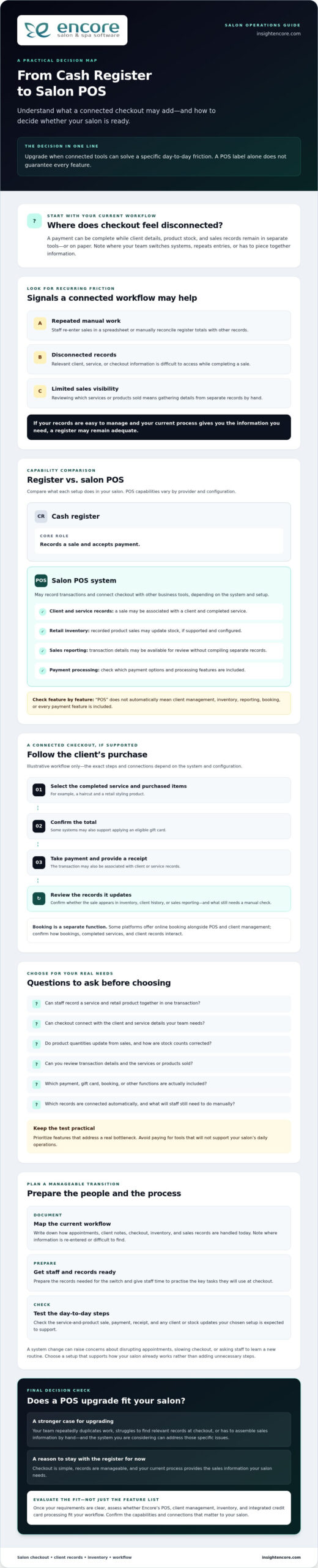
Your barber shop is a place of craft, conversation, and community. However, beneath the hum of clippers, it’s also a business that requires precise management to thrive. While many people think of a point-of-sale terminal as a simple tool for swiping cards, the definition of what a POS system is has evolved significantly. In 2026, it serves as the central nervous system for your shop. It’s no longer just about the transaction at the end of a cut. It’s about everything that happens before a client sits in your chair and long after they walk out the door.

A generic retail POS often fails because it’s built for selling hardware or clothing, not for the unique rhythm of a barber shop. Retail systems don’t understand that you don’t just sell products; you sell time, expertise, and relationships. They lack the built-in logic for booth rentals, commission splits, and the specific scheduling needs of a 1-5 chair shop. The best pos system for a small barber shop acts as a silent partner. It handles the “back-office” noise so you can focus on the fade. This shift from simple payment processing to total business management is what separates growing shops from those that struggle to keep up.

The Hidden Cost of Manual Management

Relying on a paper book or a basic digital calendar might feel “simple,” but it carries a heavy price tag. Every minute you spend on the phone confirming an appointment is a minute you aren’t cutting hair. Manual systems also leave you vulnerable to the financial sting of no-shows. When a client misses a slot and you have no way to enforce a cancellation policy, that’s pure profit out the window. Beyond the money, paper ledgers are a significant security risk. Keeping client phone numbers and notes in an unsecured book isn’t just old-school; it’s a liability in a world where data privacy matters more than ever.

Modernizing My Barbershop Operations

Stepping away from a “cash-only” mindset is about more than just convenience. It’s about professional trust. Modern clients expect a digital-first experience, from the moment they book on their phone to the moment they receive a digital receipt. A dedicated system shows your regulars and new guests alike that you run a serious, organized business. If you are looking for more ways to level up, modernizing my barbershop operations is the first step toward long-term stability. By adopting the best pos system for a small barber shop, you create a seamless flow that makes life easier for both you and your clients. It’s an investment in your peace of mind.

Core Features That Make a POS System ‘Barber-Friendly’

The best pos system for a small barber shop should feel like an extra set of hands in the shop. It isn’t just about the hardware on your counter. It’s about the software’s ability to handle the specific, often messy, details of a service-based business. While a retail store tracks barcodes, you track people, time, and preferences. You need a system that offers 24/7 online booking so clients can grab a slot while you’re focused on a fade. It should also act as a digital memory, storing client history so you know exactly which blade size or pomade a regular prefers without having to ask.

Inventory management is another essential piece of the puzzle. If you sell beard oils or high-end styling creams, your system should alert you before your shelves are empty. When you’re learning how to choose a POS system, look for a platform that integrates these retail sales directly with your service menu. This creates a single, clear picture of your shop’s health. It’s about making the business side as sharp as the cuts you provide. If you’re ready to see how these features work together, you can explore our specialized barber tools today.

Managing Chair and Booth Renters Efficiently

In many small shops, managing independent contractors is the biggest administrative headache. Generic systems often lump all revenue together, leaving you to untangle commissions and rental fees in a spreadsheet at the end of the week. A barber-specific system solves this by automatically separating business revenue from independent barber earnings. This transparency builds trust and saves hours of manual math. Using a dedicated booth renter client management app ensures everyone gets paid accurately and on time.

Client Retention Tools That Drive Loyalty

Keeping your chairs full is a constant priority. Automated reminders are a simple but powerful way to protect your time. Some industry professionals report that automated SMS and email reminders can reduce no-shows by up to 40 percent. This is a massive win for a 1-5 chair shop where every missed appointment hurts. Beyond reminders, look for loyalty programs that reward frequent visits. These barbershop client retention ideas turn one-time walk-ins into lifelong regulars. To take your retention strategy even further, exploring creative barbershop loyalty program ideas can help you build a structured rewards system that keeps clients coming back consistently. When the best pos system for a small barber shop handles the follow-up, you can stay focused on the craft.

The True Cost of a POS: Evaluating Fees, Hardware, and Hidden Contracts

Cost is often the biggest hurdle when you’re looking for the best pos system for a small barber shop. It’s easy to get distracted by a low monthly price while ignoring the “hidden” numbers that eat into your profit. To understand the real price, you have to look at the combination of software subscriptions, hardware investments, and transaction fees. A low sticker price on software doesn’t mean much if the processing rates are sky-high.

Many “free” software options appear attractive at first glance. However, these providers often recover their costs by charging significantly higher processing rates on every transaction. Over a year, those extra fractions of a percentage can cost you thousands. It’s usually better to pay a fair, transparent subscription fee for quality software than to be nickeled and dimed on every haircut. Transparency is key to maintaining your peace of mind.

Integrated Credit Card Processing Explained

One of the smartest moves you can make is choosing integrated credit card processing. When your payments and software talk to each other, you eliminate manual entry errors. You won’t have to worry about accidentally typing $5.00 instead of $50.00 during a busy rush. Plus, if there’s ever a technical glitch, you have one point of contact to call. You don’t want to get stuck in a loop between a software company and a bank, each blaming the other while your shop sits at a standstill.

Long-term contracts are another red flag to watch out for. In a fast-moving industry, you need the freedom to adapt. Avoid being locked into three-year agreements that make it impossible to switch if your needs change or if the service quality drops. You deserve a partner that earns your business every single month.

Hardware vs. Software: Finding the Right Balance

You don’t necessarily need a $1,000 all-in-one terminal for a 2-chair shop. In 2026, cloud-based systems are the industry standard. They allow you to use existing hardware, like an iPad or a tablet, which keeps your initial costs manageable. This flexibility is perfect for small shops that want to grow without a massive upfront investment.

Proprietary hardware can look sleek, but it often locks you into a specific ecosystem. If that proprietary terminal breaks, you’re forced to buy another expensive unit from the same vendor. Tablets offer more flexibility and are much easier to replace. The best pos system for a small barber shop should be accessible on any device. This gives you the power to check your schedule or run reports from home or on the go. Focus on finding a balance that gives you a professional look without the unnecessary technical headache.

Best POS for Small Barber Shops: 2026 Buyer’s Guide

Setting Up for Success: Transitioning to Your New Barbershop POS

Switching your management software can feel like trying to change a tire while the car is moving. We understand the hesitation. You’ve spent years building a loyal client list, and the thought of losing even one contact or service history note is stressful. However, the transition to a professional system shouldn’t be a technical nightmare. The best pos system for a small barber shop is designed to make this move feel like a natural extension of your daily workflow. It’s about moving from “organized chaos” to a state of complete control without the typical software headache.

Data migration is the first priority. Most modern systems allow you to import your existing client list from a spreadsheet or even directly from another app. Once your names and numbers are in, you can begin setting up your service menu. This is where you define exactly how your shop runs. You can set specific time blocks for fades, beard trims, or luxury shaves, ensuring your online booking portal reflects the reality of your chair time. By the time you launch the portal to your clients, every detail will be polished and professional.

The 3-Day Implementation Plan

A structured approach removes the guesswork from your launch and keeps your stress levels low. On Day 1, focus on the foundation. Set up your hardware and enter your basic business information. Day 2 is for the heart of your business: importing clients and setting up those automated reminders that protect your revenue. Finally, Day 3 is for practice. Run a few test transactions to get comfortable with the interface. By the afternoon, you’ll be ready to go live with total confidence and a clear mind.

Overcoming the ‘Tech Anxiety’ Hurdle

Many barbers worry that new software will be too complex for their team to master. The truth is that the best pos system for a small barber shop is built with the same logic as the smartphone apps you already use every day. If you can navigate a social media feed, you can manage your shop’s schedule. The learning curve is intentionally short, often taking less than an hour for you or your team to master the basics. Having a human support line to call during your first week ensures you never feel stuck. Exploring the Encore Salon Software features will show you just how intuitive a professional system can be.

Start your stress-free transition today

Encore: The Professional Choice for Streamlined Barbershop Management

Choosing the best pos system for a small barber shop is about more than just picking software. It’s about choosing who you want in your corner when your shop gets busy. At Encore, we’ve been helping shops thrive since 1991. That is over three decades of industry expertise built directly into our platform. We didn’t just build a generic tool; we developed the Encore Barber Software module to handle the specific needs of barbers. From the perfect fade to the final checkout, our system is designed to mirror the way you actually work.

Our approach is different from the big, impersonal tech giants. We see ourselves as your friendly guide. We know that when you have a question, you don’t want to talk to an AI bot or wait 48 hours for an email response. You want a human being who understands your business. Our human-centric support means you get experts who are ready to help you overcome hurdles in real-time. Whether you’re running a single chair or managing a multi-location franchise, our solution scales with you. We grow as you grow. Pairing your POS with the right barbershop appointment scheduling software gives you a complete performance dashboard so you can track revenue trends and make data-driven decisions with confidence.

A Supportive Partner for Your Growth

We focus on removing the friction that slows you down. Frustrations like manual payroll calculations and messy inventory tracking should be a thing of the past. Our specialized modules for chair and booth renters ensure that everyone in your shop stays organized and motivated. This level of detail gives you the peace of mind to stay behind the chair while the business side runs smoothly. It is about creating a professional environment where you can focus on your craft. If you’re ready to see how a dedicated partner can change your daily workflow, you can contact Encore for a demo and experience the difference yourself.

Transparent Pricing for Small Businesses

We believe in transparency. Many providers lure you in with “free” plans only to trap you with predatory contracts or hidden processing fees. We reject that model entirely. Our goal is to provide value-based pricing that fits the budget of a small shop without any “gotcha” moments. You get professional-grade tools like integrated credit card processing and automated marketing without the fear of a surprise bill. You can view our straightforward Encore pricing to see exactly how we support your bottom line. We are here to help you grow, not to hold you back with red tape. Finding the best pos system for a small barber shop shouldn’t be a gamble; it should be the smartest investment you make this year.

Level Up Your Shop with Confidence

Choosing the best pos system for a small barber shop is a decision that impacts every cut and every client interaction. You’ve seen how the right technology acts as a silent mentor, handling the heavy lifting of booth rentals and automated reminders while you stay focused on your craft. It is about moving away from manual stress and toward a future where your business runs as smoothly as a fresh shave. Since 1991, we’ve dedicated ourselves to helping professionals grow through reliable software and specialized modules for chair renters.

You don’t have to navigate this transition alone. With dedicated human support and a system built by industry experts, the technical headaches of the past are over. You deserve the peace of mind that comes with knowing the business side is handled by a partner who truly cares about your individual success.

Ready to streamline your shop? Explore Encore Barber Software today.

Your shop is more than just a business; it’s a staple of your community. We’re here to help you keep those chairs full and your operations sharp for years to come.

Frequently Asked Questions

What is the best POS system for a small barber shop with only two chairs?

The best pos system for a small barber shop with two chairs is one that offers professional features without overwhelming a small team. Encore Barber Software is specifically designed for this scale. It provides all-in-one management that handles booking and payments seamlessly. Because it’s scalable, you don’t have to pay for enterprise-level features you won’t use, yet it grows with you if you decide to add more chairs later.

How much does a barbershop POS system usually cost in 2026?

In 2026, subscription costs for barbershop software generally range from $20 to over $150 per month depending on your staff size. You should also account for payment processing fees, which often hover around 2.4 percent to 2.7 percent per transaction. While some providers offer “free” plans, these often come with higher processing rates. It is usually more cost-effective to choose a value-based subscription that offers transparent pricing and integrated features.

Can a POS system help me manage independent booth renters?

Yes, a dedicated system is essential for managing independent contractors. Encore offers specialized Chair/Booth Renter Software that tracks individual sales and calculates commissions automatically. This eliminates the need for manual spreadsheets or messy end-of-week math. By separating business revenue from independent barber earnings, you create a transparent environment that builds trust. Each renter can manage their own schedule while you maintain oversight of the shop’s total performance.

Do I need to buy expensive hardware to use a modern POS?

You don’t need to invest in proprietary $1,000 terminals to run a modern shop. Most 2026 systems are cloud-based and compatible with standard tablets or iPads. This allows you to use hardware you might already own, keeping your initial setup costs low. Using a tablet also gives you the flexibility to check your schedule or run reports from home. You only need a reliable internet connection and a compatible card reader to get started.

Will a POS system really help reduce my no-shows?

Automated reminders can significantly protect your bottom line. Industry data shows that sending SMS and email confirmations can reduce no-shows by up to 40 percent. By using the best pos system for a small barber shop, you can set these reminders to go out automatically 24 or 48 hours before an appointment. This gives clients a chance to reschedule and allows you to fill the empty slot before it’s too late.

How hard is it to move my client list from a paper book to a POS?

Moving from a paper book to a digital system is a straightforward process that usually takes less than a day. You can manually enter your core client list or import a spreadsheet if you have one. Modern interfaces are designed to be as intuitive as smartphone apps, so the learning curve is very short. Once your data is in, you’ll never have to worry about losing a phone number or a client’s formula notes again.

Is credit card processing integrated into the software?

Integrated credit card processing is a core feature of the Encore platform. This means your payment terminal talks directly to your software, eliminating the risk of manual entry errors at checkout. When a service is finished, the total is automatically sent to the reader. This creates a faster experience for your clients and ensures your daily sales reports are always 100 percent accurate. You won’t have to spend hours reconciling bank statements.

What kind of support should I expect if my system goes down?

You should expect responsive, human-centric support from experts who understand the beauty industry. At Encore, we reject the use of automated bots or delayed email tickets. Our team provides accessible help to ensure your shop stays up and running. Having a dedicated partner who has been serving the industry since 1991 means you get reliable advice and quick solutions. Your peace of mind is prioritized alongside your business growth.

Disclaimer

This article is general in nature and may contain errors, please verify all claims with your sales rep
Categories
Uncategorized

12 Barbershop Client Retention Ideas to Boost Loyalty in 2026

Did you know that new guest visits to barbershops declined by 17% in 2025? This startling shift means that mastering barbershop client retention ideas is now the most critical part of your growth strategy. You’ve likely felt the pressure of high churn or the frustration of an inconsistent booking schedule. It’s exhausting to hunt for new faces while competing with low-cost chains. You deserve a business that feels stable and a community that truly values your craft.

We believe your focus should stay on the chair, not on chasing "lost" clients. We’re going to show you how to turn one-time walk-ins into lifelong regulars using modern tools and actionable strategies. This guide covers 12 proven methods to automate your follow-ups and build a loyal community that refers their friends. You’ll discover how to fill your calendar weeks in advance and finally get the peace of mind you’ve been working toward. Let’s move from a state of stress to a feeling of total, organized control.

Key Takeaways

  • Learn how to standardize a “Welcome Ritual” and use digital notes to make every client feel like a VIP from the moment they sit down.
  • Discover how to use automated “We Miss You” messages and birthday greetings to stay top-of-mind without lifting a finger.
  • Explore modern barbershop client retention ideas like digital point systems and VIP membership models that move beyond outdated paper punch cards.
  • Find out how to turn your shop into a local hub by hosting exclusive events and building strategic partnerships with nearby businesses.
  • Identify at-risk regulars before they disappear by tracking the right retention metrics through specialized management software.

Elevating the In-Chair Experience for Maximum Retention

The moment a client sits in your chair, the clock starts ticking on their decision to return. While great marketing brings people through the door, the physical experience determines if they stay. High-performing shops succeed because they treat every visit as an audition for the next one. This begins with a standardized "Welcome Ritual." Whether it is a signature beverage or a specific way you draped the cape, consistency builds comfort. When you remove the guesswork for the client, you strengthen the foundation of customer retention by proving your shop is a reliable sanctuary.

To truly stand out from low-cost chains, you must offer what they cannot: personalized indulgence. Small, niche add-ons like a three-minute scalp massage or a peppermint-scented hot towel treatment create sensory memories. These aren’t just services; they are barbershop client retention ideas that turn a basic chore into a luxury highlight of someone’s week. When these "extras" become your standard, you stop competing on price and start winning on value.

The Art of the Digital Consultation

Modern loyalty is built on being heard. Using tablets at the chair allows you to pull up style galleries and previous photos of the client’s best cuts. This visual confirmation builds immediate trust. Don’t rely on your memory for the details. Record specific clipper guard sizes, cowlick directions, and preferred styling products directly into the digital client profile. When a regular returns and you already know they prefer a #2 fade with a matte finish, they feel understood. Before they stand up, always set the "Next Step" by suggesting a style adjustment for their next visit based on their hair growth or upcoming season.

Standardizing Service Quality

Consistency is the enemy of churn. If a client gets a different level of service depending on which barber they book, your brand feels unstable. Create a checklist for the "Encore Experience" to ensure every staff member follows the same high standards. This includes soft skills like active listening and knowing when to keep the conversation flowing or when to offer a quiet, relaxing cut. Training your team on these nuances is just as important as technical skill. For more on operational excellence, check out our 15 Barbershop Management Tips: The 2026 Success Guide. By focusing on these barbershop client retention ideas, you ensure that every chair in your shop produces the same premium results that keep your calendar full.

Using Automation to Stay Top-of-Mind Between Appointments

The relationship with your client shouldn’t end when they walk out the door. In fact, the time between appointments is where most shops lose their regulars. While you’re focused on the precision of a fade, automation acts as your silent partner, maintaining the connection. One of the most effective barbershop client retention ideas is using SMS reminders. Research shows that shops using automated reminders and deposits can reduce no-shows by 89%. It’s a simple way to keep your schedule tight and your revenue predictable.

Beyond reminders, post-visit surveys are a powerful tool for growth. They allow you to catch a negative experience before it turns into a bad review or a lost customer. If a client felt the wait was too long or the music was too loud, you can address it immediately. This proactive approach shows you value their feedback and are committed to excellence. It’s about turning a potential exit into a reason to stay.

The Power of Automated Re-engagement

Most barbershops have a "Churn Window," which is typically between 35 and 45 days. If a client hasn’t re-booked by then, the chances of them "ghosting" your shop increase significantly. You don’t need to manually track every name on your list. Instead, set up automated "We Miss You" messages that trigger at the 40-day mark. A single, friendly sentence like, "It’s been a few weeks since your last visit, and we’d love to see you back in the chair for a fresh look," invites them back without sounding pushy. You can explore how Encore’s automated marketing features handle these workflows for you 24/7, so you never have to worry about a client slipping through the cracks.

Personalized Digital Touchpoints

Personalization is the secret to high-impact customer retention strategies. You can segment your client list based on the services they receive. For example, a client who gets a beard trim every two weeks needs different communication than someone who gets a full buzz cut every month. Send "Style Maintenance" tips via email two weeks after their service to help them keep their look fresh at home. Don’t forget the small wins, like automated birthday and anniversary greetings. Including a small incentive, like a complimentary product or a minor discount, makes the gesture feel like a genuine gift. These small touchpoints are essential barbershop client retention ideas that build a community of regulars who feel seen and appreciated. If you’re ready to see how these systems can transform your shop, you might want to see the platform in action today.

Modern Loyalty Programs: Moving Beyond the Paper Punch Card

The paper punch card is a relic of the past. It’s too easy to lose, forget, or simply ignore in a drawer. In 2026, building a resilient business requires digital barbershop client retention ideas that integrate directly with your point-of-sale system. Transitioning to a point-based system allows you to track total spend rather than just visit frequency. This rewards your highest-value clients who buy premium products or book multi-service appointments. It’s a fairer way to show appreciation and keeps your profit margins healthy while making the client feel like their loyalty is truly recognized. If you’re evaluating which technology to use, our guide to the best POS system for a small barber shop can help you find the right fit for your loyalty and payment needs.

Don’t stop at just rewarding visits. You can also reward your loyal regulars with "Account Credit" for successful referrals. This feels like real money in their digital wallet. It encourages them to return and use that credit toward their next service or a new styling product. It creates a cycle of value that keeps your chair full and your community growing without the messy math of manual discounts.

Gamifying the Barbershop Visit

Retention should be engaging. Create "Double Point Days" for your slower mid-week slots to balance your schedule. This incentivizes clients to book on a Tuesday morning instead of fighting for a crowded Saturday spot. You can also offer "Founder Member" status to your long-term regulars. Give them exclusive perks like early access to new product launches or a specific "members-only" grooming station. Finally, reward "Social Proof." If a client tags your shop in a fresh-cut photo on Instagram, add points to their account automatically. It’s free marketing for you and a small, rewarding win for them. These modern barbershop client retention ideas turn a routine appointment into an experience that clients genuinely enjoy and want to repeat. For a deeper dive into structuring these programs, explore these creative barbershop loyalty program ideas that go beyond the basics to drive real retention results.

12 Barbershop Client Retention Ideas to Boost Loyalty in 2026

Building a Community Brand That Clients Never Want to Leave

In 2026, a haircut is often viewed as a commodity. A community, however, is a destination. People don’t just stay for the precision of the blade; they stay where they feel they belong. Building a brand that resonates on a personal level is one of the most effective barbershop client retention ideas because it creates an emotional bond that a discount chain can’t replicate. When your shop becomes a hub for connection, your clients become your strongest advocates.

Start by hosting "After Hours" networking or grooming education events. These sessions transform your space from a simple service provider into a center for local culture. You could invite a local stylist to talk about beard care or host a small business meetup. You should also showcase real clients on your social media channels. Move away from polished stock imagery and highlight the actual faces in your chairs. This visibility fosters a deep sense of belonging. It turns a routine appointment into a moment of pride for the client.

Local Partnerships and Cross-Pollination

Your shop doesn’t exist in a vacuum. To grow, you should identify three local, non-competing businesses that share your target demographic. A nearby coffee shop, a boutique gym, or a craft brewery are perfect candidates. By establishing a "Regulars Exchange" program, you provide your loyal clients with exclusive perks at these partner locations while they do the same for you. These strategic partnerships build local authority and weave your shop into the fabric of the neighborhood. This approach ensures your brand is mentioned in conversations all over town.

The "Barbershop as a Third Place" Concept

The "Third Place" is the social environment between home and work where people find relaxation and community. You can achieve this by optimizing your waiting area with high-quality amenities like premium refreshments and tech charging stations. Encourage your barbers to do more than just cut hair; they should facilitate introductions between clients who have shared interests. Use your digital platforms to tell the "Stories of the Shop" rather than just showing the technical side of a fade. When you focus on the people behind the hair, you implement barbershop client retention ideas that build a legacy, not just a list of names.

Start building your shop's community today

Tracking Retention Metrics with Barbershop Management Software

You can’t manage what you don’t measure. While the craft happens in the chair, the growth of your business happens in the data. Your Client Retention Rate is the most important metric you’ll ever track. It tells you exactly how many people trust you enough to return. With new guest visits down by 17% across the industry in 2025, keeping the clients you already have is no longer just a goal; it’s a survival strategy. Using software to track these barbershop client retention ideas ensures you aren’t just guessing about your shop’s health.

Modern management tools allow you to identify "At-Risk Clients" before they disappear. These are the regulars who have broken their usual booking pattern. If a client who usually visits every 21 days hasn’t been seen in six weeks, they’re at risk. Catching this early allows you to reach out with a personalized message. It’s much easier to save a relationship than it is to start a new one from scratch.

Decoding Your Retention Data

It’s vital to distinguish between New Client Retention and Existing Client Retention. A high return rate for first-timers suggests your initial "Welcome Ritual" is hitting the mark. Conversely, if your long-term regulars are leaving, you might have a consistency issue. You should also monitor individual barber retention rates. This isn’t about playing favorites; it’s about identifying who needs more support or soft-skills training. To see how these numbers fit into your overall shop efficiency, you can learn how to calculate salon staff utilization rate for deeper performance insights. Encore’s Barbershop Software makes this easy by visualizing these complex numbers into simple, actionable dashboards.

Acting on the Insights

Data is only useful if you act on it. Set aside time for a weekly "Retention Review" with your management team. Look at the "First-Time Client Return Rate" to evaluate the impact of your current shop vibe. If the numbers are dipping, it’s time to investigate why. You can also use this data to reward your team. Instead of just tracking total sales, incentivize barbers based on their personal retention growth. This shifts the focus from "getting the next person in the chair" to "making sure this person comes back." Finally, use these metrics to make big business decisions. If your retention is high and your calendar is full, that’s a data-backed signal that you’re ready for a price increase. These barbershop client retention ideas turn your software into a dedicated mentor that guides your shop toward long-term success.

Building Your Future-Proof Barbershop

You have the tools to transform your shop from a place of high churn into a thriving community of regulars. By moving beyond paper systems and embracing automation, you reclaim your time and your peace of mind. Whether you’re standardizing your welcome ritual or launching a digital membership model, every step you take builds a more resilient business. You’ve worked hard to master your craft; now it’s time to master your growth.

Implementing these barbershop client retention ideas is about winning the moments between visits. With real-time performance dashboards and integrated marketing tools, you can identify at-risk clients before they vanish. We’ve been a trusted partner for barbers since 1991, providing the support you need to lead with confidence and professional clarity.

See how Encore’s Barbershop Software automates your retention strategy
You’re just one step away from a fully booked calendar and a business that feels organized and in control. We’re excited to see your shop reach its full potential.

Frequently Asked Questions

What is a good client retention rate for a barbershop in 2026?

You should aim for at least 44.63% of your total visits to come from returning clients. Since existing guest visits grew by 2% in 2025 while new guest visits declined by 17%, keeping your current base is vital for survival. High-performing shops often see even higher numbers. Tracking this metric monthly helps you spot trends before they impact your revenue and allows you to adjust your strategy accordingly.

How often should I send automated re-engagement emails to my clients?

You should trigger re-engagement messages based on the average time between visits, which is currently 48.5 days. Sending a "We Miss You" note around the 40 to 45-day mark is most effective. This catches clients just as they are considering their next cut. Avoid daily emails; a single, well-timed message with a direct booking link feels helpful rather than intrusive. It’s about being present without being a nuisance.

Are digital loyalty programs better than paper punch cards for barbers?

Yes, digital programs are significantly more effective because they eliminate manual tracking and the risk of lost cards. Shops using automated barbershop client retention ideas like digital points report 25% more repeat business. Digital systems also allow you to track spend rather than just visits, rewarding your highest-value clients. Plus, you get valuable data on client behavior that paper punch cards simply can’t provide to your business. To find the right structure for your shop, check out these barbershop loyalty program ideas designed to increase visit frequency and drive retail sales.

How do I handle a regular client who suddenly stops coming in?

Use "At-Risk Client" reports to identify them immediately and reach out with a personalized "Check-in" message. Sometimes life gets busy, and a friendly reminder is all they need to return. If they’ve had a bad experience, this proactive outreach gives you a chance to apologize and offer a small incentive, like a complimentary scalp massage. It shows you value the relationship more than just the transaction at the end.

Can barbershop management software really help with retention?

Absolutely, because it acts as a silent partner that handles follow-ups while you focus on the cut. It automates the 77.49% of appointments that happen online and sends reminders that reduce no-shows by up to 89%. By using real-time dashboards, you can see exactly which barbershop client retention ideas are working and where your team needs more training. It brings a level of organized control to your daily operations.

What are the most effective incentives for a barbershop loyalty program?

The best incentives focus on value-added services rather than deep discounts. Offer points for "Social Proof" like tagging the shop on Instagram, or give "Account Credit" for referrals. Perks like a complimentary hot towel treatment or a "Founder Member" status create an emotional bond. These rewards make the client feel like a VIP without eroding your profit margins. It’s about building a sense of belonging that keeps them coming back.

How do I ask my clients for referrals without feeling pushy?

The most natural time to ask is right after a successful service when the client is feeling confident. Simply mention that your best clients come from referrals and that you’d love to see their friends in the chair. You can make it even easier by automating a "Refer-a-Friend" text that offers both the existing client and the new guest a small perk. This keeps the conversation professional and focused on mutual benefit for everyone involved.

Should I offer discounts to first-time clients to encourage them to return?

It’s better to offer a "Second Visit Incentive" rather than a first-time discount. A discount on the first visit often attracts price-shoppers who won’t stay. Instead, provide a small credit or a free add-on for their next booking before they leave the chair. This encourages the habit of returning and helps you overcome the 17% decline in new guest visits seen recently. Consistency and value are the keys to long-term loyalty.

Disclaimer

This article is general in nature and may contain errors, please verify all claims with your sales rep

Categories
Uncategorized

15 Barbershop Management Tips: The 2026 Success Guide

The hardest part of opening a barbershop isn’t the first cut. It’s the first hour you spend staring at a complex spreadsheet instead of a client. You’ve spent years mastering your craft, but suddenly you’re expected to be an accountant, a marketing expert, and a manager all at once. It’s exhausting to feel like your shop is running you. We understand that frustration. That’s why we’ve compiled these essential barbershop management tips for new owners to help you reclaim your time.

This 2026 success guide is designed to help you master the transition from master barber to confident business owner with total ease. We’ll show you how to implement "invisible infrastructure" that handles the boring admin while you focus on your art and your community. It’s about moving from a state of stress to a feeling of organized control. We’re here to be your partner in this growth, providing the clarity you need to succeed.

In the following sections, we’ll walk through 15 actionable strategies for operations, finance, and team growth. You’ll learn how to slash no-show rates, track inventory without the headache, and gain clear visibility into your shop’s profitability. It’s time to build a streamlined workflow that supports your passion rather than draining it. Let’s get started on building your legacy.

Key Takeaways

  • Learn to balance your time behind the chair with the 80/20 rule for sustainable business growth.
  • Discover essential barbershop management tips for new owners to implement 24/7 online booking and eliminate missed calls.
  • Gain visibility into your shop’s health by moving from a cash drawer to an integrated POS with inventory tracking.
  • Create a winning environment by hiring for culture and using clear performance data to mentor your team.
  • Reach your 2026 goals with automated marketing that secures client loyalty and streamlines every transaction.

The Transition: From Master Barber to Business Manager

You’ve spent years perfecting the fade and mastering the straight-razor shave. The history of the barber profession is rooted in craftsmanship and community, but becoming an owner requires a different set of tools. You’re moving from a focus on billable hours to broad operational oversight. This mental shift is the foundation of long-term success. Instead of just thinking about the next cut, you’re now responsible for the entire environment. It’s a big change, but it’s where your legacy truly begins.

Most successful owners follow an 80/20 rule to stay balanced. While you likely still want to cut hair, you must dedicate at least 20% of your week to growth and management tasks. If you stay behind the chair 100% of the time, you’ll miss the small operational leaks that drain your profit. Setting clear KPIs (Key Performance Indicators) from day one keeps you grounded. Don’t just guess how you’re doing. Track your client retention rates and average ticket prices to see the real health of your business. Using specialized Encore barber software can help you see these numbers without the manual headache.

Setting Your Business Goals

It’s vital to differentiate between your personal income and shop profit. Your individual chair brings in money, but the shop’s profit is what allows for future expansion, equipment repairs, and marketing. Create a one-year growth roadmap for your new shop. This plan should identify your target demographic and your local market niche. Are you a high-end grooming lounge or a fast-paced community hub? Knowing your identity helps you apply the right barbershop management tips for new owners to your specific neighborhood.

Developing Standard Operating Procedures (SOPs)

Consistency is what builds a brand. You want every client to receive the same high-quality experience, regardless of which chair they sit in. This starts with documentation. During your first six months, write down every process. Draft opening and closing checklists for your staff so nothing is left to chance. Set firm expectations for chair cleanliness and tool maintenance. When your team has a clear manual to follow, the shop runs like clockwork even when you aren’t there. This structure provides the peace of mind you need to lead with confidence.

Streamlining Operations with Modern Scheduling

Gone are the days when a ringing landline was the heartbeat of a shop. In 2026, the call-in is effectively dead. Modern clients expect to book a trim at 11 PM while scrolling through their phones. If you aren’t offering 24/7 online booking, you’re essentially closing your doors the moment you lock up for the night. This is one of the most vital barbershop management tips for new owners because it removes the friction between a client’s impulse and a confirmed appointment. It keeps your chair full without you ever having to pick up the phone.

Managing a hybrid flow is equally important for a new business. You need a system that balances scheduled appointments with the local walk-in culture that keeps shops vibrant. Automated SMS and email confirmations act as your first line of defense against empty chairs. When a cancellation does happen, waitlist automation can instantly notify your next eager client. This fills the gap before you even notice it. It’s about creating a seamless experience that respects both your time and the client’s schedule.

The Power of Online Booking

Implementing a salon client booking portal can increase your total bookings by 20% simply by making the process effortless. You should integrate your booking link directly into Instagram and Google My Business. This allows clients to find you, see your work, and secure a spot in seconds. Your software should also allow them to select their preferred barber during checkout. This builds individual staff loyalty and ensures your team stays busy with the clients they serve best.

Reducing Revenue Leakage

No-shows are more than an annoyance. They’re lost revenue that you can’t recover. A fair but firm cancellation policy is essential for protecting your bottom line. For high-value services like a premium beard sculpt or a hot towel shave, requiring a small deposit ensures the client is committed. These barbershop management tips for new owners help you establish professional boundaries early. You can find more advice on professional standards in the SBA’s guide to business management, which helps you stay compliant while growing.

Analyzing your peak hours is the final piece of the puzzle. Look at your data to see when the shop is consistently packed. This allows you to optimize staff scheduling so you never have too many barbers standing around or too many clients waiting on the bench. If you want to see how these tools work in real-time, you can explore our booking features today to see the difference automation makes.

Financial Management and Inventory Control

Managing the till shouldn’t feel like a chore at the end of a long shift. Moving beyond the traditional cash drawer is one of the most effective barbershop management tips for new owners who want to scale. An integrated POS system does more than just process payments. It simplifies end-of-day reconciliation for multiple barbers, ensuring every penny is accounted for without the manual math. It provides a clear audit trail that builds trust with your team and gives you peace of mind. If you’re still evaluating your options, our guide to the best pos system for a small barber shop breaks down the top 2026 solutions, from processing rates to booth rental management, so you can choose with confidence.

Retail sales shouldn’t be an afterthought. You should track them as a percentage of your total revenue to see where you might be leaving money on the table. Automating your inventory counts prevents those awkward "out of stock" moments when a client wants to buy their favorite pomade. When your system alerts you to low stock, you can restock before the shelf goes bare. This level of organization transforms your shop from a hobby into a professional enterprise.

Mastering Barbershop Inventory

Setting par levels for both your back-bar and retail shelves is a game changer. This means you always know the minimum amount of product you need to have on hand to keep operations running smoothly. Using Encore Salon Software allows you to track exact product usage per service. This data helps you identify your highest-margin retail items. When you know which products bring in the most profit, you can train your team to focus their sales efforts where they’ll have the biggest impact.

Optimizing Cash Flow

Understanding the gap between your total revenue and your actual profit margin is vital for survival. You might bring in thousands of dollars each week, but your actual take-home depends entirely on your overhead and expenses. Monitoring how to increase salon profit margin through diligent expense tracking ensures you stay in the black. For more foundational advice on financial planning and legal compliance, check out the resources provided by the Small Business Administration (SBA).

Your staffing model also dictates your cash flow. Whether you choose a chair rental model with fixed fees or commission-based payouts, your software must handle these calculations automatically. This transparency prevents disputes and keeps your books clean. By mastering these financial basics, you create a stable foundation that allows you to focus on the creative side of your business. It’s about working smarter, not harder, to secure your shop’s future.

15 Barbershop Management Tips: The 2026 Success Guide

Building and Retaining a High-Performance Team

The people in your shop are your greatest asset. A great haircut brings a client in, but the relationship with the barber keeps them coming back for years. One of the most critical barbershop management tips for new owners is to hire for culture first and skill second. You can always mentor a barber on their technique. It’s much harder to change a personality that clashes with your shop’s vibe. Your team should reflect the welcoming brand you’ve worked hard to build. High staff retention leads directly to high client retention.

Data makes management conversations easier and much more objective. Instead of giving vague feedback, use real numbers to drive performance reviews. Show your team exactly where they excel and where they have room to grow. This transparency builds a culture of trust and progress. It also helps you manage the different legal and operational expectations for employees versus chair renters. While renters have more autonomy, they still need to meet your shop’s baseline standards for professionalism and cleanliness to protect your reputation.

Tracking Staff Productivity

Understanding how your team spends their time is essential for a healthy bottom line. You should learn how to calculate salon staff utilization rate to see if your scheduling matches your actual demand. Set individual goals for client retention and retail upselling that feel achievable. When staff can see their progress on a real-time dashboard, they stay motivated and engaged. It turns management into a collaborative effort rather than a top-down command. This clarity removes the guesswork from your daily operations.

Fostering Shop Culture

A strong culture doesn’t happen by accident. It’s built through regular team meetings and intentional skill-sharing sessions. These moments allow your team to learn from each other and feel truly invested in the shop’s success. Reward your top performers with public recognition or small bonuses to show your appreciation. This encourages high performance without alienating the rest of the team. When you build a brand that values growth and respect, talented barbers stay for the long haul. They become partners in your shop’s growth.

Don’t forget to involve your team in your loyalty programs. When staff are excited about the perks they can offer, they’re much more likely to promote them to every client in their chair. This creates a win-win for everyone involved. Your team feels empowered to provide extra value, and your clients feel like part of an exclusive club. It’s a simple way to boost morale and revenue at the same time. For a deeper dive into keeping your regulars coming back, explore these proven barbershop client retention ideas that turn one-time walk-ins into lifelong regulars. If you operate or partner with a nail salon, you’ll also find value in these nail salon client retention ideas that use automated systems and personalized client profiles to keep stations fully booked with loyal, returning clients.

Start managing your team with confidence today

Scaling Your Barbershop with 2026 Tech

Scaling your business doesn’t mean you have to work more hours behind the chair. It means letting technology take the weight of daily admin off your shoulders. One of the best barbershop management tips for new owners is to embrace automation early, before you feel overwhelmed. This starts with integrated credit card processing. It cuts down checkout time and removes the risk of manual entry errors. Your clients get a faster, more professional experience, and you get accurate financial records instantly.

Off-peak hours can be a challenge for any new shop. Using gift cards helps you smooth out those revenue dips by bringing in cash flow ahead of time. They’re perfect for seasonal gifts and encourage new clients to visit during quieter periods. When you pair this with a mobile-first management app, you can check your shop’s performance from anywhere. You’re no longer tethered to a back-office desk. You have the freedom to lead your team while the tech handles the routine tasks.

Automated Marketing Strategies

Automation acts like a silent marketing team that never sleeps. You can set up "We Miss You" emails to trigger automatically for any client who hasn’t visited in six weeks. It’s a gentle, personal nudge that keeps your chair full without you sending a single manual message. SMS marketing also works perfectly for seasonal promotions or filling last-minute openings. These tools help you collect and showcase client reviews automatically. Positive social proof builds trust with new neighbors and keeps your local reputation strong.

Choosing the Right Software Partner

The right software partner should feel like an extension of your team rather than just another bill. When you evaluate Encore features, you’ll see tools designed specifically for the unique flow of a modern barbershop. We believe human support matters more than AI chatbots. If you have a question, you deserve a real conversation with someone who understands your daily hurdles. These barbershop management tips for new owners are most effective when supported by a reliable, human-centric system. As you build that system, make sure you’re also following salon client data security best practices to protect your clients’ personal and payment information from the growing threat of cyberattacks. Ready to streamline? View Encore Pricing and start your journey today.

Take Control of Your Shop’s Future

Stepping into your role as a business owner is a bold move. It’s about more than just great haircuts; it’s about building a community and a sustainable legacy. By implementing these barbershop management tips for new owners, you’re setting a foundation for a business that thrives even when you’re not behind the chair. You’ve learned how to automate your scheduling, master your finances, and mentor a high-performance team using real data. These strategies turn daily chaos into organized control.

Syntec Business Systems, the developer of Encore, has been a supportive partner for beauty and wellness pros since 1991. We provide an all-in-one POS, booking, and inventory system that handles the paperwork so you don’t have to. Our team offers real human support to every owner, ensuring you never feel alone in your business journey. You have the vision and the craft. Now, you have the strategy to scale with confidence and ease.

Streamline your shop with Encore Barber Software
We’re excited to see your shop grow and become a neighborhood staple. Your success is our priority, and we’re ready to help you every step of the way. It’s time to work on your business, not just in it.

Frequently Asked Questions

How do I choose the best management software for my new barbershop?

Focus on all-in-one solutions that handle booking, POS, and inventory in a single platform. Look for a partner with decades of experience, like the people behind Encore, who have been supporting beauty and wellness pros since 1991. You need a system that offers real human support rather than just automated bots. This ensures you have help when you’re in the middle of a busy shift. Choose a platform that scales with your growth.

What is the most effective way to reduce no-shows in a barbershop?

Automated SMS and email reminders are the most effective way to keep your chairs full. When you implement barbershop management tips for new owners, prioritize systems that send these notifications 24 to 48 hours before the appointment. Requiring a deposit for high-value services also secures client commitment. These small steps protect your revenue and respect your barbers’ time, creating a more professional environment for everyone involved.

Should I use a commission-based or chair-rental model for my barbers?

The choice depends on your long-term business goals and desired level of control. A commission model often fosters a stronger team culture and gives you more influence over the client experience. Chair rental offers lower overhead and more autonomy for the barbers, which can attract seasoned pros. Whichever you choose, ensure your software can handle the specific financial calculations automatically. This transparency prevents disputes and keeps your team focused on their craft.

How much should I spend on marketing my new barbershop?

Start by focusing on low-cost, high-impact digital strategies like Google My Business and local social media. While many experts suggest allocating 5% to 10% of your gross revenue to marketing, your focus should be on automated loyalty programs and client referrals. These internal tools often yield a higher return on investment than expensive external ads. Building a solid reputation in your local neighborhood is the most sustainable way to grow.

Can I manage my barbershop operations from my phone?

Yes, modern cloud-based systems allow you to oversee your shop from anywhere with an internet connection. You can check your daily schedule, track retail sales, and monitor staff performance right from your mobile device. This flexibility is essential for the modern owner who needs to balance shop management with their personal life. You aren’t tethered to a desk, which gives you the freedom to lead your team effectively while on the move.

How do I track inventory for both back-bar and retail products?

Use an integrated inventory management system that automatically deducts products as they’re sold or used in services. Setting "par levels" ensures you receive alerts when stock is low, so you never run out of essential supplies. This level of automation is one of the top barbershop management tips for new owners because it eliminates manual counting errors. It keeps your shelves stocked and your back-bar ready for every client without any guesswork.

What are the most important KPIs for a new barbershop owner to track?

Focus on client retention rate, average ticket value, and staff utilization rate. These three metrics provide a clear picture of your shop’s health and profitability. Retention shows if your clients are happy, while ticket value reveals how well you’re upselling retail or premium services. Monitoring these numbers through a real-time dashboard helps you make informed decisions. It transforms your management style from guessing to leading with pure confidence and clarity.

How do I handle walk-ins when my barbers are fully booked?

Implement a digital waitlist that sends a text message to the client when their barber is ready. This allows walk-ins to grab a coffee or run an errand nearby instead of crowding your waiting area. Your online booking module should also show real-time availability so clients can see if a spot opens up later in the day. This seamless flow keeps the shop atmosphere calm and professional, even during your busiest peak hours. To keep those walk-ins returning long after their first visit, review these barbershop client retention ideas designed to build lasting loyalty in 2026. As you grow your client base, be sure to also review salon client data security best practices to ensure the personal and payment information of every new client is properly protected.

Disclaimer

This article is general in nature and may contain errors, please verify all claims with your sales rep
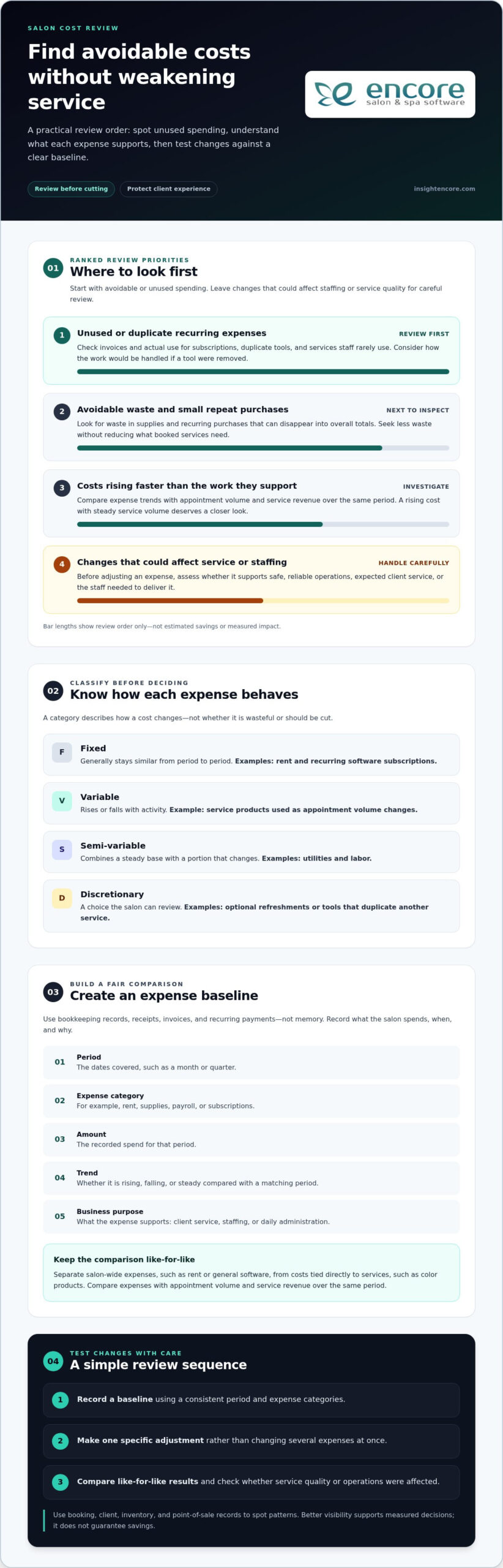
Categories
Uncategorized

Reduce Small Business Credit Card Fees: 2026 Guide

That "simple" flat-rate pricing you chose to avoid headaches is likely the very thing quietly draining your bank account. You’ve probably stared at your monthly merchant statement, squinting at line items like PCI non-compliance or statement fees; it’s frustrating to feel like you need a finance degree to learn how to reduce credit card processing fees for small business. We know the feeling of seeing your hard-earned profit margins shrink under the weight of unpredictable costs. It shouldn’t be this complicated to get paid for the great work you do.

This 2026 guide pulls back the curtain on the industry’s hidden junk fees and shows you exactly how to reclaim your profits through smarter processing strategies. We’ll explore the impact of the latest Visa and Mastercard interchange rate reductions, the transparency of interchange-plus models, and how to find a processing partner that values your peace of mind as much as your growth. By the end, you’ll have a clear roadmap to a lower effective rate and a system that integrates perfectly with your existing booking software.

Key Takeaways

  • Learn why the “simplicity” of flat-rate pricing often hides higher margins and how to calculate your true effective rate.
  • Understand the transparency of Interchange-Plus pricing to avoid the expensive “non-qualified” transaction traps found in tiered models.
  • Discover actionable steps on how to reduce credit card processing fees for small business by optimizing your data accuracy and risk profile.
  • Stop losing money to “junk” fees by mastering 2026 security compliance standards and debunking common merchant myths.
  • Streamline your operations by moving to integrated payments, which eliminates manual reconciliation and simplifies your support.

The Hidden Cost of ‘Simple’ Credit Card Processing

Many salon and spa owners feel a sense of relief when they sign up for a flat-rate processing plan. It sounds easy. It looks predictable. But that simplicity often comes with a steep price tag that stays hidden beneath the surface of your monthly statements. If you want to know how to reduce credit card processing fees for small business, you first have to look past the marketing slogans and focus on your "effective rate." This is the only number that truly matters; it’s calculated by dividing your total monthly fees by your total sales volume. It reveals exactly what percentage of your revenue is vanishing into the processing ether.

Credit card processing fees are the aggregate of interchange, assessment, and processor markup. When a provider offers you a single flat rate, like the common 2.9% + 30c marketing hook, they aren’t actually charging you one fee. They’re bundling all those costs together and adding a significant buffer to ensure they profit on every single swipe, regardless of the card type used. This "convenience" allows brands to hide high margins behind a single, easy-to-digest number.

Myth: Flat-Rate Pricing is Always the Cheapest Option

Flat-rate models are a psychological trap designed for convenience. While they’re great for a brand-new business with very low volume, high-growth salons often find themselves overpaying. The processor essentially "averages out" the costs in their own favor. If a client pays for a $200 hair color service with a basic debit card, the actual cost to process that transaction is quite low. However, with a flat rate, you’re still paying that high percentage. The processor simply pockets the difference. This is a major hurdle when you’re looking for ways how to reduce credit card processing fees for small business. Small-ticket items like a $15 lip wax also get hit hard by the fixed "per transaction" fee, which can eat up a massive portion of your margin on low-cost services.

The True Anatomy of a Transaction Fee

To reclaim your margins, you need to know exactly where your money is going. Every fee you pay is split into three distinct buckets:

  • Interchange fee: This is the non-negotiable cost set by card brands like Visa and Mastercard. It’s paid to the bank that issued the customer’s card. It varies based on the card type and how it’s processed.
  • Assessment fees: These are small, fixed percentages paid directly to the card networks for using their systems. Like interchange, these are non-negotiable for everyone.
  • Processor markup: This is the only area where you actually have leverage. This is the fee your processing partner charges for their service.

Understanding these layers is the first step toward a healthier bottom line. When you use integrated credit card processing, you gain the transparency needed to see these costs clearly rather than having them buried in a single, expensive bundle. It’s about moving from a state of confusion to a position of organized control over your business finances.

Decoding Processing Models: Interchange-Plus vs. Tiered

Understanding the difference between pricing models is a critical step in learning how to reduce credit card processing fees. Most processors use one of two main structures: Interchange-Plus or Tiered. While both might look similar on a sales sheet, their impact on your monthly profit is vastly different. One offers a clear window into your costs, while the other often feels like a locked door. Choosing the right model is about more than just numbers; it’s about gaining the transparency you need to run a healthy, predictable business.

Why Interchange-Plus is the Gold Standard for Salons

Interchange-Plus is often called "wholesale" pricing because it’s the most transparent model available. You pay the exact cost set by the card brands plus a small, fixed markup from the processor. This clarity allows you to see exactly where every penny goes. For high-volume businesses like salons and spas, this model is incredibly cost-effective. You benefit directly from lower interchange rates on debit cards or standard consumer cards. As your business scales, the savings grow with you. Choosing integrated credit card processing using this model ensures your software and payments work together without hidden surprises. It’s a professional approach that treats you like a partner, not just another account number.

Avoiding the Trap of Tiered Pricing

Tiered pricing is the opposite of transparency. It bundles different transaction types into categories like "qualified," "mid-qualified," and "non-qualified." While the low "qualified" rate looks attractive in a marketing brochure, very few modern cards actually qualify for it. Most rewards cards, business cards, and online transactions get pushed into the expensive non-qualified tier. This allows processors to hide high margins behind a confusing wall of categories. You might think you’re paying a low rate, but your effective rate often tells a much more expensive story. It’s a common industry frustration that leaves many owners feeling stuck and confused.

Savvy owners are moving away from these bundled traps. Tiered statements are notoriously difficult to audit because they lack the line-item detail needed to see the actual cost of each transaction. This lack of transparency is why Tiered models are becoming obsolete for businesses that prioritize financial health. When you understand how to reduce credit card processing fees for small business, you realize that the cheapest "looking" rate is rarely the cheapest "actual" rate. If you’re tired of the guesswork and want a partner that values your peace of mind, it’s time to see how integrated software can simplify your payments.

5 Proven Strategies to Reduce Fees in 2026

Implementing a few operational shifts can significantly lower your risk profile and, by extension, your costs. A foundational step in understanding credit card processing fees is recognizing that processors charge more for transactions they perceive as high risk. By improving data accuracy and ensuring your Merchant Category Code (MCC) accurately reflects your service-based business, you set a lower baseline for your rates. These small adjustments are key parts of how to increase salon profit margin in a competitive market.

Strategy 1: Optimize for Card-Present Transactions

Transactions where a card is physically "dipped" or "tapped" carry the lowest risk of fraud. Because the security chip is verified in person, banks reward you with lower interchange rates. On the other hand, keying in card numbers manually is one of the most expensive ways to get paid. It signals a higher risk of chargebacks to the processor. Encourage your clients to use their physical cards or mobile wallets at the counter. While "card on file" features are convenient for no-show protection, using them for every routine checkout can quietly inflate your monthly costs. Learning how to reduce credit card processing fees for small business often starts with this simple hardware habit.

Strategy 2: Leverage Industry-Specific Integrated Software

Standalone terminals often lead to manual entry errors and reconciliation headaches. When you use salon software that features integrated payments, the transaction data flows directly from your booking calendar to the card reader. This precision reduces the chance of human error and provides the "enhanced data" that card brands look for when qualifying you for better rates. It also makes defending against unfair chargebacks much easier. You get a clear audit trail that links the payment to the specific service and client, giving you a level of organized control that third-party terminals simply can’t match.

Strategy 3: Negotiate and Eliminate ‘Junk’ Fees

Many business owners don’t realize that several items on their statements are actually optional markups. Fees for "IRS reporting," "online portals," or "monthly statements" are often just extra profit for the processor. Take the time for an annual fee review with your provider. If you have a consistent processing history and high volume, you have leverage. Don’t be afraid to ask for a "Meet or Beat" offer. A supportive partner will be transparent about these costs and willing to work with you to keep your business healthy. It’s not just about finding the lowest rate; it’s about finding a partner that doesn’t nickel-and-dime your growth.

Reduce Small Business Credit Card Fees: 2026 Guide

Common Processing Myths That Hurt Small Business Margins

Misinformation is often the biggest hurdle to financial freedom. Many salon and spa owners operate under the assumption that their current setup is the only way to do business. This feeling of being "stuck" can lead to thousands of dollars in lost revenue over time. Learning how to reduce credit card processing fees for small business requires clearing away these common myths. This process is a vital part of your overall salon cash flow management strategy.

Myth: I’m Locked Into My Current Bank’s Rates

It’s a common misconception that you must use the processing service offered by your business bank. Banks often bundle these services together to create a sense of "all-in-one" convenience. However, these bundled services are frequently the most expensive way to process payments. Your business bank account and your merchant processor are two separate entities. You have the total freedom to choose a processor that integrates seamlessly with your salon software. Understanding how to reduce credit card processing fees for small business starts with realizing you aren’t tied to your bank’s high-margin bundles. Breaking this cycle allows you to find rates that actually reflect your business volume.

Myth: Security Compliance (PCI) is a Profit Center for Processors

In the 2026 payment landscape, security is more important than ever. Yet, many processors use PCI non-compliance fees as a way to pad their own pockets. These monthly charges aren’t a mandatory tax; they’re a penalty for not completing a Self-Assessment Questionnaire (SAQ). You can avoid these "junk" fees entirely by working with a partner that helps you stay compliant. Modern technology like tokenization also reduces your compliance burden by ensuring sensitive card data never actually touches your local system. A supportive partner won’t just charge you a fee; they’ll provide the tools and guidance to ensure your clients’ data stays safe.

Take control of your processing fees today

Streamlining Your Bottom Line with Integrated Payments

Moving from a standalone terminal to a fully integrated system is often the final step for owners who have mastered how to reduce credit card processing fees for small business. Standalone machines act like islands; they don’t talk to your booking software, which leads to manual errors and hours of wasted reconciliation time. By bringing your payments and your salon management into one ecosystem, you eliminate the friction that quietly drains your profits. It’s about having "one throat to choke." If a transaction doesn’t go through, you have one dedicated partner to call, not a software vendor and a separate bank pointing fingers at each other.

This streamlined approach also transforms the client experience. Checkout becomes a professional, seamless moment rather than a clunky hand-off between two different systems. Your clients notice the speed and efficiency, which builds trust and encourages repeat visits. You have more control over your fees than you might think. By choosing a partner that understands the specific needs of the beauty and wellness industry, you move from a state of financial stress to a feeling of organized control.

The Efficiency Gain of Encore’s Built-in Processing

Our integrated credit card processing removes the need for double-entry. When you close a ticket in your Encore Salon Software, the total amount is automatically sent to the terminal. This prevents the costly manual errors that often happen during a busy shift. Beyond simple swipes, our system allows you to manage gift cards and loyalty programs in the same flow, boosting your revenue without adding extra steps. You also gain access to real-time reporting. You can see your true net profit after fees instantly, rather than waiting for a confusing monthly statement to arrive in the mail.

Transitioning Without Disrupting Your Client Experience

Switching to a new system doesn’t have to be a headache. We guide you through a step-by-step process to ensure your transition to our integrated system is smooth and stress-free. Training your staff on the new, faster checkout procedures usually takes minutes, not hours. Our team is invested in your individual success, providing the human support you need to feel confident from day one. You deserve a processing partner that acts as a supportive ally in your business growth. If you’re ready to stop overpaying and start growing, contact us for a transparent fee review.

Take Control of Your Financial Future

You now have the tools to look past the marketing fluff and see your merchant statements for what they really are. By focusing on your effective rate and choosing transparent interchange-plus models, you move from a state of confusion to one of organized control. Reclaiming your profit margins is a journey that begins with understanding exactly where every penny of your revenue is going.

Learning how to reduce credit card processing fees for small business is one of the most impactful things you can do for your long-term growth. At Syntec Business Systems, we’ve been dedicated to the success of salons and spas since 1991. We believe in a human-centric approach with a strict policy against hidden "junk" fees. Our seamless integration with Encore Salon & Spa Software ensures that your payments and booking work together perfectly.

Ready to stop overpaying? Explore Encore’s transparent credit card processing solutions today.
You’ve worked hard to build your business, and you deserve a partner that respects your bottom line. Take this knowledge and start making the shifts that will protect your profits for years to come. We are here to help you every step of the way.

Frequently Asked Questions

What is a good credit card processing rate for a small salon?

A competitive effective rate for a small salon typically ranges between 1.5% and 3.5%. This percentage includes the interchange fee, network assessments, and your processor’s markup. Rather than chasing a single "low" number, you should calculate your total monthly fees divided by your total sales volume. High-volume businesses often find that interchange-plus models provide a much lower effective rate than simple flat-rate options. It’s about finding the right balance for your specific service mix.

Can I pass credit card processing fees to my customers?

You can apply surcharges for credit card use or offer discounts for cash payments to help offset costs. As of 2026, cash discount programs remain legal in all 50 states. However, you must follow specific card network rules regarding clear signage and disclosure at the point of sale. Many owners prefer cash discounts because they provide a positive incentive for clients while protecting the business’s bottom line from rising processing costs. It is an effective way to manage your margins.

How often should I negotiate my merchant processing rates?

You should conduct a formal review of your merchant processing rates at least once a year. This annual check-up allows you to leverage your consistent processing history to ask for a "Meet or Beat" offer from your provider. If your business volume has grown significantly, you have more leverage to negotiate a lower markup. Staying proactive ensures your processing partner’s fees remain competitive as your salon scales. It is a simple step that protects your long-term financial health and peace of mind.

What are the most common hidden fees in credit card processing?

The most common hidden costs include PCI non-compliance fees, statement fees, and "IRS reporting" fees. These are often optional markups that processors use to increase their own profit margins. Learning how to reduce credit card processing fees for small business involves identifying these line items on your monthly statement. A transparent partner will help you eliminate these unnecessary charges by assisting with compliance and providing digital reporting. It saves you money every month without any hidden surprises.

Is it cheaper to use a third-party flat-rate processor or an integrated system?

Integrated systems are often more cost-effective for growing businesses than third-party flat-rate processors. While flat-rate brands offer simplicity, they often charge a high premium to cover their own risks. An integrated system like Encore provides transparency and eliminates manual data entry errors. This reduces labor costs and prevents reconciliation headaches. For a busy salon, the efficiency gains and lower effective rates of an integrated model usually outweigh the perceived convenience of a simple, third-party flat-rate app.

What happens if I don’t complete my PCI compliance questionnaire?

If you don’t complete your annual Self-Assessment Questionnaire, your processor will likely charge you a monthly non-compliance fee. This is a penalty designed to encourage security, not a mandatory tax. These fees can range significantly and add up quickly over a year. Completing the questionnaire not only removes the fee but also ensures you are using modern security tools like tokenization to protect your clients’ sensitive data. It is a vital part of professional and secure management.

Do debit cards cost the same to process as credit cards?

Debit cards are significantly cheaper to process than credit cards because their interchange rates are regulated. For example, regulated debit rates in 2026 are often as low as 0.05% plus a small fixed fee per transaction. Flat-rate processors typically charge you the same high percentage for both, pocketing the massive difference. Using an interchange-plus model ensures these savings are passed directly to your business rather than staying with the processor. It is a simple way to reclaim your hard-earned profit.

How do integrated payments help reduce my overall business costs?

Integrated payments reduce costs by automating the reconciliation process and eliminating manual entry errors at the front desk. When your checkout software talks directly to your terminal, you spend less time on bookkeeping and more time with clients. This precision is a key part of how to reduce credit card processing fees for small business because it qualifies you for better rates. It also provides a stronger audit trail to help you successfully win unfair chargeback disputes.

Disclaimer

This article is general in nature and may contain errors, please verify all claims with your sales rep

Categories
Uncategorized

The Ultimate Salon Business Health Checklist: Is Your Studio Ready for 2026?

Did you know that increasing your client retention by just 5% can boost your profits by as much as 95%? It’s a staggering figure, yet many owners spend 2026 feeling like they’re just keeping their heads above water. Between rising operating costs and the constant pressure to keep top talent from moving to salon suites, it’s easy to lose track of the actual pulse of your studio. You deserve a business that supports your life, not one that consumes every waking hour with unpredictable cash flow and booking friction.

We’ve designed this salon business health checklist to help you audit your financial, operational, and cultural vitality. It’s time to move past the guesswork and use a clear diagnostic framework to see where you truly stand. This guide will walk you through everything from meeting the latest OSHA hazard communication standards to implementing automated loyalty programs. By the end, you’ll have a clear roadmap to improve your profit margins beyond the 8% industry average and regain the work-life balance you’ve been working so hard to find.

Key Takeaways

  • Learn how to balance cash flow, staff satisfaction, and client loyalty to move from surviving to thriving in the 2026 economy.
  • Audit your profit margins against 2026 benchmarks to ensure your overhead isn’t quietly draining your service revenue.
  • Identify “dead air” in your schedule and remove friction from your booking process by using our comprehensive salon business health checklist.
  • Discover how to boost your bottom line by automating your marketing and loyalty programs to reach clients at the perfect time.
  • Verify your tech stack’s health by ensuring your POS, credit card processing, and reporting tools work together seamlessly for real-time monitoring.

The 2026 Salon Landscape: Why a Business Health Checkup is Mandatory

The 2026 beauty market moves fast. It’s no longer enough to just “keep the lights on” and hope for the best. To move from surviving to thriving, you need a deep understanding of your studio’s inner workings. Relying on gut feelings or outdated paper ledgers is a major risk to your business continuity. Manual tracking makes it impossible to spot trends until it’s too late. It leaves your business vulnerable to simple human errors that digital systems catch instantly. If your data isn’t digital, it isn’t actionable.

True vitality comes from balancing three core pillars: consistent cash flow, high staff satisfaction, and deep client loyalty. When these align, your salon becomes resilient against economic shifts. This is why a comprehensive salon business health checklist is mandatory for any owner who wants to grow rather than just exist. We’ve designed this audit to give you the clarity you need to lead with confidence.

Moving Beyond Revenue: Defining True Business Health

Revenue is a vanity metric if your expenses are out of control. You might have a full book, but are you actually profitable? True health is measured through utilization rates. This means looking at how much of your stylists’ time is actually generating income versus sitting idle. If your team is only 50% utilized, you’re paying for overhead that isn’t working for you.

Applying sound business administration principles helps you build a “Business Continuity Plan” to protect your studio from unexpected market changes. To make this work, you need a single source of truth that consolidates your data. Encore Salon Software provides that data-driven backbone, turning vague feelings of “being busy” into concrete numbers you can use to make real-time decisions.

Common Red Flags in Modern Salon Operations

Identifying problems early saves you thousands in the long run. One major red flag is a high no-show rate. This usually points to a breakdown in your client management or a lack of automated reminders. If your retail sales haven’t moved in months, it often signals a gap in staff training or poor inventory control. These issues don’t fix themselves; they require a proactive approach to management.

Keep an eye out for “operational leakage” in your daily workflow. Operational leakage is the invisible loss of profit caused by small inefficiencies like manual booking errors, unoptimized schedules, or missed rebooking opportunities. By running through a salon business health checklist, you can plug these holes before they drain your bank account. We’ll explore how to audit these financial and operational vital signs in the sections ahead.

Financial Vital Signs: Profits, Margins, and Cash Flow

Checking your bank balance isn’t a financial audit. In 2026, the average hair salon operates on a slim profit margin of about 8% to 8.2%. While top performers can push those margins toward 25%, most studios struggle with rising costs that quietly eat away at their take-home pay. Using a salon business health checklist allows you to see exactly where your money goes before it disappears. You need to know if your overhead, from rent to backbar supplies, is staying in proportion to your service revenue. If your costs are rising faster than your prices, you’re essentially paying for the privilege of working.

Hidden costs are the primary culprits of financial stress. Many owners overlook credit card processing fees, which typically range from 2.5% to 3.5% per transaction. While it seems small, this can cost a high-volume studio thousands every year. If you want to understand how to reduce credit card processing fees for small business and stop junk fees from quietly draining your margins, our 2026 guide breaks down exactly where those costs hide and how to reclaim them. Integrating your payments through Integrated Credit Card Processing can help you track these costs in real-time rather than waiting for a confusing end-of-month statement. For long-term growth, you should also look at SBA financial projections to map out your expected income and expenses for the next quarter. This foresight prevents the “feast or famine” cycle that plagues so many small businesses.

Cash Flow Stability and Expense Management

Cash flow is the lifeblood of your studio, but there’s often a painful gap between performing a service and having that cash available for bills. You need to audit your recurring expenses for “vampire” costs. These are old software subscriptions, unused marketing tools, or redundant services that no longer provide value. Small, $30 monthly charges add up quickly. By tightening your expense management, you ensure that more of your hard-earned money stays in your business. It’s about making sure every dollar has a job to do.

Profit Margins and Revenue Diversification

Healthy salons don’t rely on services alone. You should aim for a retail-to-service ratio of at least 15% to 20%. Since retail products often carry profit margins of 50% or more, they are the fastest way to boost your bottom line without adding more hours to your day. Another vital tool for stability is your gift cards strategy. Gift cards provide immediate cash flow and are excellent for filling the books during traditional off-peak months. If you’re looking for ways to streamline these numbers, you can contact our team to see how data-driven tools make financial tracking effortless.

Diversifying how you earn money makes your business resilient. When you combine high-margin retail sales with a robust rebooking strategy, your profit margins naturally expand. Don’t let your financial health be a mystery. Take control of your data today to build the profitable studio you’ve always envisioned.

Operational Efficiency: Optimizing the Salon Floor

A busy salon floor isn’t always an efficient one. If your stylists are rushing while your chairs sit empty during peak hours, you have a bottleneck. A robust salon business health checklist must include a deep dive into your daily operations. Start by auditing the friction in your booking process. How many clicks does it take for a client to secure an appointment? If the process is clunky or requires a phone call, you’re likely losing younger clients who value speed. Seamless online booking isn’t just a convenience; it’s a vital revenue protector.

Beyond the schedule, you must protect your digital assets. Your client data is one of your most valuable resources for growth. Ensuring full PCI compliance and secure data storage protects your reputation and your clients’ peace of mind. Without secure systems, a single data breach could undo years of brand building. Reliability in your tech stack allows you to focus on the artistry of your craft while the backend stays secure and organized.

Optimizing Staff Utilization and Scheduling

Dead air in the schedule is a silent profit killer. You need to identify if your current hours maximize peak revenue. Are you overstaffed on Tuesday mornings but turning away clients on Thursday nights? Measuring utilization rates helps you spot top-performing stylists and those who might need extra coaching. You can learn how to calculate salon staff utilization rate to turn these observations into hard data. High utilization means your team is productive, but not burnt out. It’s about finding the “sweet spot” where your team stays engaged without feeling overwhelmed by an impossible pace.

Inventory Control and Waste Reduction

Capital locked in dust-gathering products is capital you can’t use for marketing or upgrades. Audit your back-bar usage to prevent the “heavy pour” that drains your supplies faster than expected. A dedicated inventory management system helps you set automated reordering triggers. This prevents “out of stock” scenarios that frustrate clients and staff alike. Efficient inventory turnover ensures your cash stays liquid and your shelves stay fresh. While operational efficiency keeps the floor running, it also supports broader customer retention strategies by ensuring a consistent, reliable experience every time a guest walks through the door.

The Ultimate Salon Business Health Checklist: Is Your Studio Ready for 2026?

Client Retention and Brand Vitality Checklist

Social media followers are often a vanity metric that masks the true health of your studio. While a large following looks great, it doesn’t always translate into a stable bank account. Real vitality is measured by your Client Retention Rate (CRR). A healthy salon usually maintains a retention rate between 60% and 75%, with top performers reaching as high as 85%. If your numbers are slipping, your salon business health checklist should focus on why guests aren’t coming back. Remember, it’s five times more expensive to find a new client than it is to keep an existing one happy.

Reviewing your loyalty program is another essential step in this audit. Is your program actually driving more frequent visits, or is it just handing out discounts to people who would have come anyway? In the 2026 economy, your loyalty strategy should reward engagement and rebooking rather than just slashing your profit margins. You also need to assess your online reputation. Responding to every review shows you’re a human-centric business that cares about feedback. It builds trust with potential clients before they even step through your door.

Understanding Client Lifetime Value (CLV)

Understanding CLV is more important than tracking a single high-ticket service. CLV represents the total revenue a client brings to your studio throughout their entire relationship with you. Your management software should track these spending habits over time so you can clearly see who your most valuable guests are. Once you identify this VIP segment, you can create targeted appreciation campaigns that make them feel seen and valued. This data-driven approach ensures you’re investing your marketing energy where it will have the biggest impact on your long-term stability.

Marketing Automation and Digital Presence

Your marketing shouldn’t feel like a second job. Audit your automated email and SMS triggers to see if you’re reaching clients at the right time. “Thank you” messages after an appointment and “we miss you” prompts for clients who haven’t visited in eight weeks are simple ways to stay top-of-mind. These small touchpoints keep your chairs full without requiring hours of manual work. It’s about working smarter so you can spend more time behind the chair or leading your team.

Branding consistency is the final piece of the vitality puzzle. Your logo, colors, and tone should be identical across your social media and your online booking module. A professional, unified look builds confidence and makes the booking process feel secure. While social media is great for inspiration, your automated SMS marketing often delivers a much higher ROI because it lands directly in your client’s pocket. Mixing these digital tools creates a resilient brand that can weather any market shift.

Build a more loyal client base today

The Tech-Enabled Salon: Automating Your Health Monitoring

A common mistake in any salon business health checklist is treating software as a simple cash register. In reality, your technology is the central nervous system of your studio. You need to verify if your POS system integrates directly with your credit card processing. If these systems are disconnected, you’re forced to reconcile data manually; this invites errors and hides the true state of your margins. Integrated systems ensure that every penny is accounted for without the headache of manual entry.

Real-time reporting is another non-negotiable for 2026. Can you see your health metrics on your phone while you’re away from the desk? Waiting for a monthly report is too slow in a fast-moving market. You need to see staff utilization and daily sales at a glance. This accessibility gives you peace of mind and allows for quick adjustments before small issues become expensive problems. If you can’t monitor your business from anywhere, you’re tied to the front desk instead of leading your team.

Technology should be a tool that supports your staff, not a hurdle that slows them down. Audit how your team interacts with your current systems. If they find the software frustrating or confusing, they won’t use it correctly, and your data will suffer. Scalability is also vital. Your tech stack must be ready to support your 2026 growth, whether that means adding new chairs, hiring more stylists, or opening a second location. Your software should grow with you, not hold you back.

Leveraging Encore Salon Software for Real-Time Insights

Encore’s dashboard is designed to provide an instant business health score. It takes the guesswork out of management by turning raw numbers into clear, actionable insights. We offer specialized tools for tattoo studios, nail salons, and barber shops to ensure the features fit your specific workflow. Moving away from manual spreadsheets to automated accuracy isn’t just about saving time. It’s about having the confidence that your data is 100% correct. When your backend is automated, you can focus on the artistry and client relationships that define your brand.

Setting Your 2026 Growth Roadmap

Now that you’ve completed this salon business health checklist, use your results to set three “Non-Negotiable” goals for Q1. Maybe you need to tighten inventory control, or perhaps your focus is on boosting client retention through automated loyalty programs. Whatever the gap, technology is usually the bridge that gets you there. Scheduling a demo is the best way to see how modern tools can fill the specific needs identified in your audit. It’s time to stop wondering if your business is healthy and start knowing it is. Contact us today to start your tech-driven health check and secure your studio’s future.

Secure Your Studio’s Future with Data-Driven Confidence

Building a thriving studio in 2026 requires more than just artistic talent; it demands a clear view of your business’s inner workings. By running through this salon business health checklist, you’ve taken the first step toward moving from survival to sustainable growth. You now understand that true health is a balance of optimized staff utilization, secure client data, and healthy profit margins that exceed the industry average. It’s about making sure your hard work translates into a stable, profitable future.

Since 1991, we’ve helped thousands of beauty professionals simplify their operations. Whether you run a specialized tattoo studio, a spa, or a traditional salon, our integrated POS and credit card processing tools turn complex numbers into a simple roadmap for success. You deserve the peace of mind that comes with knowing your studio is on the right track. We’ve built our systems to remove the daily frustrations that hold you back from your true potential.

Ready to automate your salon's health check? Explore Encore Salon Software today.

You don’t have to face the hurdles of 2026 alone. With the right tools and a commitment to your studio’s vitality, you can reclaim your time and build a legacy that lasts. We’re here to help you every step of the way, providing the support you need to lead with confidence. Your journey toward a healthier, more organized business starts today.

Frequently Asked Questions

How often should I perform a salon business health checklist?

Aim for a full review every quarter. This frequency allows you to spot seasonal trends without becoming overwhelmed by data. Use a salon business health checklist monthly to monitor your cash flow and no-show rates. Regular checkups ensure you can pivot quickly if your margins slip. Staying consistent with these audits prevents small operational leaks from turning into major financial drains and keeps you focused on growth.

What is the most important KPI for salon health in 2026?

Client Retention Rate (CRR) remains the gold standard for health in 2026. Because acquiring a new client is five times more expensive than keeping an existing one, your ability to bring guests back is vital. A healthy salon targets a CRR between 60% and 75%. While revenue tells you what you’ve earned, retention tells you if your business has a sustainable future and a loyal, returning community.

How do I calculate my salon’s client retention rate accurately?

To calculate your CRR, subtract your new clients from the total number of clients at the end of a period. Divide that number by the total clients you had at the start. It sounds complex to do manually, which is why most owners use their management software to generate this report instantly. Accurate tracking helps you identify whether your stylists are building long-term relationships or just filling seats for a single visit.

Can salon management software really reduce my operating costs?

Yes, modern software reduces costs by eliminating manual errors and automating repetitive tasks. It cuts down on “dead air” in your schedule through smart rebooking and reduces no-shows with automated reminders. An inventory management system also prevents over-ordering, ensuring your capital isn’t tied up in products that don’t sell. These small efficiencies add up to a significant increase in your overall profit margins without needing extra staff.

What are the signs that my salon is financially ‘at risk’?

A primary sign of risk is a profit margin that consistently stays below the 8% industry average. Other red flags include high staff turnover and a rising no-show rate. If you find yourself struggling to cover overhead despite a busy schedule, you likely have operational leakage. Completing a salon business health checklist can help you identify if your pricing or expenses are out of alignment with your long-term studio goals.

How do I improve staff utilization without burning out my stylists?

Focus on optimizing your peak hours rather than just adding more shifts. Use data to identify the busiest times and ensure your top stylists are available when demand is highest. Automated gap-filling tools can also book short services into small openings in the schedule. This approach maximizes revenue without forcing your team to work longer hours. It’s about working smarter to protect their creative energy and your bottom line.

Is my salon data safe with cloud-based management software?

Your data is extremely secure when you use a reputable cloud-based platform. We prioritize PCI compliance and advanced encryption to protect your client records and payment information. Cloud systems are often safer than local computers because they include automatic backups and protection against hardware failure. This reliability ensures your business remains operational even if your physical studio faces an unexpected technical issue or power outage, giving you total peace of mind.

What is a healthy retail-to-service revenue ratio for a modern spa?

Modern spas should aim for a retail-to-service revenue ratio of 15% to 20%. Since retail products often have profit margins near 50%, they are essential for offsetting the lower margins of labor-intensive services. If your ratio is below 10%, it’s a sign that your team may need more training on how to recommend home-care solutions. Improving this metric is one of the fastest ways to boost your studio’s financial vitality and overall health.

Disclaimer

This article is general in nature and may contain errors, please verify all claims with your sales rep
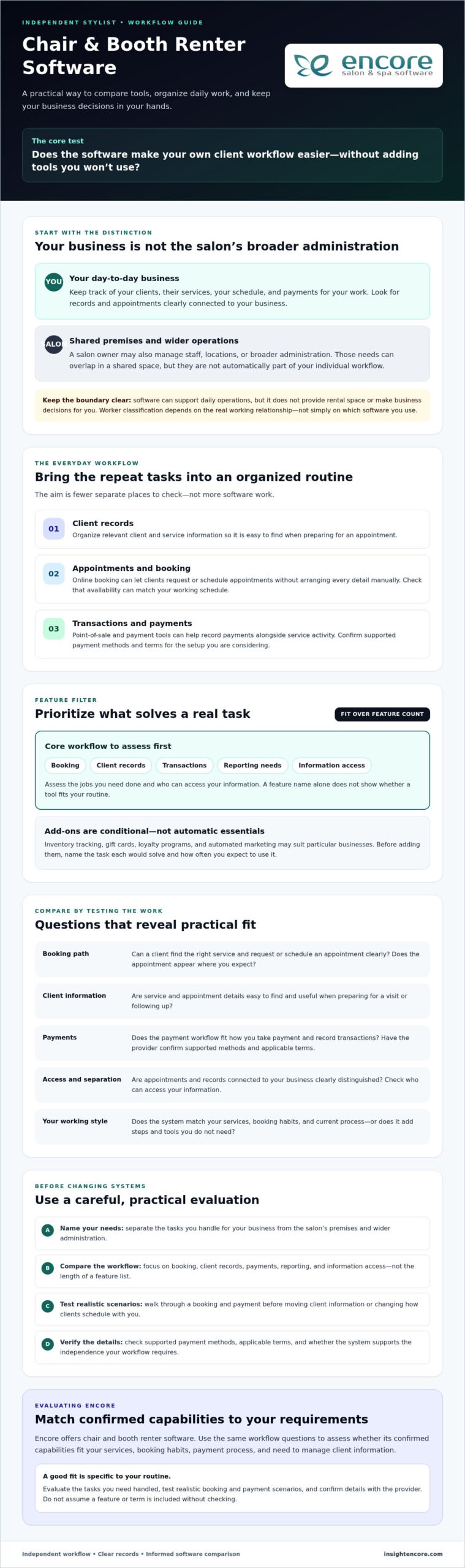
Categories
Uncategorized

Ultimate Salon Financial Forecast Template & Guide 2026

Did you know that while the beauty industry is worth over $92 billion, same-store growth for many salons has slowed to just 2%? It’s a sobering reality that makes every dollar count more than ever. You likely started your business to create beauty, not to spend your Sunday nights squinting at a confusing spreadsheet. It’s normal to feel a bit of anxiety when you’re deciding if you can afford a new hire or a second location. That’s why having a reliable salon financial forecasting template is so vital. It moves you away from “gut feelings” and toward a clear, data-backed strategy for your year ahead.

We understand that numbers can feel intimidating, but they don’t have to be. This guide provides a plug-and-play framework designed to wipe out cash flow uncertainty and replace it with professional confidence. You’ll learn how to build a living roadmap that accounts for everything from repeat client revenue to the latest 2026 economic shifts. We’ll show you how to automate your data tracking so you can stop worrying about manual errors and start focusing on your team. By the end of this article, you’ll have the tools to ensure your salon is sustainable, profitable, and ready for growth.

Key Takeaways

  • Shift your focus from past bookkeeping to future forecasting to identify potential cash flow dips before they happen.
  • Master the essential components of a salon financial forecasting template, including service sales, retail revenue, and the balance between fixed and variable costs.
  • Learn the step-by-step process of using your POS data to calculate average ticket prices and client frequency for a reliable 12-month roadmap.
  • Avoid expensive growth mistakes by accounting for staff turnover and setting realistic timelines for new guest acquisition.
  • Discover how Encore Salon Software removes the stress of manual data entry by generating instant reports for your financial planning.

Why Financial Forecasting is the Secret to Salon Longevity in 2026

Many salon owners mistake bookkeeping for financial planning. While bookkeeping tracks what you’ve already spent, it doesn’t tell you where you’re going. To understand what a financial forecast is, think of it as a projection of your future business health based on current trends. Using a salon financial forecasting template allows you to look forward. It helps you anticipate the slow months of 2026 before they happen. You’re no longer just recording history; you’re writing it.

A forecast acts as your business’s early warning system. With industry reports showing that same-store growth has leveled off at around 2%, you can’t afford to be reactive. If your forecast shows a potential cash flow dip in November, you have time to launch a loyalty campaign or adjust your inventory orders now. This proactive approach is what separates a thriving salon from one that’s constantly firefighting. It gives you the power to make adjustments while you still have the resources to do so.

The Emotional Benefit of Financial Clarity

Financial uncertainty is a leading cause of owner burnout. When you don’t know if you can cover rent next month, your creativity suffers. Clarity brings peace. A clear roadmap transforms you from a stressed manager into a confident leader. It also builds a professional image that matters to outside partners. If you’re looking at SBA 7(a) loans, which currently carry variable rates between 9.75% and 13.25%, lenders will want to see that you have a firm grip on your future numbers. Professionalism breeds trust.

Strategic Decision Making via Data

Data gives you the permission to grow. Instead of wondering if it’s time to hire a new stylist, your salon financial forecasting template will show you exactly when your current team will reach capacity. You can see the revenue impact of a new hire before they even start their first shift. This same logic applies to your marketing budget. You’ll know exactly how much you can spend to acquire a new guest while maintaining your margins. For more tips on protecting your bottom line, check out our guide on how to increase salon profit margin. Strategic growth isn’t about taking big risks; it’s about making informed choices.

Essential Components of a Salon Financial Forecasting Template

A salon financial forecast is a predictive model of cash inflows and outflows over a specific period. To build a resilient business, your salon financial forecasting template must go beyond simple estimates. It needs to reflect the reality of your daily operations. This means breaking your business down into manageable categories that show exactly where your money goes. You can’t plan for growth if you don’t know your starting point.

Revenue isn’t just about how many haircuts you perform. It includes retail product sales, which often carry higher profit margins, and gift card breakage. When you create a prospective financial outlook, you’re looking at the total potential of your brand. It’s about seeing the big picture of how different income streams work together to support your goals.

Costs usually fall into two buckets. Fixed costs like rent and insurance stay the same regardless of your volume. Variable costs, such as color backbar and stylist commissions, change based on how busy you are. Staffing costs remain the biggest lever in your financial model. Managing these properly is the difference between a profitable month and a stressful one. You also need to plan for capital expenditures. These are the larger investments, like new styling chairs or a front desk renovation, that keep your space competitive and fresh.

Predicting Revenue Beyond Service Sales

Service sales drive the schedule, but retail-to-service ratios drive the profit. A healthy salon often aims for retail to make up 10% to 20% of total revenue. Your forecast should also account for seasonal fluctuations, such as the “January dip” when client spending naturally cools after the holidays. Don’t overlook the impact of gift cards on your future cash flow. While they provide immediate cash, they represent a liability for future services that you must track carefully in your model.

Understanding Your True Operating Costs

Hidden costs can quietly erode your margins. Credit card processing fees and software subscriptions often go unexamined but add up quickly over a year. If you want to stop these fees from silently draining your profits, our guide on how to reduce credit card processing fees for small business breaks down exactly where the money goes and how to reclaim it. Treat your backbar inventory as a variable expense that scales with your service volume. If your color usage spikes, your revenue should too. For a deeper dive into balancing these numbers, read our guide on salon cash flow management. If you want to see these numbers in real-time without the manual math, you can explore our reporting tools to simplify your planning.

Step-by-Step: How to Forecast Salon Revenue and Expenses

Creating a salon financial forecasting template isn’t just about guessing. It’s about building a model based on what actually happens in your chairs. You need to follow a logical path to ensure your projections are grounded in reality. This process turns your messy data into a clear vision for the future of your business.

Start by gathering historical data from your POS system. Look at your performance from the last 12 months to find your baseline. This tells you your average ticket price and how often your clients return. If you’re following the SBA’s guide to financial projections, you know that historical accuracy is the foundation of any reliable outlook. Next, factor in your staff utilization. A chair that sits empty for half the day isn’t earning its keep. Layer in any planned price increases or upcoming marketing campaigns. These variables can significantly shift your revenue curve.

Finally, stress-test your model. Create a “worst-case” scenario where new guest acquisition drops by 10%, which was a common industry trend in late 2026. Knowing you can survive a dip gives you the confidence to push for the “best-case” results. It’s better to be prepared for a storm than to be surprised by one. To ensure your studio is truly ready for what’s ahead, it’s worth running through a comprehensive salon business health checklist that audits your financial, operational, and cultural vitality alongside your forecast.

The Role of Staff Utilization in Revenue

Your forecast will fail if you don’t track stylist performance. You need to calculate the revenue per hour for every chair in your salon. This metric reveals whether you’re truly at capacity or if you just have a scheduling bottleneck. If you aren’t sure where to start, check out our guide on how to calculate salon staff utilization rate. High utilization leads to higher profit margins without adding more overhead. It’s the most effective way to grow your income without expanding your footprint.

Projecting Retail and Upsell Growth

Retail isn’t just an extra on the side; it’s a core revenue driver. Set realistic benchmarks for your team based on their historical performance. Use your salon financial forecasting template to see how even a small 5% increase in retail sales impacts your year-end profit. Automated marketing tools can help here by sending rebooking reminders and personalized product offers. These systems boost your rebooking rates, making your future revenue more predictable and less reliant on finding new guests every month. Use your historical data to predict peak demand periods so you can stock up on inventory before the rush starts.

Ultimate Salon Financial Forecast Template & Guide 2026

Common Forecasting Mistakes and How to Avoid Them

Many owners feel a surge of relief once they first fill out a salon financial forecasting template. It feels like the hard part is over. However, the real value of a forecast lies in the accuracy of your assumptions. It’s easy to fall into traps that make your roadmap unreliable. One of the most frequent errors is overestimating how quickly you can acquire new clients. Industry data from 2026 shows that new guest visits declined by 10% across the board. If your model assumes a constant stream of new faces without a heavy marketing spend, your revenue projections will be inflated.

You also can’t ignore the impact of staff turnover. When a stylist leaves, they often take a portion of their clientele with them. This creates a massive revenue hole that can take months to fill with new hires. Additionally, many owners underestimate the “cost of goods” as they get busier. As your service volume increases, your backbar expenses and laundry costs scale right along with it. If you don’t account for this, your profit margin will shrink even as your total sales grow. Finally, a forecast is only useful if you update it. Failing to compare your actual results against your projections makes the whole exercise a waste of time.

The Danger of “Optimism Bias”

Everyone wants to be positive about their business, but your budget needs to be grounded in reality. Always include a 10% buffer for expenses in your salon financial forecasting template. Unexpected costs, like a broken HVAC system or a faulty water heater, can derail your cash flow if you aren’t prepared. Use real benchmarks to validate your goals. For example, a well-managed salon typically sees a profit margin between 8% and 15%. If your model predicts a 40% margin, it’s time to double-check your math and your assumptions.

Static vs. Rolling Forecasts

A yearly budget often feels irrelevant by February. The market moves too fast for static planning. Instead, adopt a 3-month rolling forecast. This allows you to stay agile and adjust your spending based on the previous quarter’s actual performance. By integrating real-time credit card processing data, you can see exactly how much cash is hitting your bank account every day. This clean data ensures your projections stay accurate and useful all year long, helping you make better decisions for your team’s future.

Get started with Encore to automate your data tracking today

Automating Your Forecast with Encore Salon Software

A manual salon financial forecasting template is a fantastic starting point, but the real magic happens when you stop typing and start leading. Manual data entry is the primary source of errors that lead to “messy spreadsheet” anxiety. Encore Salon Software eliminates this hurdle by connecting your POS and inventory management directly to your financial planning. Every service performed and every bottle of retail product sold flows into your records automatically. This shift moves you from a state of constant stress to a feeling of organized control.

Generic accounting tools often fall short because they don’t speak the language of beauty and wellness. They don’t understand the nuances of color waste or the complexities of tracking chair and booth renter financials in one unified platform. We’ve spent 35 years refining our tools to handle these specific industry hurdles. We aren’t just a distant service provider; we’re a supportive partner. Our human-centric approach ensures you have the reliability you need to master your numbers without feeling intimidated by the technology.

From Data to Insight: Encore’s Reporting Suite

Visualizing your business health should only take a few clicks, not a few hours. Encore allows you to generate instant performance reports that feed directly into your salon financial forecasting template. You can customize these reports for specialized environments, including tattoo studios, nail salons, or spas. This level of detail helps you see exactly which services are driving your profit and where your costs might be creeping up. You can explore the full range of Encore Salon Software features to see how we turn raw data into actionable insights for your growth.

Ready to Take Control of Your Numbers?

Predictable revenue is the foundation of a sustainable business. Our automated marketing and loyalty programs contribute to this by increasing client retention and boosting rebooking rates. When your revenue is predictable, your forecast becomes a powerful tool for expansion rather than just a way to track expenses. You’ll have the data-backed confidence to hire new stylists or invest in a renovation. We’re eager to help you reach that next level of success. If you’re ready to see how our system can transform your planning, contact our team for a personalized walkthrough of our platform today.

Build a Business That Lasts

Mastering your numbers is the most empowering thing you can do for your salon. It transforms daily financial anxiety into a clear, actionable roadmap for growth. By implementing a salon financial forecasting template, you’ve taken the first step toward true business sustainability. You’re no longer just reacting to your bank balance; you’re designing your future with data-backed confidence.

We’ve been a dedicated partner to salon owners since 1991, offering 35 years of industry expertise. Our all-in-one platform covers everything from POS to payroll, ensuring your data is always clean and ready for analysis. Whether you run a high-volume barbershop or a specialized wellness studio, we provide the human-centric tools you need to succeed. You’ve built something beautiful, and now it’s time to ensure it thrives for years to come.

See how Encore Salon Software automates your financial reporting—Book a Demo Today!

Your passion for your craft deserves a business that is as resilient as it is creative. Take the leap today and replace uncertainty with organized control. We’re here to guide you every step of the way toward the successful future you deserve.

Frequently Asked Questions

What is the difference between a salon budget and a financial forecast?

A budget is a spending plan that sets limits on your expenses; a financial forecast is a prediction of where your business is actually headed. While a budget is often static, a forecast uses current trends to show future outcomes. Using a salon financial forecasting template helps you bridge this gap. It allows you to see the real-world impact of your current bookings on next month’s bank balance.

How often should I update my salon financial forecasting template?

You should update your salon financial forecasting template at least once a month. This practice, known as a rolling forecast, ensures your projections stay relevant as market conditions change. If same-store growth stalls or new guest acquisition dips, a monthly update allows you to catch these trends early. Regular reviews transform your forecast from a static document into a living roadmap that guides your daily business decisions.

Do I need expensive software to start forecasting for my salon?

You don’t need expensive software to begin, but manual spreadsheets often lead to data entry errors. While a basic template is a great starting point, specialized tools like Encore Salon Software automate the process. Our platform pulls data directly from your POS and inventory records to feed your projections. This saves you hours of manual work and provides the professional confidence you need to make big expansion decisions.

How do I account for booth renters in my financial projections?

Booth renters should be projected as a steady stream of fixed rental income rather than variable service revenue. Unlike commission stylists, their contribution doesn’t fluctuate with service volume. Encore offers specialized modules for chair and booth renters to keep these financials separate and clear. This ensures your projections accurately reflect your overhead coverage without confusing your personal service sales with your rental income.

What is a realistic profit margin for a hair salon in 2026?

A realistic profit margin for a well-managed hair salon in 2026 typically falls between 8% and 15%. While your total revenue might be high, your net profit depends on how effectively you manage variable costs like backbar supplies and commissions. Monitoring your margin through a forecast helps you identify if costs are creeping up. This allows you to adjust your pricing or inventory management before your bottom line suffers.

Can I use a general accounting tool like QuickBooks for salon forecasting?

General tools like QuickBooks are excellent for bookkeeping and tax compliance, but they often lack the industry-specific depth needed for salon forecasting. They don’t naturally track metrics like stylist utilization or retail-to-service ratios. Encore is designed specifically for wellness businesses, offering integrated reporting that understands the nuances of your daily operations. This specialized focus provides a much clearer picture of your business health than generic accounting software can.

How do I factor in seasonal trends like the holiday rush?

Factoring in seasonal trends requires looking at your historical POS data to identify recurring patterns. Most salons experience a significant revenue peak in December followed by a natural cooling in January. Your forecast should adjust for these fluctuations by lowering revenue expectations during slow months and increasing them during high-demand periods. This ensures you have enough cash reserved from the busy season to comfortably cover your fixed costs during the dips.

What should I do if my actual numbers are significantly lower than my forecast?

If your actual numbers fall short, use the gap to identify exactly where the leakage is happening. Check if your new guest acquisition has dropped or if your staff turnover has increased. A forecast acts as an early warning system, giving you time to respond. You might launch an automated loyalty program or a targeted marketing campaign to boost rebooking rates and get your revenue back on track.

Disclaimer

This article is general in nature and may contain errors, please verify all claims with your sales rep

Categories
Uncategorized

Salon Cash Flow Management: 2026 Financial Guide

With the U.S. salon industry projected to generate $48 billion in revenue in 2026, why does it feel like your bank account is often running on empty? It’s a common frustration to see every chair full yet still worry about covering the next lease payment. You aren’t alone in feeling the sting of unpredictable slow seasons or the headache of tying up too much capital in retail stock that just won’t move. Learning how to manage salon cash flow effectively is the vital shift that transforms a talented artist into a confident, relaxed business owner.

We understand that you started this journey to create beauty, not to spend your weekends buried in complex spreadsheets. It’s exhausting to manually calculate staff commissions or wonder exactly where your profit disappeared. This guide is your roadmap to financial clarity. We will provide a step-by-step framework to stabilize your monthly income and automate the “math” that currently causes so much stress. You’re about to discover how to gain a clear understanding of your finances and ensure your business thrives in 2026 with systems that work as hard as you do.

Key Takeaways

  • Understand why a fully booked calendar doesn’t always mean a healthy bank account by mastering the difference between profit and real-time cash flow.
  • Stop “leaky” finances by categorizing fixed and variable expenses and implementing a simple daily reconciliation routine that keeps you in control.
  • Unlock “frozen cash” by optimizing your inventory levels and aligning staff schedules with your most productive hours to reduce unnecessary overhead.
  • Follow a proven five-step method on how to manage salon cash flow effectively by using historical data to project future revenue with confidence.
  • Learn how automated tools like Encore Salon Software handle complex math and data tracking for you, letting you focus on your clients instead of spreadsheets.

Profit vs. Cash Flow: Why Your Salon Can Be Busy but Broke

It’s a frustrating paradox. Your stylists are booked solid and you might even hit the industry average revenue of $245,000. Yet, when you look at your bank balance on Friday, there’s barely enough to cover the rent. This is the “Busy but Broke” trap. It happens because profit is just a theoretical number on paper, while cash flow is the cold, hard reality of your bank account. To understand what cash flow is, you have to look at the timing of every transaction. Profit tells you what you earned after expenses, but cash flow tracks exactly when that money arrives and when it leaves.

In a salon, managing this is uniquely complex. You’re balancing service revenue, which is immediate, with retail stock that might sit on a shelf for months. With labor costs typically eating up 45% to 55% of your gross revenue, there is very little room for error. You have to track three main types of movement:

  • Operating Cash Flow: The daily money from haircuts, colors, and product sales.
  • Investing Cash Flow: Money spent on long-term assets, like new salon chairs or high-end equipment.
  • Financing Cash Flow: Cash used for loans or business debt.

Learning how to manage salon cash flow effectively starts with recognizing that timing is everything. If your expenses hit on the 1st but your big color appointments aren’t until the 15th, you have a cash flow problem, even if you are profitable by the end of the month.

Common Cash Flow Killers in the Beauty Industry

Small leaks can sink a big ship. Last-minute cancellations and no-shows are the most immediate thieves. They don’t just cost you a service fee; they leave a stylist idle while your fixed costs, like electricity and rent, keep ticking. Then there’s the “January Slump.” If you haven’t built a reserve during the busy holiday season, a 20% dip in bookings can feel like a crisis. Finally, watch your petty cash. Those emergency trips to the store for extra towels or coffee pods add up quickly if they aren’t tracked daily.

The Role of Visibility in Financial Peace of Mind

You can’t fix what you can’t see. Many owners wait for a quarterly report from their accountant, but that’s like looking in the rearview mirror while driving. By the time you see a problem, it’s three months old. Real-time data gives you the power to make decisions today. Instead of relying on a gut feeling that the salon is doing well, you need to know your exact totals every evening. Automation is the key. It removes human error from daily tallies and ensures that your commission math is perfect. When you use integrated management features, the stress of the unknown disappears, replaced by a feeling of organized control.

Building a Foundation: Tracking Income and Expenses with Precision

Running a salon is deeply personal. Every dollar represents a client served or a product sold. To keep that money where it belongs, you need a crystal-clear map of your outflows. This starts with separating your fixed costs from your variable ones. Your fixed costs, like rent and insurance, are the anchors that stay the same every month. Variable costs, such as backbar supplies and utilities, are more fluid. Tracking these categories separately is how to manage salon cash flow effectively because it stops small, variable leaks before they become floods.

Daily reconciliation is your best defense against “leaky” cash flow. It’s tempting to wait until the end of the week, but small errors in manual entry or untracked petty cash purchases add up quickly. By spending ten minutes each evening balancing your till, you ensure your records match your bank account. This habit creates a reliable foundation for your morning check-in. A simple cash flow dashboard allows you to see your current balance and upcoming bills in just five minutes, giving you the confidence to start your day with a clear head.

Automating Revenue Tracking with POS Integration

Manual data entry is a magnet for human error. When you use integrated credit card processing, your sales data flows directly into your management system without you lifting a finger. This automation captures every detail, including digital tips and service add-ons that might otherwise slip through the cracks. It also speeds up fund availability. Instead of waiting days for transactions to clear, integrated systems often provide faster access to your cash, which is vital for meeting immediate payroll needs.

Managing Outflows: The ‘Envelope Method’ for the Digital Age

The “Envelope Method” isn’t just for physical cash; it’s a powerful digital strategy too. By allocating specific percentages of your daily revenue to separate “envelopes” or accounts, you ensure you’re never scrambling for tax or payroll money. For example, you might set aside 15 percent for taxes and 50 percent for labor costs immediately. This proactive approach allows you to implement strategies to strengthen your financial stability during the quieter seasons.

Modern software can even flag your account when variable expenses, like your monthly color order, exceed your set budget. There is a massive psychological benefit to seeing “saved” cash sitting in a dedicated account for future bills. It replaces the panic of the unknown with a sense of organized control. If you’re ready to see how simple this tracking can be, you can explore our all-in-one management tools today.

Optimizing Your Two Largest Outflows: Inventory and Labor

Inventory and labor are the two heaviest weights on your balance sheet. If they aren’t balanced perfectly, they can pull your entire business down. Many owners see a shelf full of products and feel a sense of security, but that’s a mistake. Think of your backbar and retail shelves as “frozen cash.” Every bottle sitting there is money that isn’t available to pay your team or your rent. Understanding the relationship between these two expenses is the next step in learning how to manage salon cash flow effectively.

Labor is your highest expense, typically accounting for 45% to 55% of gross revenue in 2026. If you have three stylists standing around during a Tuesday morning dead zone, you’re paying to keep the lights on for no return. This is especially critical for specialized businesses like tattoo studios or booth rental spaces. These “mini-cash flows” require precision to ensure the house stays profitable while the artists thrive. Commission structures also impact your weekly cash availability. If you pay out commissions before your credit card deposits fully clear, you create a temporary cash crunch that can be avoided with better timing.

Smart Inventory Management: Freeing Up Your Capital

Stop guessing what you need to order. You can implement “Par Levels” to trigger orders only when you hit a specific minimum. This ensures you aren’t overbuying “Dust-Gatherers,” which are products that haven’t moved in 90 days. When you use Encore’s inventory management, this process becomes automatic. The system tracks every ounce used in the backbar and every bottle sold at retail, keeping your capital fluid instead of trapped on a shelf.

Aligning Staff Performance with Financial Health

A busy salon isn’t always a productive one. You need to track your salon staff utilization rate to see if your team’s time is being used efficiently. If utilization is low, it’s time to adjust your scheduling or focus on automated marketing to fill those gaps. Automated commission calculations also prevent “human error” overages that can quietly drain your accounts. By incentivizing your staff to focus on high-margin services like color corrections or scalp treatments, you increase the amount of cash staying in the business after labor costs are paid.

Salon Cash Flow Management: 2026 Financial Guide

The 5-Step 2026 Salon Cash Flow Forecasting Method

Forecasting is your financial weather report. It tells you when to carry an umbrella and when to soak up the sun. If you’re tired of being surprised by a low bank balance, learning how to manage salon cash flow effectively requires a proactive look at the months ahead. This isn’t about being a math genius; it’s about using your existing data to make informed decisions. This 5-step method for 2026 simplifies the process so you can plan with total confidence. To take your planning even further, a dedicated salon financial forecasting template can give you a plug-and-play framework that moves you from gut feelings to a clear, data-backed strategy for the year ahead.

  • Step 1: Gather 12 months of historical data. This shows you the natural rhythm and seasonal cycles of your business.
  • Step 2: Project future revenue. Use your current booking trends and staff levels to estimate what’s coming in the next quarter.
  • Step 3: List known upcoming expenses. Include everything from license renewals to planned equipment upgrades and lease increases.
  • Step 4: Factor in seasonal peaks and valleys. Plan for the holiday rush and the January slump at the same time.
  • Step 5: Adjust your strategy. This is where you decide how to manage salon cash flow effectively by cutting unnecessary costs or launching a new marketing campaign.

Projecting Revenue in a Subscription and Service Economy

The beauty industry is leaning heavily into recurring revenue models. If you offer memberships, include that guaranteed income in your projections. It’s also helpful to estimate the lifetime value of a new client. A one-time visitor is a win, but a client who returns every six weeks is a financial pillar for your business. Don’t forget about gift card sales. These are fantastic immediate cash injections that can help bridge a gap during a slow week. Just remember to track these as liabilities so you’re ready when the client returns to redeem them later in the year.

Building the ‘Peace of Mind’ Cash Reserve

Every salon owner deserves to sleep soundly at night. We recommend following the “Rule of Three” as a core part of your financial strategy. Your goal is to have three months of operating expenses sitting in a separate business savings account. You don’t need to find this money all at once. Build this reserve incrementally by setting aside a small percentage of your weekly profit, perhaps just 2 or 3 percent. This habit ensures your business remains stable without hurting your daily operations or your ability to pay your team. This emergency fund is your shield against the unexpected, like a sudden equipment failure or a change in local regulations. Having this cushion allows you to lead your team with a sense of calm and control. Pairing this reserve-building habit with a thorough salon business health checklist gives you a complete picture of your studio’s financial and operational readiness for the year ahead.

Start your financial transformation today

Leveraging Encore Salon Software to Automate Your Success

You didn’t open your doors to become a full-time bookkeeper. You’re an artist, a mentor, and a leader. While the financial framework we’ve discussed is vital, you shouldn’t have to spend your Sunday nights manually entering data into a spreadsheet. This is where Encore acts as your friendly mentor, handling the heavy lifting of data tracking so you can stay focused on your team and your clients. Shifting your focus to how to manage salon cash flow effectively through automation is the single most impactful change you can make for your business in 2026.

One of the biggest mistakes owners make is “Frankenstein-ing” their business by using five different apps that don’t talk to each other. When your booking system, inventory tracker, and credit card processor all live under one roof, you eliminate the data gaps that lead to financial surprises. For specialized businesses like tattoo studios or niche wellness centers, this level of integration is even more critical. You need a system that understands the specific nuances of your craft, from tracking booth rental fees to managing high-ticket service deposits.

Integrated Tools That Drive Immediate Inflows

Waiting for money to arrive is the hardest part of the “Busy but Broke” cycle. Encore helps you break that cycle with tools designed to secure your income before the client even walks in. By setting automated deposit requirements for high-ticket services like extensions or complex color work, you protect your time and your cash. If your calendar shows a gap, you can use built-in marketing automation to send targeted offers to your most loyal clients, filling those empty chairs instantly. Best of all, our simplified financial reporting translates complex numbers into clear, actionable insights that you can actually understand at a glance.

Taking the Next Step Toward Financial Freedom

Upgrading your management system is about more than just better math; it’s an investment in your mental health. The constant low-level stress of “not knowing” is what leads to burnout. Transitioning from a state of surviving to thriving requires the visibility that only professional software can provide. You don’t have to be an accountant to run a highly profitable business. You just need the right partner to handle the details. Encore is the ultimate answer to how to manage salon cash flow effectively without the daily headache of manual tracking.

Explore Encore Salon Software features

Transforming Your Financial Future

Mastering the art of financial management is the bridge between being a busy stylist and becoming a thriving business owner. You’ve learned that profit on paper doesn’t always match the cash in your hand, and that visibility is your greatest tool for stability. By optimizing your inventory and aligning your labor costs with actual productivity, you’re already ahead of the curve. Learning how to manage salon cash flow effectively is a journey that replaces daily stress with organized control.

Since 1991, we’ve helped salons, spas, and tattoo studios across the globe simplify their operations. Our all-in-one management platform handles the complex data lifting, from integrated inventory tracking to automated payroll calculations. You don’t have to navigate these financial hurdles alone. With the right systems in place, you can focus on the creative work you love while your business grows with confidence.

Take Control of Your Salon's Finances with Encore Salon Software

Your path to a predictable monthly income and a thriving salon starts today. We’re here to guide you every step of the way toward the financial freedom you deserve. You’ve got the talent; now you have the framework to match it.

Frequently Asked Questions

What is the difference between profit and cash flow in a salon?

Profit is the surplus left over after all expenses are subtracted on paper, while cash flow is the actual timing of money entering and leaving your bank account. A salon can be profitable but still run out of cash if bills are due before client payments arrive. Understanding this distinction is key to learning how to manage salon cash flow effectively. It ensures you have liquid funds for daily operations regardless of your paper revenue.

How much cash reserve should a small salon ideally have?

A small salon should ideally aim for a cash reserve that covers at least three months of operating expenses. This “Rule of Three” provides a safety net for unexpected equipment repairs, sudden staff turnover, or seasonal dips. You can build this fund incrementally by setting aside a small percentage of your weekly intake. Having this cushion allows you to make calm, strategic decisions rather than reacting out of financial panic during a slow week.

Can salon software really help me save money on credit card fees?

Yes, integrated credit card processing can often reduce your total costs by eliminating the need for separate third-party hardware and reducing manual entry errors. While specific fees vary by provider, integrated systems streamline your reporting and speed up fund availability. This improved efficiency means your money reaches your bank account faster, which is a vital part of how to manage salon cash flow effectively and maintain steady business operations.

How often should I check my salon’s cash flow statement?

You should perform a quick five-minute check of your daily totals every evening and a more detailed review of your cash flow statement once a week. Daily reconciliation prevents small errors from ballooning into large discrepancies. The weekly review allows you to spot trends, such as rising backbar costs or underperforming shifts, before they impact your ability to pay upcoming bills like rent or payroll.

What are the biggest ‘hidden’ expenses in a spa or salon?

The biggest hidden expenses often include backbar waste, untracked petty cash spending, and credit card processing fees. Small, frequent purchases for salon supplies like coffee, towels, or cleaning products can quietly drain your profits if they aren’t logged. Additionally, “frozen cash” tied up in overstocked retail inventory that hasn’t moved in 90 days acts as a major hidden drain on your liquid capital and prevents you from investing in growth.

How do I handle cash flow if I’m a solo chair renter?

Solo chair renters should treat their business like a mini-salon by using specialized Chair/Booth Renter Software to track their individual inflows and outflows. You need to separate your personal and business finances strictly and set aside a fixed percentage of every service for taxes and rent immediately. This disciplined approach ensures you always have the funds ready for your overhead, even if your booking schedule varies from week to week.

What should I do if my salon’s cash flow becomes negative?

If your cash flow becomes negative, the first step is to identify where the money is “leaking” by reviewing your variable expenses. You may need to temporarily reduce inventory orders, adjust staff schedules to match peak hours, or offer high-margin service specials to drive immediate revenue. Focus on collecting deposits for high-ticket services to inject cash into the business quickly. Analyzing your data helps you determine if the issue is a temporary dip or a structural problem.

How can I improve cash flow during the slow post-holiday months?

To improve cash flow during slow periods, use automated marketing to fill empty chairs with loyal clients who haven’t visited recently. You can also promote gift card redemptions or launch specialized membership programs to create recurring, predictable income. Focusing on high-margin treatments, such as scalp treatments or deep conditioning, can increase the average ticket price without significantly increasing your product costs or labor time during these quieter weeks.

Disclaimer

This article is general in nature and may contain errors, please verify all claims with your sales rep
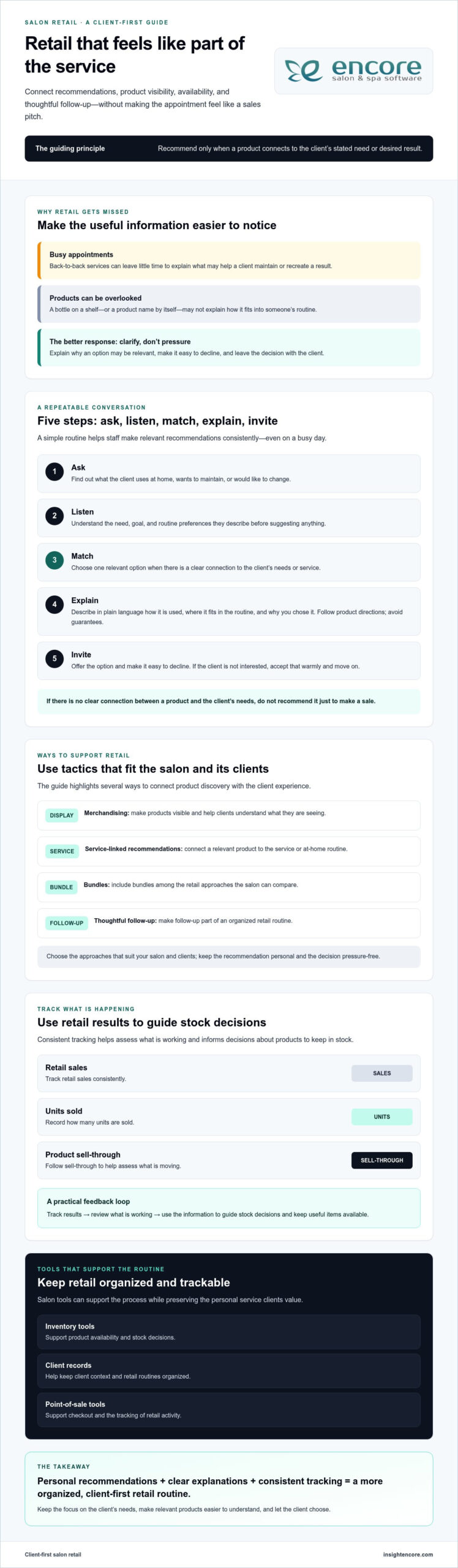
Categories
Uncategorized

How to Increase Salon Profit Margin: The 2026 Operational Checklist

What if the reason your bank account feels empty isn’t a lack of clients, but a series of invisible leaks in your daily operations? It’s a frustrating reality for many owners in 2026. You see a packed appointment book, yet rising labor costs, high no-show rates, and product waste keep your actual take-home pay stagnant. We understand how exhausting it feels to work this hard without seeing the financial reward you deserve. To truly master how to increase salon profit margin, you need to move beyond simple revenue growth and start plugging those operational gaps.

We’re here to help you shift from being busy to being profitable. You’ll discover how to identify which services are actually making you money and how to stop the backbar bleed of wasted supplies. We’ll also look at how automating those tedious, time-consuming tasks can drastically lower your labor expenses. This guide provides a comprehensive operational checklist designed to protect your bottom line and give you back your peace of mind. By the end, you’ll have a clear roadmap to turn your salon into a high-efficiency, high-profit business.

Key Takeaways

  • Understand the difference between gross and net profit margins to set realistic 2026 targets for your specific business model.
  • Identify and stop “invisible” profit leaks like backbar over-pouring that quietly erode your bottom line.
  • Discover how to increase salon profit margin by auditing your service menu to prioritize high-margin treatments over high-effort tasks.
  • Reclaim hours of administrative time and reduce labor costs by automating your booking and marketing workflows.
  • Establish a sustainable profit culture by tracking the specific weekly metrics that move the needle on your financial growth.

Understanding Salon Profit Margins: 2026 Benchmarks

Many owners focus on the wrong number. They see a busy shop and assume success. But revenue just tells you how much money passed through your hands. Profit tells you how much stayed there. Profit margin is the percentage of revenue remaining after all operating costs are paid. In our current economic climate, “revenue is vanity, profit is sanity.” You can have a million-dollar salon and still struggle if your margins are thin. Learning how to increase salon profit margin starts with a clear-eyed look at your current health.

There are two levels to watch. Gross margin measures the efficiency of a specific service. It subtracts the cost of the stylist and the product from the ticket price. Net profit margin is the big picture. It’s the final amount left after you’ve paid the landlord, the tax man, and the electric bill. If you don’t know the difference, you might be busy doing work that actually costs you money.

The Net Profit Formula for Salon Owners

Calculating your profit doesn’t require a degree in finance. Use this simple formula: (Total Revenue – Total Expenses) / Total Revenue. This gives you a percentage that represents your business efficiency. To get an accurate number, you must categorize your spending correctly. Fixed costs stay the same regardless of how many clients you see. This includes your rent, insurance, and utilities. Variable costs move with your volume. These include backbar products, retail inventory, and commissions.

In 2026, three specific “margin killers” are draining bank accounts. Labor costs are rising as the competition for top talent increases. Software bloat is a sneaky second; paying for multiple disconnected apps for booking, marketing, and inventory adds up fast. Finally, product inflation means your color lines and shampoos likely cost significantly more than they did two years ago. Identifying these leaks is the first step toward fixing them. Learning how to manage salon cash flow effectively alongside your margin strategy ensures that the money you save from plugging leaks actually stays in your account.

Margin Benchmarks by Business Model

Profitability looks different depending on how you run your shop. Traditional commission-based hair salons usually aim for a 10-15% net margin. Med spas often see higher margins due to equipment-led services, though their insurance and compliance costs are much steeper. Tattoo and nail studios vary wildly based on talent, but they generally fall within the 12-18% range.

If you manage a booth rental model, your margins might look higher, often 20-30%. This is because your overhead is lower, but remember that the responsibility for marketing and growth shifts to the individual renter. Using Encore Salon Software helps you track these specific benchmarks in real-time. Instead of waiting for your accountant to deliver bad news, you can see exactly where you stand every Monday morning. Understanding these numbers gives you the professional confidence to make necessary changes before a small leak becomes a flood. Pairing this real-time visibility with a salon financial forecasting template allows you to project future performance and plan proactively rather than reacting to surprises.

Identifying and Plugging Salon “Profit Leaks”

Revenue growth is exciting, but it’s often a mask for internal inefficiencies. If your salon is a bucket, you can’t fill it if the bottom is full of holes. Small losses compound. Identifying where your money disappears daily is the most practical way to understand how to increase salon profit margin. These “profit leaks” are often invisible until you start looking for them. From the backbar to the front desk, tiny drains on your resources turn into a significant financial deficit by the end of the year.

Consider your backbar first. Many stylists over-pour color or use twice as much shampoo as a service requires. This invisible waste typically eats 3-5% of your gross margin. It might seem like a few cents per service, but it adds up to hundreds of dollars in literal trash every month. The Invisible Waste Checklist includes:

  • Backbar over-pouring in color and chemical services.
  • Retail shrinkage from unrecorded sales or theft.
  • Expired inventory taking up valuable shelf space.
  • Staff downtime due to poor scheduling or late arrivals.

Staff downtime is a particularly silent killer. If your therapists have a 50% utilization rate, you’re paying for an hour of labor but only generating revenue for 30 minutes. This is a financial emergency. It demands an immediate shift in how you manage your team’s time and schedule. Whether you run a hair salon or a barbershop, the principles of tight scheduling and operational accountability are universal — the barbershop management tips for new owners in our 2026 success guide offer a practical framework for building that discipline from day one.

Inventory Control and Backbar Management

Protecting your supplies requires more than just a locked cabinet. You need a robust inventory management system to track exactly what’s being used versus what’s being sold. Implementing a weigh-and-track policy for chemical services is a game-changer. By weighing color bowls before and after application, you eliminate the guesswork that leads to over-pouring. This level of transparency also reduces “shrinkage” and ensures you aren’t holding onto expired products that represent dead capital on your shelves. You’ll stop paying for product that never reaches a client’s hair.

Eliminating the No-Show Margin Drain

A no-show is more than just a missed appointment. It represents a 100% loss of revenue for that time slot while your fixed costs remain unchanged. This is a primary factor when considering how to increase salon profit margin. In 2026, relying on hope is not a business strategy. Automated appointment reminders are essential for keeping your calendar full. They respect the client’s time and protect your therapists’ productivity. You might also consider the psychology of deposits. A small booking fee, even $20, creates a commitment that significantly lowers no-show rates. If you’re ready to secure your schedule, you can explore how automated tools protect your time.

High-Margin Service Engineering & Retail Strategy

Not all services are created equal. Some treatments fill your chair but drain your resources; others take minutes and carry massive margins. To master how to increase salon profit margin, you must audit your menu with clinical precision. Identify your “Stars” and your “Dogs.” Stars are high-margin services that are easy to perform. Dogs are low-margin tasks that require heavy effort or expensive supplies. If a service takes three hours but barely covers the stylist’s commission and product costs, it might be time to let it go.

The secret to immediate growth often lies in the “Add-on.” These are 5-minute treatments, like deep conditioning masks or scalp massages, that provide up to 90% profit margins. They require almost no extra labor but significantly increase the average ticket price. When you engineer your menu to encourage these small wins, your daily profitability climbs without adding more hours to the schedule. It’s about working smarter, not just filling more slots.

Cash flow is the lifeblood of your business. Developing a proactive gift card strategy is one of the fastest ways to improve immediate liquidity. Gift cards provide upfront revenue and often lead to new client acquisitions. They also tend to result in higher spending per visit, as clients feel like they’re “treating” themselves with “free” money. This simple shift in focus helps stabilize your bank account during slower months. Pairing this approach with a solid understanding of salon cash flow management ensures that seasonal revenue spikes are planned for and protected rather than spent impulsively.

Menu Engineering for Maximum Profit

Start by calculating the “Cost per Minute” for every stylist in your building. Factor in their wages, the utilities used during their shift, and the average cost of backbar supplies. If a service doesn’t clear this baseline with a healthy buffer, it’s a liability. Specialized software for nail salons or hair studios can help you track specific art-supply or color costs with total accuracy. You can’t fix what you don’t measure. Dropping services with a low return on investment frees up time for more profitable bookings.

The 20% Retail Rule

Retail should account for at least 20% of your total revenue. This is pure margin that doesn’t require additional chair time. The key is training your staff to view retail as “prescribing” rather than “selling.” If a client leaves without the right products, they can’t maintain the look you’ve created. It’s a service to their hair, not a sales pitch. Link retail sales to your commission structures. When your team sees how retail growth boosts their own paychecks, they’ll become your most vocal advocates for profit growth. This creates a win-win culture where everyone is invested in the salon’s financial health.

How to Increase Salon Profit Margin: The 2026 Operational Checklist

Operational Efficiency: Automation as a Margin Protector

Labor is often the single largest expense on your profit and loss statement. If you’re paying a receptionist to answer phones and manage a paper book, you’re missing a massive opportunity to protect your bottom line. Automation isn’t about replacing the human touch; it’s about removing the manual friction that eats your time. Implementing an online booking module can save your team 10 or more hours of administrative labor every week. That’s time they could spend on the floor or assisting clients, directly impacting how to increase salon profit margin through reduced overhead.

Beyond the front desk, automated marketing acts as a silent salesperson. Instead of manual outreach, your system identifies gaps in the calendar and sends personalized offers to clients who are due for a visit. This fills empty chairs without requiring a single minute of staff time. Additionally, moving toward a “paperless” model in 2026 reduces physical overhead. You save on the cost of supplies, storage, and the inevitable time lost searching for misplaced client files. Every minute saved is a cent earned back for your business.

Integrated payments also play a critical role in efficiency. When your POS and booking system talk to each other, you reduce human errors during checkout. This ensures you’re capturing every dollar and managing credit card processing fees effectively. It’s a professional, seamless experience that builds trust with your clients while protecting your revenue. As you digitize more of your operations, following salon client data security best practices becomes equally important to ensure that the personal and payment information flowing through your integrated systems stays fully protected.

Streamline your salon operations today

Optimizing Staff Utilization Rates

Staff utilization is the percentage of available hours actually spent in a billable service. If your team is only billable 50% of the time, your margins are in danger. You can use a performance dashboard to spot these schedule gaps before they become a problem. Once you see a pattern of downtime, you can deploy “last-minute” automated marketing campaigns to fill those empty slots. This turns wasted time into profitable appointments with minimal effort.

Streamlining the Checkout Process

A slow, clunky checkout process leads to missed retail opportunities. If a client has to wait five minutes to pay, they won’t want to browse your product shelves. Integrated POS systems are especially beneficial for tattoo studios and barber shops where quick, accurate transactions are essential. These systems automate commission and tip calculations, removing the risk of “human error” that can lead to overpaying or frustrating your staff. A fast checkout keeps the client happy and ensures your financial data is always precise.

Building a Sustainable Profit Culture with Encore

Transitioning from a busy salon to a profitable one requires a fundamental shift in your daily mindset. You’ve likely spent years focusing on filling chairs, but now it’s time to focus on what actually stays in the bank. A sustainable profit culture starts with transparency and a clear understanding of how to increase salon profit margin. This isn’t a one-time event; it’s a commitment to checking the pulse of your business every single week. Monitoring your net margin, retail-to-service ratio, and staff utilization rates allows you to make corrections before a small dip becomes a financial crisis.

Sharing these financial goals with your team doesn’t have to create friction. In fact, it often does the opposite. When you frame profitability as “business health” and “job security,” your staff becomes more invested in the results. A profitable salon can afford better education, newer equipment, and a more stable work environment. It creates a win-win scenario where everyone benefits from efficiency. While you build this culture, take a hard look at your current software stack. Many owners pay for multiple apps that overlap in features. Auditing for this waste and consolidating your tools can instantly reclaim hundreds of dollars in monthly overhead.

Data-Driven Decision Making

Using Encore Salon Software reporting removes the guesswork from your management style. You can see your true net margin at the click of a button, rather than waiting for an accountant’s end-of-year report. This data helps you identify your top-performing staff members and those who might need extra support or training. If a specific stylist has a low retail percentage, you can provide targeted coaching to help them grow. Setting specific “Margin Goals” for the next quarter gives your entire team a target to hit, turning abstract numbers into a shared mission. Complement this real-time reporting with a structured salon financial forecasting template to translate today’s data into confident projections for the months ahead.

Your 2026 Profit Growth Roadmap

Massive year-over-year gains are rarely the result of one giant change. They come from consistent, small tweaks to your operations. Use a 30-day checklist to keep yourself on track: spend the first week auditing your menu, the second week implementing backbar tracking, the third week setting up automated marketing, and the final week training your team on retail prescriptions. This methodical approach ensures you aren’t overwhelmed while making significant progress. If you’re ready to take control of your financial future, view Encore pricing and start protecting your margins today.

Take Control of Your Financial Future

Success in 2026 isn’t just about how many clients walk through your door. It’s about what stays. By plugging invisible leaks in your backbar and using automation to cut labor costs, you’ve mastered the basics of how to increase salon profit margin. These small operational shifts create the foundation for a business that truly rewards your hard work. You’ve built a beautiful brand; now it’s time to ensure it provides the financial freedom you deserve.

We’ve supported beauty professionals as a dedicated partner since 1991. Whether you need integrated credit card processing or precise inventory tracking, our specialized solutions are built for your specific niche. We’re here to help you move from feeling overwhelmed to feeling in total control of your bottom line. Our tools act as the silent partner that watches your metrics so you can focus on your craft. Protecting your clients’ personal and payment data is equally part of that commitment — reviewing the latest salon client data security best practices ensures that the trust you’ve built with every client is never put at risk.

Ready to see your true profit? Explore Encore Salon Software today.

Take that first step toward a more profitable future today. We’re ready to help you grow and thrive.

Frequently Asked Questions

What is a good profit margin for a hair salon in 2026?

A healthy net profit margin for traditional hair salons in 2026 typically falls between 10% and 15%. If you’re operating a booth rental model, you might see higher margins between 20% and 30% because your overhead is significantly lower. These benchmarks help you understand where your business stands compared to industry standards. Aiming for these numbers ensures you have enough capital to reinvest in your team and your facility’s long-term growth.

How do I calculate my salon’s net profit margin?

You can calculate your net profit margin by subtracting your total expenses from your total revenue, then dividing that result by the total revenue. This gives you a percentage that reflects your overall business efficiency. It’s essential to include every cost, from fixed rent and insurance to variable expenses like backbar supplies and commissions. Tracking this number monthly allows you to see exactly how your operational changes are impacting your actual take-home pay.

Will increasing my prices hurt my salon’s profit margin in the long run?

Increasing your prices won’t necessarily hurt your margin if you focus on delivering high-value, high-margin services. In fact, strategic price adjustments are often necessary to keep up with rising product inflation and labor costs. The key is to communicate the value to your clients and ensure your “Star” services remain profitable. If you provide a superior experience, your loyal clients will understand the need for a professional rate that reflects your expertise.

How can salon software help increase my profit margin?

Salon software provides the tools you need for how to increase salon profit margin by automating time-consuming administrative tasks. By using an online booking module, you can save hours of receptionist labor every week. Integrated inventory management also prevents costly product waste by tracking exactly what your stylists use. These efficiencies protect your bottom line from the silent leaks that often go unnoticed in a busy, manual shop environment.

What are the biggest expenses for a salon business?

Labor remains the largest expense for most salon owners, often accounting for a significant portion of total revenue. Rent and utilities are the primary fixed costs, while product inventory and software bloat from multiple disconnected apps are the main variable drains. In 2026, product inflation has also become a major factor. Identifying these high-cost areas is the first step toward managing them more effectively and protecting your business’s financial health.

How can I reduce my salon’s product waste?

You can reduce product waste by implementing a strict weigh-and-track policy for all chemical services. Using an inventory management system allows you to see exactly how much color or treatment product is used versus what was billed. This transparency discourages over-pouring and ensures you aren’t throwing money into the trash. Training your staff to view backbar supplies as a shared resource helps build a culture of accountability and financial awareness.

Is it better to have more clients or higher-paying clients for better margins?

Higher-paying clients who book high-margin services are generally better for your bottom line than a high volume of low-profit appointments. Focus on “Star” services that offer a high return for the time and effort required. Encouraging small, high-margin add-ons can also boost your average ticket price without adding significant labor time. Efficiency is the key to mastering how to increase salon profit margin while maintaining a sustainable workload for your team.

How does staff utilization affect my bottom line?

Staff utilization directly impacts your profitability because it measures the percentage of available hours your team spends in billable services. If your stylists are only billable 50% of the time, you’re paying for labor that isn’t generating revenue. This is a common profit leak that demands better scheduling and automated marketing to fill gaps. Improving this rate ensures you’re getting the best possible return on your largest investment: your people.

Disclaimer

This article is general in nature and may contain errors, please verify all claims with your sales rep