window.dataLayer = window.dataLayer || []; function gtag(){dataLayer.push(arguments);} gtag('js', new Date()); gtag('config', 'UA-206511945-1');
Search
Categories
Uncategorized

Automated Marketing & Loyalty: 2026 Salon & Spa Guide

What if your next repeat visit began with one well-timed message and a reward that felt genuinely worthwhile? Automated Marketing & Loyalty Programs can help connect those moments when they match client needs and fit your salon or spa’s daily workflow.

Follow-up matters, but sending messages between appointments, managing operations, and serving clients leaves little time for manual marketing. A generic offer may not give someone a compelling reason to return. Industry research reports that 73% of clients are more likely to choose a salon or spa with a loyalty or membership program. The opportunity is there, but the approach needs to feel relevant and be measured.

This guide explains how to pair timely communication with meaningful rewards, assess whether your efforts support repeat business, and choose a practical setup. You’ll also see how client management, online booking, marketing, and loyalty can work together through Encore Salon & Spa Software, helping you create a more consistent client journey with less manual effort.

Key Takeaways

  • Connect communication and rewards across the client journey, from the first interaction to a future return.
  • Compare points, visit-based rewards, and non-discount recognition to find an approach clients can understand and your team can manage.
  • Use Automated Marketing & Loyalty Programs to make client communication more consistent while keeping rewards relevant.
  • Start with one business goal and one client group, then explain program terms clearly to clients and staff.
  • See how Encore brings marketing and loyalty capabilities into a broader platform that includes client management and online booking.

What Automated Marketing & Loyalty Programs Mean for Salons

Salon relationships are built in person, but they continue between appointments. A useful update, a timely follow-up, or recognition of a client’s continued visits can keep that relationship active without relying on staff to remember every task. Automated Marketing & Loyalty Programs bring together two distinct activities: planned communication and meaningful recognition.

Marketing automation uses software to support repeatable communication workflows. It can help organize messages and client information, but it doesn’t replace professional judgment or the personal attention clients value. The overview What is Marketing Automation? explains the broader concept and its applications. For a salon or spa, the practical question is how to make each communication useful and appropriate, not simply how to send more messages.

How do automated marketing and loyalty programs differ?

Think of marketing automation as the communication process and a loyalty program as the value or recognition offered to clients. For example, a salon might plan a message with relevant service information for a color client, while separately recognizing clients who continue to book over time. The business decides what to say, when it makes sense to say it, and how clients receive the recognition.

Client information can make both activities more relevant. Service history and booking preferences can help a team avoid sending a broad promotion that doesn’t fit a client’s needs. That context can also help staff recognize ongoing relationships in a way that feels sincere. Record only useful details, keep them current, and put the client experience first.

Why does the combination matter in a salon or spa?

Appointment-based businesses have natural points of connection: a client discovers the business, books, receives a service, and decides whether to return. Consistent communication can make those transitions clearer. A helpful follow-up can keep a client engaged after a visit, while a relevant reward can offer an added reason to continue the relationship.

Neither element works well if it feels impersonal. Frequent messages can become noise, and a reward with complicated rules may not feel valuable. Keep communications purposeful, explain recognition clearly, and let staff bring their knowledge of clients into the relationship. Software can organize the process, but the human welcome, consultation, and service remain essential.

Marketing keeps the conversation timely; loyalty gives clients a meaningful reason to continue it. Together, they can support a connected client journey without treating every person as if they have the same needs. Encore brings automated marketing and loyalty capabilities into salon and spa management software alongside client management and online booking. Explore salon software features to see how these capabilities fit into business management.

How Marketing Automation and Loyalty Connect Across the Client Journey

A client’s experience doesn’t begin and end in the salon chair. It moves through discovery, booking, service, follow-up, and the decision to return. When client records, appointment context, communication, and loyalty participation are organized around that journey, each interaction can feel more connected. The aim isn’t to automate every moment. It’s to help your team keep useful details accessible and communicate with care.

Where can marketing and loyalty meet in a client journey?

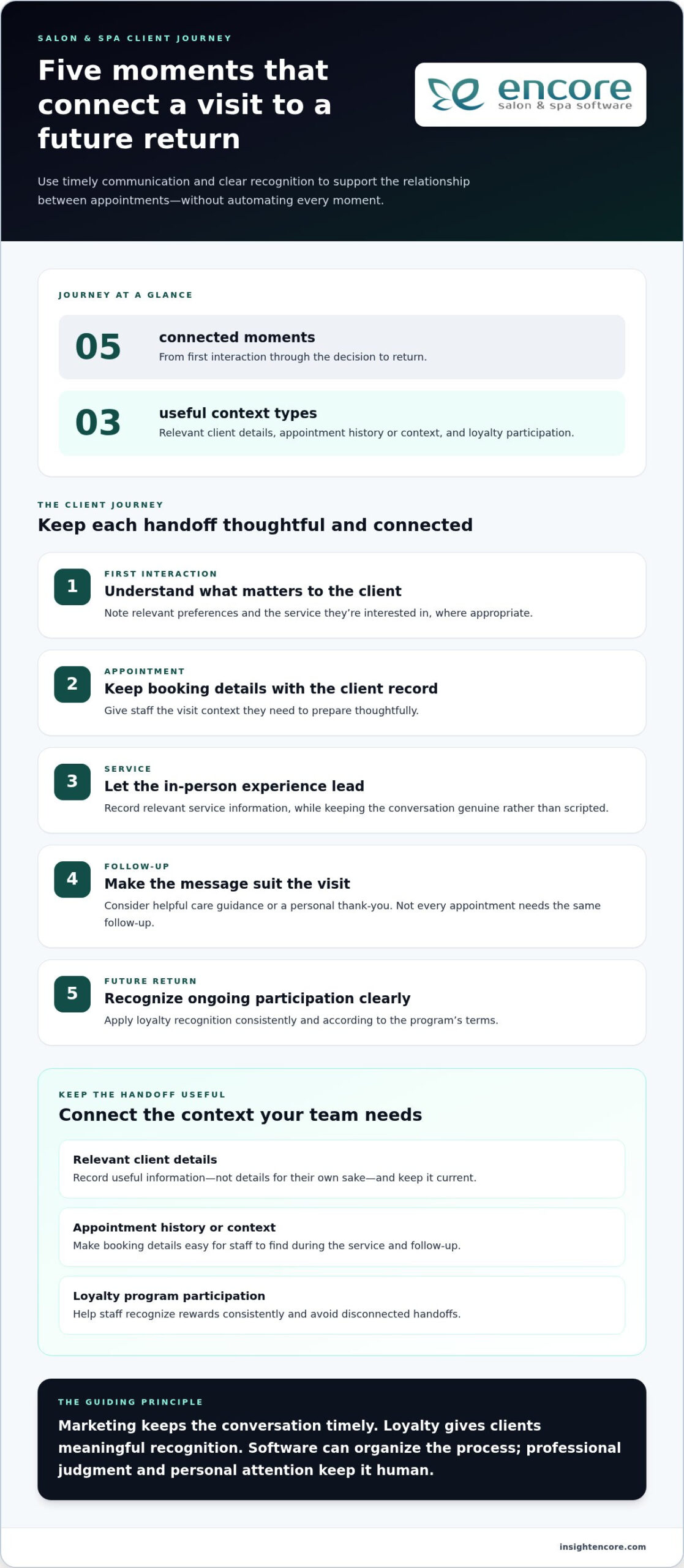
Picture a first-time client who finds your salon, books a consultation, receives a service, and considers their next visit. A simple journey map helps your team identify what information and support matter at each step:

  • First interaction: Note the client’s preferences and the service they’re interested in, where appropriate.
  • Appointment: Keep booking details connected to the client’s record so staff can prepare with the visit’s context in mind.
  • Service: Record relevant service information, then let the in-person experience lead. A genuine conversation is more valuable than a scripted exchange.
  • Follow-up: Decide whether a helpful message, such as care guidance or a personal thank-you, suits the visit. Don’t assume every appointment needs the same follow-up.
  • Future return: Recognize ongoing participation in a loyalty program clearly and consistently, according to its terms.

The handoff matters. When booking details are easy for the team to find during the service, staff can carry that context into follow-up. A salon client booking portal guide can help you consider how online booking fits into the wider experience, from choosing an appointment to arriving prepared.

What should salon owners keep connected?

Start with the information your team needs to serve clients thoughtfully: relevant client details, appointment history or context, and loyalty program participation. The point isn’t to collect information for its own sake. Make useful context available when it can improve a conversation or help staff provide a more consistent experience.

Disconnected records can lead to generic communication. A client might receive an offer that doesn’t reflect their services, or staff may not know whether a reward has already been recognized. Agree on what information the team records, where it belongs, and how staff keep it current. A shared process makes handoffs easier without requiring a complicated journey design.

Encore brings client management, online booking, automated marketing, and loyalty capabilities into a broader business-management platform. Explore the client management features as you consider how organized records can support daily operations. Explore Encore to see how these tools could fit your business.

How to Judge Whether a Salon Loyalty Program Is Worthwhile

A loyalty program should feel worthwhile to clients and manageable for your team. Before choosing a reward, ask whether clients will understand its value, staff can explain the rules, and you can track participation. The best fit depends on your services, client habits, and capacity to run the program consistently, not on how elaborate it looks.

Which loyalty approach fits your clients and business?

Each approach balances clarity, perceived value, and administration differently. Use this comparison to narrow your options:

  • Points: Clients accumulate points through defined activity and redeem them for a stated reward. This can offer flexibility, but earning and redemption rules need to be easy to follow and maintain.
  • Visit-based rewards: Clients receive recognition after a set number of visits or services. The idea is simple to explain, but the program needs a clear way to record progress and define which visits count.
  • Non-discount recognition: A business can acknowledge continued participation without making a price reduction the focus. This may feel personal, but the recognition still needs to matter to clients and be delivered consistently.

Consider your service mix and booking patterns. If clients tend to return for similar services, a straightforward visit-based structure may be easier to explain. If they use a wider range of services, a flexible points model may suit them, provided the team can administer it accurately. Non-discount recognition can complement either approach, but it needs a clear purpose too. Keep the terms brief: explain how clients participate, what counts, and how they receive recognition. If staff need a lengthy explanation, simplify the rules.

How can a business tell whether the program is helping?

Set a baseline before launch so you have a fair point of comparison. Choose a period that reflects your normal appointment patterns, then track a small set of measures consistently:

  • Repeat visits: Track whether participating clients return and compare the pattern with your baseline.
  • Redemptions: Note how often clients use rewards and which types they choose.
  • Client response: Record questions, feedback, and signs that clients understand or value the offer.
  • Team workload: Notice whether tracking and explaining the program fits comfortably into daily operations.

Redemption shows that a reward was used. It doesn’t, by itself, show that the program prompted a meaningful return visit. Compare behavior over time and consider whether clients might have booked again without the reward. Avoid treating correlation as proof that the program caused a change.

Program activity shows participation; repeat behavior helps show whether the program is supporting the relationship. Salesforce has cited a broad estimate that customer acquisition can cost at least six times more than retention. Treat that as general research, not a salon-specific benchmark or a prediction of what your own program will achieve. Judge Automated Marketing & Loyalty Programs using your own records, client feedback, and the effort required to keep the program clear and consistent.
Automated Marketing & Loyalty: 2026 Salon & Spa Guide

How to Launch Automated Marketing and Loyalty Without Overwhelming Clients

A manageable launch starts with focus, not a long list of campaigns. Choose one business goal and one client group, then build a process your staff can explain and maintain. For example, you might focus on keeping clients who book a particular service connected between visits. Keep the first version small enough to review and adjust.

What should a practical launch sequence include?

Before setting anything up, write down how your team currently handles client follow-up and rewards. This gives you a starting point and helps reveal manual steps or confusing handoffs. Then follow a straightforward sequence:

  1. Choose a measurable objective. Decide what you want to learn or improve, such as whether a specific client group returns after a service. Record the current process or baseline so you can compare later.
  2. Set simple program rules. Define how clients participate, what recognition they can receive, and which terms they need to understand. Keep the explanation brief enough for staff to share consistently.
  3. Prepare the client-facing language. Draft a clear message that sounds like your business. Make sure staff know how to answer common questions and where to find program details.
  4. Review responses and refine. Look at participation, client feedback, and any confusion your team encounters. Adjust the message or rules based on what you observe before adding another client group or idea.

This sequence lets you test the experience as well as the offer. A program that looks simple on paper still needs to work at the front desk, during a busy appointment day, and in the way clients understand it.

How can automation stay personal and respectful?

Automation should make useful communication easier to manage, not become a reason to contact clients more often. Before sending a message, ask whether it’s relevant to the recipient, clear about its purpose, and consistent with the service they receive in person. If it adds no useful information or value, leave it out.

Keep the language warm and direct. Use familiar wording, explain why you’re contacting the client, and describe any reward in plain terms. Review messages regularly so details stay accurate as services or program rules change. Let staff use their judgment too. A planned workflow can support consistency, while a personal conversation is still the right choice for questions or individual client needs.

Start with the smallest version that lets you learn. A measured rollout gives your team room to build confidence and gives clients a clear, comfortable experience. Encore brings automated marketing and loyalty capabilities into a broader salon and spa management platform, alongside client management and online booking.

Explore how Encore can support your business

How Encore Brings Salon Marketing and Loyalty Into Business Management

Marketing and rewards are easier to manage when considered alongside the daily work of running a salon or spa. Encore Salon & Spa Software is an all-in-one management platform with automated marketing and loyalty capabilities, as well as client management, online booking, gift card management, and point-of-sale transactions. This broader context helps owners consider how client communications and recognition fit into daily operations instead of treating them as separate tasks.

How does Encore fit into salon and spa operations?

Appointment-based businesses rely on clear client and booking information to organize the client experience. Encore Salon & Spa Software brings client management and online booking into the same broader software offering as marketing and loyalty. These capabilities support planning client communications and rewards, while the business chooses messages and program terms that suit its clients.

Encore Salon & Spa Software also serves barber shops, tattoo studios, massage businesses, and pet grooming businesses, alongside salons and spas. Each business has different needs, so consider how the management tools relate to the way your team books appointments and maintains client relationships. The Encore Salon & Spa Software overview provides salon-specific platform context.

Keep gift cards distinct from loyalty rewards. A gift card represents stored value that can be purchased or given to someone, while a loyalty program recognizes ongoing client participation according to its terms. Both can be part of a client-focused business, but they serve different purposes. Encore Salon & Spa Software includes gift card management alongside its marketing and loyalty capabilities.

What is a sensible next step for your business?

Before adopting new tools, take stock of your current process. Where does your team record client information? How do you handle follow-up? Can staff explain existing rewards consistently? These questions help identify what’s working and where manual steps or disconnected records create extra effort.

Next, consider how marketing and rewards fit with your client-management needs. A useful solution should support the way your business organizes client details and appointments while keeping communication clear and manageable. Start with the needs you’ve identified, such as more organized records or a more consistent approach to client recognition. Then consider how the platform’s relevant capabilities could support those priorities without assuming every feature or workflow is necessary for your business.

Encore Salon & Spa Software’s Automated Marketing & Loyalty Programs are part of a broader management platform for appointment-based businesses. Salon and spa owners can consider marketing, loyalty, booking, and client management together while keeping decisions about the client experience in their hands.

See how Encore fits your business

Build a Client Experience You Can Keep Improving

Your next step doesn’t need to be a full campaign calendar or a complex rewards structure. Choose one moment in the client relationship where a clearer, more thoughtful touchpoint could help. Decide what you want clients to understand or do, then make the experience easy for your team to deliver consistently.

As you put Automated Marketing & Loyalty Programs into practice, leave room to learn. Pay attention to client questions, staff feedback, and whether the process fits naturally into daily work. Use those observations to make small adjustments before expanding your approach. Progress comes from building a system that feels useful to clients and manageable for your business, not from adding more messages or rules.

Explore Encore’s marketing and loyalty tools

Build a more organized, personal client experience at a pace that works for your team. Explore Encore for your business.

Frequently Asked Questions

Is automated marketing useful for a small salon?

Yes, Automated Marketing & Loyalty Programs can help a small team keep routine client communication from slipping during busy days. Start with one purpose, such as sharing useful service information with a defined client group. Review the wording before using it, then note whether clients respond or ask questions. The goal is to make repeatable tasks easier, not to replace staff conversations or personal service.

Can a salon loyalty program work without discounts?

Yes, a salon can recognize client engagement without making price cuts the main reward. For example, a business might acknowledge a client milestone or offer an experience-based benefit that suits its services and capacity. Consider what clients would find meaningful and what staff can deliver consistently. Keep participation terms straightforward, and explain what recognition clients can expect.

How often should a salon send automated marketing messages?

There isn’t one schedule that works for every salon or client group. Separate practical appointment information from promotional communication, then consider whether each planned message has a clear purpose. A service update may be useful, while another general offer soon afterward may feel unnecessary. Review replies, unsubscribes, and client feedback where available, and adjust the schedule if people seem confused or overwhelmed.

Do clients need an app to participate in a salon loyalty program?

No, a separate app isn’t automatically required. The participation method depends on how the salon designs its program and what its software supports. Some businesses may explain progress in person or use another straightforward way to record participation. Tell clients how to join, track their status, and receive rewards. A simple process is easier to understand.

How much should a salon offer as a loyalty reward?

There’s no universal reward amount that fits every salon. Consider the cost of delivering the benefit, the value clients may place on it, and whether it fits comfortably within your service business. Compare a lower-cost recognition idea with a more substantial benefit before setting the program terms. Track participation and redemptions over time, but don’t assume reward use alone means clients are returning more often.

What happens if clients do not use their loyalty rewards?

Low redemption doesn’t automatically mean the program has failed. Check whether clients know they’re enrolled, understand how to use a reward, and can recall the terms when they’re ready to book. Staff can note common questions during checkout or service conversations. If clients aren’t clear on the benefit, improve how it’s explained before changing the reward itself. Make one adjustment at a time so you can see what helps.

Disclaimer

This article is general in nature and may contain errors, please verify all claims with your sales rep
Categories
Uncategorized

Spa Marketing Automation Examples: 10 Ideas to Build Client Loyalty in 2026

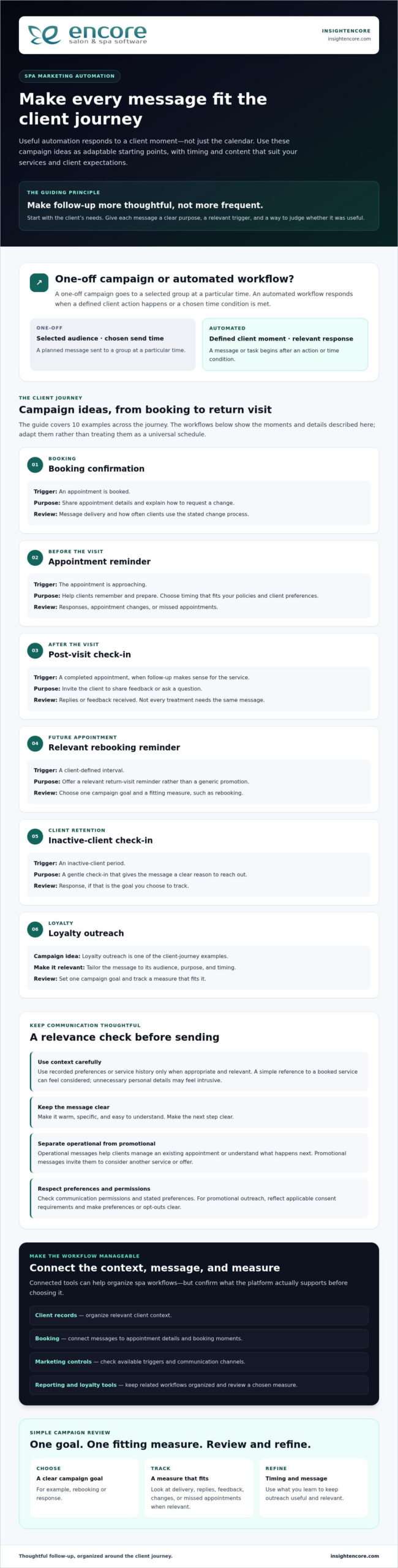
What if the best way to bring spa clients back isn’t another generic promotion, but a timely message that fits their client journey? When manual follow-ups compete with appointments and daily operations, messages can go out too late, too often, or without a clear reason. The most useful spa marketing automation examples start with a client’s needs, not a calendar of blasts.

It makes sense to be careful: outreach that feels impersonal can weaken the relationships your spa works hard to build. Automation should make follow-up more thoughtful, not make clients feel like names on a list. This guide shares practical campaign ideas and explains when each may work best, so you can choose messages that feel relevant and useful.

Explore 10 examples across the client journey, from welcome and post-visit messages to rebooking reminders, win-back campaigns, and loyalty outreach. For each, you’ll see what client information can guide the timing and what to measure. You’ll also learn how to start with a manageable plan and review it over time, using connected booking, client management, marketing, and loyalty tools to keep campaigns organized.

Key Takeaways

  • Build campaigns around client actions and stages, so messages feel timely and relevant rather than like generic promotions.
  • Use spa marketing automation examples as adaptable starting points, then tailor each message to its audience, purpose, and timing.
  • Choose one campaign goal and track a fitting measure, such as rebooking or response, to see whether clients find it useful.
  • Compare software by how clearly it connects client records, booking context, campaign controls, and reporting.
  • Connected booking, client management, marketing, and loyalty tools can help organize spa workflows. Confirm which triggers and channels a platform supports.

Why spa marketing automation works best across the client journey

A client’s relationship with your spa doesn’t begin and end in the treatment room. It may start when they discover your services, continue as they book and visit, and grow through useful follow-up and future appointments. Marketing automation can help you communicate at those moments without relying on someone to remember every task manually.

Spa marketing automation is software-supported messaging or tasks that begin when a client takes an action or a chosen time condition is met. A one-off campaign goes to a selected group at a particular time; an automated workflow responds to a defined client moment. This reflects the broader idea of marketing automation, where software helps coordinate marketing tasks and communication.

The distinction matters. Automation isn’t a reason to send more promotions. It’s a way to make communication more useful: booking information when someone schedules, a thoughtful check-in after a visit, or a relevant reminder after a client-defined interval. The best spa marketing automation examples fit the service and the client’s expectations rather than treating every client alike.

Which spa moments are useful automation triggers?

Start with moments that give a message a clear purpose. A booking can prompt practical appointment information. An appointment completion may prompt a follow-up. A client-defined interval can cue a relevant return-visit reminder, while an inactive-client period may prompt a gentle check-in. These are possible workflow ideas, not a universal schedule. Choose triggers that make sense for your services and how clients prefer to hear from you.

Keep operational messages distinct from promotional ones. Operational communication helps a client manage an existing appointment or understand what happens next. Promotional communication invites them to consider another service or offer. The purpose affects the content, timing, and permissions you need to check before sending.

How can automation still feel personal?

Personal doesn’t have to mean overly familiar. Use preferences or service history only when they’ve been appropriately recorded and are relevant to the message. A simple reference to the service a client booked can feel more considered than a generic offer. Adding unnecessary personal details, however, may feel intrusive.

Keep every message warm, specific, and easy to understand. Make the next step clear, and respect the client’s communication permissions and stated preferences. For promotional outreach, ensure your process reflects applicable consent requirements and makes preferences or opt-outs clear.

Connected booking and client-management records may help a spa organize context for follow-up, while marketing and loyalty tools can support related workflows. Before choosing software, confirm which triggers and communication channels it actually supports. The goal is a client journey that feels thoughtfully supported, not a larger volume of automated messages.

Spa marketing automation examples for booking, follow-up, and rebooking

Use these workflows as starting points, not guaranteed revenue drivers or a universal message schedule. The right trigger and timing depend on your spa’s services, policies, and client expectations. For more help assessing booking workflows, consult a spa booking software buyer’s guide.

What can a spa automate before and after an appointment?

Begin with practical messages that support an appointment already on the books. Keep each one clear and focused on what the client needs next.

  • Booking confirmation: Trigger it when an appointment is booked. Send the appointment details and explain how to request a change. Review delivery and how often clients use the stated process to handle changes.
  • Appointment reminder: Trigger it as the appointment approaches, with timing chosen to fit your policies and client preferences. Its purpose is to help clients remember and prepare. Review responses, changes, or missed appointments to assess whether the timing and wording are useful.
  • Post-visit check-in: Trigger it after a completed appointment when follow-up makes sense for the service. Invite the client to share feedback or ask a question. Measure replies or feedback received rather than assuming every treatment needs the same message.

These are operational communications: they help clients manage an existing appointment. Keep them distinct from promotional messages, which invite a client to consider another visit or service.

How can spas encourage the next visit?

A rebooking prompt should relate to the service and arrive at an interval the spa considers appropriate. Avoid treating one schedule as right for every client. A message can invite the client to book again without implying they need a service or assuming a particular result.

  • Service-relevant rebooking: Trigger it after a spa-selected interval has passed since a completed visit. Send it to clients who received that service, with a warm, optional invitation to view booking availability. Measure return bookings among the clients who received the prompt.
  • Relevant next-step suggestion: Trigger it after a visit when a suitable recommendation is supported by the service and the client’s recorded preferences. Keep the message informative, and measure replies or bookings linked to the recommendation.

Gift-related follow-up has a different audience and purpose. After a gift card purchase, for example, a spa might send useful information about how the recipient can use it. Explore gift card management tools when planning that workflow.

Review each campaign’s responses and client feedback. Adjust or pause messages that feel mistimed, irrelevant, or repetitive. The aim is thoughtful follow-up, not more contact for its own sake.

Spa automation examples for retention, win-back, and client loyalty

Retention messages work best when they recognize why a client might value hearing from your spa. A service follow-up can invite feedback, a win-back note can reopen a conversation, and a loyalty update can acknowledge participation. Seasonal education can offer helpful context without turning every change in season into a sales pitch. These spa marketing automation examples are options to adapt, not fixed schedules or promises of results.

Automation should support a human experience, not replace thoughtful service. Use a message to make the next interaction easier or more relevant, then leave room for a personal response when a client has a question or concern.

Trigger Appropriate message Intended client value Measurement option
Visit completed A brief service follow-up or invitation to share feedback, when appropriate A simple way to give input or ask a question Replies or feedback received
Spa-defined inactive period A warm check-in or relevant service reminder A useful, low-pressure prompt to reconnect Responses or return bookings
Loyalty participation changes A clear update about the client’s loyalty activity Recognition and a better understanding of the program Client engagement or questions about the program
Seasonal point chosen by the spa Practical education related to services or client interests Helpful information without an unnecessary sales push Engagement with the message or related inquiries

These measures are options, not industry benchmarks. Choose a spa-defined target for each campaign, then review results alongside client feedback. If a message gets little response or draws complaints, reconsider its timing, relevance, or audience.

What does a respectful win-back message look like?

Define “inactive” using a timeframe that fits the service cycle at your spa. A client who hasn’t returned within that period could receive a friendly check-in or useful reminder, without an assumed discount or pressure to book. If clients don’t engage, stop or adjust the outreach according to your communication policy. Respecting silence helps keep future contact welcome.

How can loyalty campaigns add value without over-messaging?

Send loyalty updates when there’s something useful to share, rather than repeating sales prompts. A clear note can recognize participation or explain relevant program information without inventing rewards or mechanics. Beyond loyalty updates, date-based triggers such as automated birthday greetings for salon clients offer another way to acknowledge clients personally without adding manual work. Encore offers loyalty programs alongside automated marketing capabilities. If you’re comparing software, review its automated marketing and loyalty features, and confirm which triggers and channels are supported.

Keep the experience personal by using only appropriately recorded client information and honoring communication preferences. A smaller number of relevant messages can serve clients better than frequent outreach that asks for their attention without offering something useful.

Spa Marketing Automation Examples: 10 Ideas to Build Client Loyalty in 2026

How to choose spa marketing automation examples and measure them

The most useful spa marketing automation examples solve a clear communication problem and give you a way to assess whether the workflow is helping. Start small. A campaign that’s easy to understand, check, and adjust is more manageable than several automations launched at once.

Use this sequence to shape one workflow:

  • Choose one goal: For example, reduce missed appointments or encourage clients to return.
  • Define the audience: Select clients for whom the message is relevant.
  • Set a trigger: Choose a recorded action or spa-defined timing condition.
  • Write the message: Make its purpose and next step clear.
  • Select a channel: Use a method that suits the message and client permissions.
  • Pick a measure: Decide what response or outcome you’ll review.

Booking information can provide useful context for appointment-related workflows. A salon client booking portal guide may help you consider how booking details fit into the client experience. If you’re evaluating software, look for usable client records, relevant booking context, control over campaign audiences and timing, and reports your team can interpret. Confirm which specific triggers and channels are available before relying on them.

Which metrics can a spa track for each campaign?

Match the measure to the message. For booking reminders, review attendance or rescheduling when those records are reliable. For retention outreach, consider rebooking, repeat visits, replies, and opt-outs. Campaign activity, such as messages sent or opened, isn’t the same as a business outcome. A change in bookings may have other causes, so avoid crediting automation alone. To go further, measuring salon marketing ROI can help you separate campaign-driven visits from business that was already likely to happen and assess what each promotion actually contributed.

Set any performance target yourself, based on your spa’s goals and starting point. Then compare results over a useful review period and note client feedback, not just counts.

How should a spa start without overwhelming the team?

Pick one recurring communication problem staff can describe clearly. Draft the message and review it manually before automating delivery. Check that the audience, wording, timing, and next step make sense. Assign an owner to monitor accuracy, client responses, and the effort required to keep the workflow working. Once the process is dependable, decide whether to refine it or test another campaign.

This measured approach helps you improve without adding unnecessary work. Encore brings online booking, client management, automated marketing, and loyalty programs into one platform. Review whether its capabilities fit your workflow and verify the triggers and channels you need.

Explore Encore for spa marketing workflows

How Encore can support a more organized spa marketing workflow

It’s easier to plan relevant client communication when booking details, client records, and marketing activities are organized together. Encore serves spa and beauty businesses with online booking, client management, automated marketing, and loyalty programs. These capabilities can help a spa coordinate its workflow, such as keeping booking context accessible while planning communications for clients.

That organization is a starting point, not a strategy by itself. Your team still decides who should receive a message, what it should say, and whether the timing suits the service and client. Software can support the process, but it doesn’t replace consent, good judgment, or personal care.

What should spa owners confirm in a software evaluation?

Ask the provider to show how client records, online booking, marketing tools, and loyalty programs work together in practice. A system’s feature list matters less than whether staff can use the information to manage the workflow you have in mind. When evaluating how transactions, client notes, and inventory connect at checkout, it may also be worth reviewing what’s involved in upgrading from a cash register to a POS system to understand what a more connected setup can support.

  • Campaign control: Can your team choose or adjust the audience and timing?
  • Channels and triggers: Which communication channels and campaign triggers are available? Confirm the specific options directly with the provider.
  • Reporting: Can you understand what was sent and review the responses or outcomes that matter to your spa?
  • Team fit: Does the workflow suit your services, staff responsibilities, and clients’ communication preferences?

Bring a real example to the evaluation. For instance, map the information your team would need to send a relevant follow-up after a visit. Check where that information is recorded, who reviews the message, and how you’d know whether the process is working. This helps reveal gaps before you commit to a workflow.

When is it time to explore Encore?

If coordinating bookings and repeat-client communication across separate processes is creating extra work, it may be worth seeing how Encore’s capabilities fit together. Encore offers spa and beauty business software, not a full-service marketing agency. Before relying on a particular automation, confirm the triggers, communication channels, and reporting available for your needs.

The spa marketing automation examples in this article can help you identify a first workflow to evaluate. Choose one that addresses a clear client or team need, then assess whether the tools support it without adding unnecessary complexity. Keep client preferences and thoughtful service at the center. You can explore Encore and its spa workflow tools as part of that evaluation.

Build a more thoughtful client journey, one step at a time

The strongest spa marketing automation examples aren’t about sending more messages. They help your team communicate at useful moments, with content that fits the client and a clear way to review how it’s received. Start with one workflow, define what you want it to do, and adjust based on client responses and your team’s experience.

Good tools can make that work easier to organize. Encore includes online booking, client management, automated marketing, and loyalty programs, bringing key parts of the spa workflow into one platform. As you evaluate the fit, confirm that its available campaign controls and channels support the approach you have in mind. Automation can support your relationships, while your team’s thoughtful care keeps them personal.

You don’t need to automate everything at once. Choose a useful place to begin, learn from the response, and build a client journey that feels considered at every step.

Frequently Asked Questions

What are examples of marketing automation for a spa?

Examples include booking confirmations, appointment reminders, post-visit feedback requests, service-relevant rebooking prompts, loyalty updates, and check-ins for clients who haven’t visited within a spa-defined period. These spa marketing automation examples work best when each has a clear audience and purpose. Before launching one, decide what client need it serves, what information it relies on, and how you’ll tell whether it’s useful.

How can a spa automate client follow-up after an appointment?

A spa can use appointment records to organize a follow-up for clients who’ve completed a visit, if the software supports that workflow. First decide whether follow-up is appropriate for the service, then write a brief message that offers a useful next step, such as a way to share feedback. Review the wording and recipient criteria, and make sure the message respects client permissions and preferences.

Can spa marketing automation help bring clients back?

It can support return visits by helping a spa follow up with relevant clients at a time that fits its service cycle. For example, a spa might identify clients who haven’t booked again within a timeframe it defines, then send a considerate check-in rather than assuming they want a promotion. Review resulting bookings and replies, but remember that automation supports outreach; it can’t guarantee a client will return.

How often should a spa send automated marketing messages?

There’s no single schedule that suits every spa or client. Set timing according to the purpose of each message, your services, client preferences, and communication permissions. Avoid sending multiple messages that repeat the same request or arrive too close together. Review client responses, opt-outs, and complaints for signs that the pace or content needs to change, and pause messages that no longer feel relevant.

What should a spa measure in an automated marketing campaign?

Choose measures that match the campaign’s purpose. For appointment communications, review reliable attendance or rescheduling records. For retention outreach, consider replies, repeat visits, rebookings, and opt-outs. Opens or clicks can show interaction, but they don’t prove a campaign caused a business outcome. A practical approach to measuring salon marketing ROI can help you account for discounts, compare channels consistently, and avoid giving one promotion credit for a client’s ongoing loyalty. Compare results with your spa’s own goals and context, and treat targets as internal benchmarks rather than universal standards.

Does spa marketing automation replace personal client service?

No. Automation can help organize routine communication, but it can’t replace a staff member’s judgment, attentive treatment, or personal response to a client’s question. Use it to handle appropriate, predictable tasks, and give clients a clear way to get help from your team when they need it. Keep messages accurate and considerate, and review feedback so your communication continues to reflect the experience your spa wants to provide.

Explore Encore for your spa marketing workflow

Disclaimer

This article is general in nature and may contain errors, please verify all claims with your sales rep
Categories
Uncategorized

The Complete Guide to Spa Gift Card Software: Boosting Revenue in 2026

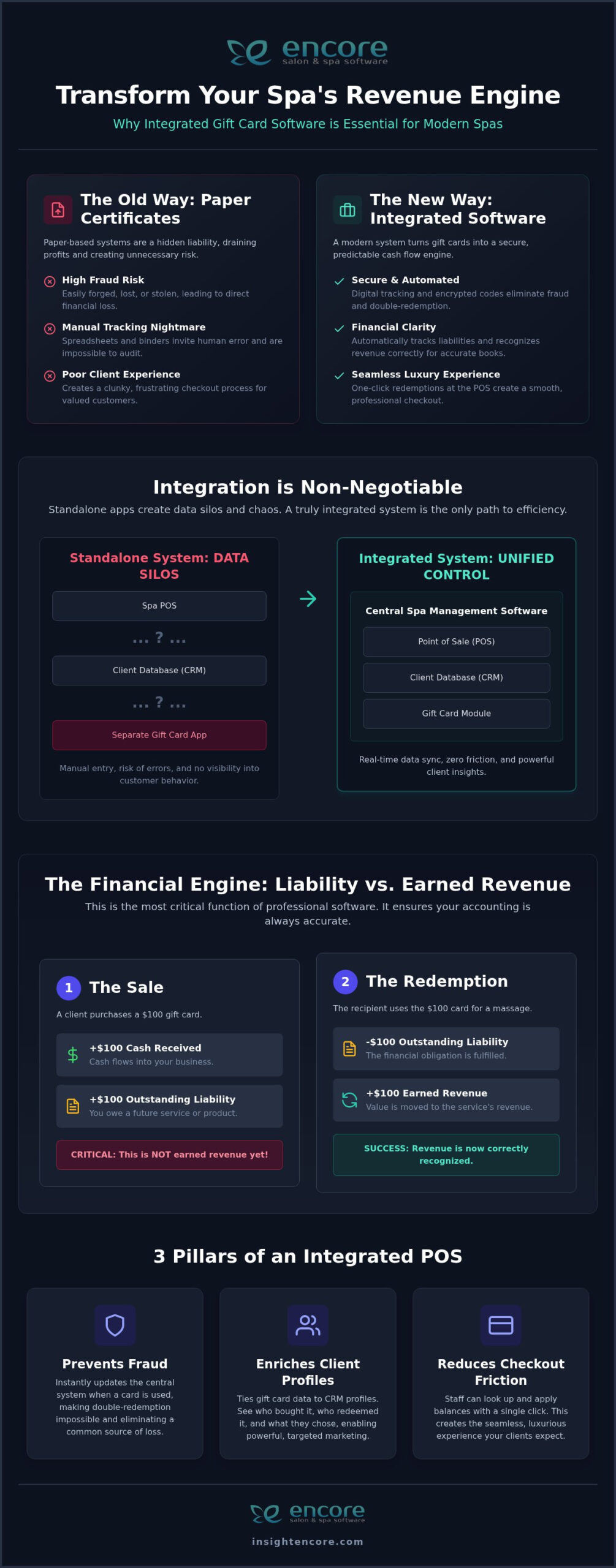
A stack of paper gift certificates tucked away in a drawer isn’t just disorganized—it’s a ticking time bomb of accounting errors, lost revenue, and client frustration. In 2026, a modern spa’s success hinges on turning those liabilities into a powerful, predictable cash flow engine. The right spa gift card software does more than just replace paper; it transforms how you attract new clients, manage revenue, and build loyalty.

The problem is that many systems are either standalone apps that create data headaches or expensive add-ons that don’t truly integrate with your daily operations. You need a solution that feels like a natural part of your workflow, not another task on your to-do list.

This guide will walk you through the essential features of a high-performance gift card system. We’ll cover everything from the critical importance of POS integration and liability tracking to the specific strategies you can use to make gift cards a cornerstone of your spa’s growth.

Spa Gift Card Systems: Why Integration is Key

At its core, spa gift card software is a digital ledger that tracks prepaid services or dollar amounts for your clients. It replaces unreliable paper certificates with a secure, centralized system that logs every purchase, redemption, and balance. For 2026, the industry standard has moved far beyond simple tracking; it’s about creating a seamless financial tool that works in lockstep with every other part of your business.

The most significant evolution is the shift from standalone gift card apps to fully integrated modules within your primary spa management software. Standalone systems create dangerous data silos. When your gift card program doesn’t communicate with your point-of-sale (POS) or client relationship management (CRM) system, you invite chaos. Staff members are forced to manually enter codes, check balances in a separate program, and reconcile sales at the end of the day. This friction leads to errors, a clunky checkout experience, and a professional blind spot—you have no idea who is buying or redeeming cards.

True integration means that when a gift card is sold or redeemed, the balance updates in real-time across your entire system, from the front desk computer to a therapist’s tablet. This isn’t a luxury; it’s a fundamental requirement for efficient and secure operations.

The Evolution from Paper to eGift Cards

For decades, spas relied on paper gift certificates. While charming, they are a significant security risk. They can be easily forged, lost, or stolen, and tracking their balances in a binder or spreadsheet is an administrative nightmare. Any spa still using paper in 2026 is leaving itself vulnerable to fraud and accounting errors that can silently drain profits.

The rise of eGift cards—digital codes that can be emailed or texted—introduced instant delivery, which is perfect for last-minute shoppers. However, the true innovation isn’t just the digital format, but the encrypted code itself. This unique identifier is the foundation of a secure system, whether it’s assigned to a physical plastic card or a digital certificate. This leads to the modern standard: an omnichannel gift card experience where a single, integrated system manages both physical and digital card data seamlessly at the point of sale.

Why Integrated POS Systems Win

The point of sale is where your gift card program lives or dies. An integrated system connects every transaction directly to your financial and client databases, providing three undeniable advantages:

  • Prevents Fraud and Double-Redemption: When a card is redeemed through an integrated POS, its balance is instantly and permanently updated in the central system. This makes it impossible for the same card or code to be used twice, eliminating a common source of loss.
  • Enriches Client Profiles: Tying gift card data to a client’s CRM profile is a marketing game-changer. You can see who purchased the card, who redeemed it, and what services they chose. This allows you to turn a first-time gift recipient into a loyal, long-term client with targeted follow-up marketing.
  • Reduces Checkout Friction: A seamless checkout is a hallmark of a luxury spa experience. With an integrated system, your front desk staff can look up a client, see their available gift card balance, and apply it to a sale with a single click. No manual entry, no awkward delays.

High-Performance Features: Beyond Simple Gift Certificates

A basic system that just sells and redeems cards is no longer enough. To truly drive revenue and streamline your business, your spa gift card software needs a robust set of back-end features designed for spa owners and managers. It’s about giving you control, security, and financial clarity.

Look for a system that offers customizable denominations, allowing you to sell cards for specific services (like a "Signature Massage Package") or flexible dollar amounts. You should also have control over expiration logic, ensuring your policies are clear and comply with local regulations. Most importantly, any system you choose must be powered by secure integrated credit card processing. This protects both you and your clients, ensuring every transaction is fast, safe, and reliable.

Liability Tracking and Revenue Recognition

This is the single most overlooked—and most critical—feature of professional spa gift card software. When a client buys a $100 gift card, you have $100 in cash, but you have not yet earned $100 in revenue. That money is a liability on your books until the client redeems the card for services or products.

Manually tracking this is an accountant’s worst nightmare and can lead to serious errors on your tax filings. A sophisticated system like Encore solves this automatically:

  • It separates cash from earned revenue. The software understands that a gift card sale is a prepayment. It tracks the cash received while holding the value as an outstanding liability.
  • It automates revenue recognition. When the card is used, the software correctly moves the corresponding amount from the liability column to the earned revenue column for the specific service or product sold.
  • It provides instant, accurate reporting. With a few clicks, you can generate a report showing all active, redeemed, and expired gift cards. This gives you a precise, real-time snapshot of your outstanding financial obligations.

Flexible Selling and Marketing

An omnichannel strategy in 2026 is about making your gift cards visible everywhere, even if the final sale happens in a controlled environment. While some platforms offer online storefronts, a system that centralizes sales through your POS provides a high-touch, secure alternative that many spa owners prefer. This approach allows you to:

  • Promote 24/7, Sell In-Person: Use your website and social media to showcase beautifully designed gift card packages for holidays, birthdays, and special occasions. A clear call-to-action can direct clients to call or visit the spa to purchase, creating an opportunity for a personal interaction.
  • Leverage Your Automated Marketing: A fully integrated system allows you to use your CRM to promote gift cards. Send a targeted email campaign to clients who have purchased gift cards in the past, reminding them that Mother’s Day is approaching. You can include a link to your automated marketing features page on your website with details about your current gift card offers.
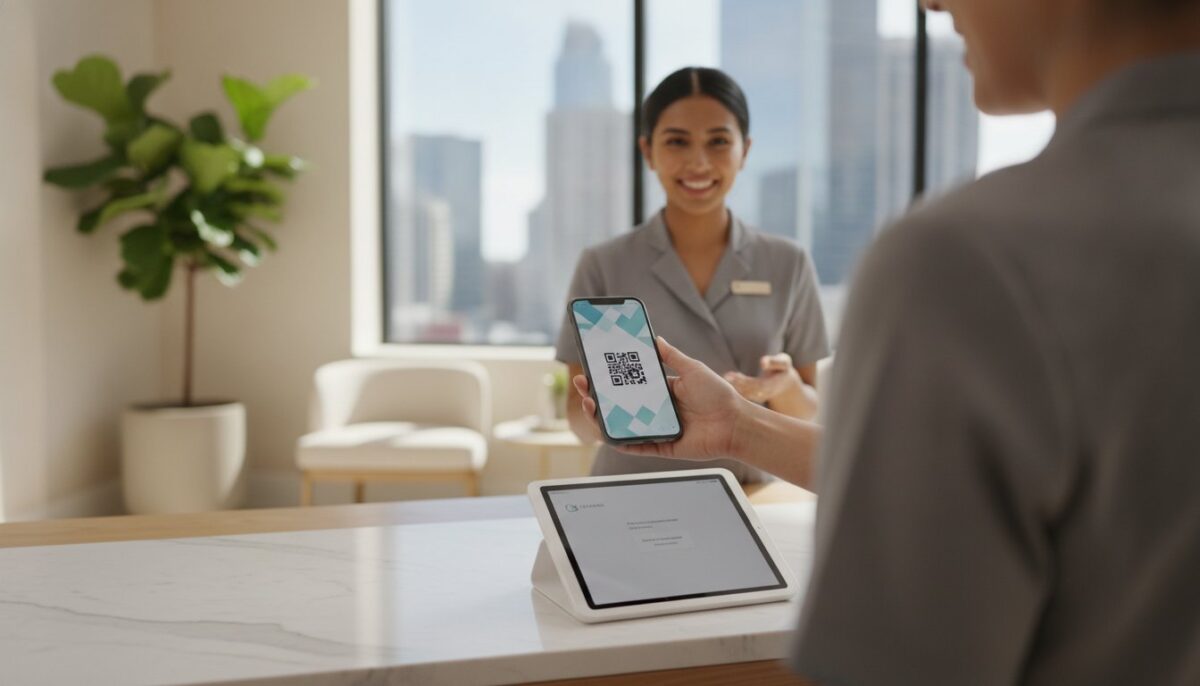
  • Use In-Salon Prompts: Place elegant signage and QR codes at the front desk that lead to a promotional page on your website. This encourages clients to think about gift-giving while they are already in your spa and feeling great about their experience.

The Business Case: How Gift Cards Drive Spa Growth

Gift cards are far more than a simple convenience; they are a strategic tool for client acquisition, cash flow management, and revenue growth. When implemented correctly, they can become one of your most profitable marketing channels.

The data consistently shows that gift card recipients spend more. Studies reveal that clients using a gift card are likely to spend 20-50% more than the card’s initial value. This "Reciprocal Spending" effect happens because the initial service feels "free," making clients more open to splurging on an add-on, upgrading a service, or purchasing retail products. Speaking of which, it’s vital to have a robust spa inventory management system to handle the increased product sales that gift cards drive.

Furthermore, every gift card sold acts as a zero-cost client acquisition tool. Your loyal clients are effectively selling your services to their friends and family, delivering a pre-qualified new customer directly to your door. Finally, gift cards provide a crucial injection of upfront cash flow, helping you manage expenses and payroll during seasonal lulls.

The Psychology of the Gift Card Recipient

A client spending their own money might stick to their usual maintenance service. But a client spending "free money" from a gift card is psychologically primed to explore. This is your golden opportunity to introduce them to higher-margin, luxury services they might not otherwise try, like an advanced facial, a body wrap, or a hot stone massage.

Your goal is to use the gift card as an introduction to a new level of service. Once a client experiences that luxury treatment, they are far more likely to book it again. Your integrated CRM is key here. By tracking what the gift recipient chose, you can send targeted follow-up promotions for that specific high-ticket service, strategically converting them from a one-time guest into a long-term, high-value client.

Referral Programs and Client Incentives

Gift cards are the perfect fuel for a powerful referral and retention engine. Instead of offering a generic discount, you can create tangible, high-perceived-value rewards that drive specific actions:

  • Reward Referrals: When a loyal client refers a new guest, automatically add a $15 or $25 gift credit to their account as a thank you. It feels more like a gift than a discount and encourages them to return.
  • Re-engage Dormant Clients: Run a report to find clients who haven’t visited in over six months. Send them a "We Miss You!" SMS or email with a surprise $10 digital gift credit that expires in 30 days. This small gesture can be incredibly effective at bringing them back.
  • Incentivize Pre-Booking: Encourage clients to pre-book their next appointment before leaving by offering a small gift card credit that can be used at their next visit.

The Complete Guide to Spa Gift Card Software: Boosting Revenue in 2026

Implementation Guide: Launching Your Digital Gift Card Program

Moving from a manual process to a streamlined digital system is a straightforward process when you have a clear roadmap. The key is to focus on system configuration, staff training, and a smart marketing launch.

This process is especially critical for businesses with unique structures, such as spas that work with chair or booth renters. A professional software solution should allow each independent renter to manage their own gift card program under the spa’s umbrella, ensuring their revenue is tracked separately and accurately.

Before you launch, invest time in training your team. They are your front-line salespeople. Ensure they understand the benefits, know how to answer questions about terms and conditions, and feel comfortable mentioning gift cards during checkout or service wrap-ups.

Step-by-Step System Configuration

  1. Step 1: Define Your Card Types and Branding. Work with your software provider to design physical cards that reflect your spa’s luxury brand. Decide on the standard denominations you will offer and create templates for any digital gift certificates you may email from the POS.
  2. Step 2: Set Your Terms, Conditions, and Expiration Dates. Research your state or provincial laws regarding gift card expiration—many jurisdictions have strict consumer protection laws. Clearly define your policies on your website and on the cards themselves to avoid any client confusion.
  3. Step 3: Integrate Your Payment Gateway. Ensure your credit card processing is fully integrated with your POS system. This allows your staff to sell and activate a gift card in a single, secure, and swift transaction right at the front desk.
  4. Step 4: Promote Your Program. Announce your new, professional gift card program to your clients via email, social media, and in-salon signage. This is the time to build excitement and educate your customers on how easy it is to give the gift of relaxation.

Marketing Your Gift Card Program

Once your system is live, a proactive marketing strategy will ensure it generates a steady stream of revenue.

  • Plan Holiday Campaigns: Don’t wait until December to think about Christmas. Plan your marketing for Mother’s Day, Valentine’s Day, and the holiday season months in advance. Create compelling graphics and email campaigns for each.
  • Create Bundle Deals: Increase the average sale value by offering incentives. A popular promotion is: "Buy a $100 gift card, and receive a bonus $20 credit to spend on retail products." This drives cash flow and moves your inventory.
  • Train for the Upsell: The best time to sell a gift card is when a client is at their happiest—right after a wonderful service. Train your therapists and stylists to conclude their service by saying, "If you know anyone who could use a day of relaxation like this, we have beautiful gift cards available at the front desk."

Why Encore is the Best Choice for Spa Gift Card Management

Choosing the right software is about choosing a partner that understands the unique pressures of the spa industry. Encore Salon & Spa Software provides a fully integrated gift card management system designed to eliminate complexity, not add to it. Because gift cards are a core feature of the all-in-one platform—not a tacked-on module—they work seamlessly with every other part of your business.

Developed by Syntec Business Systems, a company that has specialized in the beauty industry since 1991, Encore is built on a foundation of reliability and deep industry knowledge. We understand the specific needs of spas, salons, and even niche businesses like tattoo studios, and have tailored our features to solve their real-world problems.

Our human-centric support and "can-do" personality mean you’re never left dealing with a faceless corporation. We are your partners in growth, dedicated to helping you succeed.

Seamless Integration Across All Modules

The power of Encore lies in its unified ecosystem. When you sell a gift card through our POS, the data flows everywhere it needs to, instantly:

  • Marketing & Loyalty: The purchaser and recipient are tagged in the CRM, allowing for targeted follow-up campaigns and loyalty point tracking.
  • Inventory Management: When a gift card is used to buy a retail product, your stock levels are updated in real-time.
  • Centralized Reporting: Multi-location spas and franchise owners can view gift card sales and liability reports for their entire organization from a single dashboard, providing complete financial oversight.

Getting Started with Encore

We make the transition from a legacy system or manual process smooth and painless. Our team will guide you through the setup, help you configure your gift card program, and ensure your staff is fully trained. With integrated credit card processing built-in, you can streamline every sale from day one.

Stop wrestling with spreadsheets and paper certificates. It’s time to implement a professional, secure, and integrated gift card system that boosts your revenue and gives you peace of mind. Start Growing Your Revenue with Encore Gift Cards and see how a truly all-in-one system can transform your business.

Frequently Asked Questions (FAQs)

Do spa gift cards expire by law in 2026?

Gift card expiration laws vary significantly by state and province. In the U.S., the federal Credit CARD Act of 2009 mandates that cards cannot expire within five years of their purchase date, but many states have even stricter consumer protections. Always consult with a local business advisor to ensure your spa’s policy is compliant with current 2026 regulations in your area.

What is the difference between an eGift card and a physical gift card?

A physical gift card is a plastic, branded card with a magnetic stripe or barcode. An eGift card is a digital version with a unique code that is delivered to the recipient via email or text. Both are managed by the same integrated software; the only difference is the delivery method and physical form factor.

How do I track gift card sales for my spa’s taxes?

Properly integrated spa gift card software does this automatically. It records the sale as a liability, not as immediate revenue. When the card is redeemed for a service or product, the software moves the amount from the liability account to the earned revenue account. This ensures your financial reports are accurate for tax purposes.

Can booth renters have their own independent gift card system?

Yes, but only with the right software. Systems like Encore offer specialized features for booth renters, allowing them to sell and manage their own gift cards. The software keeps their financial data separate from the main spa, ensuring each independent professional can accurately track their own sales and liabilities.

How much do spas typically make from gift card sales annually?

This varies widely based on spa size, location, and marketing efforts. However, for many successful spas, gift card sales can account for 5-10% of their total annual revenue, with significant spikes during key holidays like Christmas and Mother’s Day.

What happens if a client loses their physical gift card?

This is a major advantage of an integrated software system. Because the gift card’s value is tied to a unique code and often linked to a client profile in your CRM, you can easily look up the balance and issue a new card or apply the credit directly to their account. With paper certificates, the value is often lost for good.

Is it better to offer a discount or a gift card for referrals?

While both can be effective, a gift card often has a higher perceived value and is more likely to bring a client back. A $20 gift card feels like a tangible present, whereas a "20% off" coupon feels like a simple marketing promotion. Gift cards are excellent tools for building loyalty and encouraging repeat visits.

How do I integrate gift cards into my spa’s existing website?

The best approach is to create a dedicated page on your website that beautifully showcases your gift card designs and package options. While some systems offer direct online sales, a highly secure and personal approach is to use this page to direct customers to call or visit your spa to complete the purchase through your integrated POS system. This ensures every sale is handled securely by your trained staff.

Disclaimer

This article is general in nature and may contain errors, please verify all claims with your sales rep