Repeat visits are built between appointments, not just at the chair. To understand how to increase salon client frequency, make the next visit easier to book, follow each client’s usual service rhythm, and send a helpful reminder when they’re due. A practical target is 7-8 visits per client per year, adjusted to the services they choose and the maintenance schedule that suits them.
It’s easy to assume clients will remember to rebook when they’re ready. In practice, asking about their preferred days, times, and booking methods can make returning easier without creating pressure. Tracking visit patterns also helps you notice when a client’s usual gap is getting longer, so follow-up feels timely and personal rather than generic.
This guide covers four practical ways to encourage more consistent visits: discuss booking preferences, measure return frequency, use appointment reminders, and adapt follow-up to each client. Together, these steps make regular outreach a considerate part of the salon experience.
Key Takeaways
- Recommend a return visit based on the client’s service needs, then make rebooking a comfortable choice rather than a sales pitch.
- Ask when and how clients prefer to book so your follow-up fits their routines.
- Track repeat visits by both overall salon performance and individual team members to spot patterns worth addressing.
- Send reminders when clients are approaching or past their usual appointment interval, with a message that feels personal and useful.
- Review results regularly and adjust your timing and messaging to what clients actually respond to.
1. Client retention and predictable revenue
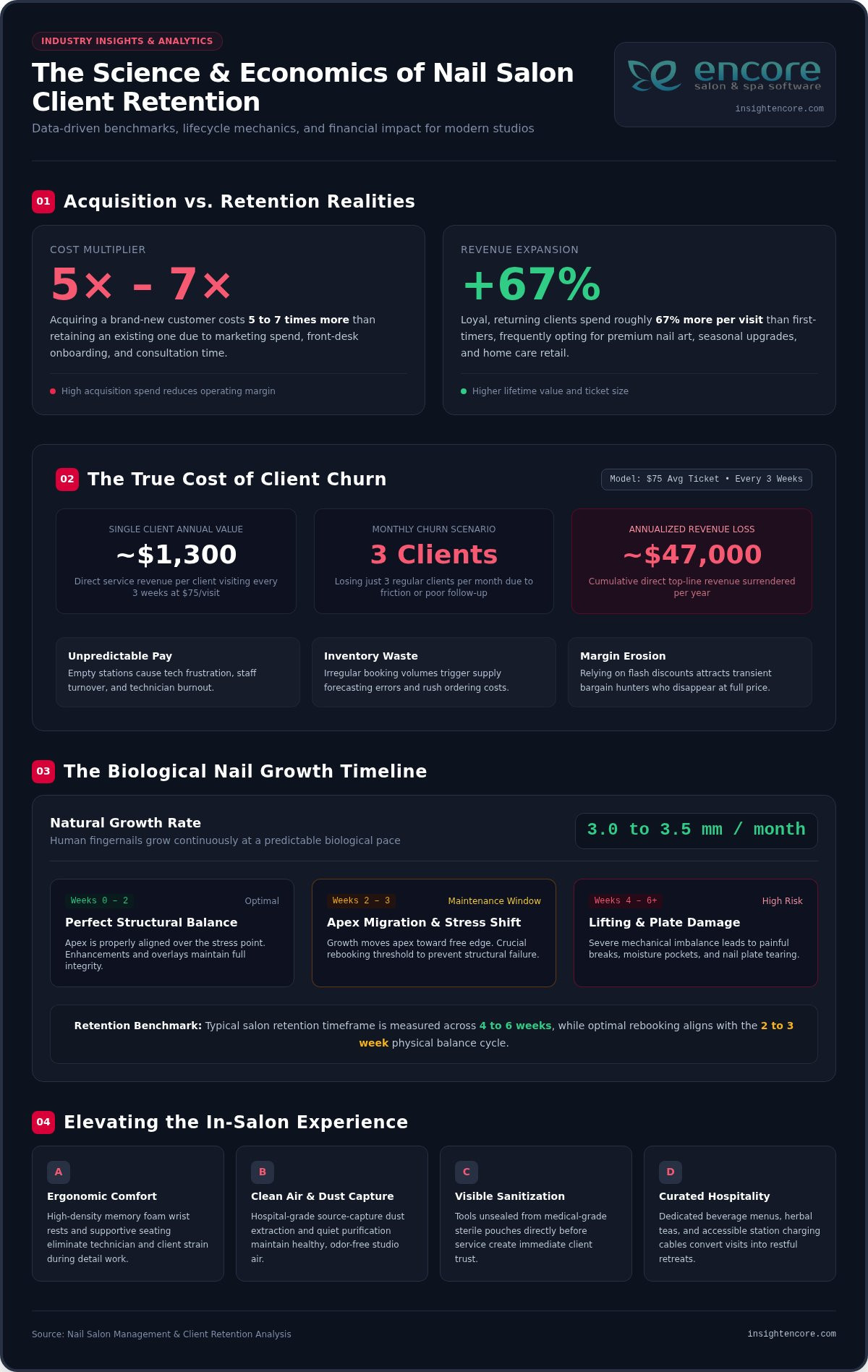
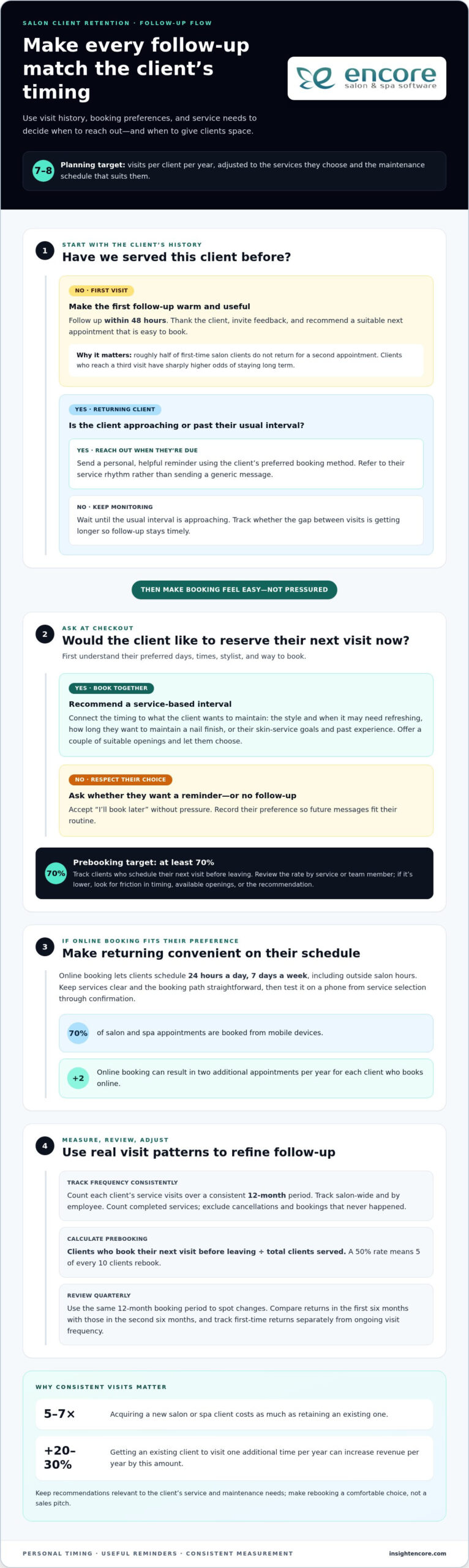
Retention supports steadier revenue because returning clients already know your service and booking process. Acquiring a new salon or spa client costs 5-7X as much as retaining an existing one. Getting an existing client to visit one additional time per year can increase revenue by 20-30 % per year. Use 7-8 visits per year as a planning target, then adjust recommendations to each service’s maintenance needs.
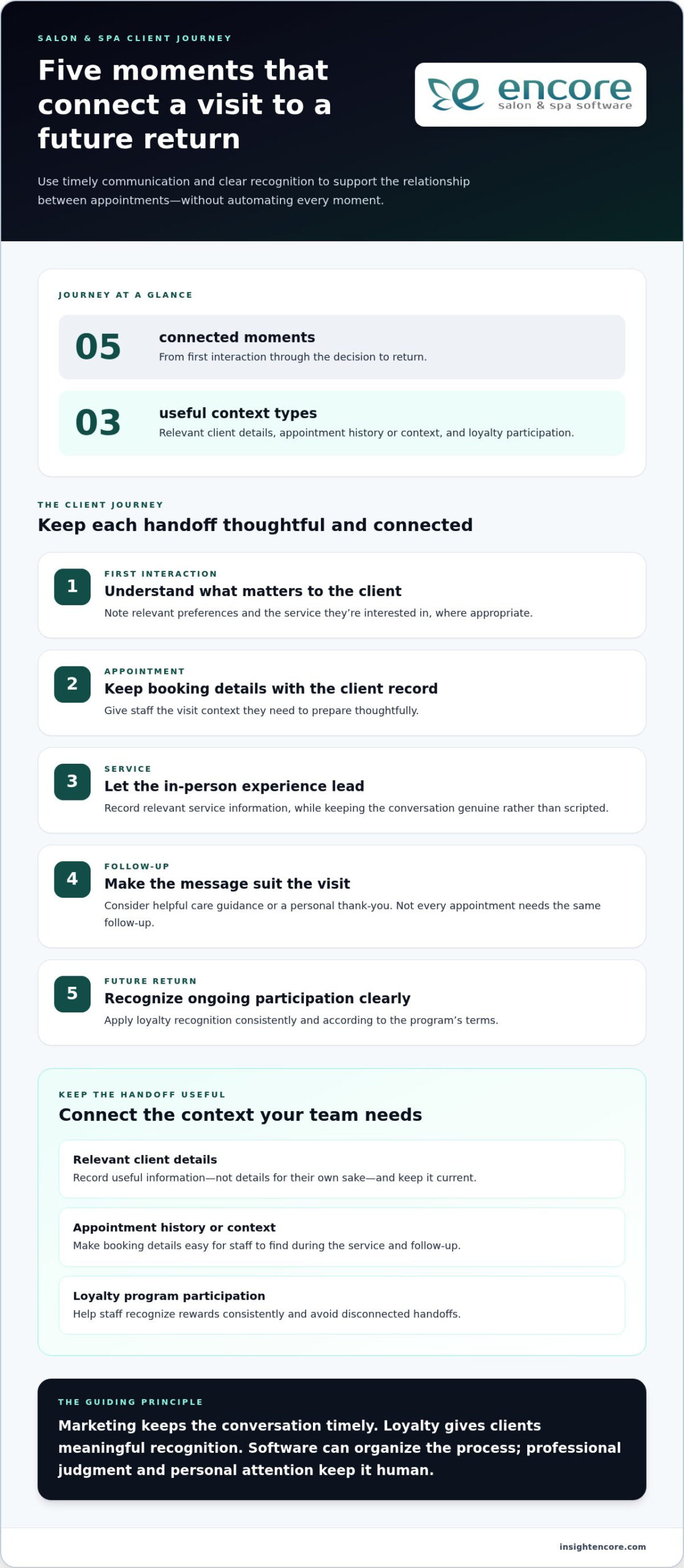
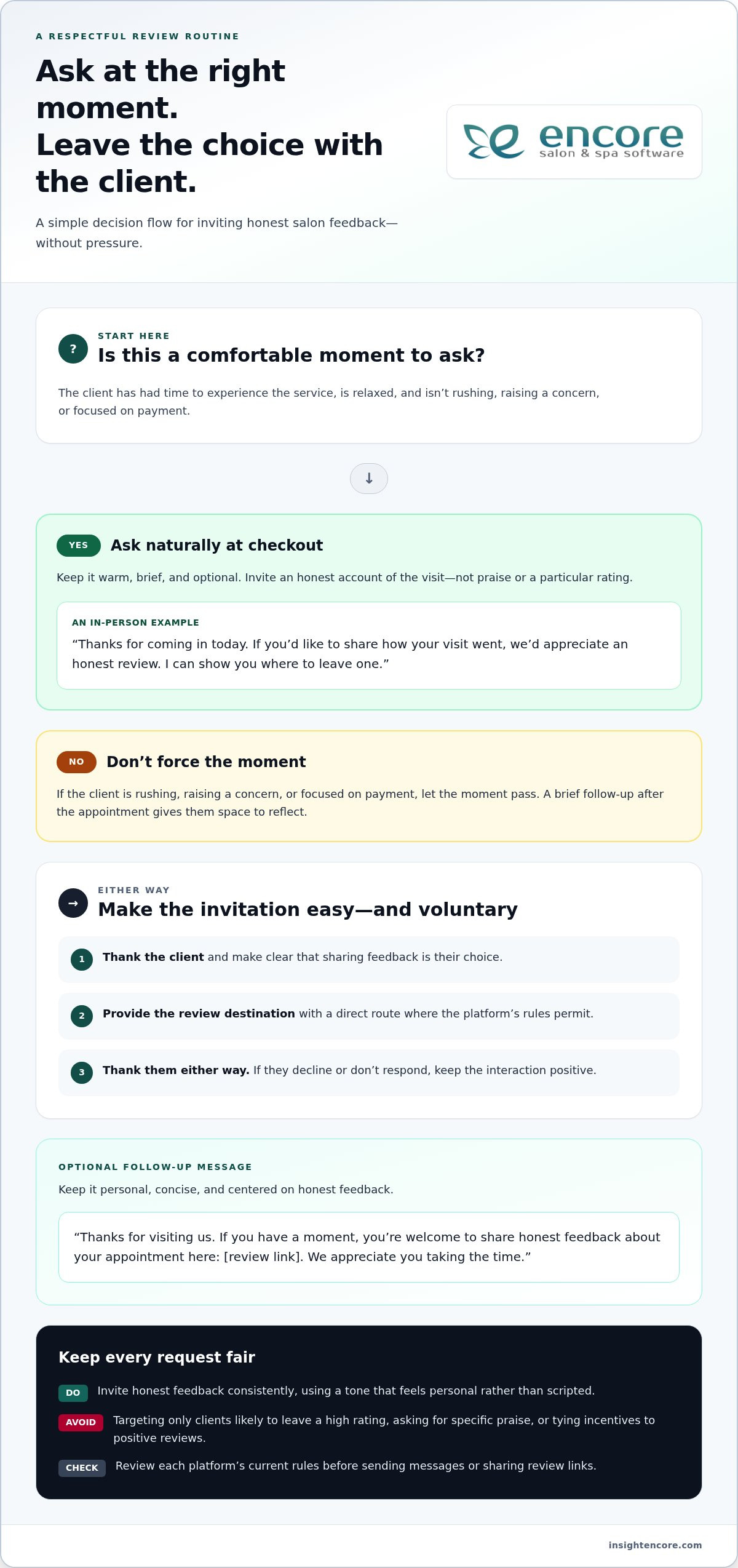
First-time visits deserve focused attention: roughly half of first-time salon clients do not return for a second appointment. Follow up within 48 hours after the visit, thank the client, and invite them to share feedback. Then recommend a suitable next appointment and make it easy to book. Clients who reach a third visit have sharply higher odds of staying long term, so a warm, consistent start can help build a lasting relationship.
Effective salon promotions give clients a relevant reason to return without making every visit depend on a discount. For example, offer the third blowout at 50% off when a client buys two, or award loyalty points for actions such as posting a 5-star review. Keep rewards tied to services clients value, and explain the offer clearly at checkout.
Discounts can prompt a return visit, but frequent price cuts may reduce revenue per appointment and encourage clients to wait for offers. Before launching a promotion, weigh its redemption cost against the additional visits it generates. Set an end date, track bookings tied to the offer, and avoid discounting services clients already book consistently.
In a salon suite, retention often depends on the personal experience a client receives from one provider. Record styling preferences, past services, and preferred follow-up methods. These details help a renter make each appointment feel connected to the last, even when weeks pass between visits.
To measure frequency, calculate each client’s service visits over twelve months and compare the total with your retention and rebooking rates. For rebooking, divide clients who schedule their next visit before leaving by the total clients served; a 50% rate means 5 of every 10 clients rebook.
Review retention metrics quarterly, using a consistent twelve-month booking period to spot changes. You can also compare clients who visited in the first six months with those who returned in the second six months. Since a first-time client has no interval to measure yet, track first-time returns separately from ongoing visit frequency.
2. Discussing booking preferences without pressure
Start booking conversations with the client’s routine, not a sales target. Ask whether they prefer weekday mornings, evenings, or a particular stylist, then suggest a next appointment that fits. For example: “Would you like to reserve a time that suits your usual schedule, or book later?” This gives clients a clear choice and makes pre-booking helpful rather than pushy.
Recommend a service schedule based on what the client wants to maintain and how their results change over time. For hair, discuss the desired style and how soon it may need refreshing. For nails, ask how long they want to maintain the finish. For skin services, consider their goals and experience with previous services. Explain why an interval may suit them, then let them decide whether to book.
Keep the next-appointment conversation simple at checkout. Mention the recommended timing, offer a couple of suitable openings, and accept “I’ll book later” without pressure. If the client declines, ask whether they would prefer a reminder or no follow-up. Their preference can guide future messages and keep marketing relevant.
Aim for a prebook rate of at least 70% to support more frequent visits. Track how many clients schedule their next appointment before leaving, then review the rate by service or team member. If one service has lower prebooking, discuss whether appointment timing, available openings, or the recommendation itself creates friction.
Online booking can give clients more control over when they schedule. Clients can book 24 hours a day, 7 days a week, including outside salon hours. Online booking can result in two additional appointments per year for each client who books online. Make the booking path easy to find, show available services clearly, and keep appointment choices straightforward.
Mobile access matters in that process: 70% of salon and spa appointments are booked from mobile devices. Test the booking flow on a phone, from choosing a service through confirming the appointment. Avoid unnecessary steps that could interrupt a client ready to book.
Use booking software that connects online scheduling with client records, appointment history, and reminders. Staff can see each client’s last service and follow up at an appropriate time. Automated reminders can help identify when to invite a client back, while leaving the final choice to them.
At the next visit, ask whether the booking method worked well and record any preference that could help next time. This feedback lets you shape scheduling and marketing around actual client habits rather than assumptions.
3. Tracking overall and employee visit frequency
Visit frequency is the average number of service purchases clients make per year. Track it across the salon and by employee, so a steady overall figure doesn’t hide a decline in one team member’s returning clients. Use a consistent reporting period and define which completed services count before comparing results. These records help owners looking at how to increase salon client frequency identify where follow-up may need attention.
Count completed services, such as a haircut, colour appointment, manicure, or facial. Exclude cancellations and bookings that never happened. If one appointment includes several services, decide whether to count the appointment once or each service purchase. Apply the same definition across employees, service categories, and reporting periods.
To calculate average gaps between visits, list each client’s completed appointment dates in order. Find the days between consecutive visits, add those intervals, and divide by the number of intervals. In one illustrative history, three intervals total 112 days, creating an average gap of about 37 days. A client with only one visit has no interval to calculate.
Review individual gaps alongside the average. In that example, the interval from January 10 to February 7 is 28 days, while the gap from March 7 to May 2 is 56 days. The change could point to a shift in routine, a missed follow-up, or a service schedule worth discussing. Compare clients with similar services, since maintenance patterns vary.
Frequency also helps owners understand revenue patterns. In an illustrative example, 1,500 clients making five visits per year at $100 per visit generate $750,000 annually. Increasing the average to six visits produces $900,000, a 20% gain. These figures describe the example, not a forecast for every salon. Actual revenue depends on client count, completed visits, and services purchased.
For employee-level analysis, group client histories by the staff member who performed each service. Compare repeat visits and average intervals across similar services. If one stylist’s clients have longer gaps, review appointment availability and follow-up habits before drawing conclusions. Client transfers, time away, and service mix can also affect comparisons.
A client management system keeps appointment histories together and makes patterns easier to review. Check for missing or duplicate records, then compare overall and employee-level trends using consistent definitions. This gives you a clearer basis for deciding how to increase salon client frequency without assuming every client follows the same schedule.
4. Automated email and text appointment reminders
Time reminders to each client’s actual visit pattern. Review past appointments and identify their usual interval, then follow up if they have gone beyond it. For example, if a client typically returns every eight weeks, reach out once that usual window has passed. Keep the message friendly and make booking the next appointment straightforward.
Automated email and text reminders help staff follow up consistently with clients who have different schedules. Use each client’s preferred channel and make the message specific to their last service. “Ready to refresh your colour?” feels more personal than a general beauty promotion. Include a clear booking prompt while letting the client choose when to return.
Clients may space out appointments because their needs or routines have changed. A longer gap doesn’t necessarily mean they are unhappy. Review the client’s service history before sending a reminder, then tailor the message to their last booking. Someone whose style needs regular maintenance may appreciate a timely nudge, while another client may prefer a longer interval.
Manual review can work for a salon with a manageable client list. Open appointment records, identify clients who have passed their usual interval, and note their last service and preferred follow-up method. Sort the list by service or employee so a stylist can add context before a message goes out. This check helps prevent irrelevant reminders.
For a broad comparison, the stated industry average for salon and spa visit frequency is 4.88 visits per year. Use that figure as context, not as a target for every client. A client’s suitable average depends on the service, maintenance needs, and personal routine. Compare similar services and clients before deciding whether the gap signals a missed opportunity.
Visit patterns can vary with local routines, work schedules, travel, and the services clients seek. Compare appointment history within your own salon and service categories, then adjust reminder timing to fit those patterns instead of using one schedule for everyone.
Personalize follow-ups with the client’s name, last service, stylist, and preferred booking channel. For example, mention their recent haircut and invite them to choose a convenient time for their next visit. If they prefer email, don’t switch to text just because another client responds faster that way.
Before sending a reminder, check upcoming appointments so you don’t invite someone to rebook when they already have a visit scheduled. Then review replies and bookings linked to each message. This shows which reminders lead to appointments and which may need different timing, wording, or a more service-specific approach.
5. Monitoring progress and adjusting tactics
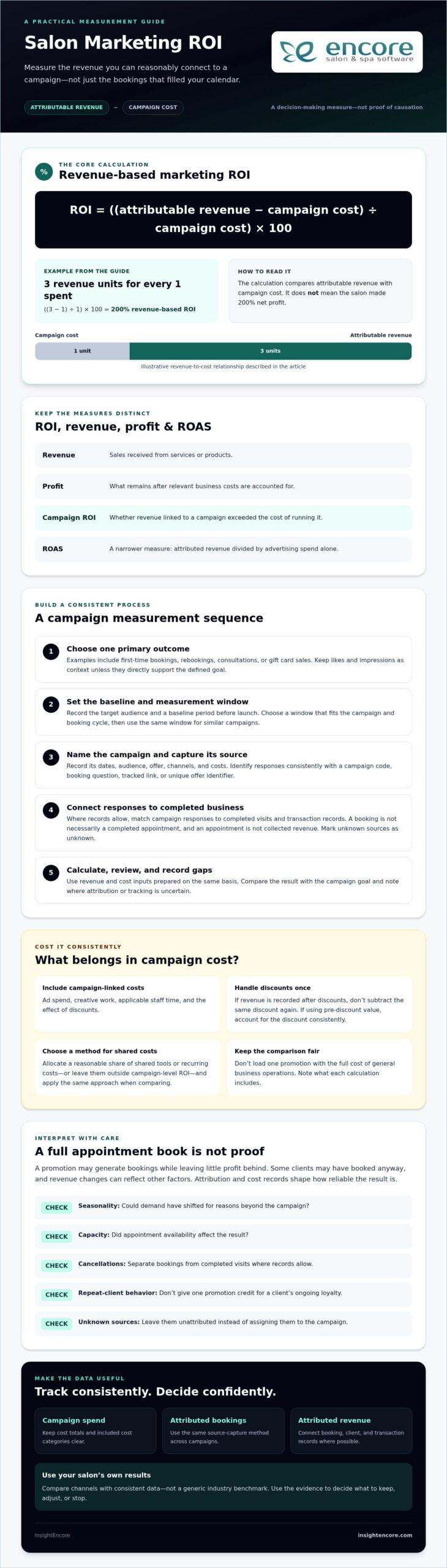
Review your follow-up plan regularly instead of relying on guesswork. Set a baseline using twelve months of booking history, then compare results quarterly. Track repeat visits, rebooking, average visit frequency, and reminder responses separately. This helps show whether more clients are returning or whether a tactic is mainly generating bookings from existing regulars.
Set a practical goal, such as adding 1-2 appointments per client per year. Break that goal into observable changes: more clients rebooking before checkout, fewer overdue appointments, or more completed visits after reminders. Review each measure beside the previous quarter, and keep the service mix in view so different maintenance schedules don’t distort comparisons.
Test one change at a time. For example, adjust reminder timing for clients who have not visited for 3 months or more, then compare their responses with the prior approach. Keep the message, audience, and booking path clear. If replies increase but completed appointments don’t, examine how easy it is to find and book a suitable opening.
Break down results by service, team member, and client history. A colour client and a nail client may have different reasons for delaying a visit, so one reminder schedule may not suit both. If one group has longer gaps, review appointment availability and follow-up wording before applying a change across the salon. Record what you changed and the outcome for the next review.
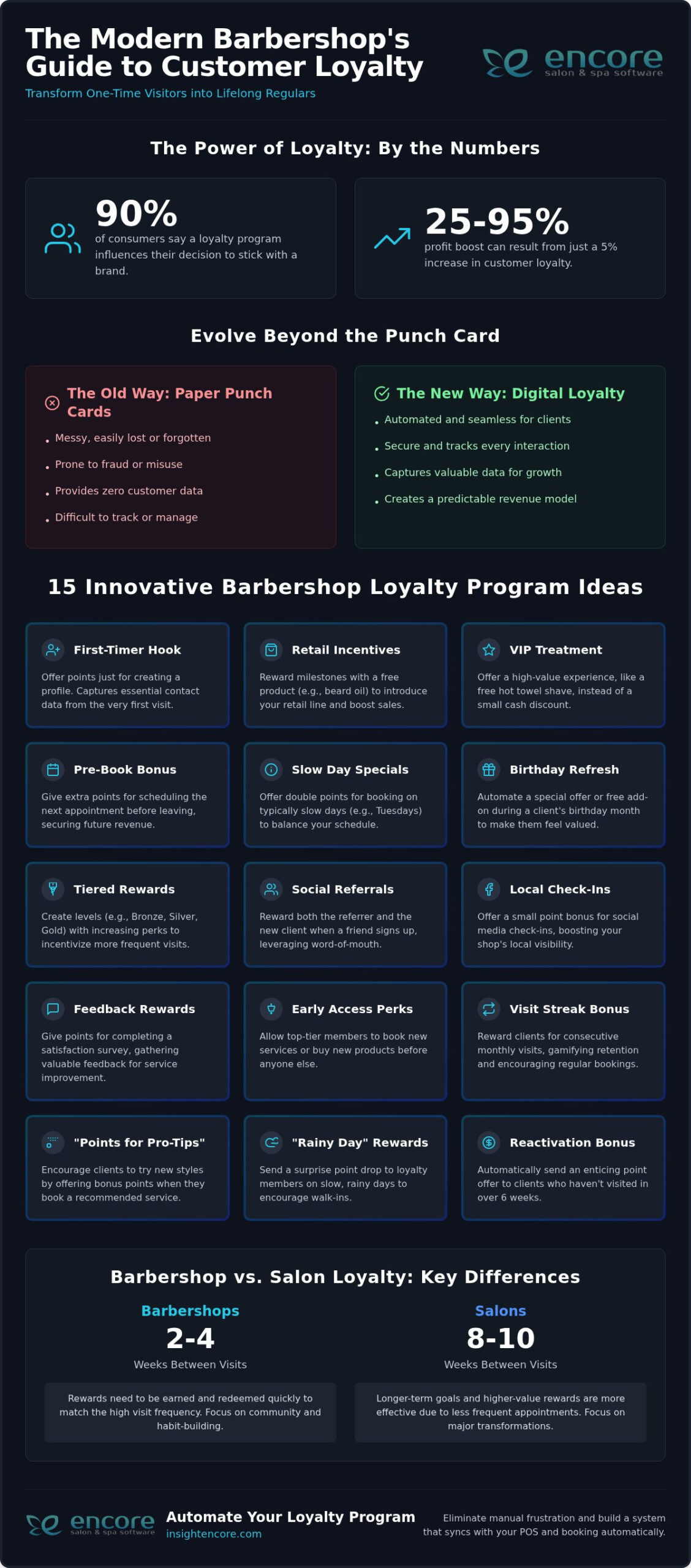
VIP perks can recognize consistency without relying on blanket discounts. Offer a useful benefit that suits your salon, such as priority access to newly opened appointment times or a reward after a clear visit milestone. Keep the rules simple, and compare booking and return patterns among enrolled clients with similar clients outside the program.
Referral and loyalty programs can support retention while helping attract new clients. A loyalty program might reward repeat visits, referrals, or other actions that matter to your salon. Track referrals separately from repeat bookings to see which outcome the program supports.
Use each quarterly review to decide whether to keep, change, or stop a tactic. Compare completed visits, not just messages sent or appointments booked. If rebooking rises but overall visits stay flat, check cancellations and whether clients are moving existing appointments. If an approach works for one group, apply it where the service and client pattern fit.
Encore Salon & Spa Software: Encore Salon Software
Encore Salon & Spa Software offers Encore Salon Software for salons that want to manage bookings and client information in one place. Online booking and client management tools support follow-up by keeping appointments and client records together. When tracking return visits or coordinating booking preferences becomes difficult to do manually, these tools help organize the work in one system.
Choose the approach that fits your business: Encore Spa Software, Chair/Booth Renter Software, and Tattoo Studio Software are also available for their respective settings. To explore how Encore Salon Software could fit your salon’s workflow, contact Encore Salon & Spa Software.
Make the Next Step Easier to Sustain
Stronger client relationships grow from small, consistent choices that fit your salon’s daily routine. Start with one follow-up improvement and give your team a clear process. For example, agree on how to record client preferences or who reviews overdue appointments. A manageable change is easier to maintain than a long list of new procedures.
As you build this habit, keep listening to what clients find useful. Their responses can guide what you refine next, so follow-up feels like part of good service rather than another task on the schedule. If you’re considering how to increase salon client frequency, choose a next step your team can put into practice and review consistently.
Encore Salon & Spa Software offers Encore Salon Software, Encore Spa Software, and Chair/Booth Renter Software for different business settings.
Focus on thoughtful service and steady progress. Each useful follow-up can help create a more connected salon experience.
Frequently Asked Questions
How do you keep salon clients coming back?
Make each visit dependable, personal, and easy to continue. Remember details that shape the next appointment, such as a client’s styling preference, product sensitivity, or preferred time. If a service didn’t meet expectations, address the concern before sending a routine promotion. For example, a stylist can ask what the client would change next time and record the answer, so the next visit feels attentive rather than starting from scratch.
What is the average salon client rebooking rate and visit frequency?
The stated industry average is 4.88 visits per year; rebooking rate is a separate measure, and no single average rebooking rate is supplied here. For a useful comparison, define rebooking as clients who schedule another appointment before leaving, divided by clients served. Keep that definition consistent across reports. Then compare results by service type and employee, since a combined salon-wide rate can hide different booking patterns.
How can salons improve client rebooking before checkout?
Connect the recommendation to the service just completed. A stylist might say, “To keep this shape, we can plan your next trim around your usual schedule,” then offer the choice to book now or later. Don’t make booking feel compulsory. If the client declines, ask whether they prefer to book online or receive a reminder. Record their preference so the next conversation respects their choice.
What loyalty programs increase repeat salon visits?
Programs work best when rewards are clear, attainable, and relevant to your salon’s services. Clients might earn points for repeat visits or receive a benefit after a series of appointments. A referral reward can recognize someone who introduces a new client, while a VIP perk could offer early access to newly opened appointment times. Track participation and completed visits, not just sign-ups, to see which rewards encourage ongoing bookings.
How can salons use SMS and email reminders to reduce no-shows and encourage return visits?
Use appointment confirmations to help clients remember scheduled visits, then send a separate, considerate follow-up when their usual return window has passed. Keep each message focused: identify the service, explain the next step, and make booking straightforward. Use the client’s preferred channel, and avoid inviting someone to rebook if they already have a future appointment. Review completed bookings and missed visits to refine reminder timing.
Disclaimer
This article is general in nature and may contain errors, please verify all claims with your sales rep