
window.dataLayer = window.dataLayer || []; function gtag(){dataLayer.push(arguments);} gtag('js', new Date()); gtag('config', 'UA-206511945-1');
Search
Categories
Uncategorized

Reduce Small Business Credit Card Fees: 2026 Guide

That "simple" flat-rate pricing you chose to avoid headaches is likely the very thing quietly draining your bank account. You’ve probably stared at your monthly merchant statement, squinting at line items like PCI non-compliance or statement fees; it’s frustrating to feel like you need a finance degree to learn how to reduce credit card processing fees for small business. We know the feeling of seeing your hard-earned profit margins shrink under the weight of unpredictable costs. It shouldn’t be this complicated to get paid for the great work you do.

This 2026 guide pulls back the curtain on the industry’s hidden junk fees and shows you exactly how to reclaim your profits through smarter processing strategies. We’ll explore the impact of the latest Visa and Mastercard interchange rate reductions, the transparency of interchange-plus models, and how to find a processing partner that values your peace of mind as much as your growth. By the end, you’ll have a clear roadmap to a lower effective rate and a system that integrates perfectly with your existing booking software.

Key Takeaways

  • Learn why the “simplicity” of flat-rate pricing often hides higher margins and how to calculate your true effective rate.
  • Understand the transparency of Interchange-Plus pricing to avoid the expensive “non-qualified” transaction traps found in tiered models.
  • Discover actionable steps on how to reduce credit card processing fees for small business by optimizing your data accuracy and risk profile.
  • Stop losing money to “junk” fees by mastering 2026 security compliance standards and debunking common merchant myths.
  • Streamline your operations by moving to integrated payments, which eliminates manual reconciliation and simplifies your support.

The Hidden Cost of ‘Simple’ Credit Card Processing

Many salon and spa owners feel a sense of relief when they sign up for a flat-rate processing plan. It sounds easy. It looks predictable. But that simplicity often comes with a steep price tag that stays hidden beneath the surface of your monthly statements. If you want to know how to reduce credit card processing fees for small business, you first have to look past the marketing slogans and focus on your "effective rate." This is the only number that truly matters; it’s calculated by dividing your total monthly fees by your total sales volume. It reveals exactly what percentage of your revenue is vanishing into the processing ether.

Credit card processing fees are the aggregate of interchange, assessment, and processor markup. When a provider offers you a single flat rate, like the common 2.9% + 30c marketing hook, they aren’t actually charging you one fee. They’re bundling all those costs together and adding a significant buffer to ensure they profit on every single swipe, regardless of the card type used. This "convenience" allows brands to hide high margins behind a single, easy-to-digest number.

Myth: Flat-Rate Pricing is Always the Cheapest Option

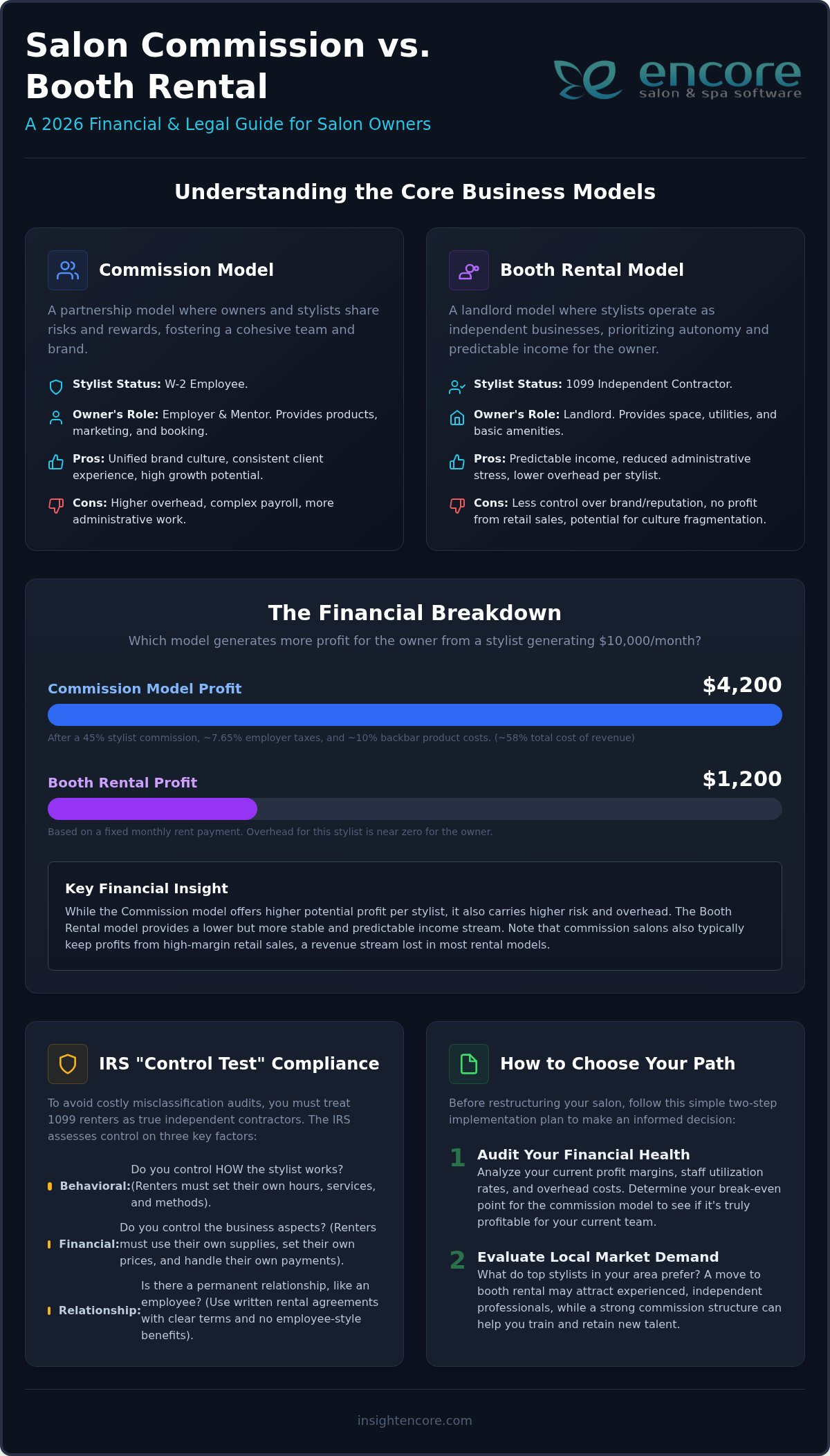
Flat-rate models are a psychological trap designed for convenience. While they’re great for a brand-new business with very low volume, high-growth salons often find themselves overpaying. The processor essentially "averages out" the costs in their own favor. If a client pays for a $200 hair color service with a basic debit card, the actual cost to process that transaction is quite low. However, with a flat rate, you’re still paying that high percentage. The processor simply pockets the difference. This is a major hurdle when you’re looking for ways how to reduce credit card processing fees for small business. Small-ticket items like a $15 lip wax also get hit hard by the fixed "per transaction" fee, which can eat up a massive portion of your margin on low-cost services.

The True Anatomy of a Transaction Fee

To reclaim your margins, you need to know exactly where your money is going. Every fee you pay is split into three distinct buckets:

  • Interchange fee: This is the non-negotiable cost set by card brands like Visa and Mastercard. It’s paid to the bank that issued the customer’s card. It varies based on the card type and how it’s processed.
  • Assessment fees: These are small, fixed percentages paid directly to the card networks for using their systems. Like interchange, these are non-negotiable for everyone.
  • Processor markup: This is the only area where you actually have leverage. This is the fee your processing partner charges for their service.

Understanding these layers is the first step toward a healthier bottom line. When you use integrated credit card processing, you gain the transparency needed to see these costs clearly rather than having them buried in a single, expensive bundle. It’s about moving from a state of confusion to a position of organized control over your business finances.

Decoding Processing Models: Interchange-Plus vs. Tiered

Understanding the difference between pricing models is a critical step in learning how to reduce credit card processing fees. Most processors use one of two main structures: Interchange-Plus or Tiered. While both might look similar on a sales sheet, their impact on your monthly profit is vastly different. One offers a clear window into your costs, while the other often feels like a locked door. Choosing the right model is about more than just numbers; it’s about gaining the transparency you need to run a healthy, predictable business.

Why Interchange-Plus is the Gold Standard for Salons

Interchange-Plus is often called "wholesale" pricing because it’s the most transparent model available. You pay the exact cost set by the card brands plus a small, fixed markup from the processor. This clarity allows you to see exactly where every penny goes. For high-volume businesses like salons and spas, this model is incredibly cost-effective. You benefit directly from lower interchange rates on debit cards or standard consumer cards. As your business scales, the savings grow with you. Choosing integrated credit card processing using this model ensures your software and payments work together without hidden surprises. It’s a professional approach that treats you like a partner, not just another account number.

Avoiding the Trap of Tiered Pricing

Tiered pricing is the opposite of transparency. It bundles different transaction types into categories like "qualified," "mid-qualified," and "non-qualified." While the low "qualified" rate looks attractive in a marketing brochure, very few modern cards actually qualify for it. Most rewards cards, business cards, and online transactions get pushed into the expensive non-qualified tier. This allows processors to hide high margins behind a confusing wall of categories. You might think you’re paying a low rate, but your effective rate often tells a much more expensive story. It’s a common industry frustration that leaves many owners feeling stuck and confused.

Savvy owners are moving away from these bundled traps. Tiered statements are notoriously difficult to audit because they lack the line-item detail needed to see the actual cost of each transaction. This lack of transparency is why Tiered models are becoming obsolete for businesses that prioritize financial health. When you understand how to reduce credit card processing fees for small business, you realize that the cheapest "looking" rate is rarely the cheapest "actual" rate. If you’re tired of the guesswork and want a partner that values your peace of mind, it’s time to see how integrated software can simplify your payments.

5 Proven Strategies to Reduce Fees in 2026

Implementing a few operational shifts can significantly lower your risk profile and, by extension, your costs. A foundational step in understanding credit card processing fees is recognizing that processors charge more for transactions they perceive as high risk. By improving data accuracy and ensuring your Merchant Category Code (MCC) accurately reflects your service-based business, you set a lower baseline for your rates. These small adjustments are key parts of how to increase salon profit margin in a competitive market.

Strategy 1: Optimize for Card-Present Transactions

Transactions where a card is physically "dipped" or "tapped" carry the lowest risk of fraud. Because the security chip is verified in person, banks reward you with lower interchange rates. On the other hand, keying in card numbers manually is one of the most expensive ways to get paid. It signals a higher risk of chargebacks to the processor. Encourage your clients to use their physical cards or mobile wallets at the counter. While "card on file" features are convenient for no-show protection, using them for every routine checkout can quietly inflate your monthly costs. Learning how to reduce credit card processing fees for small business often starts with this simple hardware habit.

Strategy 2: Leverage Industry-Specific Integrated Software

Standalone terminals often lead to manual entry errors and reconciliation headaches. When you use salon software that features integrated payments, the transaction data flows directly from your booking calendar to the card reader. This precision reduces the chance of human error and provides the "enhanced data" that card brands look for when qualifying you for better rates. It also makes defending against unfair chargebacks much easier. You get a clear audit trail that links the payment to the specific service and client, giving you a level of organized control that third-party terminals simply can’t match.

Strategy 3: Negotiate and Eliminate ‘Junk’ Fees

Many business owners don’t realize that several items on their statements are actually optional markups. Fees for "IRS reporting," "online portals," or "monthly statements" are often just extra profit for the processor. Take the time for an annual fee review with your provider. If you have a consistent processing history and high volume, you have leverage. Don’t be afraid to ask for a "Meet or Beat" offer. A supportive partner will be transparent about these costs and willing to work with you to keep your business healthy. It’s not just about finding the lowest rate; it’s about finding a partner that doesn’t nickel-and-dime your growth.

Reduce Small Business Credit Card Fees: 2026 Guide

Common Processing Myths That Hurt Small Business Margins

Misinformation is often the biggest hurdle to financial freedom. Many salon and spa owners operate under the assumption that their current setup is the only way to do business. This feeling of being "stuck" can lead to thousands of dollars in lost revenue over time. Learning how to reduce credit card processing fees for small business requires clearing away these common myths. This process is a vital part of your overall salon cash flow management strategy.

Myth: I’m Locked Into My Current Bank’s Rates

It’s a common misconception that you must use the processing service offered by your business bank. Banks often bundle these services together to create a sense of "all-in-one" convenience. However, these bundled services are frequently the most expensive way to process payments. Your business bank account and your merchant processor are two separate entities. You have the total freedom to choose a processor that integrates seamlessly with your salon software. Understanding how to reduce credit card processing fees for small business starts with realizing you aren’t tied to your bank’s high-margin bundles. Breaking this cycle allows you to find rates that actually reflect your business volume.

Myth: Security Compliance (PCI) is a Profit Center for Processors

In the 2026 payment landscape, security is more important than ever. Yet, many processors use PCI non-compliance fees as a way to pad their own pockets. These monthly charges aren’t a mandatory tax; they’re a penalty for not completing a Self-Assessment Questionnaire (SAQ). You can avoid these "junk" fees entirely by working with a partner that helps you stay compliant. Modern technology like tokenization also reduces your compliance burden by ensuring sensitive card data never actually touches your local system. A supportive partner won’t just charge you a fee; they’ll provide the tools and guidance to ensure your clients’ data stays safe.

Take control of your processing fees today

Streamlining Your Bottom Line with Integrated Payments

Moving from a standalone terminal to a fully integrated system is often the final step for owners who have mastered how to reduce credit card processing fees for small business. Standalone machines act like islands; they don’t talk to your booking software, which leads to manual errors and hours of wasted reconciliation time. By bringing your payments and your salon management into one ecosystem, you eliminate the friction that quietly drains your profits. It’s about having "one throat to choke." If a transaction doesn’t go through, you have one dedicated partner to call, not a software vendor and a separate bank pointing fingers at each other.

This streamlined approach also transforms the client experience. Checkout becomes a professional, seamless moment rather than a clunky hand-off between two different systems. Your clients notice the speed and efficiency, which builds trust and encourages repeat visits. You have more control over your fees than you might think. By choosing a partner that understands the specific needs of the beauty and wellness industry, you move from a state of financial stress to a feeling of organized control.

The Efficiency Gain of Encore’s Built-in Processing

Our integrated credit card processing removes the need for double-entry. When you close a ticket in your Encore Salon Software, the total amount is automatically sent to the terminal. This prevents the costly manual errors that often happen during a busy shift. Beyond simple swipes, our system allows you to manage gift cards and loyalty programs in the same flow, boosting your revenue without adding extra steps. You also gain access to real-time reporting. You can see your true net profit after fees instantly, rather than waiting for a confusing monthly statement to arrive in the mail.

Transitioning Without Disrupting Your Client Experience

Switching to a new system doesn’t have to be a headache. We guide you through a step-by-step process to ensure your transition to our integrated system is smooth and stress-free. Training your staff on the new, faster checkout procedures usually takes minutes, not hours. Our team is invested in your individual success, providing the human support you need to feel confident from day one. You deserve a processing partner that acts as a supportive ally in your business growth. If you’re ready to stop overpaying and start growing, contact us for a transparent fee review.

Take Control of Your Financial Future

You now have the tools to look past the marketing fluff and see your merchant statements for what they really are. By focusing on your effective rate and choosing transparent interchange-plus models, you move from a state of confusion to one of organized control. Reclaiming your profit margins is a journey that begins with understanding exactly where every penny of your revenue is going.

Learning how to reduce credit card processing fees for small business is one of the most impactful things you can do for your long-term growth. At Syntec Business Systems, we’ve been dedicated to the success of salons and spas since 1991. We believe in a human-centric approach with a strict policy against hidden "junk" fees. Our seamless integration with Encore Salon & Spa Software ensures that your payments and booking work together perfectly.

Ready to stop overpaying? Explore Encore’s transparent credit card processing solutions today.
You’ve worked hard to build your business, and you deserve a partner that respects your bottom line. Take this knowledge and start making the shifts that will protect your profits for years to come. We are here to help you every step of the way.

Frequently Asked Questions

What is a good credit card processing rate for a small salon?

A competitive effective rate for a small salon typically ranges between 1.5% and 3.5%. This percentage includes the interchange fee, network assessments, and your processor’s markup. Rather than chasing a single "low" number, you should calculate your total monthly fees divided by your total sales volume. High-volume businesses often find that interchange-plus models provide a much lower effective rate than simple flat-rate options. It’s about finding the right balance for your specific service mix.

Can I pass credit card processing fees to my customers?

You can apply surcharges for credit card use or offer discounts for cash payments to help offset costs. As of 2026, cash discount programs remain legal in all 50 states. However, you must follow specific card network rules regarding clear signage and disclosure at the point of sale. Many owners prefer cash discounts because they provide a positive incentive for clients while protecting the business’s bottom line from rising processing costs. It is an effective way to manage your margins.

How often should I negotiate my merchant processing rates?

You should conduct a formal review of your merchant processing rates at least once a year. This annual check-up allows you to leverage your consistent processing history to ask for a "Meet or Beat" offer from your provider. If your business volume has grown significantly, you have more leverage to negotiate a lower markup. Staying proactive ensures your processing partner’s fees remain competitive as your salon scales. It is a simple step that protects your long-term financial health and peace of mind.

What are the most common hidden fees in credit card processing?

The most common hidden costs include PCI non-compliance fees, statement fees, and "IRS reporting" fees. These are often optional markups that processors use to increase their own profit margins. Learning how to reduce credit card processing fees for small business involves identifying these line items on your monthly statement. A transparent partner will help you eliminate these unnecessary charges by assisting with compliance and providing digital reporting. It saves you money every month without any hidden surprises.

Is it cheaper to use a third-party flat-rate processor or an integrated system?

Integrated systems are often more cost-effective for growing businesses than third-party flat-rate processors. While flat-rate brands offer simplicity, they often charge a high premium to cover their own risks. An integrated system like Encore provides transparency and eliminates manual data entry errors. This reduces labor costs and prevents reconciliation headaches. For a busy salon, the efficiency gains and lower effective rates of an integrated model usually outweigh the perceived convenience of a simple, third-party flat-rate app.

What happens if I don’t complete my PCI compliance questionnaire?

If you don’t complete your annual Self-Assessment Questionnaire, your processor will likely charge you a monthly non-compliance fee. This is a penalty designed to encourage security, not a mandatory tax. These fees can range significantly and add up quickly over a year. Completing the questionnaire not only removes the fee but also ensures you are using modern security tools like tokenization to protect your clients’ sensitive data. It is a vital part of professional and secure management.

Do debit cards cost the same to process as credit cards?

Debit cards are significantly cheaper to process than credit cards because their interchange rates are regulated. For example, regulated debit rates in 2026 are often as low as 0.05% plus a small fixed fee per transaction. Flat-rate processors typically charge you the same high percentage for both, pocketing the massive difference. Using an interchange-plus model ensures these savings are passed directly to your business rather than staying with the processor. It is a simple way to reclaim your hard-earned profit.

How do integrated payments help reduce my overall business costs?

Integrated payments reduce costs by automating the reconciliation process and eliminating manual entry errors at the front desk. When your checkout software talks directly to your terminal, you spend less time on bookkeeping and more time with clients. This precision is a key part of how to reduce credit card processing fees for small business because it qualifies you for better rates. It also provides a stronger audit trail to help you successfully win unfair chargeback disputes.

Disclaimer

This article is general in nature and may contain errors, please verify all claims with your sales rep

Categories
Uncategorized

The Ultimate Salon Business Health Checklist: Is Your Studio Ready for 2026?

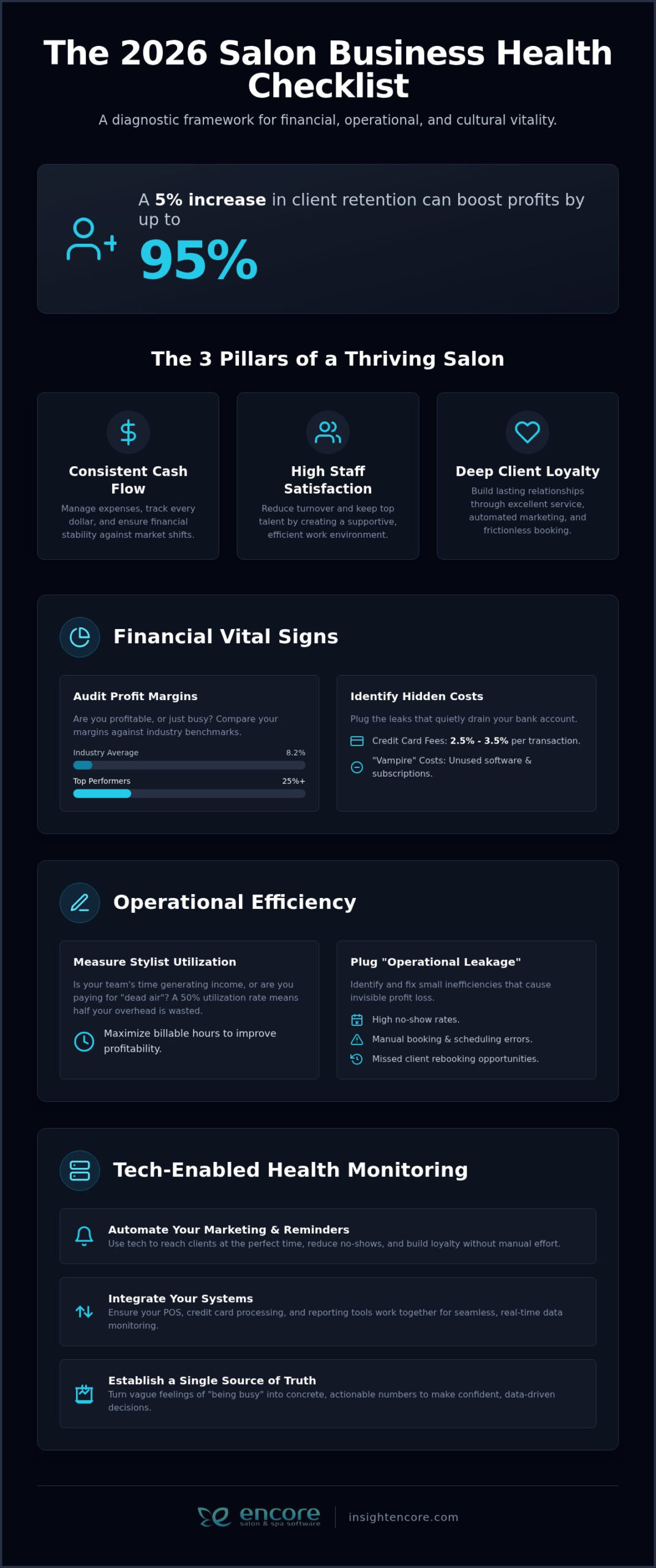
Did you know that increasing your client retention by just 5% can boost your profits by as much as 95%? It’s a staggering figure, yet many owners spend 2026 feeling like they’re just keeping their heads above water. Between rising operating costs and the constant pressure to keep top talent from moving to salon suites, it’s easy to lose track of the actual pulse of your studio. You deserve a business that supports your life, not one that consumes every waking hour with unpredictable cash flow and booking friction.

We’ve designed this salon business health checklist to help you audit your financial, operational, and cultural vitality. It’s time to move past the guesswork and use a clear diagnostic framework to see where you truly stand. This guide will walk you through everything from meeting the latest OSHA hazard communication standards to implementing automated loyalty programs. By the end, you’ll have a clear roadmap to improve your profit margins beyond the 8% industry average and regain the work-life balance you’ve been working so hard to find.

Key Takeaways

  • Learn how to balance cash flow, staff satisfaction, and client loyalty to move from surviving to thriving in the 2026 economy.
  • Audit your profit margins against 2026 benchmarks to ensure your overhead isn’t quietly draining your service revenue.
  • Identify “dead air” in your schedule and remove friction from your booking process by using our comprehensive salon business health checklist.
  • Discover how to boost your bottom line by automating your marketing and loyalty programs to reach clients at the perfect time.
  • Verify your tech stack’s health by ensuring your POS, credit card processing, and reporting tools work together seamlessly for real-time monitoring.

The 2026 Salon Landscape: Why a Business Health Checkup is Mandatory

The 2026 beauty market moves fast. It’s no longer enough to just “keep the lights on” and hope for the best. To move from surviving to thriving, you need a deep understanding of your studio’s inner workings. Relying on gut feelings or outdated paper ledgers is a major risk to your business continuity. Manual tracking makes it impossible to spot trends until it’s too late. It leaves your business vulnerable to simple human errors that digital systems catch instantly. If your data isn’t digital, it isn’t actionable.

True vitality comes from balancing three core pillars: consistent cash flow, high staff satisfaction, and deep client loyalty. When these align, your salon becomes resilient against economic shifts. This is why a comprehensive salon business health checklist is mandatory for any owner who wants to grow rather than just exist. We’ve designed this audit to give you the clarity you need to lead with confidence.

Moving Beyond Revenue: Defining True Business Health

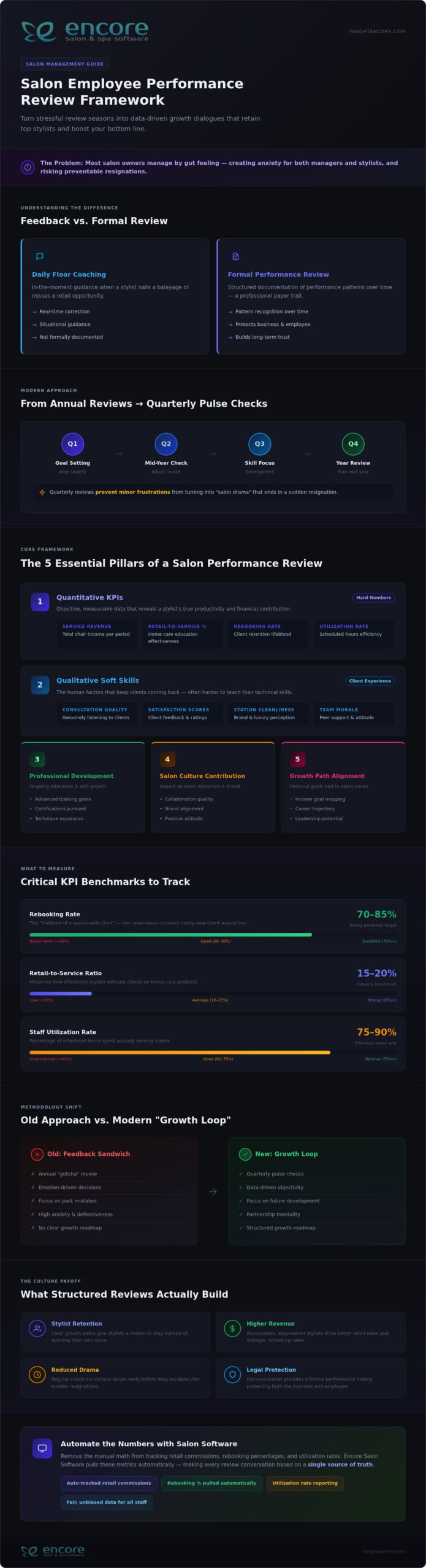
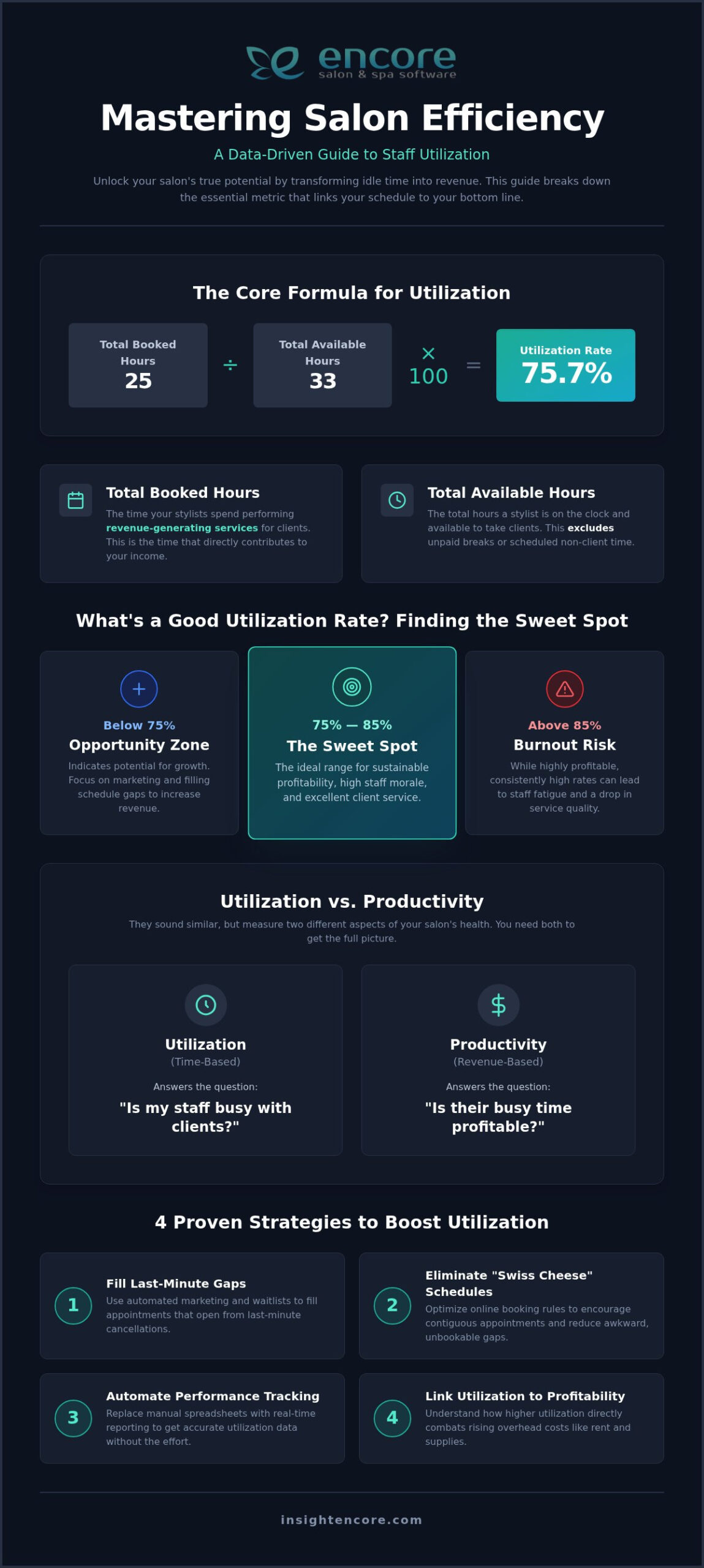
Revenue is a vanity metric if your expenses are out of control. You might have a full book, but are you actually profitable? True health is measured through utilization rates. This means looking at how much of your stylists’ time is actually generating income versus sitting idle. If your team is only 50% utilized, you’re paying for overhead that isn’t working for you.

Applying sound business administration principles helps you build a “Business Continuity Plan” to protect your studio from unexpected market changes. To make this work, you need a single source of truth that consolidates your data. Encore Salon Software provides that data-driven backbone, turning vague feelings of “being busy” into concrete numbers you can use to make real-time decisions.

Common Red Flags in Modern Salon Operations

Identifying problems early saves you thousands in the long run. One major red flag is a high no-show rate. This usually points to a breakdown in your client management or a lack of automated reminders. If your retail sales haven’t moved in months, it often signals a gap in staff training or poor inventory control. These issues don’t fix themselves; they require a proactive approach to management.

Keep an eye out for “operational leakage” in your daily workflow. Operational leakage is the invisible loss of profit caused by small inefficiencies like manual booking errors, unoptimized schedules, or missed rebooking opportunities. By running through a salon business health checklist, you can plug these holes before they drain your bank account. We’ll explore how to audit these financial and operational vital signs in the sections ahead.

Financial Vital Signs: Profits, Margins, and Cash Flow

Checking your bank balance isn’t a financial audit. In 2026, the average hair salon operates on a slim profit margin of about 8% to 8.2%. While top performers can push those margins toward 25%, most studios struggle with rising costs that quietly eat away at their take-home pay. Using a salon business health checklist allows you to see exactly where your money goes before it disappears. You need to know if your overhead, from rent to backbar supplies, is staying in proportion to your service revenue. If your costs are rising faster than your prices, you’re essentially paying for the privilege of working.

Hidden costs are the primary culprits of financial stress. Many owners overlook credit card processing fees, which typically range from 2.5% to 3.5% per transaction. While it seems small, this can cost a high-volume studio thousands every year. If you want to understand how to reduce credit card processing fees for small business and stop junk fees from quietly draining your margins, our 2026 guide breaks down exactly where those costs hide and how to reclaim them. Integrating your payments through Integrated Credit Card Processing can help you track these costs in real-time rather than waiting for a confusing end-of-month statement. For long-term growth, you should also look at SBA financial projections to map out your expected income and expenses for the next quarter. This foresight prevents the “feast or famine” cycle that plagues so many small businesses.

Cash Flow Stability and Expense Management

Cash flow is the lifeblood of your studio, but there’s often a painful gap between performing a service and having that cash available for bills. You need to audit your recurring expenses for “vampire” costs. These are old software subscriptions, unused marketing tools, or redundant services that no longer provide value. Small, $30 monthly charges add up quickly. By tightening your expense management, you ensure that more of your hard-earned money stays in your business. It’s about making sure every dollar has a job to do.

Profit Margins and Revenue Diversification

Healthy salons don’t rely on services alone. You should aim for a retail-to-service ratio of at least 15% to 20%. Since retail products often carry profit margins of 50% or more, they are the fastest way to boost your bottom line without adding more hours to your day. Another vital tool for stability is your gift cards strategy. Gift cards provide immediate cash flow and are excellent for filling the books during traditional off-peak months. If you’re looking for ways to streamline these numbers, you can contact our team to see how data-driven tools make financial tracking effortless.

Diversifying how you earn money makes your business resilient. When you combine high-margin retail sales with a robust rebooking strategy, your profit margins naturally expand. Don’t let your financial health be a mystery. Take control of your data today to build the profitable studio you’ve always envisioned.

Operational Efficiency: Optimizing the Salon Floor

A busy salon floor isn’t always an efficient one. If your stylists are rushing while your chairs sit empty during peak hours, you have a bottleneck. A robust salon business health checklist must include a deep dive into your daily operations. Start by auditing the friction in your booking process. How many clicks does it take for a client to secure an appointment? If the process is clunky or requires a phone call, you’re likely losing younger clients who value speed. Seamless online booking isn’t just a convenience; it’s a vital revenue protector.

Beyond the schedule, you must protect your digital assets. Your client data is one of your most valuable resources for growth. Ensuring full PCI compliance and secure data storage protects your reputation and your clients’ peace of mind. Without secure systems, a single data breach could undo years of brand building. Reliability in your tech stack allows you to focus on the artistry of your craft while the backend stays secure and organized.

Optimizing Staff Utilization and Scheduling

Dead air in the schedule is a silent profit killer. You need to identify if your current hours maximize peak revenue. Are you overstaffed on Tuesday mornings but turning away clients on Thursday nights? Measuring utilization rates helps you spot top-performing stylists and those who might need extra coaching. You can learn how to calculate salon staff utilization rate to turn these observations into hard data. High utilization means your team is productive, but not burnt out. It’s about finding the “sweet spot” where your team stays engaged without feeling overwhelmed by an impossible pace.

Inventory Control and Waste Reduction

Capital locked in dust-gathering products is capital you can’t use for marketing or upgrades. Audit your back-bar usage to prevent the “heavy pour” that drains your supplies faster than expected. A dedicated inventory management system helps you set automated reordering triggers. This prevents “out of stock” scenarios that frustrate clients and staff alike. Efficient inventory turnover ensures your cash stays liquid and your shelves stay fresh. While operational efficiency keeps the floor running, it also supports broader customer retention strategies by ensuring a consistent, reliable experience every time a guest walks through the door.

The Ultimate Salon Business Health Checklist: Is Your Studio Ready for 2026?

Client Retention and Brand Vitality Checklist

Social media followers are often a vanity metric that masks the true health of your studio. While a large following looks great, it doesn’t always translate into a stable bank account. Real vitality is measured by your Client Retention Rate (CRR). A healthy salon usually maintains a retention rate between 60% and 75%, with top performers reaching as high as 85%. If your numbers are slipping, your salon business health checklist should focus on why guests aren’t coming back. Remember, it’s five times more expensive to find a new client than it is to keep an existing one happy.

Reviewing your loyalty program is another essential step in this audit. Is your program actually driving more frequent visits, or is it just handing out discounts to people who would have come anyway? In the 2026 economy, your loyalty strategy should reward engagement and rebooking rather than just slashing your profit margins. You also need to assess your online reputation. Responding to every review shows you’re a human-centric business that cares about feedback. It builds trust with potential clients before they even step through your door.

Understanding Client Lifetime Value (CLV)

Understanding CLV is more important than tracking a single high-ticket service. CLV represents the total revenue a client brings to your studio throughout their entire relationship with you. Your management software should track these spending habits over time so you can clearly see who your most valuable guests are. Once you identify this VIP segment, you can create targeted appreciation campaigns that make them feel seen and valued. This data-driven approach ensures you’re investing your marketing energy where it will have the biggest impact on your long-term stability.

Marketing Automation and Digital Presence

Your marketing shouldn’t feel like a second job. Audit your automated email and SMS triggers to see if you’re reaching clients at the right time. “Thank you” messages after an appointment and “we miss you” prompts for clients who haven’t visited in eight weeks are simple ways to stay top-of-mind. These small touchpoints keep your chairs full without requiring hours of manual work. It’s about working smarter so you can spend more time behind the chair or leading your team.

Branding consistency is the final piece of the vitality puzzle. Your logo, colors, and tone should be identical across your social media and your online booking module. A professional, unified look builds confidence and makes the booking process feel secure. While social media is great for inspiration, your automated SMS marketing often delivers a much higher ROI because it lands directly in your client’s pocket. Mixing these digital tools creates a resilient brand that can weather any market shift.

Build a more loyal client base today

The Tech-Enabled Salon: Automating Your Health Monitoring

A common mistake in any salon business health checklist is treating software as a simple cash register. In reality, your technology is the central nervous system of your studio. You need to verify if your POS system integrates directly with your credit card processing. If these systems are disconnected, you’re forced to reconcile data manually; this invites errors and hides the true state of your margins. Integrated systems ensure that every penny is accounted for without the headache of manual entry.

Real-time reporting is another non-negotiable for 2026. Can you see your health metrics on your phone while you’re away from the desk? Waiting for a monthly report is too slow in a fast-moving market. You need to see staff utilization and daily sales at a glance. This accessibility gives you peace of mind and allows for quick adjustments before small issues become expensive problems. If you can’t monitor your business from anywhere, you’re tied to the front desk instead of leading your team.

Technology should be a tool that supports your staff, not a hurdle that slows them down. Audit how your team interacts with your current systems. If they find the software frustrating or confusing, they won’t use it correctly, and your data will suffer. Scalability is also vital. Your tech stack must be ready to support your 2026 growth, whether that means adding new chairs, hiring more stylists, or opening a second location. Your software should grow with you, not hold you back.

Leveraging Encore Salon Software for Real-Time Insights

Encore’s dashboard is designed to provide an instant business health score. It takes the guesswork out of management by turning raw numbers into clear, actionable insights. We offer specialized tools for tattoo studios, nail salons, and barber shops to ensure the features fit your specific workflow. Moving away from manual spreadsheets to automated accuracy isn’t just about saving time. It’s about having the confidence that your data is 100% correct. When your backend is automated, you can focus on the artistry and client relationships that define your brand.

Setting Your 2026 Growth Roadmap

Now that you’ve completed this salon business health checklist, use your results to set three “Non-Negotiable” goals for Q1. Maybe you need to tighten inventory control, or perhaps your focus is on boosting client retention through automated loyalty programs. Whatever the gap, technology is usually the bridge that gets you there. Scheduling a demo is the best way to see how modern tools can fill the specific needs identified in your audit. It’s time to stop wondering if your business is healthy and start knowing it is. Contact us today to start your tech-driven health check and secure your studio’s future.

Secure Your Studio’s Future with Data-Driven Confidence

Building a thriving studio in 2026 requires more than just artistic talent; it demands a clear view of your business’s inner workings. By running through this salon business health checklist, you’ve taken the first step toward moving from survival to sustainable growth. You now understand that true health is a balance of optimized staff utilization, secure client data, and healthy profit margins that exceed the industry average. It’s about making sure your hard work translates into a stable, profitable future.

Since 1991, we’ve helped thousands of beauty professionals simplify their operations. Whether you run a specialized tattoo studio, a spa, or a traditional salon, our integrated POS and credit card processing tools turn complex numbers into a simple roadmap for success. You deserve the peace of mind that comes with knowing your studio is on the right track. We’ve built our systems to remove the daily frustrations that hold you back from your true potential.

Ready to automate your salon's health check? Explore Encore Salon Software today.

You don’t have to face the hurdles of 2026 alone. With the right tools and a commitment to your studio’s vitality, you can reclaim your time and build a legacy that lasts. We’re here to help you every step of the way, providing the support you need to lead with confidence. Your journey toward a healthier, more organized business starts today.

Frequently Asked Questions

How often should I perform a salon business health checklist?

Aim for a full review every quarter. This frequency allows you to spot seasonal trends without becoming overwhelmed by data. Use a salon business health checklist monthly to monitor your cash flow and no-show rates. Regular checkups ensure you can pivot quickly if your margins slip. Staying consistent with these audits prevents small operational leaks from turning into major financial drains and keeps you focused on growth.

What is the most important KPI for salon health in 2026?

Client Retention Rate (CRR) remains the gold standard for health in 2026. Because acquiring a new client is five times more expensive than keeping an existing one, your ability to bring guests back is vital. A healthy salon targets a CRR between 60% and 75%. While revenue tells you what you’ve earned, retention tells you if your business has a sustainable future and a loyal, returning community.

How do I calculate my salon’s client retention rate accurately?

To calculate your CRR, subtract your new clients from the total number of clients at the end of a period. Divide that number by the total clients you had at the start. It sounds complex to do manually, which is why most owners use their management software to generate this report instantly. Accurate tracking helps you identify whether your stylists are building long-term relationships or just filling seats for a single visit.

Can salon management software really reduce my operating costs?

Yes, modern software reduces costs by eliminating manual errors and automating repetitive tasks. It cuts down on “dead air” in your schedule through smart rebooking and reduces no-shows with automated reminders. An inventory management system also prevents over-ordering, ensuring your capital isn’t tied up in products that don’t sell. These small efficiencies add up to a significant increase in your overall profit margins without needing extra staff.

What are the signs that my salon is financially ‘at risk’?

A primary sign of risk is a profit margin that consistently stays below the 8% industry average. Other red flags include high staff turnover and a rising no-show rate. If you find yourself struggling to cover overhead despite a busy schedule, you likely have operational leakage. Completing a salon business health checklist can help you identify if your pricing or expenses are out of alignment with your long-term studio goals.

How do I improve staff utilization without burning out my stylists?

Focus on optimizing your peak hours rather than just adding more shifts. Use data to identify the busiest times and ensure your top stylists are available when demand is highest. Automated gap-filling tools can also book short services into small openings in the schedule. This approach maximizes revenue without forcing your team to work longer hours. It’s about working smarter to protect their creative energy and your bottom line.

Is my salon data safe with cloud-based management software?

Your data is extremely secure when you use a reputable cloud-based platform. We prioritize PCI compliance and advanced encryption to protect your client records and payment information. Cloud systems are often safer than local computers because they include automatic backups and protection against hardware failure. This reliability ensures your business remains operational even if your physical studio faces an unexpected technical issue or power outage, giving you total peace of mind.

What is a healthy retail-to-service revenue ratio for a modern spa?

Modern spas should aim for a retail-to-service revenue ratio of 15% to 20%. Since retail products often have profit margins near 50%, they are essential for offsetting the lower margins of labor-intensive services. If your ratio is below 10%, it’s a sign that your team may need more training on how to recommend home-care solutions. Improving this metric is one of the fastest ways to boost your studio’s financial vitality and overall health.

Disclaimer

This article is general in nature and may contain errors, please verify all claims with your sales rep

Categories
Uncategorized

Ultimate Salon Financial Forecast Template & Guide 2026

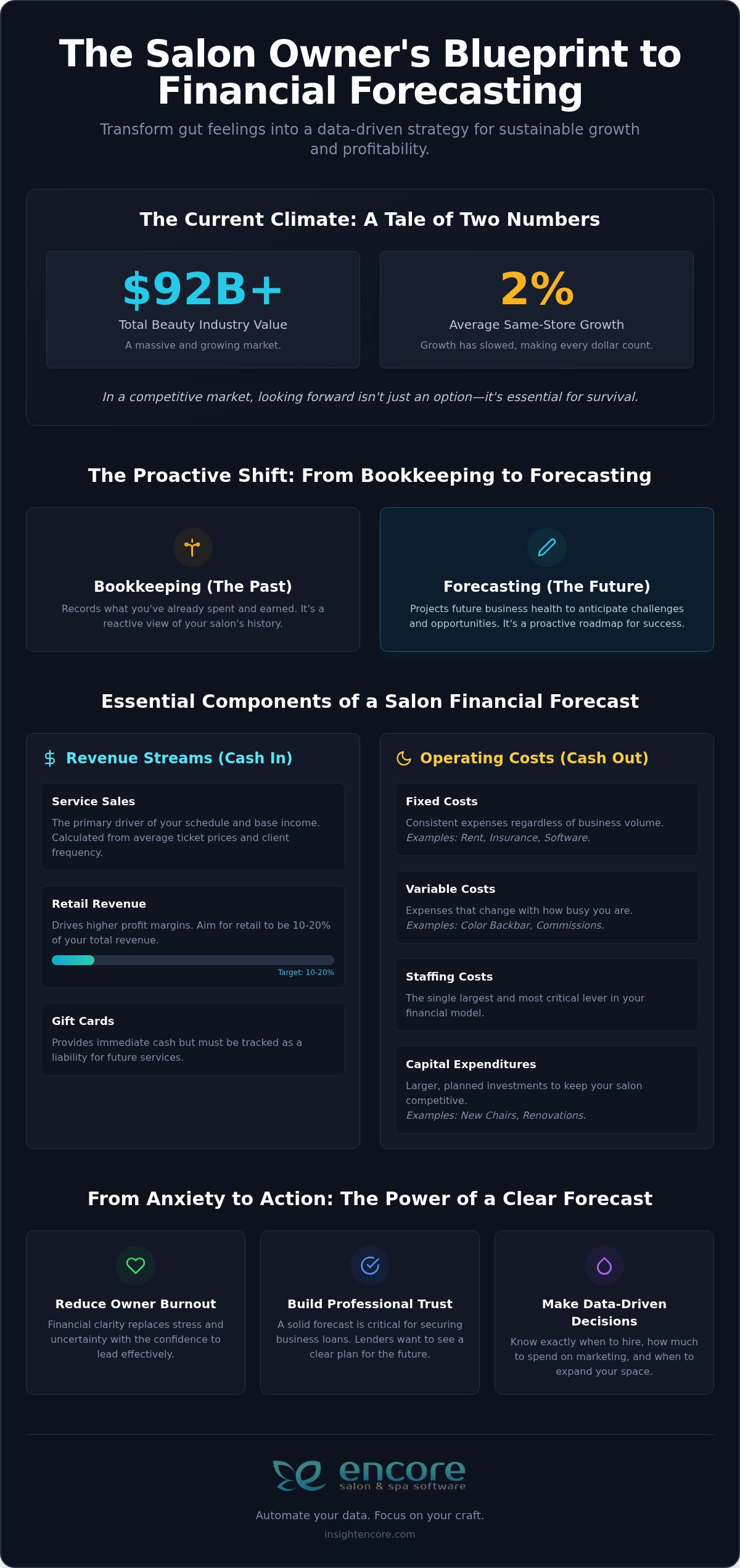
Did you know that while the beauty industry is worth over $92 billion, same-store growth for many salons has slowed to just 2%? It’s a sobering reality that makes every dollar count more than ever. You likely started your business to create beauty, not to spend your Sunday nights squinting at a confusing spreadsheet. It’s normal to feel a bit of anxiety when you’re deciding if you can afford a new hire or a second location. That’s why having a reliable salon financial forecasting template is so vital. It moves you away from “gut feelings” and toward a clear, data-backed strategy for your year ahead.

We understand that numbers can feel intimidating, but they don’t have to be. This guide provides a plug-and-play framework designed to wipe out cash flow uncertainty and replace it with professional confidence. You’ll learn how to build a living roadmap that accounts for everything from repeat client revenue to the latest 2026 economic shifts. We’ll show you how to automate your data tracking so you can stop worrying about manual errors and start focusing on your team. By the end of this article, you’ll have the tools to ensure your salon is sustainable, profitable, and ready for growth.

Key Takeaways

  • Shift your focus from past bookkeeping to future forecasting to identify potential cash flow dips before they happen.
  • Master the essential components of a salon financial forecasting template, including service sales, retail revenue, and the balance between fixed and variable costs.
  • Learn the step-by-step process of using your POS data to calculate average ticket prices and client frequency for a reliable 12-month roadmap.
  • Avoid expensive growth mistakes by accounting for staff turnover and setting realistic timelines for new guest acquisition.
  • Discover how Encore Salon Software removes the stress of manual data entry by generating instant reports for your financial planning.

Why Financial Forecasting is the Secret to Salon Longevity in 2026

Many salon owners mistake bookkeeping for financial planning. While bookkeeping tracks what you’ve already spent, it doesn’t tell you where you’re going. To understand what a financial forecast is, think of it as a projection of your future business health based on current trends. Using a salon financial forecasting template allows you to look forward. It helps you anticipate the slow months of 2026 before they happen. You’re no longer just recording history; you’re writing it.

A forecast acts as your business’s early warning system. With industry reports showing that same-store growth has leveled off at around 2%, you can’t afford to be reactive. If your forecast shows a potential cash flow dip in November, you have time to launch a loyalty campaign or adjust your inventory orders now. This proactive approach is what separates a thriving salon from one that’s constantly firefighting. It gives you the power to make adjustments while you still have the resources to do so.

The Emotional Benefit of Financial Clarity

Financial uncertainty is a leading cause of owner burnout. When you don’t know if you can cover rent next month, your creativity suffers. Clarity brings peace. A clear roadmap transforms you from a stressed manager into a confident leader. It also builds a professional image that matters to outside partners. If you’re looking at SBA 7(a) loans, which currently carry variable rates between 9.75% and 13.25%, lenders will want to see that you have a firm grip on your future numbers. Professionalism breeds trust.

Strategic Decision Making via Data

Data gives you the permission to grow. Instead of wondering if it’s time to hire a new stylist, your salon financial forecasting template will show you exactly when your current team will reach capacity. You can see the revenue impact of a new hire before they even start their first shift. This same logic applies to your marketing budget. You’ll know exactly how much you can spend to acquire a new guest while maintaining your margins. For more tips on protecting your bottom line, check out our guide on how to increase salon profit margin. Strategic growth isn’t about taking big risks; it’s about making informed choices.

Essential Components of a Salon Financial Forecasting Template

A salon financial forecast is a predictive model of cash inflows and outflows over a specific period. To build a resilient business, your salon financial forecasting template must go beyond simple estimates. It needs to reflect the reality of your daily operations. This means breaking your business down into manageable categories that show exactly where your money goes. You can’t plan for growth if you don’t know your starting point.

Revenue isn’t just about how many haircuts you perform. It includes retail product sales, which often carry higher profit margins, and gift card breakage. When you create a prospective financial outlook, you’re looking at the total potential of your brand. It’s about seeing the big picture of how different income streams work together to support your goals.

Costs usually fall into two buckets. Fixed costs like rent and insurance stay the same regardless of your volume. Variable costs, such as color backbar and stylist commissions, change based on how busy you are. Staffing costs remain the biggest lever in your financial model. Managing these properly is the difference between a profitable month and a stressful one. You also need to plan for capital expenditures. These are the larger investments, like new styling chairs or a front desk renovation, that keep your space competitive and fresh.

Predicting Revenue Beyond Service Sales

Service sales drive the schedule, but retail-to-service ratios drive the profit. A healthy salon often aims for retail to make up 10% to 20% of total revenue. Your forecast should also account for seasonal fluctuations, such as the “January dip” when client spending naturally cools after the holidays. Don’t overlook the impact of gift cards on your future cash flow. While they provide immediate cash, they represent a liability for future services that you must track carefully in your model.

Understanding Your True Operating Costs

Hidden costs can quietly erode your margins. Credit card processing fees and software subscriptions often go unexamined but add up quickly over a year. If you want to stop these fees from silently draining your profits, our guide on how to reduce credit card processing fees for small business breaks down exactly where the money goes and how to reclaim it. Treat your backbar inventory as a variable expense that scales with your service volume. If your color usage spikes, your revenue should too. For a deeper dive into balancing these numbers, read our guide on salon cash flow management. If you want to see these numbers in real-time without the manual math, you can explore our reporting tools to simplify your planning.

Step-by-Step: How to Forecast Salon Revenue and Expenses

Creating a salon financial forecasting template isn’t just about guessing. It’s about building a model based on what actually happens in your chairs. You need to follow a logical path to ensure your projections are grounded in reality. This process turns your messy data into a clear vision for the future of your business.

Start by gathering historical data from your POS system. Look at your performance from the last 12 months to find your baseline. This tells you your average ticket price and how often your clients return. If you’re following the SBA’s guide to financial projections, you know that historical accuracy is the foundation of any reliable outlook. Next, factor in your staff utilization. A chair that sits empty for half the day isn’t earning its keep. Layer in any planned price increases or upcoming marketing campaigns. These variables can significantly shift your revenue curve.

Finally, stress-test your model. Create a “worst-case” scenario where new guest acquisition drops by 10%, which was a common industry trend in late 2026. Knowing you can survive a dip gives you the confidence to push for the “best-case” results. It’s better to be prepared for a storm than to be surprised by one. To ensure your studio is truly ready for what’s ahead, it’s worth running through a comprehensive salon business health checklist that audits your financial, operational, and cultural vitality alongside your forecast.

The Role of Staff Utilization in Revenue

Your forecast will fail if you don’t track stylist performance. You need to calculate the revenue per hour for every chair in your salon. This metric reveals whether you’re truly at capacity or if you just have a scheduling bottleneck. If you aren’t sure where to start, check out our guide on how to calculate salon staff utilization rate. High utilization leads to higher profit margins without adding more overhead. It’s the most effective way to grow your income without expanding your footprint.

Projecting Retail and Upsell Growth

Retail isn’t just an extra on the side; it’s a core revenue driver. Set realistic benchmarks for your team based on their historical performance. Use your salon financial forecasting template to see how even a small 5% increase in retail sales impacts your year-end profit. Automated marketing tools can help here by sending rebooking reminders and personalized product offers. These systems boost your rebooking rates, making your future revenue more predictable and less reliant on finding new guests every month. Use your historical data to predict peak demand periods so you can stock up on inventory before the rush starts.

Ultimate Salon Financial Forecast Template & Guide 2026

Common Forecasting Mistakes and How to Avoid Them

Many owners feel a surge of relief once they first fill out a salon financial forecasting template. It feels like the hard part is over. However, the real value of a forecast lies in the accuracy of your assumptions. It’s easy to fall into traps that make your roadmap unreliable. One of the most frequent errors is overestimating how quickly you can acquire new clients. Industry data from 2026 shows that new guest visits declined by 10% across the board. If your model assumes a constant stream of new faces without a heavy marketing spend, your revenue projections will be inflated.

You also can’t ignore the impact of staff turnover. When a stylist leaves, they often take a portion of their clientele with them. This creates a massive revenue hole that can take months to fill with new hires. Additionally, many owners underestimate the “cost of goods” as they get busier. As your service volume increases, your backbar expenses and laundry costs scale right along with it. If you don’t account for this, your profit margin will shrink even as your total sales grow. Finally, a forecast is only useful if you update it. Failing to compare your actual results against your projections makes the whole exercise a waste of time.

The Danger of “Optimism Bias”

Everyone wants to be positive about their business, but your budget needs to be grounded in reality. Always include a 10% buffer for expenses in your salon financial forecasting template. Unexpected costs, like a broken HVAC system or a faulty water heater, can derail your cash flow if you aren’t prepared. Use real benchmarks to validate your goals. For example, a well-managed salon typically sees a profit margin between 8% and 15%. If your model predicts a 40% margin, it’s time to double-check your math and your assumptions.

Static vs. Rolling Forecasts

A yearly budget often feels irrelevant by February. The market moves too fast for static planning. Instead, adopt a 3-month rolling forecast. This allows you to stay agile and adjust your spending based on the previous quarter’s actual performance. By integrating real-time credit card processing data, you can see exactly how much cash is hitting your bank account every day. This clean data ensures your projections stay accurate and useful all year long, helping you make better decisions for your team’s future.

Get started with Encore to automate your data tracking today

Automating Your Forecast with Encore Salon Software

A manual salon financial forecasting template is a fantastic starting point, but the real magic happens when you stop typing and start leading. Manual data entry is the primary source of errors that lead to “messy spreadsheet” anxiety. Encore Salon Software eliminates this hurdle by connecting your POS and inventory management directly to your financial planning. Every service performed and every bottle of retail product sold flows into your records automatically. This shift moves you from a state of constant stress to a feeling of organized control.

Generic accounting tools often fall short because they don’t speak the language of beauty and wellness. They don’t understand the nuances of color waste or the complexities of tracking chair and booth renter financials in one unified platform. We’ve spent 35 years refining our tools to handle these specific industry hurdles. We aren’t just a distant service provider; we’re a supportive partner. Our human-centric approach ensures you have the reliability you need to master your numbers without feeling intimidated by the technology.

From Data to Insight: Encore’s Reporting Suite

Visualizing your business health should only take a few clicks, not a few hours. Encore allows you to generate instant performance reports that feed directly into your salon financial forecasting template. You can customize these reports for specialized environments, including tattoo studios, nail salons, or spas. This level of detail helps you see exactly which services are driving your profit and where your costs might be creeping up. You can explore the full range of Encore Salon Software features to see how we turn raw data into actionable insights for your growth.

Ready to Take Control of Your Numbers?

Predictable revenue is the foundation of a sustainable business. Our automated marketing and loyalty programs contribute to this by increasing client retention and boosting rebooking rates. When your revenue is predictable, your forecast becomes a powerful tool for expansion rather than just a way to track expenses. You’ll have the data-backed confidence to hire new stylists or invest in a renovation. We’re eager to help you reach that next level of success. If you’re ready to see how our system can transform your planning, contact our team for a personalized walkthrough of our platform today.

Build a Business That Lasts

Mastering your numbers is the most empowering thing you can do for your salon. It transforms daily financial anxiety into a clear, actionable roadmap for growth. By implementing a salon financial forecasting template, you’ve taken the first step toward true business sustainability. You’re no longer just reacting to your bank balance; you’re designing your future with data-backed confidence.

We’ve been a dedicated partner to salon owners since 1991, offering 35 years of industry expertise. Our all-in-one platform covers everything from POS to payroll, ensuring your data is always clean and ready for analysis. Whether you run a high-volume barbershop or a specialized wellness studio, we provide the human-centric tools you need to succeed. You’ve built something beautiful, and now it’s time to ensure it thrives for years to come.

See how Encore Salon Software automates your financial reporting—Book a Demo Today!

Your passion for your craft deserves a business that is as resilient as it is creative. Take the leap today and replace uncertainty with organized control. We’re here to guide you every step of the way toward the successful future you deserve.

Frequently Asked Questions

What is the difference between a salon budget and a financial forecast?

A budget is a spending plan that sets limits on your expenses; a financial forecast is a prediction of where your business is actually headed. While a budget is often static, a forecast uses current trends to show future outcomes. Using a salon financial forecasting template helps you bridge this gap. It allows you to see the real-world impact of your current bookings on next month’s bank balance.

How often should I update my salon financial forecasting template?

You should update your salon financial forecasting template at least once a month. This practice, known as a rolling forecast, ensures your projections stay relevant as market conditions change. If same-store growth stalls or new guest acquisition dips, a monthly update allows you to catch these trends early. Regular reviews transform your forecast from a static document into a living roadmap that guides your daily business decisions.

Do I need expensive software to start forecasting for my salon?

You don’t need expensive software to begin, but manual spreadsheets often lead to data entry errors. While a basic template is a great starting point, specialized tools like Encore Salon Software automate the process. Our platform pulls data directly from your POS and inventory records to feed your projections. This saves you hours of manual work and provides the professional confidence you need to make big expansion decisions.

How do I account for booth renters in my financial projections?

Booth renters should be projected as a steady stream of fixed rental income rather than variable service revenue. Unlike commission stylists, their contribution doesn’t fluctuate with service volume. Encore offers specialized modules for chair and booth renters to keep these financials separate and clear. This ensures your projections accurately reflect your overhead coverage without confusing your personal service sales with your rental income.

What is a realistic profit margin for a hair salon in 2026?

A realistic profit margin for a well-managed hair salon in 2026 typically falls between 8% and 15%. While your total revenue might be high, your net profit depends on how effectively you manage variable costs like backbar supplies and commissions. Monitoring your margin through a forecast helps you identify if costs are creeping up. This allows you to adjust your pricing or inventory management before your bottom line suffers.

Can I use a general accounting tool like QuickBooks for salon forecasting?

General tools like QuickBooks are excellent for bookkeeping and tax compliance, but they often lack the industry-specific depth needed for salon forecasting. They don’t naturally track metrics like stylist utilization or retail-to-service ratios. Encore is designed specifically for wellness businesses, offering integrated reporting that understands the nuances of your daily operations. This specialized focus provides a much clearer picture of your business health than generic accounting software can.

How do I factor in seasonal trends like the holiday rush?

Factoring in seasonal trends requires looking at your historical POS data to identify recurring patterns. Most salons experience a significant revenue peak in December followed by a natural cooling in January. Your forecast should adjust for these fluctuations by lowering revenue expectations during slow months and increasing them during high-demand periods. This ensures you have enough cash reserved from the busy season to comfortably cover your fixed costs during the dips.

What should I do if my actual numbers are significantly lower than my forecast?

If your actual numbers fall short, use the gap to identify exactly where the leakage is happening. Check if your new guest acquisition has dropped or if your staff turnover has increased. A forecast acts as an early warning system, giving you time to respond. You might launch an automated loyalty program or a targeted marketing campaign to boost rebooking rates and get your revenue back on track.

Disclaimer

This article is general in nature and may contain errors, please verify all claims with your sales rep
Categories
Uncategorized

Salon Cash Flow Management: 2026 Financial Guide

With the U.S. salon industry projected to generate $48 billion in revenue in 2026, why does it feel like your bank account is often running on empty? It’s a common frustration to see every chair full yet still worry about covering the next lease payment. You aren’t alone in feeling the sting of unpredictable slow seasons or the headache of tying up too much capital in retail stock that just won’t move. Learning how to manage salon cash flow effectively is the vital shift that transforms a talented artist into a confident, relaxed business owner.

We understand that you started this journey to create beauty, not to spend your weekends buried in complex spreadsheets. It’s exhausting to manually calculate staff commissions or wonder exactly where your profit disappeared. This guide is your roadmap to financial clarity. We will provide a step-by-step framework to stabilize your monthly income and automate the “math” that currently causes so much stress. You’re about to discover how to gain a clear understanding of your finances and ensure your business thrives in 2026 with systems that work as hard as you do.

Key Takeaways

  • Understand why a fully booked calendar doesn’t always mean a healthy bank account by mastering the difference between profit and real-time cash flow.
  • Stop “leaky” finances by categorizing fixed and variable expenses and implementing a simple daily reconciliation routine that keeps you in control.
  • Unlock “frozen cash” by optimizing your inventory levels and aligning staff schedules with your most productive hours to reduce unnecessary overhead.
  • Follow a proven five-step method on how to manage salon cash flow effectively by using historical data to project future revenue with confidence.
  • Learn how automated tools like Encore Salon Software handle complex math and data tracking for you, letting you focus on your clients instead of spreadsheets.

Profit vs. Cash Flow: Why Your Salon Can Be Busy but Broke

It’s a frustrating paradox. Your stylists are booked solid and you might even hit the industry average revenue of $245,000. Yet, when you look at your bank balance on Friday, there’s barely enough to cover the rent. This is the “Busy but Broke” trap. It happens because profit is just a theoretical number on paper, while cash flow is the cold, hard reality of your bank account. To understand what cash flow is, you have to look at the timing of every transaction. Profit tells you what you earned after expenses, but cash flow tracks exactly when that money arrives and when it leaves.

In a salon, managing this is uniquely complex. You’re balancing service revenue, which is immediate, with retail stock that might sit on a shelf for months. With labor costs typically eating up 45% to 55% of your gross revenue, there is very little room for error. You have to track three main types of movement:

  • Operating Cash Flow: The daily money from haircuts, colors, and product sales.
  • Investing Cash Flow: Money spent on long-term assets, like new salon chairs or high-end equipment.
  • Financing Cash Flow: Cash used for loans or business debt.

Learning how to manage salon cash flow effectively starts with recognizing that timing is everything. If your expenses hit on the 1st but your big color appointments aren’t until the 15th, you have a cash flow problem, even if you are profitable by the end of the month.

Common Cash Flow Killers in the Beauty Industry

Small leaks can sink a big ship. Last-minute cancellations and no-shows are the most immediate thieves. They don’t just cost you a service fee; they leave a stylist idle while your fixed costs, like electricity and rent, keep ticking. Then there’s the “January Slump.” If you haven’t built a reserve during the busy holiday season, a 20% dip in bookings can feel like a crisis. Finally, watch your petty cash. Those emergency trips to the store for extra towels or coffee pods add up quickly if they aren’t tracked daily.

The Role of Visibility in Financial Peace of Mind

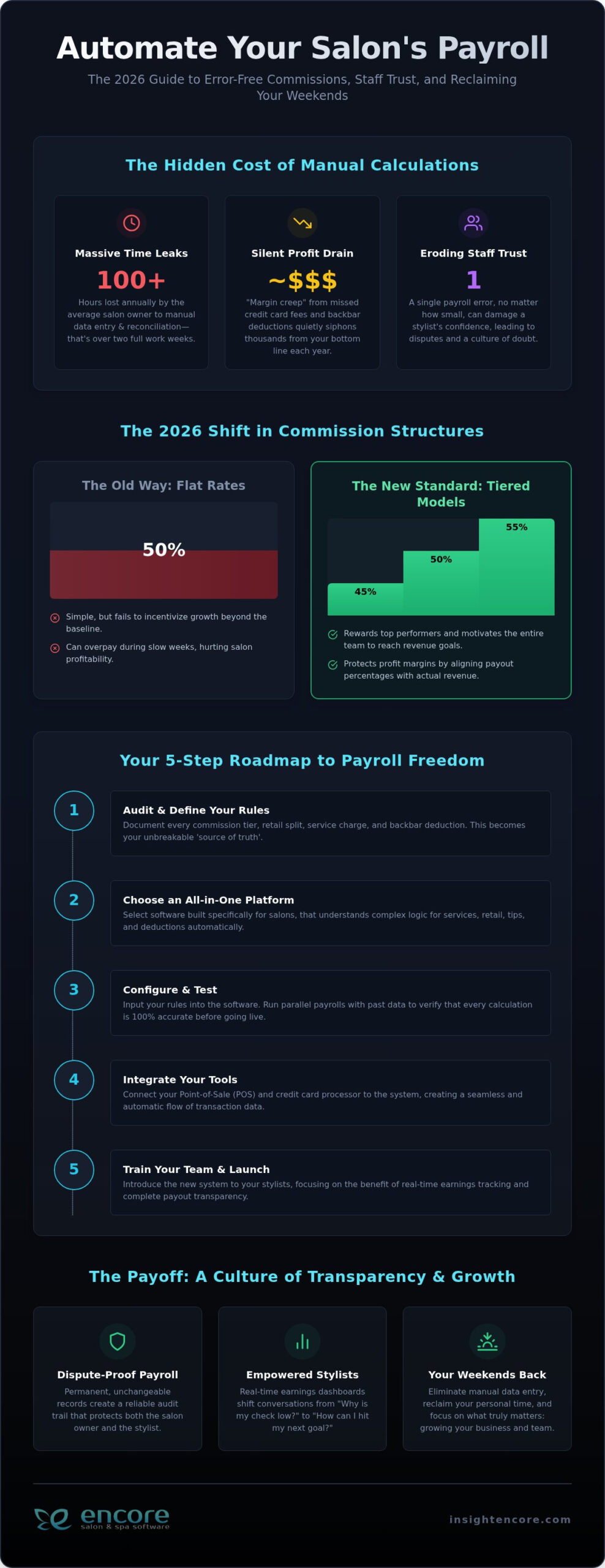
You can’t fix what you can’t see. Many owners wait for a quarterly report from their accountant, but that’s like looking in the rearview mirror while driving. By the time you see a problem, it’s three months old. Real-time data gives you the power to make decisions today. Instead of relying on a gut feeling that the salon is doing well, you need to know your exact totals every evening. Automation is the key. It removes human error from daily tallies and ensures that your commission math is perfect. When you use integrated management features, the stress of the unknown disappears, replaced by a feeling of organized control.

Building a Foundation: Tracking Income and Expenses with Precision

Running a salon is deeply personal. Every dollar represents a client served or a product sold. To keep that money where it belongs, you need a crystal-clear map of your outflows. This starts with separating your fixed costs from your variable ones. Your fixed costs, like rent and insurance, are the anchors that stay the same every month. Variable costs, such as backbar supplies and utilities, are more fluid. Tracking these categories separately is how to manage salon cash flow effectively because it stops small, variable leaks before they become floods.

Daily reconciliation is your best defense against “leaky” cash flow. It’s tempting to wait until the end of the week, but small errors in manual entry or untracked petty cash purchases add up quickly. By spending ten minutes each evening balancing your till, you ensure your records match your bank account. This habit creates a reliable foundation for your morning check-in. A simple cash flow dashboard allows you to see your current balance and upcoming bills in just five minutes, giving you the confidence to start your day with a clear head.

Automating Revenue Tracking with POS Integration

Manual data entry is a magnet for human error. When you use integrated credit card processing, your sales data flows directly into your management system without you lifting a finger. This automation captures every detail, including digital tips and service add-ons that might otherwise slip through the cracks. It also speeds up fund availability. Instead of waiting days for transactions to clear, integrated systems often provide faster access to your cash, which is vital for meeting immediate payroll needs.

Managing Outflows: The ‘Envelope Method’ for the Digital Age

The “Envelope Method” isn’t just for physical cash; it’s a powerful digital strategy too. By allocating specific percentages of your daily revenue to separate “envelopes” or accounts, you ensure you’re never scrambling for tax or payroll money. For example, you might set aside 15 percent for taxes and 50 percent for labor costs immediately. This proactive approach allows you to implement strategies to strengthen your financial stability during the quieter seasons.

Modern software can even flag your account when variable expenses, like your monthly color order, exceed your set budget. There is a massive psychological benefit to seeing “saved” cash sitting in a dedicated account for future bills. It replaces the panic of the unknown with a sense of organized control. If you’re ready to see how simple this tracking can be, you can explore our all-in-one management tools today.

Optimizing Your Two Largest Outflows: Inventory and Labor

Inventory and labor are the two heaviest weights on your balance sheet. If they aren’t balanced perfectly, they can pull your entire business down. Many owners see a shelf full of products and feel a sense of security, but that’s a mistake. Think of your backbar and retail shelves as “frozen cash.” Every bottle sitting there is money that isn’t available to pay your team or your rent. Understanding the relationship between these two expenses is the next step in learning how to manage salon cash flow effectively.

Labor is your highest expense, typically accounting for 45% to 55% of gross revenue in 2026. If you have three stylists standing around during a Tuesday morning dead zone, you’re paying to keep the lights on for no return. This is especially critical for specialized businesses like tattoo studios or booth rental spaces. These “mini-cash flows” require precision to ensure the house stays profitable while the artists thrive. Commission structures also impact your weekly cash availability. If you pay out commissions before your credit card deposits fully clear, you create a temporary cash crunch that can be avoided with better timing.

Smart Inventory Management: Freeing Up Your Capital

Stop guessing what you need to order. You can implement “Par Levels” to trigger orders only when you hit a specific minimum. This ensures you aren’t overbuying “Dust-Gatherers,” which are products that haven’t moved in 90 days. When you use Encore’s inventory management, this process becomes automatic. The system tracks every ounce used in the backbar and every bottle sold at retail, keeping your capital fluid instead of trapped on a shelf.

Aligning Staff Performance with Financial Health

A busy salon isn’t always a productive one. You need to track your salon staff utilization rate to see if your team’s time is being used efficiently. If utilization is low, it’s time to adjust your scheduling or focus on automated marketing to fill those gaps. Automated commission calculations also prevent “human error” overages that can quietly drain your accounts. By incentivizing your staff to focus on high-margin services like color corrections or scalp treatments, you increase the amount of cash staying in the business after labor costs are paid.

Salon Cash Flow Management: 2026 Financial Guide

The 5-Step 2026 Salon Cash Flow Forecasting Method

Forecasting is your financial weather report. It tells you when to carry an umbrella and when to soak up the sun. If you’re tired of being surprised by a low bank balance, learning how to manage salon cash flow effectively requires a proactive look at the months ahead. This isn’t about being a math genius; it’s about using your existing data to make informed decisions. This 5-step method for 2026 simplifies the process so you can plan with total confidence. To take your planning even further, a dedicated salon financial forecasting template can give you a plug-and-play framework that moves you from gut feelings to a clear, data-backed strategy for the year ahead.

  • Step 1: Gather 12 months of historical data. This shows you the natural rhythm and seasonal cycles of your business.
  • Step 2: Project future revenue. Use your current booking trends and staff levels to estimate what’s coming in the next quarter.
  • Step 3: List known upcoming expenses. Include everything from license renewals to planned equipment upgrades and lease increases.
  • Step 4: Factor in seasonal peaks and valleys. Plan for the holiday rush and the January slump at the same time.
  • Step 5: Adjust your strategy. This is where you decide how to manage salon cash flow effectively by cutting unnecessary costs or launching a new marketing campaign.

Projecting Revenue in a Subscription and Service Economy

The beauty industry is leaning heavily into recurring revenue models. If you offer memberships, include that guaranteed income in your projections. It’s also helpful to estimate the lifetime value of a new client. A one-time visitor is a win, but a client who returns every six weeks is a financial pillar for your business. Don’t forget about gift card sales. These are fantastic immediate cash injections that can help bridge a gap during a slow week. Just remember to track these as liabilities so you’re ready when the client returns to redeem them later in the year.

Building the ‘Peace of Mind’ Cash Reserve

Every salon owner deserves to sleep soundly at night. We recommend following the “Rule of Three” as a core part of your financial strategy. Your goal is to have three months of operating expenses sitting in a separate business savings account. You don’t need to find this money all at once. Build this reserve incrementally by setting aside a small percentage of your weekly profit, perhaps just 2 or 3 percent. This habit ensures your business remains stable without hurting your daily operations or your ability to pay your team. This emergency fund is your shield against the unexpected, like a sudden equipment failure or a change in local regulations. Having this cushion allows you to lead your team with a sense of calm and control. Pairing this reserve-building habit with a thorough salon business health checklist gives you a complete picture of your studio’s financial and operational readiness for the year ahead.

Start your financial transformation today

Leveraging Encore Salon Software to Automate Your Success

You didn’t open your doors to become a full-time bookkeeper. You’re an artist, a mentor, and a leader. While the financial framework we’ve discussed is vital, you shouldn’t have to spend your Sunday nights manually entering data into a spreadsheet. This is where Encore acts as your friendly mentor, handling the heavy lifting of data tracking so you can stay focused on your team and your clients. Shifting your focus to how to manage salon cash flow effectively through automation is the single most impactful change you can make for your business in 2026.

One of the biggest mistakes owners make is “Frankenstein-ing” their business by using five different apps that don’t talk to each other. When your booking system, inventory tracker, and credit card processor all live under one roof, you eliminate the data gaps that lead to financial surprises. For specialized businesses like tattoo studios or niche wellness centers, this level of integration is even more critical. You need a system that understands the specific nuances of your craft, from tracking booth rental fees to managing high-ticket service deposits.

Integrated Tools That Drive Immediate Inflows

Waiting for money to arrive is the hardest part of the “Busy but Broke” cycle. Encore helps you break that cycle with tools designed to secure your income before the client even walks in. By setting automated deposit requirements for high-ticket services like extensions or complex color work, you protect your time and your cash. If your calendar shows a gap, you can use built-in marketing automation to send targeted offers to your most loyal clients, filling those empty chairs instantly. Best of all, our simplified financial reporting translates complex numbers into clear, actionable insights that you can actually understand at a glance.

Taking the Next Step Toward Financial Freedom

Upgrading your management system is about more than just better math; it’s an investment in your mental health. The constant low-level stress of “not knowing” is what leads to burnout. Transitioning from a state of surviving to thriving requires the visibility that only professional software can provide. You don’t have to be an accountant to run a highly profitable business. You just need the right partner to handle the details. Encore is the ultimate answer to how to manage salon cash flow effectively without the daily headache of manual tracking.

Explore Encore Salon Software features

Transforming Your Financial Future

Mastering the art of financial management is the bridge between being a busy stylist and becoming a thriving business owner. You’ve learned that profit on paper doesn’t always match the cash in your hand, and that visibility is your greatest tool for stability. By optimizing your inventory and aligning your labor costs with actual productivity, you’re already ahead of the curve. Learning how to manage salon cash flow effectively is a journey that replaces daily stress with organized control.

Since 1991, we’ve helped salons, spas, and tattoo studios across the globe simplify their operations. Our all-in-one management platform handles the complex data lifting, from integrated inventory tracking to automated payroll calculations. You don’t have to navigate these financial hurdles alone. With the right systems in place, you can focus on the creative work you love while your business grows with confidence.

Take Control of Your Salon's Finances with Encore Salon Software

Your path to a predictable monthly income and a thriving salon starts today. We’re here to guide you every step of the way toward the financial freedom you deserve. You’ve got the talent; now you have the framework to match it.

Frequently Asked Questions

What is the difference between profit and cash flow in a salon?

Profit is the surplus left over after all expenses are subtracted on paper, while cash flow is the actual timing of money entering and leaving your bank account. A salon can be profitable but still run out of cash if bills are due before client payments arrive. Understanding this distinction is key to learning how to manage salon cash flow effectively. It ensures you have liquid funds for daily operations regardless of your paper revenue.

How much cash reserve should a small salon ideally have?

A small salon should ideally aim for a cash reserve that covers at least three months of operating expenses. This “Rule of Three” provides a safety net for unexpected equipment repairs, sudden staff turnover, or seasonal dips. You can build this fund incrementally by setting aside a small percentage of your weekly intake. Having this cushion allows you to make calm, strategic decisions rather than reacting out of financial panic during a slow week.

Can salon software really help me save money on credit card fees?

Yes, integrated credit card processing can often reduce your total costs by eliminating the need for separate third-party hardware and reducing manual entry errors. While specific fees vary by provider, integrated systems streamline your reporting and speed up fund availability. This improved efficiency means your money reaches your bank account faster, which is a vital part of how to manage salon cash flow effectively and maintain steady business operations.

How often should I check my salon’s cash flow statement?

You should perform a quick five-minute check of your daily totals every evening and a more detailed review of your cash flow statement once a week. Daily reconciliation prevents small errors from ballooning into large discrepancies. The weekly review allows you to spot trends, such as rising backbar costs or underperforming shifts, before they impact your ability to pay upcoming bills like rent or payroll.

What are the biggest ‘hidden’ expenses in a spa or salon?

The biggest hidden expenses often include backbar waste, untracked petty cash spending, and credit card processing fees. Small, frequent purchases for salon supplies like coffee, towels, or cleaning products can quietly drain your profits if they aren’t logged. Additionally, “frozen cash” tied up in overstocked retail inventory that hasn’t moved in 90 days acts as a major hidden drain on your liquid capital and prevents you from investing in growth.

How do I handle cash flow if I’m a solo chair renter?

Solo chair renters should treat their business like a mini-salon by using specialized Chair/Booth Renter Software to track their individual inflows and outflows. You need to separate your personal and business finances strictly and set aside a fixed percentage of every service for taxes and rent immediately. This disciplined approach ensures you always have the funds ready for your overhead, even if your booking schedule varies from week to week.

What should I do if my salon’s cash flow becomes negative?

If your cash flow becomes negative, the first step is to identify where the money is “leaking” by reviewing your variable expenses. You may need to temporarily reduce inventory orders, adjust staff schedules to match peak hours, or offer high-margin service specials to drive immediate revenue. Focus on collecting deposits for high-ticket services to inject cash into the business quickly. Analyzing your data helps you determine if the issue is a temporary dip or a structural problem.

How can I improve cash flow during the slow post-holiday months?

To improve cash flow during slow periods, use automated marketing to fill empty chairs with loyal clients who haven’t visited recently. You can also promote gift card redemptions or launch specialized membership programs to create recurring, predictable income. Focusing on high-margin treatments, such as scalp treatments or deep conditioning, can increase the average ticket price without significantly increasing your product costs or labor time during these quieter weeks.

Disclaimer

This article is general in nature and may contain errors, please verify all claims with your sales rep

Categories
Uncategorized

How to Increase Salon Profit Margin: The 2026 Operational Checklist

What if the reason your bank account feels empty isn’t a lack of clients, but a series of invisible leaks in your daily operations? It’s a frustrating reality for many owners in 2026. You see a packed appointment book, yet rising labor costs, high no-show rates, and product waste keep your actual take-home pay stagnant. We understand how exhausting it feels to work this hard without seeing the financial reward you deserve. To truly master how to increase salon profit margin, you need to move beyond simple revenue growth and start plugging those operational gaps.

We’re here to help you shift from being busy to being profitable. You’ll discover how to identify which services are actually making you money and how to stop the backbar bleed of wasted supplies. We’ll also look at how automating those tedious, time-consuming tasks can drastically lower your labor expenses. This guide provides a comprehensive operational checklist designed to protect your bottom line and give you back your peace of mind. By the end, you’ll have a clear roadmap to turn your salon into a high-efficiency, high-profit business.

Key Takeaways

  • Understand the difference between gross and net profit margins to set realistic 2026 targets for your specific business model.
  • Identify and stop “invisible” profit leaks like backbar over-pouring that quietly erode your bottom line.
  • Discover how to increase salon profit margin by auditing your service menu to prioritize high-margin treatments over high-effort tasks.
  • Reclaim hours of administrative time and reduce labor costs by automating your booking and marketing workflows.
  • Establish a sustainable profit culture by tracking the specific weekly metrics that move the needle on your financial growth.

Understanding Salon Profit Margins: 2026 Benchmarks

Many owners focus on the wrong number. They see a busy shop and assume success. But revenue just tells you how much money passed through your hands. Profit tells you how much stayed there. Profit margin is the percentage of revenue remaining after all operating costs are paid. In our current economic climate, “revenue is vanity, profit is sanity.” You can have a million-dollar salon and still struggle if your margins are thin. Learning how to increase salon profit margin starts with a clear-eyed look at your current health.

There are two levels to watch. Gross margin measures the efficiency of a specific service. It subtracts the cost of the stylist and the product from the ticket price. Net profit margin is the big picture. It’s the final amount left after you’ve paid the landlord, the tax man, and the electric bill. If you don’t know the difference, you might be busy doing work that actually costs you money.

The Net Profit Formula for Salon Owners

Calculating your profit doesn’t require a degree in finance. Use this simple formula: (Total Revenue – Total Expenses) / Total Revenue. This gives you a percentage that represents your business efficiency. To get an accurate number, you must categorize your spending correctly. Fixed costs stay the same regardless of how many clients you see. This includes your rent, insurance, and utilities. Variable costs move with your volume. These include backbar products, retail inventory, and commissions.

In 2026, three specific “margin killers” are draining bank accounts. Labor costs are rising as the competition for top talent increases. Software bloat is a sneaky second; paying for multiple disconnected apps for booking, marketing, and inventory adds up fast. Finally, product inflation means your color lines and shampoos likely cost significantly more than they did two years ago. Identifying these leaks is the first step toward fixing them. Learning how to manage salon cash flow effectively alongside your margin strategy ensures that the money you save from plugging leaks actually stays in your account.

Margin Benchmarks by Business Model

Profitability looks different depending on how you run your shop. Traditional commission-based hair salons usually aim for a 10-15% net margin. Med spas often see higher margins due to equipment-led services, though their insurance and compliance costs are much steeper. Tattoo and nail studios vary wildly based on talent, but they generally fall within the 12-18% range.

If you manage a booth rental model, your margins might look higher, often 20-30%. This is because your overhead is lower, but remember that the responsibility for marketing and growth shifts to the individual renter. Using Encore Salon Software helps you track these specific benchmarks in real-time. Instead of waiting for your accountant to deliver bad news, you can see exactly where you stand every Monday morning. Understanding these numbers gives you the professional confidence to make necessary changes before a small leak becomes a flood. Pairing this real-time visibility with a salon financial forecasting template allows you to project future performance and plan proactively rather than reacting to surprises.

Identifying and Plugging Salon “Profit Leaks”

Revenue growth is exciting, but it’s often a mask for internal inefficiencies. If your salon is a bucket, you can’t fill it if the bottom is full of holes. Small losses compound. Identifying where your money disappears daily is the most practical way to understand how to increase salon profit margin. These “profit leaks” are often invisible until you start looking for them. From the backbar to the front desk, tiny drains on your resources turn into a significant financial deficit by the end of the year.

Consider your backbar first. Many stylists over-pour color or use twice as much shampoo as a service requires. This invisible waste typically eats 3-5% of your gross margin. It might seem like a few cents per service, but it adds up to hundreds of dollars in literal trash every month. The Invisible Waste Checklist includes:

  • Backbar over-pouring in color and chemical services.
  • Retail shrinkage from unrecorded sales or theft.
  • Expired inventory taking up valuable shelf space.
  • Staff downtime due to poor scheduling or late arrivals.

Staff downtime is a particularly silent killer. If your therapists have a 50% utilization rate, you’re paying for an hour of labor but only generating revenue for 30 minutes. This is a financial emergency. It demands an immediate shift in how you manage your team’s time and schedule. Whether you run a hair salon or a barbershop, the principles of tight scheduling and operational accountability are universal — the barbershop management tips for new owners in our 2026 success guide offer a practical framework for building that discipline from day one.

Inventory Control and Backbar Management

Protecting your supplies requires more than just a locked cabinet. You need a robust inventory management system to track exactly what’s being used versus what’s being sold. Implementing a weigh-and-track policy for chemical services is a game-changer. By weighing color bowls before and after application, you eliminate the guesswork that leads to over-pouring. This level of transparency also reduces “shrinkage” and ensures you aren’t holding onto expired products that represent dead capital on your shelves. You’ll stop paying for product that never reaches a client’s hair.

Eliminating the No-Show Margin Drain

A no-show is more than just a missed appointment. It represents a 100% loss of revenue for that time slot while your fixed costs remain unchanged. This is a primary factor when considering how to increase salon profit margin. In 2026, relying on hope is not a business strategy. Automated appointment reminders are essential for keeping your calendar full. They respect the client’s time and protect your therapists’ productivity. You might also consider the psychology of deposits. A small booking fee, even $20, creates a commitment that significantly lowers no-show rates. If you’re ready to secure your schedule, you can explore how automated tools protect your time.

High-Margin Service Engineering & Retail Strategy

Not all services are created equal. Some treatments fill your chair but drain your resources; others take minutes and carry massive margins. To master how to increase salon profit margin, you must audit your menu with clinical precision. Identify your “Stars” and your “Dogs.” Stars are high-margin services that are easy to perform. Dogs are low-margin tasks that require heavy effort or expensive supplies. If a service takes three hours but barely covers the stylist’s commission and product costs, it might be time to let it go.

The secret to immediate growth often lies in the “Add-on.” These are 5-minute treatments, like deep conditioning masks or scalp massages, that provide up to 90% profit margins. They require almost no extra labor but significantly increase the average ticket price. When you engineer your menu to encourage these small wins, your daily profitability climbs without adding more hours to the schedule. It’s about working smarter, not just filling more slots.

Cash flow is the lifeblood of your business. Developing a proactive gift card strategy is one of the fastest ways to improve immediate liquidity. Gift cards provide upfront revenue and often lead to new client acquisitions. They also tend to result in higher spending per visit, as clients feel like they’re “treating” themselves with “free” money. This simple shift in focus helps stabilize your bank account during slower months. Pairing this approach with a solid understanding of salon cash flow management ensures that seasonal revenue spikes are planned for and protected rather than spent impulsively.

Menu Engineering for Maximum Profit

Start by calculating the “Cost per Minute” for every stylist in your building. Factor in their wages, the utilities used during their shift, and the average cost of backbar supplies. If a service doesn’t clear this baseline with a healthy buffer, it’s a liability. Specialized software for nail salons or hair studios can help you track specific art-supply or color costs with total accuracy. You can’t fix what you don’t measure. Dropping services with a low return on investment frees up time for more profitable bookings.

The 20% Retail Rule

Retail should account for at least 20% of your total revenue. This is pure margin that doesn’t require additional chair time. The key is training your staff to view retail as “prescribing” rather than “selling.” If a client leaves without the right products, they can’t maintain the look you’ve created. It’s a service to their hair, not a sales pitch. Link retail sales to your commission structures. When your team sees how retail growth boosts their own paychecks, they’ll become your most vocal advocates for profit growth. This creates a win-win culture where everyone is invested in the salon’s financial health.

How to Increase Salon Profit Margin: The 2026 Operational Checklist

Operational Efficiency: Automation as a Margin Protector

Labor is often the single largest expense on your profit and loss statement. If you’re paying a receptionist to answer phones and manage a paper book, you’re missing a massive opportunity to protect your bottom line. Automation isn’t about replacing the human touch; it’s about removing the manual friction that eats your time. Implementing an online booking module can save your team 10 or more hours of administrative labor every week. That’s time they could spend on the floor or assisting clients, directly impacting how to increase salon profit margin through reduced overhead.

Beyond the front desk, automated marketing acts as a silent salesperson. Instead of manual outreach, your system identifies gaps in the calendar and sends personalized offers to clients who are due for a visit. This fills empty chairs without requiring a single minute of staff time. Additionally, moving toward a “paperless” model in 2026 reduces physical overhead. You save on the cost of supplies, storage, and the inevitable time lost searching for misplaced client files. Every minute saved is a cent earned back for your business.

Integrated payments also play a critical role in efficiency. When your POS and booking system talk to each other, you reduce human errors during checkout. This ensures you’re capturing every dollar and managing credit card processing fees effectively. It’s a professional, seamless experience that builds trust with your clients while protecting your revenue. As you digitize more of your operations, following salon client data security best practices becomes equally important to ensure that the personal and payment information flowing through your integrated systems stays fully protected.

Streamline your salon operations today

Optimizing Staff Utilization Rates

Staff utilization is the percentage of available hours actually spent in a billable service. If your team is only billable 50% of the time, your margins are in danger. You can use a performance dashboard to spot these schedule gaps before they become a problem. Once you see a pattern of downtime, you can deploy “last-minute” automated marketing campaigns to fill those empty slots. This turns wasted time into profitable appointments with minimal effort.

Streamlining the Checkout Process

A slow, clunky checkout process leads to missed retail opportunities. If a client has to wait five minutes to pay, they won’t want to browse your product shelves. Integrated POS systems are especially beneficial for tattoo studios and barber shops where quick, accurate transactions are essential. These systems automate commission and tip calculations, removing the risk of “human error” that can lead to overpaying or frustrating your staff. A fast checkout keeps the client happy and ensures your financial data is always precise.

Building a Sustainable Profit Culture with Encore

Transitioning from a busy salon to a profitable one requires a fundamental shift in your daily mindset. You’ve likely spent years focusing on filling chairs, but now it’s time to focus on what actually stays in the bank. A sustainable profit culture starts with transparency and a clear understanding of how to increase salon profit margin. This isn’t a one-time event; it’s a commitment to checking the pulse of your business every single week. Monitoring your net margin, retail-to-service ratio, and staff utilization rates allows you to make corrections before a small dip becomes a financial crisis.

Sharing these financial goals with your team doesn’t have to create friction. In fact, it often does the opposite. When you frame profitability as “business health” and “job security,” your staff becomes more invested in the results. A profitable salon can afford better education, newer equipment, and a more stable work environment. It creates a win-win scenario where everyone benefits from efficiency. While you build this culture, take a hard look at your current software stack. Many owners pay for multiple apps that overlap in features. Auditing for this waste and consolidating your tools can instantly reclaim hundreds of dollars in monthly overhead.

Data-Driven Decision Making

Using Encore Salon Software reporting removes the guesswork from your management style. You can see your true net margin at the click of a button, rather than waiting for an accountant’s end-of-year report. This data helps you identify your top-performing staff members and those who might need extra support or training. If a specific stylist has a low retail percentage, you can provide targeted coaching to help them grow. Setting specific “Margin Goals” for the next quarter gives your entire team a target to hit, turning abstract numbers into a shared mission. Complement this real-time reporting with a structured salon financial forecasting template to translate today’s data into confident projections for the months ahead.

Your 2026 Profit Growth Roadmap

Massive year-over-year gains are rarely the result of one giant change. They come from consistent, small tweaks to your operations. Use a 30-day checklist to keep yourself on track: spend the first week auditing your menu, the second week implementing backbar tracking, the third week setting up automated marketing, and the final week training your team on retail prescriptions. This methodical approach ensures you aren’t overwhelmed while making significant progress. If you’re ready to take control of your financial future, view Encore pricing and start protecting your margins today.

Take Control of Your Financial Future

Success in 2026 isn’t just about how many clients walk through your door. It’s about what stays. By plugging invisible leaks in your backbar and using automation to cut labor costs, you’ve mastered the basics of how to increase salon profit margin. These small operational shifts create the foundation for a business that truly rewards your hard work. You’ve built a beautiful brand; now it’s time to ensure it provides the financial freedom you deserve.

We’ve supported beauty professionals as a dedicated partner since 1991. Whether you need integrated credit card processing or precise inventory tracking, our specialized solutions are built for your specific niche. We’re here to help you move from feeling overwhelmed to feeling in total control of your bottom line. Our tools act as the silent partner that watches your metrics so you can focus on your craft. Protecting your clients’ personal and payment data is equally part of that commitment — reviewing the latest salon client data security best practices ensures that the trust you’ve built with every client is never put at risk.

Ready to see your true profit? Explore Encore Salon Software today.

Take that first step toward a more profitable future today. We’re ready to help you grow and thrive.

Frequently Asked Questions

What is a good profit margin for a hair salon in 2026?

A healthy net profit margin for traditional hair salons in 2026 typically falls between 10% and 15%. If you’re operating a booth rental model, you might see higher margins between 20% and 30% because your overhead is significantly lower. These benchmarks help you understand where your business stands compared to industry standards. Aiming for these numbers ensures you have enough capital to reinvest in your team and your facility’s long-term growth.

How do I calculate my salon’s net profit margin?

You can calculate your net profit margin by subtracting your total expenses from your total revenue, then dividing that result by the total revenue. This gives you a percentage that reflects your overall business efficiency. It’s essential to include every cost, from fixed rent and insurance to variable expenses like backbar supplies and commissions. Tracking this number monthly allows you to see exactly how your operational changes are impacting your actual take-home pay.

Will increasing my prices hurt my salon’s profit margin in the long run?

Increasing your prices won’t necessarily hurt your margin if you focus on delivering high-value, high-margin services. In fact, strategic price adjustments are often necessary to keep up with rising product inflation and labor costs. The key is to communicate the value to your clients and ensure your “Star” services remain profitable. If you provide a superior experience, your loyal clients will understand the need for a professional rate that reflects your expertise.

How can salon software help increase my profit margin?

Salon software provides the tools you need for how to increase salon profit margin by automating time-consuming administrative tasks. By using an online booking module, you can save hours of receptionist labor every week. Integrated inventory management also prevents costly product waste by tracking exactly what your stylists use. These efficiencies protect your bottom line from the silent leaks that often go unnoticed in a busy, manual shop environment.

What are the biggest expenses for a salon business?

Labor remains the largest expense for most salon owners, often accounting for a significant portion of total revenue. Rent and utilities are the primary fixed costs, while product inventory and software bloat from multiple disconnected apps are the main variable drains. In 2026, product inflation has also become a major factor. Identifying these high-cost areas is the first step toward managing them more effectively and protecting your business’s financial health.

How can I reduce my salon’s product waste?

You can reduce product waste by implementing a strict weigh-and-track policy for all chemical services. Using an inventory management system allows you to see exactly how much color or treatment product is used versus what was billed. This transparency discourages over-pouring and ensures you aren’t throwing money into the trash. Training your staff to view backbar supplies as a shared resource helps build a culture of accountability and financial awareness.

Is it better to have more clients or higher-paying clients for better margins?

Higher-paying clients who book high-margin services are generally better for your bottom line than a high volume of low-profit appointments. Focus on “Star” services that offer a high return for the time and effort required. Encouraging small, high-margin add-ons can also boost your average ticket price without adding significant labor time. Efficiency is the key to mastering how to increase salon profit margin while maintaining a sustainable workload for your team.

How does staff utilization affect my bottom line?

Staff utilization directly impacts your profitability because it measures the percentage of available hours your team spends in billable services. If your stylists are only billable 50% of the time, you’re paying for labor that isn’t generating revenue. This is a common profit leak that demands better scheduling and automated marketing to fill gaps. Improving this rate ensures you’re getting the best possible return on your largest investment: your people.

Disclaimer

This article is general in nature and may contain errors, please verify all claims with your sales rep
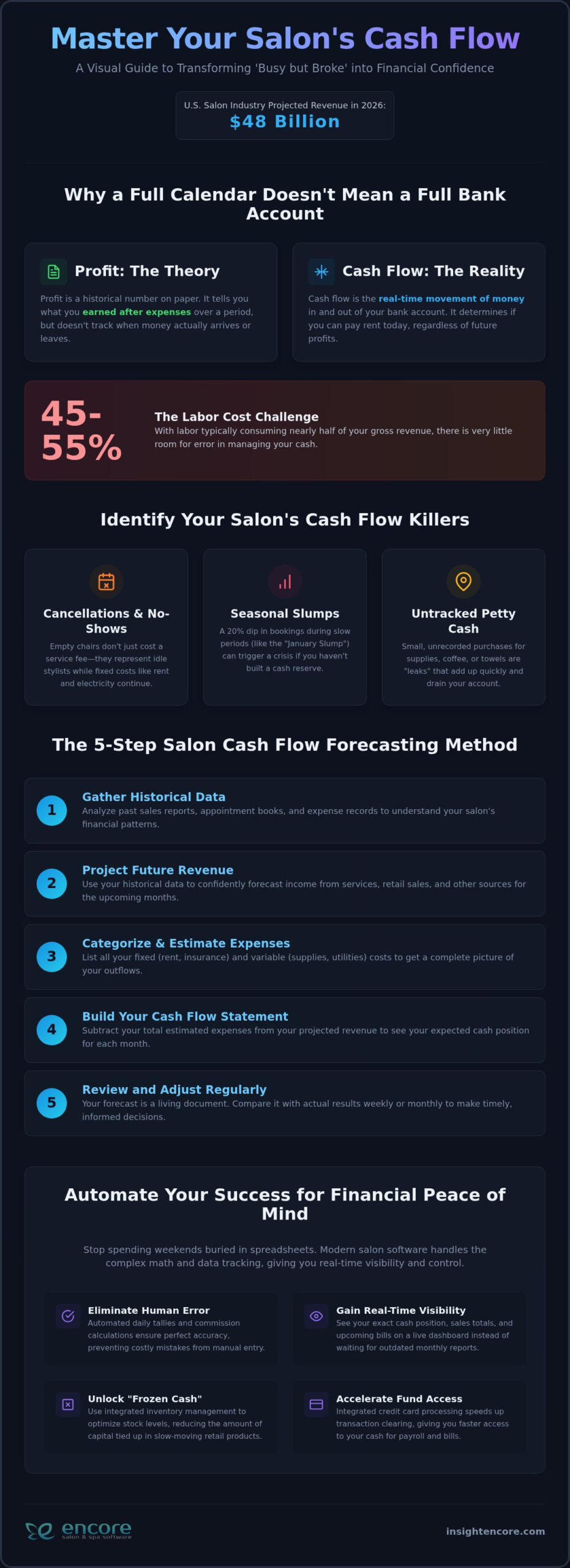
Categories
Uncategorized

Barbershop Scheduling App: The 2026 Guide to Streamlining Your Shop

Did you know that automated reminders can slash your no-show rate by up to 89%? In 2026, a reliable barbershop scheduling app is more than just a digital calendar; it’s the engine that powers your growth while you’re busy with a clipper in hand. You shouldn’t have to spend your evenings chasing Instagram DMs or stressing over manual commission math just to keep the lights on. Your shop deserves a professional edge that works as hard as you do.

We understand that your time is your most valuable asset, and it’s frustrating when a chaotic schedule keeps you from actually growing your business. You deserve a system that handles the heavy lifting, turning every empty slot into a revenue opportunity without the manual effort. This guide will help you find the right software to automate your bookings, eliminate no-shows, and provide clear reports on your best clients and barbers. We’re going to break down the essential features you need to move from daily stress to organized control, ensuring your chairs stay full and your peace of mind stays intact.

Key Takeaways

  • Reclaim your time by transforming your digital calendar into a 24/7 automated receptionist that captures appointments while you focus on your clients.
  • Identify the core integrations needed to sync your social media pages directly with your shop’s point-of-sale system for a frictionless booking experience.
  • Navigate the financial nuances of managing chair renters and commission-based employees using specialized back-office tools.
  • Learn how to choose the perfect barbershop scheduling app to eliminate no-shows and automate your shop’s daily growth.
  • Get a clear, stress-free roadmap for migrating your client data and launching new software during your shop’s quietest periods.

Beyond the Digital Calendar: Why Barbershops Need an Integrated Scheduling App in 2026

Moving from a paper ledger to a modern appointment scheduling software isn’t just about going paperless. It’s about evolving. In 2026, clients don’t want to wait for a return call or a text confirmation. They want to book a fade at 11 PM while scrolling through their phone. A dedicated barbershop scheduling app acts as your 24/7 receptionist, capturing revenue while you’re focused on the chair or even while the shop is closed. This shift creates a professional image that builds immediate trust. When a client sees a sleek, automated booking page, their perception of your shop’s value increases before they even walk through the door.

The True Cost of Manual Booking

Managing a shop through Instagram DMs or texts is a recipe for burnout. It’s not just the time spent typing. It’s the mental load of tracking dozens of separate conversations. If you spend just five minutes per client on back-and-forth booking, you’re losing over an hour of cutting time for every 12 clients. That is time you aren’t being paid for. Relying on DMs also creates a massive revenue leak. One no-show a day might seem small, but over a year, that’s thousands of dollars in empty chair time you can never recover. Your primary income stream shouldn’t depend on a social media inbox.

Winning the ‘No-Show’ War

Ghosting is the silent killer of shop profitability. You can fight back. Research from sources like Market.us shows that automated reminders can reduce no-shows by up to 89%. By using a robust barbershop scheduling app, you can send automated SMS and email alerts that keep your shop top-of-mind. Beyond reminders, modern systems allow you to protect your barbers’ time through deposits and clear cancellation policies.

Setting these expectations from the first click changes the client relationship. Digital waivers and transparent policies ensure everyone respects the schedule. If you use integrated credit card processing, you can even require a card on file. This simple step virtually eliminates “no-call, no-shows.” Clients are far more likely to honor a commitment when there is a clear financial policy in place. It isn’t about being harsh. It’s about valuing your craft and your team’s livelihood.

Core Features Every Barbershop Scheduling App Needs to Drive Growth

A great tool should do more than just record a time slot. It needs to work as a growth engine. To scale your shop, your barbershop scheduling app must integrate directly with the places your clients already spend their time. This means having an online booking module that connects seamlessly with Facebook, Instagram, and Google. When a potential client sees your work on their feed, they should be able to book immediately without leaving the app. This reduces the friction that often leads to abandoned bookings.

Beyond simple scheduling, a high-performing system acts as a central hub for your business. It tracks client history, creating a digital “lookbook” that records previous styles, preferred products, and even personal notes. This data allows you to provide a tailored experience that keeps regulars coming back. You can explore our full list of management features to see how these tools connect your front desk to your back office.

The Power of Integrated Payments

Your scheduler and your cash register shouldn’t live in two different worlds. When you use integrated credit card processing, you eliminate the need for manual entry at checkout. This reduces human error and ensures your daily payout reports match your schedule perfectly. Understanding how technology can benefit your small business is key here; automation doesn’t just save time, it protects your profits.

Features like card-on-file allow for a “silent” checkout experience. Clients can simply stand up, confirm their tip, and walk out. This premium feel encourages higher tips and better client retention. It also simplifies your end-of-day math, especially when tracking inventory levels alongside service sales. If you want to see how this looks in action, you can reach out to our team for a closer look at our all-in-one system.

Marketing That Works While You Work

Consistency is the secret to a full chair. Automated marketing tools allow you to send the right message at the perfect moment. For example, you can set up “We Miss You” campaigns that trigger automatically if a client hasn’t booked in four weeks. This keeps your shop top-of-mind without you having to send a single manual text. You can also use gift cards to boost your cash flow during slower months or holidays. By rewarding your most frequent regulars through a loyalty program, you turn casual visitors into lifelong advocates for your brand.

Managing Chair Renters vs. Employees: The Back-Office Nuance

Managing a barbershop is rarely a one-size-fits-all situation. You might have a lead barber on a high commission, a junior on a base salary, and three independent contractors renting chairs in the back. Each of these relationships requires different financial and legal handling. It’s critical to correctly determine worker classification to ensure your shop stays compliant with tax laws while protecting your profits. A specialized barbershop scheduling app must be flexible enough to manage these distinct models simultaneously. Without this nuance, you’ll end up spending your weekends buried in spreadsheets trying to figure out who owes what.

The most efficient shops use “split-payments” to handle revenue at the point of sale. This means when a client pays for a service, the software automatically routes the booth rental fee or the house’s commission to your shop account while the barber receives their share. It removes the awkward friction of chasing down rent checks or manually cutting payroll at the end of every week. If you’re looking for a system designed to handle this level of complexity, you can explore our Chair/Booth Renter Software solutions.

Automating Commission and Rental Fees

Friday afternoon shouldn’t be a source of stress. Instead of manually tallying up individual tickets and receipts, you should be calculating salon staff commission automatically through your software. For your independent contractors, the system can track flat-rate rental fees and send automated reminders when a payment is due. Giving each barber their own “mini-dashboard” is a massive efficiency win. It allows them to track their personal earnings and upcoming schedule in real-time on their own devices. This transparency builds trust and saves you from answering “How much have I made this week?” five times a day.

Staff Performance Metrics

Running a successful shop requires looking beyond the daily cash total. You need to know how efficiently your chairs are actually being used. By monitoring the salon staff utilization rate, you can identify which hours are your most productive and where you might need to adjust your staffing levels. It’s not just about who brings in the most cash today; it’s about who is building a sustainable business for the future. Tracking rebooking rates tells you which barbers are genuinely connecting with clients and keeping them coming back. These metrics provide the objective data you need for fair and productive performance reviews that help your entire team reach their full potential.

Barbershop Scheduling App: The 2026 Guide to Streamlining Your Shop

The Roadmap to Implementing New Barbershop Software Without the Headache

Switching to a new barbershop scheduling app shouldn’t feel like a chore. It’s an investment in your shop’s future. The key to a smooth transition is timing. You don’t want to launch right before a massive holiday rush when every chair is full and the shop is loud. Instead, pick a traditionally slower period to give your team the mental space to learn the new system. This approach turns a potential headache into a structured, manageable upgrade for your entire business.

Step 1: Data Migration and Setup

Your first move is to audit your current client list. Take the time to clean up duplicate entries and outdated phone numbers before you export contacts from your phone or old system into the CRM. This ensures your automated marketing actually hits the right targets. Once your data is clean, focus on your service menu. Be realistic about durations. If a detailed skin fade takes 45 minutes, don’t list it as 30 just to squeeze in more bookings. Include buffer times for cleaning and tool prep to keep your barbers from burning out. Finally, configure your “Shop Rules” for cancellations and late arrivals. Having these set in stone within the software removes the emotional weight of enforcing policies manually.

Step 2: The Training Phase

Getting your team on board with a new barbershop scheduling app is the most critical step, especially for “old-school” barbers who might be skeptical of new tech. The best way to build confidence is through a “Mock Day.” Spend a few hours running through practice check-outs, applying tips, and rebooking clients for their next visit. Show every barber how to use the mobile app to manage their own chairs directly from their phones. This autonomy is a huge selling point for staff. To keep things moving, identify a “Software Champion” in the shop. This is usually the team member who picks up tech quickly and can help others with quick questions. It takes the pressure off you and fosters a collaborative environment.

When you’re ready to flip the switch, announce the new system to your clients as a “Premium Upgrade.” Frame it as an improvement to their experience that offers faster booking, better reminders, and more personalized service. This positioning makes the change feel like a benefit to them rather than a technical hurdle for you.

Start your stress-free transition today

Why Encore is the All-in-One Partner for the Modern Barbershop

Choosing a barbershop scheduling app is about more than just picking a tool; it’s about choosing a partner. At Encore, we bring 35 years of specialized beauty and wellness industry knowledge to your shop. Since our founding in 1991, we’ve helped professionals move from chaotic calendars to streamlined, automated engines. We don’t just provide software. We provide the stability that comes from decades of understanding the daily hurdles you face behind the chair.

Many shop owners feel like just another number when using massive marketplace platforms. You’ve likely heard the stories of impersonal, bot-only customer service that leaves you hanging when things go wrong. We take a different path. Our support is human-centric. When you have a question about your payroll or a technical hiccup during a busy Saturday, you talk to a real person. We’re a seasoned professional and a dedicated ally invested in your individual success.

Encore is built to scale alongside your ambition. Whether you’re a solo barber in a private studio or a growing franchise with multiple locations, our platform adapts to your needs. We offer transparent pricing that grows as you do. You won’t find hidden marketplace fees here that eat into your hard-earned revenue. It’s a reliable system designed to give you organized control over your business.

Built for Barbers, by Industry Experts

Our Encore Barber Software is designed around the unique rhythm of a busy shop. We know you don’t have time to flip between five different browser tabs to check your numbers. That’s why we keep your inventory management, point-of-sale, and scheduling in one place. This integration ensures your data is always accurate and your checkout process is fast. It’s about removing the friction that slows you down.

Unlike marketplace apps that prioritize their own brand and directory, we focus entirely on yours. We believe your booking page should match your shop’s vibe, not ours. Our goal is to help you build your own client list and loyalty. We prioritize your brand’s growth over our own marketplace visibility because your success is our primary mission. You’ve worked hard to build your reputation; your barbershop scheduling app should help you protect it.

Ready to Take Control of Your Chair?

Organizing your operations provides a level of peace of mind that’s hard to describe until you feel it. Imagine ending your week without a single manual calculation or a missed appointment. You can finally focus on the craft you love while the software handles the rest. We’d love to show you exactly how this looks in action with a personalized walkthrough of our system. It’s time to turn your chaotic calendar into a high-growth engine.

View our pricing and start your journey with Encore today

Take the First Step Toward a Stress-Free Shop

You’ve seen how the right technology can turn a messy calendar into a high-growth business engine. By automating your bookings and utilizing specialized modules for independent booth renters, you can finally focus on your craft instead of back-office math. Choosing a reliable barbershop scheduling app is the most effective way to eliminate no-shows and reclaim your evenings.

We’ve been a supportive partner to thousands of shops since 1991, offering the reliability of 35 years of industry experience. You’ll never have to deal with impersonal bots because we provide direct human support based in North America. It’s about having a seasoned professional in your corner who understands your daily hurdles and is ready to help you overcome them.

Streamline your shop today with Encore Barber Software

Your shop’s growth is within reach. We’re here to help you build the automated, professional business you’ve always envisioned. You deserve the peace of mind that comes with a perfectly managed chair and a thriving team.

Frequently Asked Questions

Is a barbershop scheduling app worth the monthly cost?

Yes, the investment pays for itself through increased efficiency and reduced no-shows. Industry data suggests shops using management software see a revenue uplift of up to 34%. By automating the booking process, you stop losing money on empty chairs and hours spent on manual admin. A professional barbershop scheduling app ensures your business runs like a well-oiled machine even when you’re busy cutting hair or away from the front desk.

How do I move my clients from my old app to a new one?

Moving your data is a straightforward process that starts with exporting your client list into a CSV or Excel file. Most modern systems allow for a clean import of contact details, notes, and service histories. At Encore, we provide direct human support to guide you through this migration, ensuring no client record is lost. It’s a great time to audit your list and remove outdated information for a fresh start.

Can I manage both employees and independent renters in one app?

Absolutely. Our platform includes specialized modules specifically designed for the unique needs of chair and booth renters alongside traditional employees. You can manage separate schedules, track individual commissions, and even set up split payments so funds are routed correctly at the point of sale. This flexibility allows you to maintain a diverse labor model within a single, organized system without the usual back-office headaches or manual math.

Will my older clients struggle with online booking?

Most clients, regardless of age, appreciate the convenience of booking on their own terms without making a phone call. Modern interfaces are designed to be intuitive and mobile-friendly, requiring just a few simple taps to secure a spot. For those who still prefer a traditional approach, you can always enter their appointments manually into the system. This hybrid model ensures every client feels comfortable while you still benefit from an organized digital calendar.

Does the scheduling app handle my credit card processing too?

Yes, integrated credit card processing is a core feature that connects your schedule directly to your revenue. This allows you to collect deposits, enforce cancellation fees, and store cards on file for faster, touchless checkouts. By removing the need for a separate third-party terminal, you reduce manual entry errors and simplify your daily reporting. It’s an essential tool for protecting your shop’s bottom line and ensuring you get paid for your time.

Can I set different prices for different barbers in the shop?

You can easily configure different pricing tiers based on the experience level or seniority of your barbers. This is a vital feature for shops that employ master barbers alongside juniors or apprentices. The software automatically applies the correct rate when a client selects their preferred professional. It ensures your billing is accurate every time and allows you to reward your top talent for their skills without needing to perform manual price overrides.

What happens if my internet goes down in the shop?

Because modern software is cloud-based, you can still access your entire schedule and client list from a smartphone or tablet using mobile data. Your business doesn’t stop just because the local Wi-Fi fails. You can continue checking clients in and rebooking them directly from your mobile device or personal phone. This level of reliability gives you peace of mind that your shop’s operations are protected against local technical issues or temporary power outages.

Can I sell products and track inventory through the scheduling app?

Selling retail is a major revenue stream, and our inventory management system makes it easy to track every bottle on your shelves. You can add products to any service ticket during the checkout process with a single click. The software automatically adjusts your stock levels in real-time and alerts you when it’s time to reorder. This ensures you never miss a sale because of an empty shelf or a forgotten manual inventory count.

Disclaimer

This article is general in nature and may contain errors, please verify all claims with your sales rep

Categories
Uncategorized

Salon Commission vs. Booth Rental: The 2026 Owner’s Guide to Profitability

In 2026, the choice between salon commission vs booth rental has shifted from a simple math problem to a strategic decision about your professional sanity. You’ve likely felt the pressure of rising overhead costs cutting into your take-home pay. Maybe you’re even losing sleep over the threat of an IRS misclassification audit or struggling to keep your culture alive. It’s frustrating to feel like you’re working for your business instead of the other way around.

We believe you should feel confident and in control of your profit margins. This guide will help you discover the financial, legal, and operational differences between these two models so you can choose the most profitable path for your specific goals. We’ll provide a clear financial comparison and a step-by-step implementation plan to help you scale with ease. From understanding the true cost of a W-2 employee to mastering the "landlord" model of booth rentals, you’re about to get the clarity you need to lead your salon with total peace of mind.

Key Takeaways

  • Understand the fundamental operational differences between W-2 commission employees and 1099 independent contractors to ensure your salon remains compliant.
  • Analyze a side-by-side financial breakdown of salon commission vs booth rental to see which model actually leaves more profit in your pocket at the end of the month.
  • Master the IRS “Control Test” to protect your business from misclassification audits and understand the legal boundaries of managing independent renters.
  • Follow a clear two-step implementation plan to audit your financial health and evaluate local market demand before committing to a new business structure.
  • Learn how to reclaim your time by automating complex payroll calculations and booth management tasks with specialized software solutions.

Understanding the Core Models: Salon Commission vs. Booth Rental in 2026

Salon Commission is a collaborative growth model where owners and stylists share risk and reward. In the competitive 2026 market, choosing between salon commission vs booth rental is about more than just numbers. It’s about the culture you want to build. The commission model treats stylists as W-2 employees who earn a percentage of their total service revenue. On the other hand, the booth rental model views stylists as independent 1099 contractors who pay a fixed fee for their space. Both have merits, but they require very different management styles.

Many high-end urban salons are moving toward hybrid approaches. This flexibility helps owners adapt to shifting salon industry trends where professionals value both the support of a team and the freedom of independence. It’s a way to keep your best talent from walking out the door to start their own studio. By offering different paths, you can meet your stylists exactly where they are in their careers.

The Commission Model: A Partnership for Growth

This model is a true partnership. In 2026, commission splits typically range from 40/60 to 60/40, depending on the stylist’s experience level and your salon’s location. As the owner, your role is to provide the infrastructure for success. You supply the backbar products, lead the marketing efforts, and manage the booking portal to ensure a steady stream of clients. It takes the pressure off the stylist so they can focus on their craft. They don’t have to worry about the logistics of running a business; they just have to do great hair.

One of the biggest perks here is brand cohesion. Since you’re the employer, you can establish a unified culture and service standard. It creates a reliable guest experience that keeps people coming back. While it involves more administrative work and higher overhead, the potential for long-term growth is significant. You’re building an asset that is bigger than any one individual.

The Booth Rental Model: The Landlord Approach

Booth rental is the preferred choice for stylists who prioritize maximum autonomy. In this scenario, your role shifts from a mentor or boss to a landlord. You provide the physical chair, utilities, and basic amenities. The stylists handle everything else. They buy their own products, set their own prices, and manage their own schedules. It’s a hands-off relationship that significantly reduces your daily stress. You aren’t responsible for their performance, only for the space they occupy.

This model offers a predictable income stream. You don’t have to worry about a slow week affecting your ability to pay the bills. However, it also means you have less control over the salon’s reputation. You aren’t managing a team; you’re managing a facility. It works best for owners who want to scale their real estate footprint without the complexities of traditional staff management.

The Financial Comparison: Which Model Generates More Profit?

Let’s look at the hard numbers. If a stylist generates $10,000 in monthly service revenue, the outcome of salon commission vs booth rental looks very different on your balance sheet. In a 45% commission split, you’d seemingly keep $5,500. However, the true cost of a W-2 employee is often 53% to 58% of their revenue once you factor in the 7.65% employer FICA tax and backbar supplies. This leaves you with a gross profit closer to $4,200. In a rental model, you might collect an average monthly rent of $1,200. While the rental check is smaller, your overhead for that specific stylist is nearly zero.

Retail sales also tip the scales. In a commission salon, you typically keep the majority of retail profit after paying a 10% to 15% incentive to the stylist. In a rental setup, the stylist usually carries their own inventory. This means you miss out on a high-margin revenue stream. Understanding these nuances is vital for following IRS guidelines on worker classification, as financial control is a major factor in legal audits.

Calculating the Break-Even Point for Commission

To succeed with commission, you must monitor your salon staff utilization rates. If a stylist’s chair is empty half the day, you’re losing money on fixed costs like rent and electricity. You also need to account for "backbar" costs like shampoos, dyes, and foils, which typically range from 8% to 13% of service revenue. Automated tracking prevents profit leaks by ensuring every ounce of color is accounted for in your margins. You can see how automation simplifies these calculations to protect your bottom line.

Stability vs. Scalability in Booth Rental

Many owners choose rental for the "guaranteed income," but this can be a myth. You still face vacancy risks and the headache of late rent payments. An empty chair earns $0, but you still pay the full lease for the square footage. Rental income is strictly capped by the number of chairs you have. While a rental model offers a predictable baseline, it lacks the explosive growth potential of a high-performing commission team. A 5-stylist commission salon often has a much higher long-term ROI because you profit from every extra service and treatment sold. If you’re weighing salon commission vs booth rental for a new location, consider if you want a stable floor or a high ceiling.

The legal distinction in the salon commission vs booth rental debate often comes down to one thing: control. The IRS uses a "Control Test" to decide if a worker is an employee or an independent contractor. If you set their working hours, dictate which products they use, or enforce a specific dress code, they are legally W-2 employees. Misclassifying these workers as 1099 contractors is the number one legal risk for salons in 2026. Penalties can be steep, often starting at 1.5% of wages plus back taxes and interest. It’s a heavy burden that can easily be avoided with the right structure.

Maintaining legal separation is especially important for booth renters. One way to prove independence is through credit card processing. Each renter should have their own merchant account so client payments go directly to them, not through your salon’s primary bank account. You also need to verify insurance. W-2 staff are covered by your general business policy and workers’ compensation, but 1099 renters must carry their own professional liability coverage. Seeing these certificates annually protects your business from third-party claims.

W-2 Compliance: Managing the Administrative Burden

Running a commission salon means you’re responsible for the heavy lifting of payroll. You have to handle federal and state tax withholding, unemployment insurance, and Social Security contributions. It’s a lot to track manually. Many owners find that calculating salon staff commission automatically is the only way to stay compliant without losing hours to spreadsheets. Since these stylists are your employees, you also have the right to manage their growth. Using a structured employee performance review template helps you document their progress and maintain high service standards while keeping your records audit-ready.

1099 Compliance: The "Hands-Off" Rule

To keep your booth rental model safe from audits, you have to follow the "Hands-Off" rule. You cannot require renters to use your specific salon software unless you provide it as a free amenity included in their rent. They are independent business owners. This means they must have their own business licenses and individual tax IDs. Your rental agreement should be clear: you are providing the space, not managing their business. Establishing these boundaries early protects you if the IRS ever comes knocking. It’s about creating a professional environment where they can thrive as independent partners rather than subordinates.

Salon Commission vs. Booth Rental: The 2026 Owner’s Guide to Profitability

How to Choose and Implement the Right Structure for Your Salon

Deciding on salon commission vs booth rental isn’t a one-time choice. It’s a strategic evolution. To make the right move in 2026, follow a logical path that protects your peace of mind and your profits. Start by evaluating local market demand. If your city is flooded with solo suites, stylists might be craving the community of a commission house. Conversely, if high-end talent is looking for more freedom, a rental model might be your fastest path to growth.

  • Audit your finances: Review your overhead capacity. Can you handle the 7.65% employer FICA tax and the administrative weight of W-2 staff?
  • Define your vision: Decide if you want a curated, high-touch luxury brand or a collective of independent entrepreneurs.
  • Draft your contracts: Ensure your agreements reflect the 2026 legal standards for worker classification we discussed earlier.
  • Select your platform: Choose a management system that automates the specific burdens of your chosen model.

Transitioning from Commission to Rental (or Vice Versa)

Changing your business structure is a big shift, but it doesn’t have to be a crisis. Communication is everything. When you announce a change, focus on the benefits for the stylists. If you’re moving to commission, highlight the marketing support and lack of business overhead. If you’re moving to rental, celebrate their new independence. This is also the time to audit your salon pricing. A commission model often requires a price increase to maintain healthy margins after accounting for backbar and payroll costs.

Some owners find success with a hybrid model. This allows you to offer commission to new talent while providing rental chairs to your seasoned veterans. It’s a great way to retain top performers who might otherwise leave to open their own studio. Just remember that a hybrid salon requires strict legal boundaries to avoid "control" issues with your renters. You must treat them as separate businesses sharing one roof.

Setting Up Your Tech Stack for Success

Your software should be your biggest ally, not a source of frustration. In a rental or hybrid setup, each stylist needs a dedicated client management app. This ensures they can manage their own books and financial data independently. As the owner, you can still centralize the overall facility booking while keeping individual revenue streams separate. For barbershop owners navigating similar booth rental decisions, a dedicated barbershop scheduling app can automate bookings and eliminate no-shows while keeping each barber’s revenue stream clearly separated. For inventory, automation is key. Use a system that tracks usage by stylist so you can accurately charge for backbar supplies or manage shared inventory without the guesswork.

Streamline your salon management today

Streamlining Salon Payroll: Managing Every Model with Encore

Managing the administrative side of your business shouldn’t feel like a second job. Whether you’ve landed on the side of salon commission vs booth rental, the right tools turn a mountain of paperwork into a few clicks. Encore Salon & Spa Software has become the industry standard for 2026 payroll management because it removes the guesswork. It’s designed to handle the messy reality of salon life, from sliding scale commissions to independent rent tracking, all in one place.

We know that as a salon owner, your time is your most valuable asset. Spending hours every Sunday night on spreadsheets isn’t sustainable. Our system bridges the gap between your brand vision and the technical reality of local labor laws. It’s about giving you the peace of mind that your team is paid accurately and your renters are managed professionally. You can focus on the creative side of your business while we handle the data.

Automating Commission to Save 10+ Hours a Week

Manual spreadsheets are a recipe for errors and frustration. With Encore, you can automate even the most complex commission structures. Whether you use tiered splits, product bonuses, or sliding scales that increase as sales grow, the software does the math for you. Real-time performance dashboards give your stylists a clear view of their progress. This motivates them to hit their goals without you needing to play the role of a taskmaster. It’s a win-win for everyone involved.

Speed is essential in 2026. Direct integration with credit card processing allows for seamless payouts and transparent reporting. You’ll eliminate "back-of-the-napkin" calculations that lead to profit leaks. By automating these tasks, most owners reclaim at least 10 hours every week. That’s time you can spend behind the chair or growing your brand. It’s about working smarter, not harder.

The Landlord Toolbox: Managing Booth Renters

If you’ve chosen the rental path, you need a different set of tools. Our specialized Chair/Booth Renter module empowers independent stylists while protecting your facility’s organization. You can automate rent collection and send professional invoices automatically. This ensures you never have to have an awkward conversation about a late payment. It turns you into a professional landlord with minimal effort.

Renters get their own secure login to manage their clients and schedules independently. This keeps your financial data separate, which is a key requirement for IRS compliance. Plus, our integrated gift card management works across all staff types. Whether a client buys a card for a commission stylist or a booth renter, the system tracks the balance and ensures the right person gets paid when it’s redeemed. You get advanced analytics to monitor the overall health of your salon, giving you total control without the micromanagement.

Build a Profitable Future for Your Salon

You now have the roadmap to navigate the 2026 landscape with total confidence. Whether you lean toward the collaborative growth of a team or the streamlined efficiency of a rental space, your success depends on clear data and legal compliance. Choosing between salon commission vs booth rental is no longer a guessing game when you have the right financial and legal boundaries in place.

We’ve been supporting top salons and spas globally since 1991. Our specialized modules for both commission and rental models take the administrative burden off your shoulders. With integrated credit card processing for faster payouts and automated tracking, you can finally focus on what you love. You don’t have to handle the transition alone. We’re here to help you automate the hard parts so you can enjoy the rewards of a healthy, scaling business.

Try Encore Now – The All-in-One Solution for Any Salon Model
Take the first step toward a more organized and profitable business today. We’re excited to see your salon thrive and grow.

Frequently Asked Questions

Is salon commission or booth rental better for a new salon owner?

When weighing salon commission vs booth rental as a new owner, commission is often the better choice for building a strong brand. It allows you to set service standards and mentor your team to ensure a consistent guest experience. Booth rental is a lower-risk option if you prefer a landlord role with predictable income. Your decision should align with whether you want to manage a team or simply provide a professional space.

What is the average commission split for a hair stylist in 2026?

In 2026, the industry standard for W-2 stylists typically ranges between 40% and 60% of service revenue. Most modern salons land in the 45% to 55% range. Many owners are moving toward tiered or sliding scale models that reward higher productivity. This structure ensures the salon covers its overhead while giving stylists a clear path to increase their earnings as they grow their book of business.

Can I legally tell a booth renter what products to use in my salon?

No, you cannot legally dictate which products a booth renter uses. Under IRS guidelines, an independent contractor must have control over the tools and supplies they use to perform their work. If you require them to use specific brands, you risk misclassifying them as employees. You can offer products as an optional amenity, but the choice must ultimately remain with the renter to maintain a true 1099 relationship.

How do I calculate the break-even point for a rental chair?

To find your break-even point, add up the total fixed costs for the space, including rent, utilities, insurance, and maintenance. Divide this total by the number of chairs available for rent. This number represents the minimum weekly or monthly fee you must charge per renter to cover your expenses. Don’t forget to factor in a margin for vacancy periods to ensure your business remains profitable even when a chair is empty.

What are the biggest tax advantages of the booth rental model?

The primary tax advantage for owners is the elimination of employer-paid payroll taxes. You aren’t responsible for the 7.65% FICA tax, unemployment insurance, or workers’ compensation for independent renters. This significantly reduces your administrative overhead and tax liability. For the stylists, being a 1099 contractor allows them to deduct business expenses like tools and education, though they must pay the full 15.3% self-employment tax on their net earnings.

Can a salon have both commission stylists and booth renters?

Yes, many salons successfully operate using a hybrid model. This setup allows you to offer commission to new talent while providing rental chairs to your seasoned veterans. It’s a great retention strategy for top performers who want more independence. However, you must be extremely careful to maintain distinct legal boundaries. You cannot treat your renters like employees or use the same control measures for both groups without risking an audit.

How does salon software help with IRS compliance for 1099 contractors?

Specialized software like Encore provides clear financial separation between the salon owner and independent renters. It allows each professional to manage their own booking and payments through a secure login. This separation is a key factor in proving to the IRS that you don’t exert financial control over the contractor. Using a dedicated module helps document the independent nature of the relationship, which is vital for maintaining compliance in the salon commission vs booth rental debate.

Disclaimer

This article is general in nature and may contain errors, please verify all claims with your sales rep
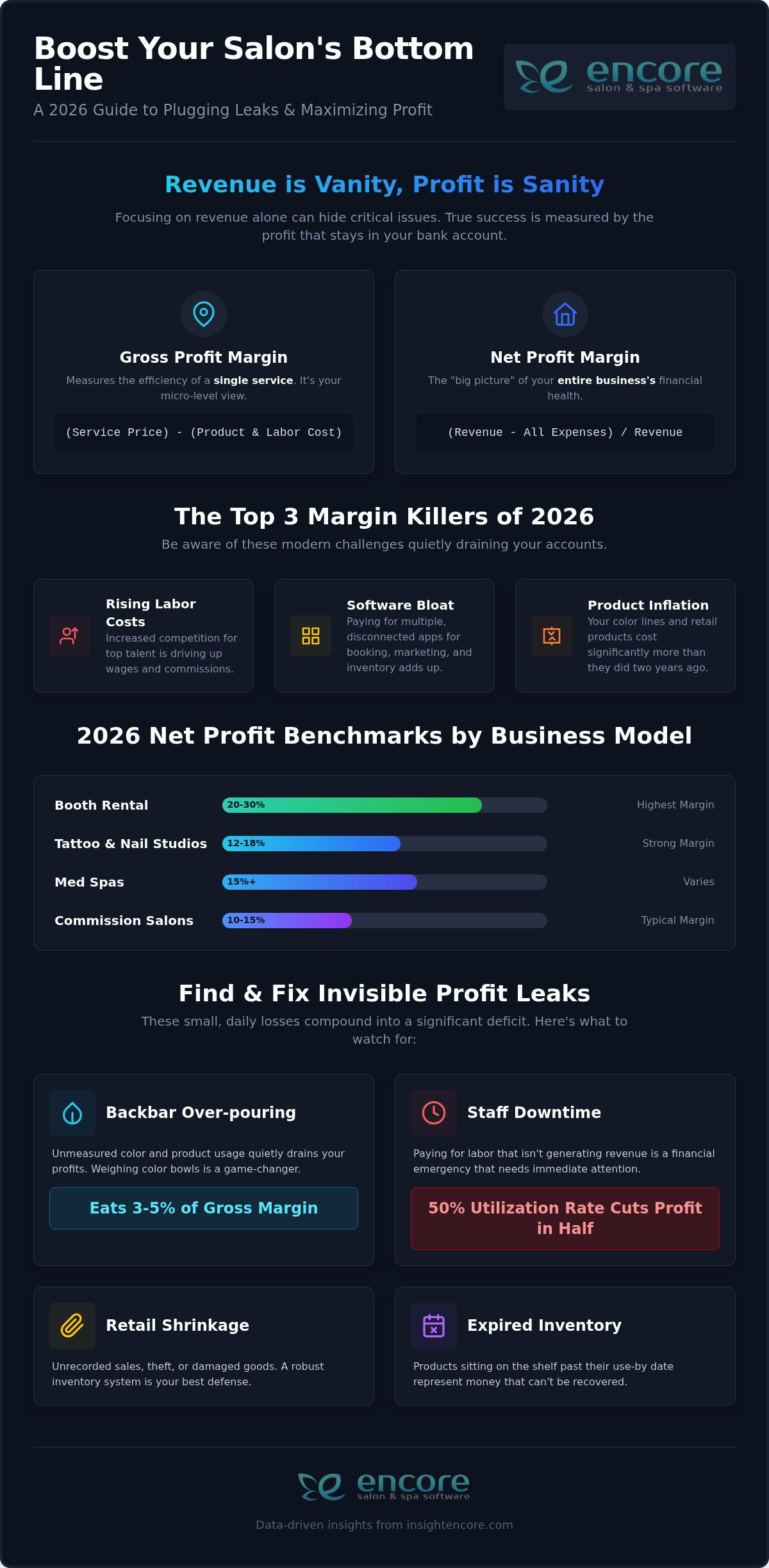
Categories
Uncategorized

Calculating Salon Staff Commission Automatically: The 2026 Efficiency Guide

Imagine it’s late Sunday night. Instead of resting for the busy week ahead, you’re hunched over a laptop, cross-referencing messy spreadsheets with crumpled retail receipts. You know that one small typo could lead to a tense conversation with your top stylist on Tuesday morning. Calculating salon staff commission automatically isn’t just a luxury anymore; it’s a necessity for your peace of mind. We understand that the pressure of getting payroll exactly right, especially with complex tiered structures and new 2026 IRS tip reporting requirements, can feel like a second full-time job.

You’ve likely felt the frustration of manual entry errors and the awkwardness of stylist disputes over "missing" retail cuts. We agree that your time is better spent mentoring your team and growing your brand than playing accountant every weekend. This guide will show you how to eliminate those manual errors and build lasting staff trust through total automation. We’ll explore the latest 2026 efficiency strategies, from integrating your credit card processing to handling the new federal tip deductions, ensuring your payroll is both dispute-proof and lightning-fast.

Key Takeaways

  • Reclaim your Sunday nights by identifying the “time leaks” that cost the average salon owner over 100 hours of productivity every year.
  • Master the shift toward tiered and hybrid models to ensure your commission structure stays competitive and profitable in 2026.
  • Discover how calculating salon staff commission automatically eliminates payroll anxiety and creates a culture of transparency for your stylists.
  • Follow a clear, five-step roadmap to audit your current pay rules and move them into a reliable, automated “source of truth.”
  • Learn why all-in-one platforms provide better accuracy for niche businesses, including specific logic for tattoo studios and nail salons.

The Hidden Cost of Manual Commission Calculations

Managing a salon is hard enough without playing part-time forensic accountant every Sunday night. Many owners view manual entry as a standard part of the job, but the true cost is hidden in plain sight. Calculating salon staff commission automatically is the process of syncing your point-of-sale data directly with your payroll engine. It removes the middleman, usually a stressed-out owner with a calculator, and ensures that every dollar is accounted for the moment a transaction closes.

Consider the math. If you spend just two hours every week reconciling tickets and retail sales, you’re losing over 100 hours a year. That is more than two full work weeks dedicated to data entry. It’s time you could spend on education, marketing, or simply resting to avoid burnout. When you automate, you aren’t just buying software. You’re buying your weekends back.

Then there is the trust gap. A single manual error, even if it’s just a ten-dollar mistake, can damage a stylist’s confidence in your leadership for months. Beyond trust, manual math often leads to "margin creep." When you calculate by hand, it’s easy to overlook small deductions like integrated credit card processing fees or backbar costs. These tiny leaks can quietly drain thousands from your bottom line over a fiscal year because the math doesn’t account for the true cost of doing business.

Why Spreadsheets Are Your Salon’s Silent Profit Killer

Spreadsheets feel safe because they’re familiar, but they’re incredibly fragile. A single broken formula in a hidden cell can ripple through your entire staff’s pay without anyone noticing until the bank accounts don’t balance. You also face the nightmare of version control. Is "Commission_Final" the right file, or is it "Commission_Final_v2_Updated"? Without a central system, you lack an audit trail. If a stylist questions a payout from three months ago, finding the "why" behind the number becomes a digital needle in a haystack. Calculating salon staff commission automatically provides a permanent, unchangeable record that protects both you and your team.

The Psychology of Payroll Transparency

Waiting until payday to see earnings creates unnecessary anxiety for your team. When stylists can’t track their progress in real time, they feel disconnected from their performance. Transitioning to an automated system allows for a culture of self-management. Stylists can check their daily totals, see their retail progress, and adjust their effort mid-week to hit their goals. This transparency reduces end-of-month arguments because the data is visible and verified every single day. It shifts the conversation from "why is my check low?" to "how can I sell more retail tomorrow?"

Modern Salon Staff Commission Structures in 2026

The industry is moving away from the old-school 50/50 split. In 2026, salon owners are adopting structures that protect their margins while rewarding their hardest workers. Whether you use a flat rate, a tiered "slab" model, or a sliding scale, the goal remains the same: sustainability. We’re also seeing a rise in "Hybrid Models" where stylists receive a guaranteed base hourly pay plus performance incentives. Calculating salon staff commission automatically allows you to run these complex numbers accurately without needing a degree in finance or spending your entire weekend with a calculator.

Tiered vs. Flat: Which Protects Your Margins Better?

Flat rates are simple to understand, but they don’t always incentivize growth. Tiered models are now the gold standard for high-growth salons. In this structure, a stylist might move from a 45% to a 50% commission once they hit a specific weekly revenue goal. A sliding scale takes this a step further by applying different percentages to different revenue brackets. This ensures you aren’t overpaying during slow weeks while still generously rewarding high-performance periods. Using Encore Salon Software, you can simulate these changes to see how they impact your bottom line before you roll them out to the team. It’s a professional way to find the sweet spot where your stylists feel valued and your business remains healthy.

Handling Retail and Backbar Deductions

This is where many owners lose money without realizing it. Service revenue looks great on paper, but the cost of hair color, lightener, and specialized treatments can eat your profit alive if you aren’t careful. In 2026, smart salons are automating the deduction of these "backbar" product costs before the commission is calculated. This ensures the stylist is paid on the actual profit rather than just the gross ticket. Retail sales require a different approach entirely. Standard retail commission rates currently sit between 10% and 15%. By linking your inventory management directly to your payouts, you can set higher incentives for high-margin products without manually tracking every single bottle of shampoo. If you’re unsure which model fits your culture, you can connect with our support team to explore how different rules might work for your specific business.

How Automation Software Thinks: The Mechanics of Payouts

To understand the power of a modern system, you have to look at it as the ultimate "Source of Truth." In a busy salon, a single transaction involves more than just swiping a card. It triggers a chain reaction of data. When you are calculating salon staff commission automatically, the software looks at the service performed, the stylist’s specific tier, and any applicable deductions in milliseconds. In 2026, stylists expect instant visibility into their earnings. They want to see their commission balance grow on their personal dashboard the moment the client walks out the door. This real-time tracking eliminates the "payday surprise" and keeps your team motivated throughout the shift.

Modern automation also solves the headache of complex service splits. If a senior stylist performs a cut but an assistant handles the specialized color application, the software can automatically divide the commission based on your pre-set rules. It also factors in the nitty-gritty details that manual math often misses, such as integrated credit card processing fees. By deducting these small costs at the point of sale, you ensure that your salon’s profit margins remain protected without having to do the heavy lifting yourself.

From Appointment to Payout: The Data Journey

The journey starts long before the client sits in the chair. An online booking module captures the service type and assigned staff member, setting the foundation for accurate tracking. To prevent "stolen" commission or accidental double-entry, top-tier systems use unique staff logins or even RFID tech to verify who actually performed the work. Automated Sync is the digital bridge that carries transaction data from the chair directly to the bank account without human intervention. This seamless flow ensures that by the time you sit down to run payroll, the work is already 99% finished. For barbershop owners looking to eliminate no-shows and chaotic scheduling alongside their commission tracking, a dedicated barbershop scheduling app can work hand-in-hand with your payroll automation to turn every empty slot into a revenue opportunity.

Calculating Salon Staff Commission Automatically: The 2026 Efficiency Guide

5 Steps to Automating Your Salon Commission Today

Transitioning from a manual system to software is a significant milestone for your business. It’s the moment you stop being a data entry clerk and start being a CEO. However, the move shouldn’t be a "flip of the switch" overnight. Calculating salon staff commission automatically requires a thoughtful approach to ensure your data is clean and your team is ready for the change. Follow these five steps to make the transition smooth and stress-free for everyone involved.

  • Audit your current structure: Document every rule you currently use. Is it consistent across the team, or are there "special deals" that need to be standardized? Consistency is the foundation of trust.
  • Choose a flexible platform: Look for software that supports multiple rule sets. Calculating salon staff commission automatically is only effective if the system understands your unique business logic. We recommend looking for a partner that offers human-centric support during this critical setup phase.
  • Clean your data: Ensure every service and retail product has an assigned cost. This is essential for accurate backbar deductions. When your inventory tracking is integrated, these deductions happen without you lifting a finger.
  • Run a "Beta" cycle: For one pay period, run your automation alongside your manual spreadsheet. This verifies the software is configured correctly and gives you a safety net while you gain confidence in the new system.
  • Train your staff: Show your stylists how to access their personal performance dashboards. When they see their earnings grow in real-time, their skepticism usually turns into excitement.

Defining Your Commission Rules in the System

Every salon has unique needs that a basic spreadsheet just can’t handle. You might want to offer a higher percentage for specialty color services or trigger a "Step-Up" bonus when a stylist hits a specific monthly revenue goal. A professional system allows you to set these granular overrides without breaking the main payroll logic. You can see how Encore’s features provide the flexibility to handle these specific rules, ensuring your high-performers are always rewarded correctly for their hard work.

Book a personalized walkthrough of our commission engine

Onboarding Your Team Without the Friction

Change can be intimidating for stylists who are used to the old way of doing things. To make it easier, focus your communication on the "Why." Explain that this move is about two things: 100% paycheck accuracy and faster payouts. Providing a "Commission FAQ" helps address common concerns about retail splits or backbar costs before they turn into disputes. This transparency builds a culture of self-management. You can even use the data from these reports during your regular performance reviews to show stylists exactly where they can grow their income.

Why Encore is the Solution for Automated Salon Management

Using separate apps for booking and payroll creates data silos that lead to friction. If your transaction data doesn’t talk to your payroll engine, you’re forced to act as the middleman. Encore removes this barrier by serving as your all-in-one partner. Calculating salon staff commission automatically becomes a seamless part of your daily operations. This integration ensures that every haircut, color service, or retail sale is tracked accurately from the moment the client checks out. You don’t have to worry about missing tickets or manual entry errors ever again.

We understand that every business is unique. That’s why we’ve built specialized modules with tailored logic for tattoo studios and nail salons. These industries have specific needs that generic software often ignores. Whether you’re a solo artist or managing a large team, our platform scales with you. You can start with a single booth and grow into a multi-location franchise without ever needing to switch systems or learn new software from scratch. It’s a reliable foundation for your long-term growth.

The transition doesn’t have to be stressful. We pride ourselves on offering a human-centric support experience. When you move away from spreadsheets or older platforms, our experts are there to guide you through the setup. We act as a dedicated mentor, ensuring your commission rules are configured perfectly. It’s about providing you with professional confidence so you can focus on your craft instead of your computer screen. You’ll have a responsive ally by your side every step of the way.

Beyond Commission: The Full Management Suite

Commission tracking is just the beginning of what’s possible. Our suite ensures that gift cards and loyalty programs feed directly into your staff performance metrics. This gives you a clear view of which stylists are building long-term client value. Our automated marketing tools also work behind the scenes to re-engage clients, specifically targeting those who haven’t visited their favorite stylist in a while. This keeps your team’s books full and their commissions high without any extra effort on your part. It’s a complete ecosystem designed to empower your staff and grow your revenue.

Ready to Reclaim Your Sundays?

True peace of mind comes from knowing your payroll is dispute-proof. When you are calculating salon staff commission automatically, you eliminate the Sunday night spreadsheet fatigue that drains your energy. The ROI is clear. Saving just 8 hours of administrative work a month often pays for the system itself. You’re not just buying software; you’re investing in your own time and your team’s trust. We invite you to book a demo or view pricing today to see how easy automation can be for your business.

Take Command of Your Salon’s Financial Future

You’ve seen how manual math drains your energy and risks your team’s trust. By calculating salon staff commission automatically, you aren’t just modernizing your business; you’re protecting your peace of mind and your bottom line. Our integrated POS and inventory management systems ensure 100% accuracy, which means you can finally say goodbye to those awkward "missing retail" conversations with your stylists.

Since 1991, we’ve helped salon owners transition from spreadsheet fatigue to professional confidence. You can eliminate up to 90% of your payroll calculation time, giving those precious hours back to your family or your creative work. It’s time to stop surviving your Sunday nights and start thriving as a leader who prioritizes transparency and growth. We’re ready to help you build a more efficient, dispute-proof salon.

Start Automating Your Salon Payroll with Encore
We’re here to be your dedicated mentor through every step of this journey. Your success is our priority, and we can’t wait to see your business reach its full potential with a system that works as hard as you do. You’ve got this, and we’ve got you.

Frequently Asked Questions

Can salon software handle different commission rates for different stylists?

Yes, Encore is built to manage diverse team structures. You can assign unique commission percentages to every staff member based on their experience level or tenure. This granularity ensures that your senior stylists are rewarded for their expertise while new talent has a clear path for growth. Calculating salon staff commission automatically means the system recognizes these individual rule sets the moment a transaction is finalized at your point of sale.

How does automated commission handle product costs or backbar deductions?

Automation eliminates the guesswork of product costs by linking your inventory management system directly to your payroll engine. You can set specific "backbar" deductions for services like specialty color or keratin treatments. The software automatically subtracts these costs from the gross service revenue before applying the stylist’s commission percentage. This ensures your salon’s margins are always protected without you needing to manually cross-reference inventory usage or receipts every single weekend.

Is it possible to calculate commission for booth renters and employees in the same app?

Yes, you can manage both business models within a single platform using our specialized modules. For employees, the system tracks service and retail commissions based on your set percentages. For chair or booth renters, it can automatically deduct daily or weekly rent from their processed service earnings. This flexibility is perfect for hybrid salons that offer both employment and rental options, providing each professional with their own secure reporting dashboard for transparency. If you’re weighing the broader financial and legal implications of each approach, our guide on salon commission vs booth rental breaks down the key differences to help you choose the most profitable model for your business.

What happens if a client tips on a credit card? Does the software track that too?

Integrated credit card processing ensures that every tip is tracked and assigned to the correct staff member instantly. In 2026, this is critical for tax compliance. The software automatically prepares the data for reporting all employee tips in Box 12 of the W-2 form using the required code "TP". Stylists can see their tip totals in real-time on their personal dashboards, which builds trust and reduces questions about gratuities.

Can I set up tiered commission where the percentage increases after a sales target is met?

Absolutely. You can configure "Step-Up" triggers or sliding scale models that reward your high-performers. For example, a stylist might earn 45% on their first $1,000 of weekly revenue and 50% on everything after that. Calculating salon staff commission automatically removes the complexity of these calculations. The system monitors sales targets in the background and applies the higher rate the moment a stylist crosses their specific performance threshold for the month.

How do I prevent staff from seeing each other’s commission data in the software?

Security is a top priority, so the software uses unique staff logins and permission-based access levels. Stylists only have visibility into their own performance metrics, retail sales, and commission balances. They cannot see the earnings or client data of their coworkers. As the owner, you maintain full control over who sees what. This ensures a professional environment where sensitive financial information remains private and secure for every member of your team.

Will automating commission help me with my salon’s tax compliance?

Automating your commission significantly simplifies your tax reporting duties. The system maintains an unchangeable audit trail of all earnings, retail cuts, and tips. This is especially helpful for meeting 2026 IRS requirements, such as reporting employee tips in Box 12 with the new "TP" code. Having accurate, software-generated reports reduces the risk of manual filing errors and ensures you are ready for the new federal tip deduction rules that began in 2025. Before finalizing your staffing model, it’s also worth understanding the full financial picture by reviewing the 2026 owner’s guide to salon commission vs booth rental profitability, which covers how each model affects your tax obligations and overhead costs.

How long does it typically take to set up automated commission in Encore?

The initial setup time depends on the complexity of your current pay structure, but our team makes the transition smooth. Since we’ve been supporting salons since 1991, we provide human-centric guidance to help you configure your rules and import your data. Most owners find they can have their primary commission engine running within a few days, especially when utilizing our expert support to ensure every deduction and tier is set correctly from the start.

Disclaimer

This article is general in nature and may contain errors, please verify all claims with your sales rep
Categories
Uncategorized

Salon Employee Performance Review Template: The 2026 Management Guide

What if your next performance review was the exact reason your top stylist decided to stay for another five years instead of opening their own suite? Most salon owners dread review season. It feels like a mountain of manual math, awkward conversations about retail sales, and the constant fear that a critique might trigger a resignation. Using a structured salon employee performance review template ensures you aren’t just guessing about who’s performing. You want to mentor your team, but without clear data, it’s hard to be truly objective. It’s exhausting to manage by gut feeling when you’re trying to build a professional brand.

We’re here to help you turn those stressful meetings into a data-driven roadmap for stylist prosperity. This guide provides a professional framework that balances hard metrics with the soft skills that keep your chairs full. You’ll learn how to create clear growth paths that slash turnover and boost your bottom line through better retail and rebooking habits. We’ll show you how to use integrated reporting to remove the guesswork; making every conversation feel like a partnership rather than a test. It’s time to lead with confidence and give your team the organized, professional structure they need to thrive.

Key Takeaways

  • Stop the “salon drama” by turning annual reviews into a structured growth dialogue that keeps your team focused and happy.
  • Use our salon employee performance review template to objectively measure both revenue metrics and the soft skills that drive client loyalty.
  • Abandon the old “feedback sandwich” for a modern “growth loop” approach that motivates stylists without the typical performance review anxiety.
  • Discover how automated software removes the manual math from tracking retail commissions and rebooking percentages for total peace of mind.
  • Create clear, professional growth paths that help you retain top talent and increase your salon’s overall revenue.

Why Performance Reviews are the Heart of Salon Growth

A performance review isn’t a “gotcha” moment or a stressful report card. Think of it as a structured growth dialogue between you and your stylists. It’s a dedicated space to pause, look at the numbers, and plan the next chapter of a stylist’s career. In 2026, the industry is shifting away from the high-pressure annual sit-down. Instead, successful owners are using quarterly “pulse checks” to keep everyone aligned. This regular rhythm prevents minor frustrations from turning into “salon drama” that ends in a sudden resignation. By using a consistent salon employee performance review template, you remove the emotion from the equation and replace it with a supportive roadmap. This isn’t just about feelings; it’s about the bottom line. Clear reviews directly lead to higher rebooking rates and better retail sales because stylists feel empowered and accountable.

The Difference Between Feedback and a Review

Daily floor coaching is essential, but it isn’t a substitute for a formal review. Feedback is what you say when a stylist nails a balayage or misses a retail opportunity in the moment. A review is the formal documentation of those patterns over time. This paper trail is vital for both parties. It protects your business by documenting performance history and protects the employee by ensuring their hard work is officially recognized. When you use a salon employee performance review template, you create a non-punitive environment where the focus remains on professional development rather than past mistakes. Documentation builds trust because it proves you are paying attention to more than just the busy Saturdays.

Salon Culture and Employee Engagement

Stylists aren’t just looking for a chair; they’re looking for a professional home. Reviews foster this sense of belonging by showing that you are invested in their individual success. When you align a stylist’s personal income goals with your salon’s brand vision, magic happens. Transparency is the secret ingredient here. By being open about metrics like utilization rates and average ticket prices, you build long-term loyalty. Stylists who understand the “why” behind the numbers are far more likely to stay engaged and help the business grow. Using Encore Salon Software to provide these metrics ensures the conversation is based on a single source of truth, making the process fair for everyone on the team.

The 5 Essential Pillars of a Salon Performance Review

A high-performing team isn’t built on gut feelings or “vibes” alone. It requires a balanced look at five specific areas that define a stylist’s success. Using a comprehensive salon employee performance review template ensures you don’t miss the subtle details that drive long-term growth. When you evaluate a team member, you’re looking for a harmony between their technical skill, their financial impact, and their contribution to your salon’s culture. This holistic approach turns a standard meeting into a powerful mentorship session. It gives your stylists a clear picture of where they shine and where they can reach the next level of their career.

Quantitative KPIs: Tracking the Numbers

Numbers provide an objective window into a stylist’s productivity. You can’t improve what you don’t measure. Focus on service revenue versus retail-to-service percentages to see how well they are educating clients on home care. Rebooking rates are equally vital; they are the lifeblood of a sustainable chair. If a stylist isn’t rebooking at a high rate, you’re constantly spending money to acquire new clients just to keep them busy. You should also learn How to Calculate Salon Staff Utilization Rate to determine if they are using their scheduled hours efficiently. To make tracking these metrics effortless, you can explore our reporting features which pull this data automatically.

Qualitative Soft Skills: The Client Experience

The client experience is what keeps people coming back. It starts with the consultation quality. Is the stylist truly listening, or are they just going through the motions? You should also track client satisfaction scores and station cleanliness. A messy station reflects poorly on your entire brand and can dampen the “luxury” feel of a service. Beyond the chair, consider their contribution to team morale. A stylist who supports their peers and maintains a positive attitude is worth their weight in gold. These soft skills are often harder to teach than a new cutting technique, so acknowledging them in your salon employee performance review template is essential for a healthy culture.

Technical Excellence and Future Growth

2026 demands constant skill updates. Your reviews should document technical progression, such as new certifications or education credits earned during the quarter. This keeps your team at the forefront of industry trends. Finally, every review must end with future growth and goal setting. Where does the stylist want to be in six months? Whether it’s increasing their average ticket price or becoming a lead educator, setting clear, documented goals gives them a reason to stay and grow within your business. This forward-looking approach transforms the review from a look at the past into a roadmap for the future.

Your Salon Employee Performance Review Template [2026 Version]

Building a high-performing team starts with organization. A well-designed salon employee performance review template acts as the skeleton for your conversation. It ensures you cover everything from basic attendance to complex retail goals without missing a beat. Start your template with a clear header including the stylist’s name, the review period, and the date. Use a simple 1 to 5 scoring system to keep things objective; 1 being “needs immediate improvement” and 5 being “consistently exceeds expectations.” This scale removes the ambiguity of “doing okay” and gives you a concrete way to track professional growth over time. It makes the “why” behind your feedback much easier for the stylist to digest.

Section 1: Performance Metrics Table

The core of your review should be a clear, easy-to-read grid. This is where you list KPIs like rebooking percentages, retail-to-service ratios, and total service revenue. For 2026, setting a “Target” versus “Actual” figure for each metric is essential. It shows the stylist exactly where they hit the mark and where they fell short of the salon’s benchmarks. Visualizing progress over the last three review periods helps identify long-term trends. Are they steadily growing, or have they hit a plateau? Using Encore’s integrated reporting allows you to pull these numbers instantly. It saves you hours of manual math and ensures your “Actual” figures are 100% accurate every single time.

Section 2: The Stylist Self-Evaluation

A review shouldn’t be a monologue. Letting the stylist lead a portion of the meeting fosters ownership and professional maturity. Include a section for self-evaluation with questions like, “What was your biggest win this quarter?” This forces them to acknowledge and celebrate their own successes. Equally important is identifying roadblocks. Ask them, “What tool or training would help you grow?” This shifts the focus from what they did wrong to what they need to succeed. It transforms you from a boss into a mentor who is actively clearing the path for their career progression. When stylists feel they have a voice in their growth, they stay more engaged with your brand.

Close your salon employee performance review template with a space for manager’s comments. This is your opportunity to provide constructive, actionable feedback. Avoid vague praise like “good job.” Instead, use specific examples. If they hit their retail target, mention the specific product line they excelled with. If they need to work on rebooking, suggest a specific script for the chair. When your template combines hard data with empathetic coaching, you create a culture of excellence that stylists won’t want to leave. It turns a standard HR requirement into a powerful tool for retention and revenue.

Salon Employee Performance Review Template: The 2026 Management Guide

Turning Reviews into Results: Best Practices for Managers

A salon employee performance review template is only as effective as the person leading the conversation. If you treat this process like a chore, your stylists will treat it like a punishment. Successful managers use these meetings to transform raw data into a shared vision for the future. It’s about moving away from the old ways of critiquing and moving toward a partnership of progress. When you lead with empathy and professional confidence, you turn a standard HR requirement into a powerful tool for team retention. If you’re also evaluating whether your current staffing model is the right fit, understanding the key differences in salon commission vs booth rental can help you structure your team and your reviews more strategically.

The Pre-Review Data Pull

Never walk into a review without your reports. Relying on memory or “gut feelings” is a fast track to defensive reactions and hurt feelings. Objective data is your best ally. Use Encore Salon Software to generate performance dashboards that show exactly where a stylist stands. Compare their performance to salon averages fairly. If the entire salon saw a dip in retail during a slow month, it isn’t fair to penalize one person for that trend. Data removes the bias and ensures the conversation remains focused on facts rather than personalities.

See how automated reporting simplifies your review prep

The “feedback sandwich” of praise, critique, and more praise is officially dead. Stylists often find it insincere or walk away confused about what they actually need to improve. Try the “Growth Loop” instead. Focus on the observation, the impact on the salon, and the collaborative solution. This method keeps the focus on continuous improvement. It feels like coaching rather than a lecture, which is essential for maintaining a high-performing culture where everyone feels supported.

Conducting the Meeting

Environment matters more than you might think. Choosing a neutral, quiet space outside of busy salon hours ensures you have the stylist’s full attention. Practice active listening techniques; let them speak more than you do. Ask open-ended questions about their challenges on the floor. If a stylist gets defensive, stay calm and empathetic. Acknowledge their perspective, but use the data you’ve gathered to bring the conversation back to professional standards. This balance of kindness and authority builds long-term respect.

Close every meeting with a clear, signed action plan for the next 90 days. Set SMART goals that are specific and measurable. Instead of saying “sell more retail,” set a goal to “increase retail-to-service percentage by 5% by the next review.” When goals are clear, stylists know exactly how to win. This transparency creates a sense of organized control that lowers stress for everyone involved. It turns the review from a look at the past into a roadmap for a successful future.

Streamlining Reviews with Encore Salon & Spa Software

While a salon employee performance review template provides the necessary structure, manual data entry is a relic of the past. If you’re still spending Sunday nights with a calculator and a stack of service receipts, you’re losing valuable time that should be spent on salon strategy. Moving from paper templates to a digital management ecosystem isn’t just about saving trees; it’s about accuracy and peace of mind. Automated performance dashboards turn hours of “number crunching” into seconds of “one-click reporting.” This transition allows you to lead with facts rather than feelings. It ensures that every conversation you have with your team is grounded in reality.

Data transparency is the foundation of a healthy salon culture. When you track retail and commissions in real-time, you remove the “black box” of payroll. Stylists can even access their own performance portal to track their progress toward goals every single day. This autonomy encourages them to take ownership of their chair. They no longer have to wait for a quarterly meeting to see if they’ve hit their rebooking targets. Instead, they can adjust their approach in the moment, leading to a more proactive and engaged team. It’s a supportive way to foster professional maturity across your entire floor. For salon owners managing complex tiered structures, calculating salon staff commission automatically eliminates the manual errors that can damage staff trust and consume your weekends.

Automated Reporting Features

One-click reports for rebooking, retention, and utilization rates provide a “source of truth” that both management and staff can trust. Whether you are managing a team of employees or looking for Specialized Solutions for chair renters, having integrated reporting is essential. It ensures that every review is based on objective metrics. When stylists see that their hard work is being tracked accurately and fairly, their trust in management grows. This clarity is what transforms a simple job into a long-term professional home. It removes the friction that often leads to staff turnover and “salon drama.”

Next Steps for Your Salon

Now is the time to audit your current tracking system. Ask yourself: is it truly objective? If your performance data is scattered across spreadsheets and paper notes, it’s time for a change. Start by downloading a professional salon employee performance review template and scheduling your first “Pulse Review” with your team. This small step signals to your staff that you are invested in their growth and the salon’s future success. Organized leadership is the most effective tool you have for reducing turnover and increasing your bottom line. You don’t have to do it alone; the right tools make all the difference.

Book a demo with Encore to see how we automate your staff tracking and give you back your peace of mind.

Empowering Your Team for Long-Term Success

Your salon’s growth depends on the growth of your individual stylists. By moving from annual “report cards” to quarterly growth dialogues, you build a culture of transparency and trust. A professional salon employee performance review template serves as your roadmap; ensuring you never miss a chance to celebrate a retail win or coach a rebooking opportunity. It’s about turning daily frustrations into documented progress. When you balance hard metrics with genuine empathy, you create a professional home where stylists feel supported and inspired to stay.

Since 1991, we’ve helped owners move from manual chaos to organized control. You don’t have to spend your weekends calculating commissions or guessing at utilization rates. With all-in-one management from POS to performance tracking, you can lead with confidence while knowing our dedicated human support team is always here to help. It’s time to reclaim your peace of mind and focus on the artistry that makes your salon unique. You’ve built something incredible; now give your team the structure they need to help it thrive.

Ready to automate your staff performance tracking? Explore Encore Salon Software today.

Frequently Asked Questions

How often should I conduct salon employee performance reviews?

You should aim for quarterly “pulse checks” rather than waiting for a stressful annual meeting. Frequent check-ins allow you to address small issues before they become “salon drama.” This rhythm keeps stylists engaged and ensures their career goals stay on track. By reviewing your salon employee performance review template every 90 days, you provide a consistent roadmap that adapts to the fast-paced nature of the beauty industry.

What are the most important KPIs for a hair stylist?

The most vital KPIs include rebooking rates, retail-to-service percentages, and utilization rates. Rebooking measures client loyalty, while retail-to-service ratios reflect how well a stylist educates their clients on home care. You should also monitor average ticket prices and new client retention. Tracking these specific numbers helps you identify whether a stylist is maximizing their scheduled hours or if there is room to increase their efficiency and income.

How do I handle a stylist who is underperforming in retail sales?

Focus on education rather than criticism when a stylist misses their retail targets. Often, underperformance stems from a lack of confidence in recommending products. Provide them with specific scripts or host a product knowledge session to build their skills. Use your salon employee performance review template to set a small, achievable goal for the next 30 days. This supportive approach turns a stressful requirement into a collaborative path toward higher commissions.

Should I include client feedback in the performance review?

Yes, client feedback is a valuable qualitative metric that adds depth to your data. Look at online reviews, satisfaction scores, and direct feedback to gauge the “vibe” of the service. While hard numbers show revenue, client comments reveal the quality of the consultation and the overall experience. Just ensure you present this feedback constructively. It helps stylists understand how their soft skills directly impact their rebooking rates and long-term professional success.

What is the best way to track rebooking rates for my team?

The most accurate way to track rebooking is through automated salon management software. Manual tracking is prone to human error and takes up too much of your limited time. Encore Salon Software calculates these percentages instantly at the point of sale, giving you a “source of truth” for every review. Having this data ready at a click ensures your meetings are based on facts, which builds trust and accountability across your entire team.

How do I conduct a review for a booth or chair renter?

Reviews for chair or booth renters should feel like a professional partnership check-in rather than a traditional boss-employee meeting. Focus on shared goals like salon cleanliness, professional standards, and how their business contributes to the salon’s brand. Since they are independent, you aren’t managing their hours, but you can discuss how your specialized Chair/Booth Renter Software tools can help them track their own success and stay organized within your space. If you’re still deciding which model works best for your business, our guide on salon commission vs booth rental profitability breaks down the financial and operational differences in detail.

What should I do if a stylist disagrees with their performance score?

Stay calm and rely on objective documentation if a stylist disagrees with a score. Walk them through the specific reports from your software to show how the numbers were calculated. Listen to their perspective with empathy, as there might be roadblocks you aren’t aware of on the floor. Use the disagreement as a starting point for a collaborative action plan. This professional confidence helps resolve tension while keeping the focus on growth.

Can salon software replace the need for formal performance reviews?

Software provides the essential data, but it cannot replace the human connection of a formal review. While Encore Salon Software removes the manual math and tracks retail in real-time, the review is your chance to act as a mentor. It’s the time to discuss career dreams, offer emotional support, and align personal goals with the salon’s vision. Think of software as the evidence and the review as the inspiration for future growth.

Disclaimer

This article is general in nature and may contain errors, please verify all claims with your sales rep
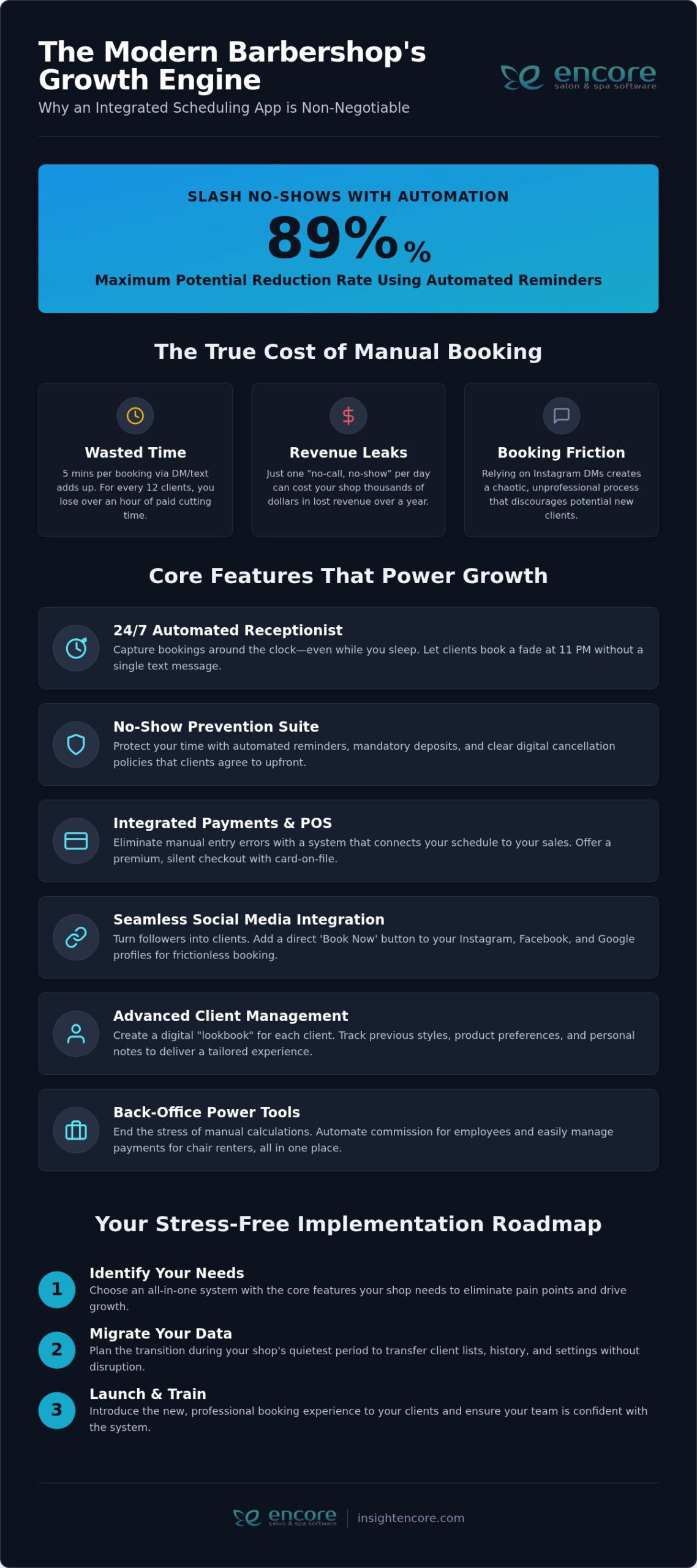
Categories
Uncategorized

How to Calculate Salon Staff Utilization Rate: The 2026 Management Guide

What if those quiet gaps in your appointment book weren’t just a natural part of the day, but actually a hidden leak in your salon’s profitability? It’s a common frustration for owners who see high overhead costs but feel like their revenue isn’t quite reaching its potential. You shouldn’t have to wonder which stylists are carrying their weight or why your margins feel so thin despite a busy-looking floor. Learning exactly how to calculate salon staff utilization rate is the first step toward reclaiming control over your schedule and your bank account.

We know that managing a team is as much about people as it is about numbers. That’s why this guide focuses on mastering the math behind your productivity without losing the human touch your brand is known for. You’ll learn the exact formula for measuring efficiency, see where you stand against 2026 industry benchmarks, and discover actionable ways to fill empty chairs. We will also look at how automated tools can replace spreadsheet fatigue with clear, reliable insights that empower both you and your staff to succeed. It’s time to turn that idle time into a revenue-generating opportunity.

Key Takeaways

  • Master the fundamental math of your business by learning exactly how to calculate salon staff utilization rate to identify where your revenue is leaking.
  • Discover why a 100% booking rate is actually a sign of potential burnout and learn how to aim for the sustainable “sweet spot” of 75% to 85%.
  • Learn how to eliminate “Swiss cheese” gaps in your daily schedule using automated marketing tools that fill last-minute cancellations.
  • Stop wasting hours on manual performance tracking and see how real-time reporting can replace your spreadsheets with accurate data.
  • Understand the direct link between stylist productivity and rising overhead costs to ensure your salon stays profitable in the 2026 market.

Understanding Salon Staff Utilization: Why This Metric Matters in 2026

In the fast-paced world of hair and beauty, it’s easy to mistake a bustling floor for a profitable one. However, the true health of your business lies in a specific number. A utilization rate is the percentage of time your stylists spend performing services compared to the total hours they are available to work. As we move into 2026, understanding this metric is no longer optional. With rising overhead costs like rent and energy prices, every minute an employee is on the clock must be intentional. This is why learning how to calculate salon staff utilization rate is the first step in protecting your bottom line.

Many owners assume that if their team looks busy, the salon is doing well. This is a common misconception. A stylist might spend half their shift cleaning or folding towels. While these tasks are helpful, they don’t generate direct revenue. Knowing how to calculate salon staff utilization rate allows you to see past the activity on the floor and focus on the actual bookings that pay the bills. It’s the direct link to your break-even point. If your utilization is too low, you aren’t just losing potential profit. You’re actively paying for time that isn’t being sold.

Utilization vs. Productivity: What is the Difference?

While these terms are often used interchangeably, they measure different things. Utilization is a time-based metric. It tells you if your staff is being kept busy with clients. Productivity, on the other hand, is revenue-based. It tracks how much money a stylist generates during those booked hours. You might have a stylist with 90% utilization who only performs low-cost trims. Conversely, a senior stylist might have 60% utilization but generates massive revenue through high-end color services. You need both metrics to get a full picture of your salon’s health and to make informed management decisions.

The Financial Impact of Idle Time

Idle time is a silent profit killer. Think about the “cost of an empty chair.” Every hour a stylist sits without a client, you’re still paying for rent, utilities, and potentially their base wage. Low utilization rates eat into your margins. This makes it difficult to offer competitive commissions or invest in new equipment. By tracking this data, you can make smarter staffing choices. If utilization is consistently high, it’s time to hire. If it’s low, you might need to adjust your scheduling features or focus on marketing to fill those gaps. Using these insights helps you move from “guesstimating” to running a data-driven business. Of course, utilization is just one piece of the puzzle — pairing this data with a broader strategy to increase your salon profit margin ensures that every filled chair is also contributing meaningfully to your bottom line.

The Step-by-Step Formula for Calculating Stylist Utilization Rates

Ready to get into the numbers? Don’t worry. This isn’t complex calculus. The core formula for how to calculate salon staff utilization rate is straightforward: (Total Booked Hours / Total Available Hours) x 100. This simple equation gives you a percentage that represents how much of your staff’s time is actually being sold to clients. It’s the most reliable way to see if your team is truly productive or just staying busy with side tasks.

To get an accurate result, you must define your terms clearly. “Available Hours” are the hours a stylist is on the clock and ready to work. This should exclude unpaid lunch breaks or scheduled administrative time where they aren’t expected to take clients. “Booked Hours” refers to the time spent performing services. While some owners include cleanup time in this, it’s often better to keep cleanup as a separate operational buffer to avoid inflating your numbers. This ensures you’re measuring the actual revenue-generating capacity of your chairs.

Let’s look at a concrete example. Stylist Sarah works a 40-hour week. After deducting 5 hours for lunch and 2 hours for a weekly staff meeting, her “Available Hours” total 33. If Sarah has 25 hours of services booked on her calendar, her calculation looks like this: (25 / 33) x 100 = 75.7%. This tells you Sarah is performing services for roughly three-quarters of her available time. Knowing how to calculate salon staff utilization rate this way helps you spot performance trends across your entire team.

Accounting for Double Bookings and Overlaps

In busy salons, stylists often work on one client while another’s color processes. This can result in utilization rates exceeding 100%, which might look great on paper but can be confusing for reporting. While high utilization is positive, “weighted” utilization helps you understand if a stylist is multi-tasking effectively or simply overbooked. To keep your data clean, normalize double-booking by counting the total duration of the shift rather than stacking overlapping appointment times. This prevents your reports from suggesting a stylist worked 12 hours in an 8-hour shift, giving you a more realistic view of capacity.

Standardizing Your Data Collection

Consistency is the secret to reliable data. If one stylist clocks in early and another forgets until their first client arrives, your percentages will be skewed. Establish a firm rule for clock-in and clock-out times. You should also distinguish between “walk-in” time and “pre-booked” time. This helps you identify if your utilization is driven by loyal repeat clients or foot traffic. Setting a weekly reporting cadence is usually best for catching trends before they become problems. If you find manual tracking too tedious, you can explore integrated reporting features that handle these calculations for you automatically.

Analyzing Your Results: What Is a “Good” Utilization Rate for a Salon?

Now that you’ve mastered how to calculate salon staff utilization rate, it’s time to interpret what those percentages mean for your business. A common mistake is aiming for 100%. While it sounds efficient, a fully booked team is often a team on the brink of burnout. In the salon industry, the “sweet spot” for sustainable growth usually falls between 75% and 85%. This range allows for maximum revenue while leaving enough room for staff to breathe, clean their stations, and engage with clients about retail products.

If you see rates dipping below 60%, you’ve entered the danger zone. This level of idle time suggests that your marketing isn’t reaching the right people or your scheduling needs a serious overhaul. However, don’t panic if your junior stylists are in this bracket. It’s natural for newer team members to have lower utilization as they build their books. For your master colorists, you should expect to see them consistently hitting that 80% mark. Understanding the numbers is just as important as knowing how to calculate salon staff utilization rate in the first place. If persistent low utilization is squeezing your margins, reviewing your full operational costs through the lens of how to increase salon profit margin can reveal additional leaks that go beyond scheduling alone.

Utilization Benchmarks by Service Type

Expectations should shift based on your business model. High-volume environments like barber shops often thrive with utilization rates closer to 90% because services are quick and transitions are fast. Luxury spas or salons specializing in long-form services like extensions might target a slightly lower rate to ensure the client experience feels unhurried. Specialized businesses have their own rhythms too. For example, artists using Encore Tattoo Software often balance long sessions with significant prep time, which changes how you view a productive day. If you run a high-volume barbershop and want to maximize those strong utilization numbers, reviewing proven barbershop management tips for new owners can help you build the operational foundation needed to sustain that pace.

Red Flags: When High Utilization Becomes a Liability

Consistency is key, but pushing for 95% or higher is a recipe for staff turnover. When stylists have zero “buffer time,” their stress levels skyrocket and the quality of their work can slip. It also kills your retail sales. A stylist who is rushing to clean up for the next client won’t have the time to explain which shampoo will preserve that fresh color. If your team is over-utilized, you’ll see it in their energy levels and your Google reviews. Sustainable success requires a balance between a full book and a supported team.

How to Calculate Salon Staff Utilization Rate: The 2026 Management Guide

4 Proven Strategies to Improve Low Utilization Without Increasing Burnout

Knowing how to calculate salon staff utilization rate is only half the battle; the real magic happens when you use that data to drive positive change. It’s common to feel a bit stuck when you see low percentages, but you don’t have to push your team to the point of exhaustion to see results. Improving utilization is about working smarter and refining your operations. Start by looking at your daily schedule for “Swiss cheese” gaps. These are those awkward 15 or 30 minute breaks between appointments that are too short for a new service but long enough to waste time. By nudging appointments together, you can reclaim hours of billable time every week.

Automated marketing is another powerful tool for your management toolkit. Instead of waiting for the phone to ring, you can send last-minute booking incentives to your most loyal clients as soon as a gap appears. Cross-training also plays a vital role in a modern salon. When a stylist is trained in multiple service types, they can step in to help with a busy nail tech’s overflow or handle a quick brow wax during a color processing break. Implementing online booking further supports this by allowing clients to fill those gaps themselves, often during the late night hours when your salon is closed.

Incentivizing Staff for Self-Filled Gaps

Your stylists are your best brand ambassadors and they’re often eager to help the business grow. Why not reward them for taking initiative? Offering a small bonus or a slightly higher commission for clients they bring in during their own idle hours can transform a slow afternoon into a productive one. You can encourage them to post “flash sales” on their professional social media pages to fill immediate openings. When you integrate these clear utilization goals into your salon employee performance review template, you turn a math problem into a shared win for the whole team.

Managing Client No-Shows and Cancellations

A single no-show can tank your daily utilization rate and leave a stylist feeling undervalued. Protecting your team’s time is a non-negotiable part of modern management. Implementing small deposits or firm cancellation fees ensures that clients value your schedule as much as you do. You can also use automated waitlists to instantly notify waiting clients the moment a slot opens up. This keeps your chairs full and your revenue steady without adding any extra stress or manual work to your staff’s busy day.

Try Encore for free and fill your empty chairs today

Beyond the Spreadsheet: Automating Performance Tracking with Encore

Many owners spend their Sunday nights hunched over a laptop, trying to figure out why their bank balance doesn’t match the activity they saw all week. While knowing how to calculate salon staff utilization rate manually is a foundational skill, relying on pen and paper or clunky spreadsheets often leads to “guesstimates” rather than solid facts. Spreadsheet fatigue is real, and human error is inevitable when you’re busy managing a team and serving clients. A missed clock-in or a forgotten walk-in can skew your data, leaving you with an inaccurate picture of your business health. Encore Salon Software removes this frustration by automating the entire process. It captures every booking and every minute on the clock to generate real-time reports that you can trust.

Automation doesn’t just save time; it connects your data in ways a manual system never could. When your utilization rates are integrated with your payroll and commission structures, you eliminate the need for stressful double-entry. For a deeper look at how to eliminate manual payroll errors entirely, explore how calculating salon staff commission automatically can build lasting trust with your team and protect your peace of mind. Your stylists can see exactly how their performance impacts their paycheck, which builds a culture of transparency and trust. You can also use these performance dashboards to make confident hiring decisions. If your team is consistently hitting that 85% mark, the data is telling you it’s safe to bring on a new team member. Learning how to calculate salon staff utilization rate through an automated system ensures every growth decision is backed by reliable evidence.

Real-Time Insights for Proactive Management

Stop waiting until the end of the month to realize you had too many empty chairs. With live data, you move from “looking back” at missed opportunities to “fixing today.” You can check staff utilization from anywhere using mobile access, whether you’re at the salon or grabbing a coffee down the street. Set up automated alerts to notify you when specific time slots are consistently under-utilized. This allows you to launch a quick marketing campaign or adjust your staffing levels before the week is even over. It’s about having total control over your schedule without being tied to a desk.

Scaling Your Business with Data

Scaling your business requires more than just a gut feeling. When you track utilization trends over months or years, you gain the clarity needed to plan for a second location or a major expansion. These data-backed reviews also improve staff morale. Instead of a vague conversation about “being busy,” you can show a stylist their growth through clear, visual charts. This professional approach fosters loyalty and keeps your best talent from looking elsewhere. If you’re ready to ditch the calculator and see what automation can do for your peace of mind, contact our team for a demo today. We’re here to help you turn those spreadsheets into a strategy for long-term success.

Take Control of Your Salon’s Future

Mastering how to calculate salon staff utilization rate is the key to identifying hidden profit leaks and protecting your team from burnout. You now have the clarity to target that 75% to 85% sweet spot where productivity meets sustainability. By replacing manual spreadsheets with automated insights, you can stop guessing and start making data-driven decisions that actually move the needle for your business.

Since 1991, we’ve provided salon owners with the specialized tools needed to manage everything from utilization to inventory in one place. Whether you’re an independent stylist or running a large spa, our all-in-one reporting is designed to give you back your Sunday nights. You’ve mastered the math. Now it’s time to let a reliable partner handle the tracking so you can focus on your craft.

Stop doing the math and start growing your salon with Encore Software.

Your journey toward a more efficient and profitable salon starts today. We’re here to help you turn your idle time into revenue and your stress into a feeling of organized control. Let’s get started.

Frequently Asked Questions

How do I calculate salon staff utilization rate manually?

To find this number, divide the total hours a stylist spent with clients by the total hours they were available to work, then multiply by 100. For example, if a stylist was available for 30 hours and performed services for 21 hours, their rate is 70%. Understanding how to calculate salon staff utilization rate manually is a great way to double-check your numbers before you transition to an automated reporting system.

What is a good staff utilization rate for a hair salon?

A healthy target for most salons is between 75% and 85%. While 100% might sound like the goal, it often leads to staff burnout and leaves no room for retail sales or cleaning. If your rates fall below 60%, it’s usually a sign that you need to ramp up your marketing or adjust your scheduling. Aiming for the sweet spot ensures your business stays profitable while your team remains happy.

Does double booking affect my utilization rate calculation?

Yes, double booking can skew your data and even push your utilization rate above 100%. If a stylist works on two clients at once, their booked hours might technically exceed their shift length. To keep your reports accurate, it’s best to normalize this data by counting the total duration of the shift as the maximum capacity. This prevents confusing spikes in your reports and gives you a more realistic view of your salon’s actual floor capacity.

How can I improve my stylists utilization without making them feel pressured?

Focus on filling the “Swiss cheese” gaps in your schedule through automated marketing rather than demanding more speed. Use incentives like small bonuses for stylists who fill their own idle time or offer flash sales to your loyal clients. When you frame utilization as a way for them to grow their own commissions, it feels like a partnership. It’s about optimizing the day to work smarter, not just pushing everyone to work harder.

Should I include unpaid lunch breaks in the available hours calculation?

No, you should always exclude unpaid lunch breaks and scheduled meetings from your “available hours” total. Your utilization rate should only reflect the time a stylist is actually on the clock and ready to accept clients. Including non-working time would artificially lower your percentages and give you an inaccurate picture of your team’s efficiency. Removing these hours ensures you’re only measuring the time that has the potential to generate revenue for your salon.

How often should I review my staff utilization reports?

Reviewing your reports once a week is the best way to catch scheduling trends before they turn into major profit leaks. A weekly check-in allows you to be proactive and adjust your marketing if you see a slow period coming up. You should also do a deeper dive once a month to look at long-term performance and seasonal patterns. Consistent reviews keep you in control and help your team stay aligned with your growth goals.

Can salon software calculate utilization for booth renters?

Yes, specialized tools like our Chair/Booth Renter Software are built specifically for independent professionals. Even if you don’t manage a full team, knowing how to calculate salon staff utilization rate for yourself is vital for managing your own time and income. The software tracks your specific bookings against your personal availability. This gives you the same level of professional insight that a large salon uses to stay profitable and organized every single day.

What is the difference between utilization and productivity in a spa?

Utilization measures the time a therapist spends with clients, while productivity measures the revenue they generate during those sessions. In a spa setting, a therapist might be 90% utilized with low-cost treatments but generate less revenue than someone who is 60% utilized with high-end facials. You need both numbers to see the full picture. High utilization is a great start, but it must be paired with strong productivity to ensure your spa remains truly profitable.

Disclaimer

This article is general in nature and may contain errors, please verify all claims with your sales rep