
window.dataLayer = window.dataLayer || []; function gtag(){dataLayer.push(arguments);} gtag('js', new Date()); gtag('config', 'UA-206511945-1');
Search
Categories
Uncategorized

Barbershop appointment management app pricing for shops

Online deposits are possible when a booking setup lets clients pay during checkout. A barbershop appointment management app can collect payment as part of the booking flow while keeping appointments and walk-ins in view. The key is choosing a system that works for clients who book ahead and those who walk in.

Online booking is only part of the picture. A busy shop also needs a clear way to coordinate walk-ins, staff calendars and appointments made at the counter. When every booking appears on one schedule, staff can see who’s next and keep the day organized.

Here, you’ll learn how deposits and after-hours booking work, how to manage walk-ins alongside staff-created appointments, and what to consider when setting up calendars, waitlists and pricing. You’ll also learn how to assess a free plan and whether its booking and payment features suit your shop.

Key Takeaways

  • Set booking rules that let clients reserve a time outside shop hours while giving barbers control over accepting, skipping or reassigning clients.
  • Keep walk-ins, online bookings and appointments made by staff together on one schedule to make the day easier to coordinate.
  • Use shared staff calendars and a visible waitlist to help the team manage the queue, even if online booking isn’t enabled.
  • Compare plan limits, payment processing costs and included features to judge whether a free option suits your shop’s workflow.
  • Review how booking, reminders and cancellations fit together so clients know what to expect and staff can manage schedule changes.

Can clients book appointments outside working hours?

Yes. An online booking page can let clients request appointments while the shop is closed. Set your services, available hours, staff schedules and booking rules in advance. A client looking for a haircut after closing will then see only the time slots you’ve opened for booking.

Decide whether bookings are confirmed automatically or require barber approval. Automatic confirmation suits predictable schedules, while approval gives barbers more control over unusual requests. For example, a barber can review a request that needs extra time before accepting it. Make each booking’s status clear, so clients know whether it’s confirmed or pending.

Set clear procedures for schedule changes. Decide who accepts, skips or reassigns clients, and make sure staff know who handles each action. If a barber is unavailable, move the client to another barber with a suitable opening, or skip the request if no slot works. Clear rules prevent pending requests from being mistaken for confirmed appointments.

After-hours booking can also support client acquisition. A shop can share its booking page on its website, social profiles or a marketplace that lists local services. For example, a new client comparing nearby barbers can view available times and book without calling. Listings can introduce the shop, but appointment availability, service descriptions and barber profiles need to stay accurate to set expectations.

Client records give staff useful context for repeat visits. Keep appointment history on each client profile, including the service booked and the barber assigned. Staff can review past visits before the next appointment. A client management system, or CRM, organizes this information and helps manage follow-ups and preferences without relying on memory.

For a US shop, use privacy controls to limit client-record access to staff who need it. Collect only details that are useful for booking, and use a secure payment flow to protect card information. Explain cancellation and deposit terms before clients submit payment.

Point-of-sale, calendar and marketing integrations vary by app. A point-of-sale connection can link appointments with checkout, while calendar syncing can help staff review scheduled work. Marketing tools may support follow-up messages or loyalty programs. Choose connections that fit your shop’s workflow.

Start setup by entering services, durations, staff availability and booking rules. Then test a booking, a schedule change and a cancellation from both the client and staff views. Adjust the settings before sharing the booking page.

Managing walk-ins alongside online and staff-created appointments

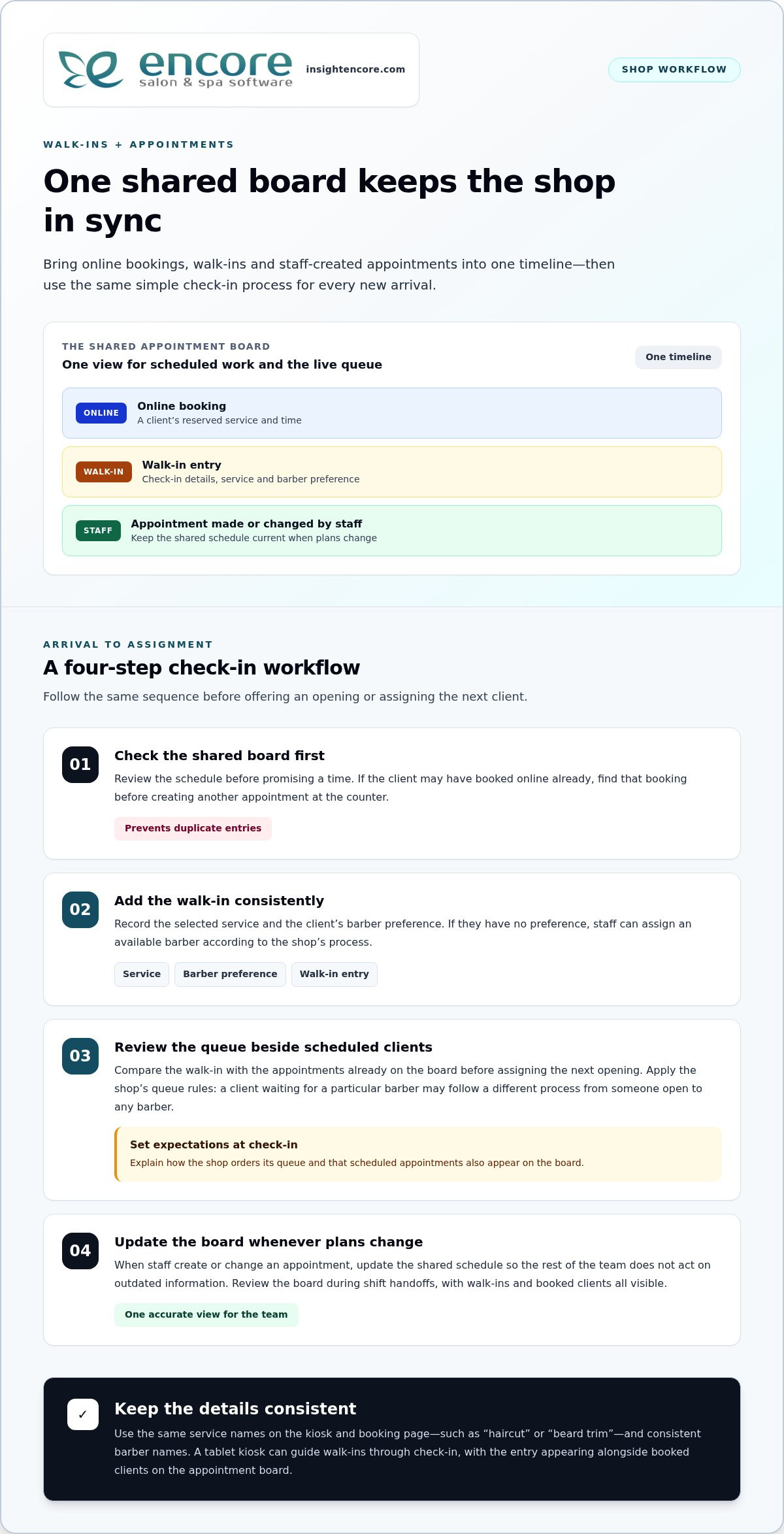
A shared appointment board gives the front desk one timeline for every client. It can combine online bookings, walk-in entries and appointments made by staff. When a client calls while another is checking in, staff can review the same schedule before offering an open slot instead of relying on separate notes or memory.

For walk-ins, a tablet kiosk can guide clients through check-in. They select a service and can choose a barber if they wish. The entry then appears on the appointment board alongside booked clients. For example, a walk-in requesting a haircut can appear in the same timeline as an online haircut booking, so staff can see the queue and scheduled work together.

Keep check-in details consistent. Use the same service names on the kiosk and booking page, such as “haircut” or “beard trim,” and use consistent barber names. Record a client’s barber choice with the walk-in entry. If they don’t choose, staff can assign an available barber according to the shop’s process.

Use a clear workflow whenever a new client arrives:

  • Check the shared board before promising an appointment time.
  • Add the walk-in with the selected service and barber preference.
  • Review the entry alongside scheduled clients before assigning the next opening.
  • Update the appointment board when staff create or change an appointment.

These steps help prevent duplicate entries. If a client has already booked online, staff should find that booking before creating another appointment at the counter. If a barber changes an appointment, update the shared schedule so other staff don’t act on outdated information. One timeline makes changes easier to spot.

Set expectations at check-in. Explain how the shop orders its queue and that scheduled appointments also appear on the board. A client waiting for a specific barber may follow a different process from someone open to any barber. Recording the service and barber preference helps staff apply the shop’s rules consistently.

Review the board during shift handoffs. Make sure online bookings, staff-created appointments and walk-in entries are all visible. If a barber is running behind, staff can check the schedule before offering an alternative. The aim isn’t to treat every arrival identically, but to give the team one accurate view and manage each client according to the shop’s queue and booking rules.

Multi-staff calendars, walk-ins, and waitlists

A shared calendar helps coordinate each barber’s appointments and availability. Pair it with a walk-in queue to manage arrivals as they happen.

Multi-Staff Calendar Coordination

Give each barber a distinct calendar view, with working hours, appointments and unavailable blocks easy to distinguish. Before assigning a client, compare the requested service and barber with the open schedule. If a client wants a particular barber, for example, staff can check that barber’s calendar instead of offering a time based on another team member’s availability.

Check how calendar changes appear to the team. When a barber’s schedule changes, staff need to see affected appointments and update them deliberately. Review the day’s schedule at opening and again during shift handoffs. This gives the next staff member a clearer view of remaining appointments and any updates.

Walk-In and Waitlist Handling

A waitlist connects clients waiting for service with the walk-in queue. Shops can show queue positions and estimated waits in real time on a TV or large screen. Clients get a visible reference, and staff can manage arrivals in sequence. A walk-in queue can also operate without online booking.

Decide what information staff need for each waitlist entry. A service request and barber preference can help direct clients appropriately. Someone waiting for a specific barber may need a different estimate from someone willing to see the next available barber. Update the queue when a client leaves, changes their request or begins service.

Use consistent steps to keep the calendar and queue aligned:

  • Add each new arrival to the walk-in queue before giving a wait estimate.
  • Review the assigned barber’s calendar before moving someone forward.
  • Update the queue when a client starts service or leaves.
  • Tell waiting clients when an estimate changes, and keep the screen current.

These habits help staff spot conflicts before they disrupt the day. If a scheduled appointment and a walk-in both expect the same barber, for instance, the calendar and queue make the overlap visible. Staff can then apply the shop’s booking and queue rules instead of making separate promises from memory. Check the display and calendar at each handoff so the team has the same information.
Barbershop appointment management app pricing for shops

Software pricing and free plans

Compare the full cost of a plan with the tools your shop needs. A low starting price may not include payment processing or optional features.

Software Pricing

Compare subscriptions by included features, staff access and payment terms. Processing fees may be separate from the software subscription, so account for them as a distinct expense. The right barbershop appointment management app should fit your shop’s workflow, not just look inexpensive at first glance.

List the tasks your team needs to manage before comparing plans. A solo barber may prioritize appointment scheduling and client records, while a shop with several barbers may need individual staff calendars. Compare options against those needs, then review user limits, included tools and billing terms. This makes the cost comparison relevant to your operation.

Free Plan Options

A free plan can help you try an appointment workflow before choosing paid software. Check whether it supports the services, staff calendars and booking steps your shop uses. Review limits on appointments, team access, client records and payment tools. Compare what each plan actually includes, as limits can vary between barbershop appointment management apps.

Test a realistic booking process instead of judging a plan by its feature list alone. Add a service, create a staff profile, make a sample booking and review the client record. Then repeat the process from the staff view. This can show whether the free option works for both clients and the people managing the schedule.

Use this checklist to compare plans:

  • List the booking and management features the shop relies on.
  • Separate software charges from payment processing costs.
  • Review free-plan limits on users, appointments and records.
  • Try the main tasks staff handle during a typical workday.

Read plan terms for restrictions that could affect daily operations. Consider whether the free option supports your booking and payment processes, and whether its limits fit your staffing needs. If you add another barber, for example, access to staff calendars may matter more than it did when you worked solo.

Choose based on practical value, not headline price. If a free plan requires staff to track bookings separately, include that extra work in your comparison. Whether you start with a free plan or compare paid options, a suitable barbershop appointment management app should make core tasks manageable within your budget and workflow.

How do barbershop apps handle online booking, reminders, and cancellations?

Online booking lets clients choose a service, barber and available time through a booking page. The app uses the shop’s schedule to show bookable slots. A client can select a beard trim, for example, and see times assigned to an available barber. Accurate service names and durations help clients choose the right appointment. Keep those details current when schedules or services change.

After a client submits a booking, the app records the appointment and displays its status. The booking flow may include a confirmation with the service, barber, date and time. This summary gives clients a chance to spot mistakes early. Someone who chose the wrong barber, for instance, can correct the booking before arriving. Clear details also help staff prepare.

Reminder tools can send appointment details before the scheduled visit. The shop can use reminders to reinforce the time, location and service the client selected. A useful message is direct: “Your haircut with Alex is booked for Thursday at 2 p.m.” Keep the wording consistent with the booking record. If the appointment changes, update the record before sending further reminders.

Cancellation settings determine what clients can do after booking. Decide whether clients can cancel online, how staff record phone cancellations and how newly open slots become available again. Explain the process during booking so clients know how to cancel or request a change instead of simply missing an appointment.

Use a simple workflow to handle changes:

  1. Record each online booking with its service, barber and appointment time.
  2. Send a confirmation that repeats those booking details.
  3. Apply the shop’s reminder schedule to upcoming appointments.
  4. Update cancellations or changes on the calendar promptly.
  5. Offer the newly open time to clients seeking an appointment.

Test the full process before sharing the booking page. Make a sample appointment, review its confirmation, then change or cancel it. Check that the calendar updates and the released slot can be booked again. A staff test can also reveal confusing service names or missing instructions. Fix these details before clients rely on the page.

When the system supports it, connect booking details to returning clients’ records. Staff can then review appointment history before serving a repeat customer. Keep messages relevant to the appointment and avoid unnecessary details. A well-managed booking flow gives clients clear steps and shows staff schedule changes.

Encore Salon & Spa Software: Encore Salon Software

Encore Salon & Spa Software offers Encore Salon Software for shops looking to manage appointments and daily operations more efficiently. The platform brings online booking, client management, inventory tracking and point-of-sale tools together. This can suit a shop that wants to connect booking activity with client records and checkout instead of managing each task separately.

Consider a unified system when appointment details, client history or sales are spread across separate systems. Staff can access relevant information while serving clients and managing the shop. Encore Salon Software is designed for salons, while Encore Spa Software, Chair/Booth Renter Software and Tattoo Studio Software serve other business types.

Visit insightencore.com to explore Encore Salon & Spa Software.

Choose a setup that supports your next stage

Start by matching your booking system to how your shop works today, then consider how your needs may change as the team grows. A barbershop appointment management app should support the way you manage appointments and client details without adding steps your staff won’t use.

Encore Salon & Spa Software offers Encore Salon Software, Encore Spa Software and Chair/Booth Renter Software for different business types. Consider which setup best fits your operation. For barber shops looking to manage appointments as part of their business software, Encore Barber Software is also available.

Before making a change, list the tasks you want to manage in one place and involve the staff who handle bookings. A clear view of your needs makes it easier to choose a practical fit and move forward confidently.

Explore Encore’s software options

A more organized booking process starts with a system that fits your shop. Take the next step when you’re ready.

Frequently Asked Questions

Can barbers collect deposits online?

Yes, if the booking system supports deposits and its payment setup allows them. Request payment during booking, then explain the deposit terms before checkout. For example, clarify whether the deposit applies toward the service and how cancellations are handled. Clear terms help clients understand the payment and staff recognize it when the appointment arrives.

Can clients choose a specific barber?

Yes, booking pages can let clients choose a barber when the shop enables that option. This suits clients who prefer a barber they’ve seen before. Keep barber names and availability current so clients choose from accurate options. If a client has no preference, offering an unassigned or next-available option can make booking easier.

Can it be linked from Instagram and social media?

Yes, a shop can share its online booking page through social profiles when the platform allows links. Add the booking link to the profile or a relevant post, with a clear label such as “Book an appointment.” Use consistent service names and shop details across profiles. This gives people who discover the shop online a direct path to its schedule.

Can it help bring in more clients?

It can make booking more convenient for people considering a visit, especially those who prefer not to call. A clear service menu and shareable booking page give potential clients a simple next step. For example, someone viewing a barber’s social profile can move from seeing the shop’s work to viewing available appointments. Booking tools make access easier, but service quality and client experience remain essential.

Can multiple barbers use separate calendars?

Yes, scheduling systems can organize availability by barber, making each team member’s appointments easier to review. This helps when staff work different shifts or offer different services. Assign each booking to the right person and review individual schedules when planning. Enter each barber’s working hours and time away before opening appointments, so availability stays accurate.

Can solo barbers use it too?

Yes, a solo barber can use appointment software to manage personal availability, client bookings and service details without coordinating a team. The barber can keep work hours and appointment types in one schedule, then share the booking page with clients. Choose settings that suit a one-person workflow instead of adding staff steps that don’t apply.

Does it prevent double bookings?

Scheduling software can reduce double bookings by marking occupied appointment times as unavailable. This helps when clients and staff add appointments through the same schedule. Once a client reserves a time, for example, it shouldn’t appear open to someone else. Record staff-created bookings and schedule changes promptly so the calendar reflects actual availability.

Does it send appointment reminders?

Yes, appointment software may send reminders using the contact details recorded for each client. Reminders can restate the appointment time, barber and service, helping clients find their booking information. A client checking a message before leaving home, for example, can confirm the scheduled service. Set message details to suit the shop’s communication style and keep appointment records current.

Disclaimer

This article is general in nature and may contain errors, please verify all claims with your sales rep

Categories
Uncategorized

Software for independent hair stylists: compare the features that matter

A booking calendar alone won’t cover the day-to-day needs of an independent stylist. Software for independent hair stylists can bring appointments, client records, payments, and retention tools together, while letting clients book online around the clock. The most useful systems connect four core functions: online booking, scheduling, point-of-sale payments, and client-retention tools.

Look beyond the calendar. Managing client details, tracking products, and encouraging repeat visits can all affect how smoothly your business runs, and platforms vary in how they handle these tasks. The right fit depends on which parts of your work you want to manage in one place.

This guide explains what salon software does and compares key features for independent hair stylists, including scheduling, client management, payments, inventory, loyalty programs, and gift cards. You’ll learn how each can support your daily workflow, what to weigh when comparing options, and how to choose a setup that suits the way you work.

Key Takeaways

  • Compare booking tools by how they handle online appointments, schedule changes, and the flow of your workday.
  • Choose client profiles that make it easy to keep useful service notes and personalize future visits.
  • Look at how payment options fit your setup, including whether you need to take payments away from a fixed counter.
  • Check whether inventory tracking, loyalty programs, and gift cards support the way you manage products and encourage repeat visits.
  • Use the comparison criteria to prioritize the features you’ll actually use, then match them to a salon software option built for your business type.

What is salon software and what does it do?

Salon software brings booking, appointment management, payments, and client tools into one platform. For an independent stylist, it can reduce manual admin and make the booking process clearer, from the first click to a confirmed appointment.

Compare booking platforms by how clients find openings, make changes, and receive appointment information. Choose a system that supports your actual workflow, not simply one with the longest feature list.

Online Booking and Social Media Links

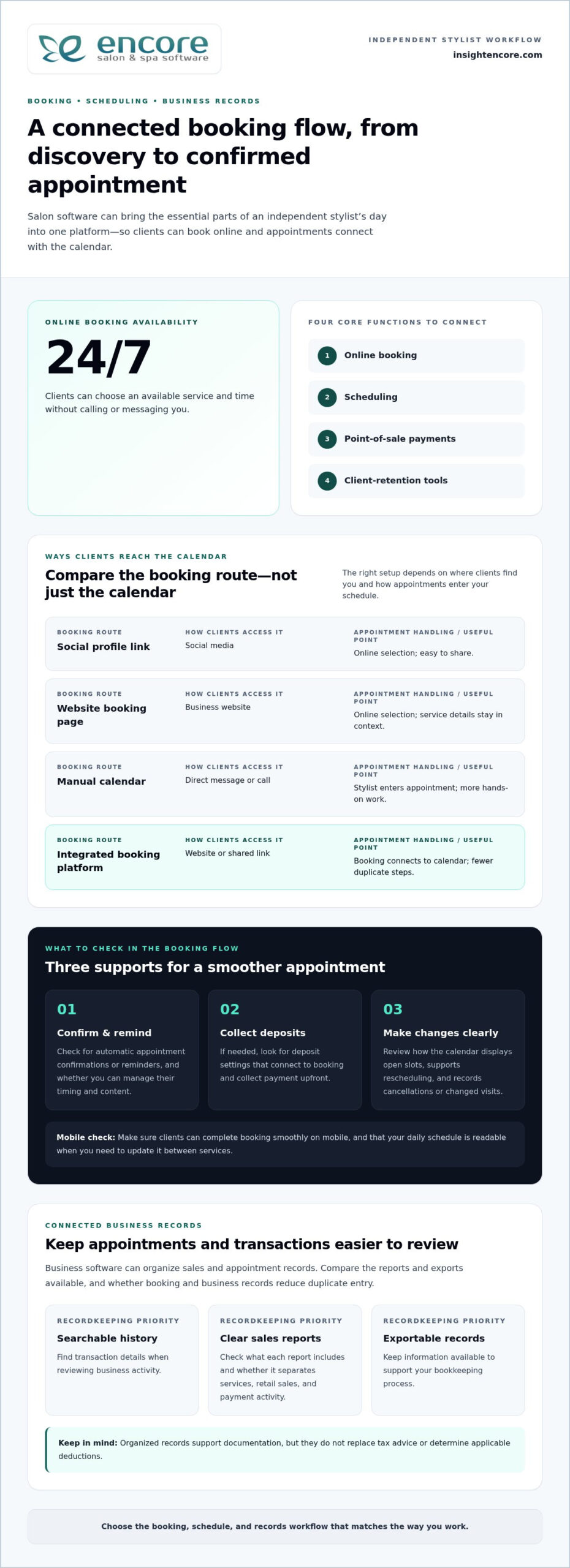
Online booking lets clients choose an available service and time without calling or messaging you. A shareable booking link can sit in a social media profile or post, connecting discovery directly to your calendar. Small salon software should support booking 24 hours a day, seven days a week.

Which salon software supports online booking, reminders, and deposits? Look for a platform with online booking, automatic appointment confirmations or reminders, and a way to take deposits during booking if you need them. Each supports a different step: reserving a slot, reminding clients, and collecting payment upfront. Check that clients can complete the booking smoothly on mobile.

Booking option How clients access it Appointment handling Useful comparison point
Social profile link Social media Online selection Easy to share
Website booking page Business website Online selection Service details in context
Manual calendar Direct message or call Stylist enters appointment More hands-on work
Integrated booking platform Website or shared link Booking connects to calendar Fewer duplicate steps

Choose a system based on where clients discover you and whether new bookings update your calendar automatically.

Appointment Management and Reminders

Appointment management helps you view upcoming services, adjust availability, and handle rescheduling in one calendar. Compare how clearly a platform shows open slots and how quickly you can change an appointment when plans shift. A readable daily view on mobile makes schedule updates easier between services.

Appointment confirmations and reminders give clients key details before their visit. Check whether the platform sends them automatically and lets you manage their timing and content. A message can include the booked service and time, so clients can find the essentials without searching old conversations. Also consider how the system records cancellations and rescheduled visits.

Tax and Recordkeeping Features

Business software can organize sales and appointment records, helping you review income and keep information together. Which tax and recordkeeping features should hairstylists look for? Prioritize searchable transaction histories, clear sales reports, and records you can export for bookkeeping. These tools organize documentation, but they don’t replace tax advice or determine applicable deductions.

Compare what each report includes and how easily you can separate services, retail sales, and payment activity. Consistent records make it easier to reconcile appointments with transactions and prepare information for your bookkeeping process. Connected booking and business records can reduce duplicate entry. For example, salon software features can bring operational details into a more connected workflow.

Client profiles and customer relationship management

A client profile connects appointment history with details that help you prepare for each visit. Compare systems by how easily they organize service notes, preferences, consultation information, reminders, and follow-up marketing.

For example, a profile could record a client’s preferred style, past colour service, and notes for the next visit. Organized client management gives you a practical reference before an appointment, without searching through separate messages.

Client Profiles and Reminders

Client profiles store useful details alongside appointment history, while reminders prompt clients about upcoming visits. Compare how quickly you can find a record, update a note, and see the next booking. Marketing tools can also help you share relevant offers or service updates with existing clients, rather than relying only on marketplace listings to attract new people.

Keep records focused on details that support service and communication. For example, a stylist might note a client’s preferred appointment time and the products used during a previous visit. Before switching platforms, consider how existing profiles and notes will move, and which details you need to retain for upcoming appointments.

Consultation Forms, Deposits, and Policies

Consultation forms collect service information before an appointment, while deposits and written policies clarify booking expectations. These tools differ from profile notes: they focus on preparation and agreement, not ongoing client history. For a colour appointment, a form could gather the client’s goals and relevant service background.

Compare whether clients can complete forms before arriving and whether deposit settings connect to booking. Keep cancellation terms clear and visible during the booking process. In the US, state or local rules may affect deposits, cancellations, and client data. Set your policies with the requirements that apply where your salon operates in mind.

Marketplace listings can help clients discover a stylist while browsing services. A standalone profile or booking page, by contrast, can direct people who already know your name to your own booking process. Compare discovery tools by how clearly they show your services, pricing, availability, and booking steps. Consider whether a listing supports the way you want to attract clients, rather than assuming it will replace your own marketing.

Client management also shapes daily operations. Use a simple review process: check the client’s profile before the visit, add useful service notes afterward, then review upcoming appointments and follow-up needs. This creates a consistent record without turning every interaction into administrative work. For a closer look at the capabilities that connect salon records and client workflows, explore salon management features.

Payments and mobile point-of-sale options

A point-of-sale system records a service sale and processes the client’s payment at checkout. Compare in-person and mobile workflows, plan terms, transaction fees, and how the platform handles sensitive information.

For privacy and payment security, compare access permissions, how card details are handled, and which transaction records staff can view. Avoid storing payment details in informal places, such as appointment notes or message threads.

POS and Payment Processing

A POS connects a service sale to payment processing, so you can record the transaction when the appointment ends. A mobile option may suit a stylist working from a rented chair or moving between stations, while a fixed checkout may suit a dedicated salon space. Compare the steps for charging a client, recording the service, and providing a receipt.

Consider whether checkout can include both a service and a retail product, such as a haircut and shampoo. An integrated workflow keeps both items together in one transaction. Separate tools may require you to record the service and product sale in different places, adding manual work.

Plans and Processing Fees

Software plans and processing fees are separate costs to compare. A plan may charge for platform access or features, while payment processing fees apply to transactions. Review the full fee schedule, including how it handles in-person and online payments, refunds, and other transaction types. Don’t assume a lower plan price means lower overall payment costs.

When comparing software for independent hair stylists, match the features in each plan to your actual checkout routine. A stylist who takes payment after appointments may need a different setup from one who accepts deposits online. Consider how transaction volume, payment methods, and plan features affect your total operating costs, rather than relying on a headline rate alone.

Privacy and Payment Security

Security comparisons should cover who can access client and payment records, how staff sign in, and how transactions are documented. For example, a solo stylist may need one account, while a shared salon workflow may require separate staff permissions. Clear access controls help limit unnecessary exposure of client information.

Review how the platform handles card details and payment records, along with its privacy information. Keep client notes focused on service needs, not payment credentials. A booking record should help you prepare for an appointment, while checkout handles the transaction through the payment system.

Before switching, map the client’s path from service selection to receipt and note every manual step. A client who finds your salon through Google, books online, and pays in person may need a different workflow from someone who books and pays remotely. Check whether transaction records support your bookkeeping process and whether checkout works on the mobile device you use during appointments.

Software for independent hair stylists: compare the features that matter

Appointment scheduling and calendar management

A salon calendar organizes appointments, stylist availability, service durations, and schedule changes. Compare how each platform handles a solo stylist’s day and whether its tools can also support shared salon operations.

Start with the services you offer. A haircut and a colour appointment need different time blocks, so set each service’s duration and availability separately. Check that the calendar displays those details clearly before you confirm a booking. A useful view helps you spot gaps, overlaps, and appointments that need preparation.

Calendar controls can shape the pace of your day. For example, add a buffer after a colour service for cleanup, then check how that gap appears between appointments. Look for clear daily and weekly views, simple edits, and a way to block personal time. The less you need to rewrite manually, the easier it is to keep your schedule accurate.

Managing no-shows and cancellations starts with clear appointment statuses. Compare whether you can mark a client as confirmed, cancelled, or rescheduled and see the change in your calendar. When a client cancels a morning appointment, for example, the open slot should be easy to identify. Tracking changes helps you understand where schedule gaps occur.

Policies matter, too. Explain your cancellation terms in plain language, then make them visible during booking or in appointment communications. A calendar can record whether a change was made, but your policy tells clients what to expect. Review how the system handles late changes, cancellations, and rebooking before relying on it for daily scheduling.

Team scheduling adds another layer. A solo stylist may need only one availability calendar, while a salon with several stylists needs a clear way to distinguish staff schedules. Compare how each system assigns appointments, displays individual availability, and handles changes. If a client requests a particular stylist, the booking view should make that choice easy to track.

Salon management tools can connect the appointment calendar with client records and service details. This helps you prepare for returning clients without searching separate systems. Reviewing the upcoming service alongside the appointment, for example, can help you plan your day. Check that calendar information is easy to access on mobile between services.

Use this practical comparison checklist:

  • Match service durations to the time blocks shown in the calendar.
  • Check how you block breaks, personal time, and cleanup periods.
  • Review how cancellations, rescheduling, and open slots appear.
  • Compare solo scheduling with staff calendars for shared salons.
  • Test whether appointment details are readable on mobile.

Choose a calendar that handles your real appointment flow, from service selection through schedule changes, without adding unnecessary tracking work.

Inventory, loyalty programs, and gift cards

Inventory, loyalty programs, and gift cards can connect product sales with client retention. Compare whether salon software integrates these tasks with appointments and checkout or leaves you to track them separately.

Inventory tools help you record products used during services and items sold to clients. For example, track colour supplies separately from retail shampoo and conditioner. Compare how easily you can add products, update stock after sales, and review what remains. If you regularly recommend beauty products, clear stock records can help you spot items to replenish before a client asks to buy them.

Choose inventory features based on how you use products. A stylist who sells a small selection may need simple product records and sales tracking. Someone managing a wider retail range may value searchable product lists and stock reports. Check whether the system connects product sales to checkout. That connection can reduce duplicate entry and show which products are selling.

Loyalty programs can give clients a reason to return, but the rules should be easy to explain. Compare how a platform records rewards, applies them to eligible purchases, and shows clients their progress. A stylist might reward repeat visits or retail purchases. State the terms clearly, including which services or products qualify, so clients know how the program works before expecting a reward.

Gift cards let clients pay for a future service or give someone else a salon experience. Compare how a system records gift card sales, tracks remaining value, and applies redemption at checkout. A connected process makes it easier to see both the original sale and later use. Keep gift cards distinct from booking deposits: a gift card stores value for future purchases, while a deposit is tied to an appointment.

Before choosing, map how each task fits your existing routine. Consider whether product sales update inventory, loyalty rewards appear at checkout, and gift card redemptions show in transaction records. An integrated workflow can reduce repeated data entry, while separate tools may require you to reconcile records manually. Select features that support the products and retention approach you actually use.

  • List the products you use and sell, then compare inventory tracking against that list.
  • Review loyalty rules for clarity and ease of redemption.
  • Trace a gift card from sale through later checkout.
  • Check whether inventory and retention records connect with sales activity.

These comparisons help show whether inventory, rewards, and gift cards support your daily work or add administration. For a stylist selling retail products, a good fit keeps stock records and sales easy to follow. For a service-focused business, loyalty and gift card workflows may matter more.

Explore inventory and loyalty tools

Encore Salon & Spa Software: Encore Salon Software

Encore Salon & Spa Software offers Encore Salon Software for independent stylists who want core salon operations in one platform. It brings appointment booking, client management, inventory tracking, and point-of-sale transactions together, connecting the client visit with the business tasks around it.

Choose a salon solution when you want those workflows organized in one place. Encore Spa Software, Chair/Booth Renter Software, and Tattoo Studio Software are designed for other business setups. Comparing your daily needs with these options can help you find a closer fit without adding tools you won’t use.

Contact Encore Salon & Spa Software to discuss your salon software needs.

Choose a Setup That Fits Your Next Stage

The right software for independent hair stylists should match how you want to run your business, not add complexity to your day. Before choosing, decide which workflow you want to improve first and which features you’ll use regularly. This gives you a practical starting point for comparing platforms and deciding whether an integrated system suits your plans.

Encore Salon & Spa Software offers Encore Salon Software for salon operations, Encore Spa Software for spa businesses, and Chair/Booth Renter Software for independent professionals renting a chair or booth. Consider which setup aligns with your working arrangement and business needs, then explore how it could support your next steps.

Explore Encore software for your business

A more organized way of working starts with a choice that suits you. Take the next step when you’re ready and build a workflow that supports the business you want to grow.

Frequently Asked Questions

How can I switch from my current booking solution?

Plan the move around your existing appointments so clients know where to book. List upcoming bookings, services, working hours, and client details you need to retain. Set up the new calendar and service options, then compare its schedule with your current one before sharing the new booking link. Choose a clear changeover date and update your website, social profiles, and appointment messages together.

How do I get started?

Start by writing down the tasks you want one system to handle, such as appointment administration, client records, or product sales. Then compare the relevant workflows using a real example from your business. Encore Salon & Spa Software offers a 30-day free trial, no credit card required, no obligation, with live support available. Use that period to explore the platform with your services and daily routines in mind.

What features should independent hairstylists look for in salon software?

Choose features based on the work you handle repeatedly, rather than selecting the longest feature list. A solo stylist might prioritize an easy-to-manage calendar, clear client histories, and checkout suited to their services. Retail sellers may also value stock tracking, while stylists focused on repeat visits may prefer loyalty or gift card tools. Consider whether the system brings these tasks together in a manageable workflow.

What is the best booking and scheduling software for independent hair stylists?

The best option is the one that fits your services, working pattern, and clients’ booking habits. A stylist working from a home studio, for example, may need a straightforward calendar and a booking page clients can use without calling. Someone sharing a salon may need separate availability for each stylist. Compare how platforms handle service durations, schedule edits, and mobile access before deciding.

How much does salon software cost for solo hairstylists in the US?

Salon software pricing depends on the platform, included features, business setup, and payment processing arrangements. Compare the subscription structure with any transaction costs or optional tools, then consider which features support your actual workflow. For Encore Salon & Spa Software, pricing depends on the case and is provided after a quote request. The relevant cost factors include the selected software setup and the number of employees or locations.

What software helps independent stylists manage client records and color formulas?

Look for salon software with client management that keeps each client’s service history and useful preferences organized. For colour work, record formulas consistently, including the date, service, product details, and any adjustments made. Keep notes attached to the correct client profile and review them before the next visit. A clear structure makes records easier to use than scattered messages or paper notes.

What are the best alternatives to salon software for stylists renting a booth or working from home?

A basic calendar and separate client records can work for a stylist with a simple schedule and few administrative needs. As appointments, payments, and client details become harder to track across separate tools, a salon platform can bring those workflows together. Booth renters may also prefer software designed for independent work. Compare the effort of maintaining separate records with the convenience of connected booking and management.

How can an independent hairstylist set up booking software and migrate client data?

Set up services, appointment lengths, availability, and booking rules before inviting clients to use the new system. Review your existing client list and remove duplicate or outdated entries. If your current system offers an export, organize the file and map each field to the matching profile information. Add upcoming appointments, test a sample booking, and share the new link once the calendar is ready.

Disclaimer

This article is general in nature and may contain errors, please verify all claims with your sales rep
Categories
Uncategorized

Getting Clients to Use Online Booking With Clear Settings

You don’t have to leave your calendar wide open to offer online booking. Getting clients to use an online booking portal starts with clear settings: how far ahead they can book, which services they can choose, and when appointments are available. Set the booking window to suit your business, then explain the options simply.

It’s understandable to worry that an online system could make scheduling feel less personal or create confusion. In practice, clients are more likely to book when the process is easy to find, service details answer their questions, and the settings match how your business works.

This guide explains how to share booking links, clarify service information, and use flexible settings to support client self-service. You’ll also learn how a client portal can simplify booking for returning customers and how to introduce it in a helpful, low-pressure way. Small improvements can make the next step clearer for clients and easier for your team to manage.

Key Takeaways

  • Make the booking option easy to spot across your website, social profiles, and client messages.
  • Write service descriptions that help clients choose confidently without needing to contact you for basic details.
  • Set booking windows, appointment availability, and form fields to fit the way your business operates.
  • Use clear confirmations and reminders to guide clients through booking and appointment changes.
  • Introduce the client portal with simple instructions so clients know how to use it for their next visit.

Encourage clients to book online by placing a clear booking link where they already find your business. Use the same direct invitation on your website, in your email signature, on social media, and in replies to appointment inquiries.

Make the link easy to spot in every channel. On your website, put “Book Now” in the main navigation and near service descriptions. Add the booking link to your email signature and social media bios, so clients can act while they’re considering an appointment. In automated email, SMS, or Messenger replies, include the link with a short prompt such as, “Choose a service and appointment time online.”

Social media can support discovery as well as booking. 32% of consumers use social media to discover new brands and research what to buy. Make the next step clear on platforms such as Instagram or Facebook: a profile link, a booking button, or a post that leads directly to the appointment page. Avoid sending people to a general homepage when a direct booking link can take them closer to choosing a service.

Keep website booking straightforward. Use familiar button text, such as “Book Now” or “Schedule an Appointment,” rather than a vague phrase like “Get Started.” Place booking among the first navigation options, ideally as the second or third tab from the homepage. Then test the route yourself: start at the homepage, select a service, choose an available time, and check that each step is clear.

Website and social media integrations can shorten the booking process by letting clients start from the channel they’re already using. Keep service names, appointment details, and the destination consistent wherever the link appears. For example, a post promoting a haircut should lead to the haircut option, not a broad list that makes clients search again. Check links regularly, especially after changing website navigation or social profiles.

Promote online booking in materials clients already receive. Add the link to newsletters and appointment follow-ups, and use printed cards with a scannable code that opens the booking page. A short demonstration video on YouTube, TikTok, or Instagram can show where to tap and what information clients need. Keep the demonstration focused on the actual process, from opening the link to receiving confirmation.

To measure adoption, compare portal bookings with all bookings over the same period. Divide portal bookings by total bookings to find the share made online. To measure conversion, divide completed online bookings by visits to the booking page. Compare channels to see which links lead to appointments.

2. Benefits of online scheduling compared with phone and email bookings

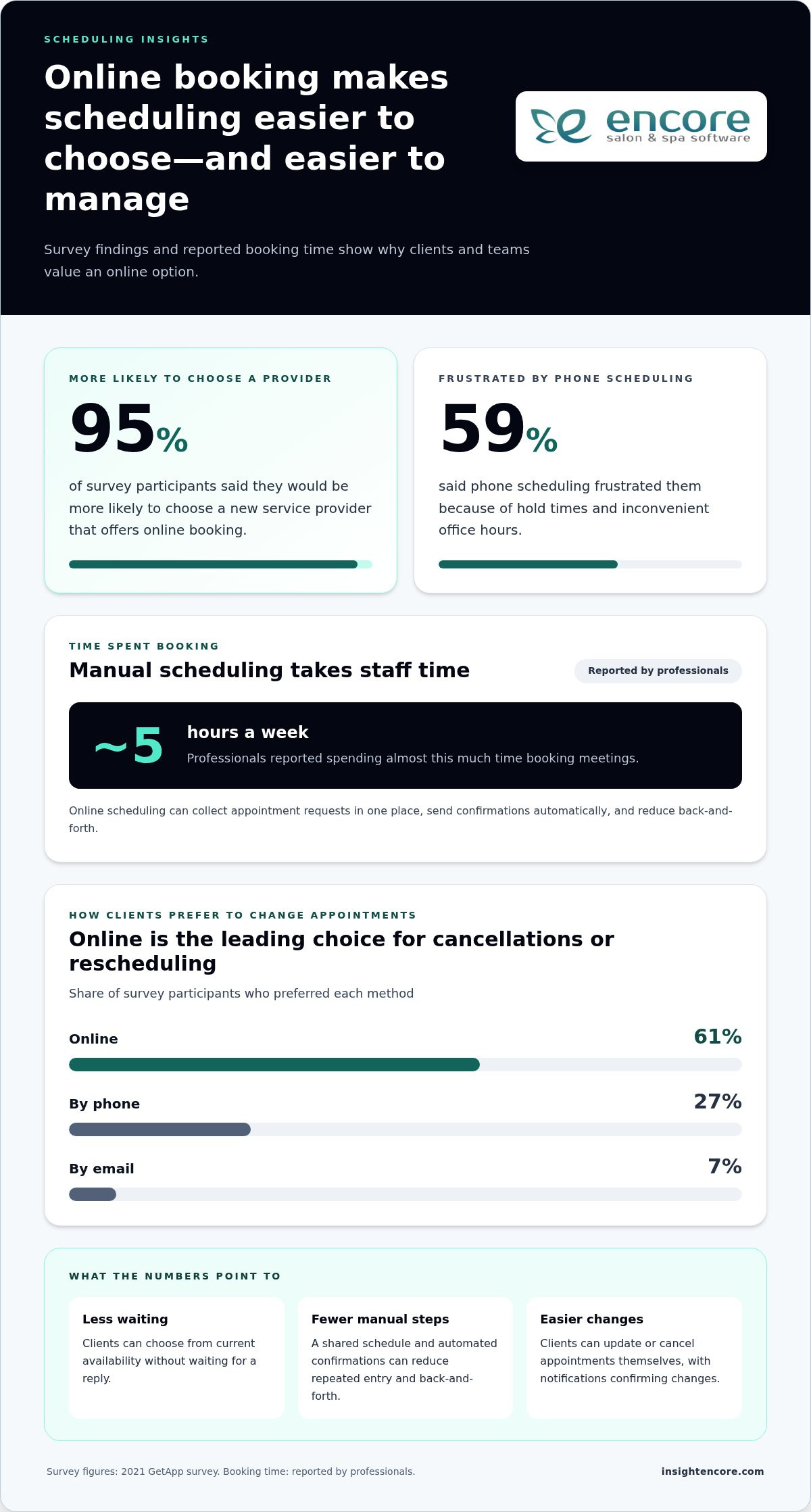
Phone and email bookings depend on someone being available to answer, record details, and confirm a time. An online platform lets clients choose from current availability without waiting for a reply. In a 2021 GetApp survey, 59% of participants said phone scheduling frustrated them because of hold times and inconvenient office hours. The same survey found 95% would be more likely to choose a new service provider offering online booking.

Less back-and-forth can also give staff time back. Professionals reported spending almost 5 hours a week booking meetings. A scheduling platform can put appointment requests in one place, create a text-based record of client interactions, and send confirmations automatically. Calendar synchronization with Google Calendar or Outlook can help prevent conflicting appointments, while clients can add bookings to their own calendars.

Separate schedules help clients find options that suit their needs. Set availability by service, staff member, or location, then show only relevant appointment times. For example, a client looking for a massage at one branch shouldn’t have to sift through another location’s schedule or unrelated services. Clear categories make choices easier and help staff manage different appointment types.

Automation can reduce manual entry and errors caused by copying appointment details between calls, emails, and calendars. Use one shared schedule as the source of truth, and ensure each booking updates availability. Test a sample appointment from start to finish, including a change or cancellation. Confirm that the correct service, staff member, location, and time appear in the schedule.

Online tools can also make cancellations easier to manage. Clients can change or cancel appointments themselves, while automated notifications can confirm a booking, update, or cancellation. Send reminders by email or SMS, and keep the cancellation instructions visible in the booking flow. In a 2021 GetApp survey, 61% preferred to cancel or reschedule online, compared with 27% by phone and 7% by email.

Choose a platform based on what your team needs to do. Check that it separates schedules clearly, updates availability, supports client changes, and sends useful notifications. If you use Google Calendar or Outlook, look for calendar synchronization to help prevent double bookings. Then test the client experience on a phone and computer, since clients may book on either.

For a salon or spa, a connected booking workflow can bring appointments and client records together. Explore an online booking workflow as a practical next step when manual scheduling takes too much staff time.

3. Using service and business information to support self-service

Clients can book independently when the page answers practical questions before they choose a time. For each service, explain what it includes, who it suits, how long it takes, and anything clients should prepare. For example, distinguish a standard haircut from a haircut with a wash, so clients can select the right appointment without calling. Keep wording consistent between the booking system and your other business information.

Give each service a clear page or section, with your logo, service-specific details, and a booking flow suited to the appointment. A massage page, for instance, can introduce the service and lead directly to available times. Branded pages help clients recognize your business, while distinct descriptions prevent one service from being mistaken for another. Ask a colleague to follow the steps and flag unclear labels or confusing choices.

Location details matter when clients can visit more than one branch. Name each location clearly and include its address, opening hours, and relevant arrival instructions. Connect each service to the locations where it’s available. A client choosing a facial should see the right branch and appointment times, rather than a location that doesn’t provide that service. Review location details whenever hours or service availability change.

Make appointment changes convenient. Let clients cancel or reschedule through the booking system, and explain the steps and applicable cancellation policy before they confirm. Keep contact options visible for questions that need personal help, such as requests involving multiple services. Automated email or SMS reminders can reinforce appointment details, while self-service changes let clients update plans through their preferred channels.

Keep information accurate throughout the booking journey. Test a booking from the service page through confirmation, then check that locations, hours, service details, and cancellation policies match your current operations. A scannable contact card can also help clients connect with your business quickly. If clients regularly ask the same question, answer it on the relevant service page rather than making them search elsewhere.

Give staff a simple, consistent handoff: show clients where to find online booking, explain how to choose a service, and offer the direct link when they ask to book. Practise the steps together, including how to find contact information or change an appointment, so every team member can guide clients confidently.

Getting Clients to Use Online Booking With Clear Settings

4. Customizable booking settings and messages

Set booking options to reflect how your business actually runs. Choose which services clients can book, when appointments are available, and how far ahead the calendar opens. A flexible booking page can give clients access 24/7, while limits on available dates help you plan staffing and appointment capacity. Test the settings as a client before sharing the page.

Customize the booking page with your logo, clear instructions, and a short form. A step-by-step flow can ask clients to choose a service, location, and time without presenting one long form. Collect only the details needed for the appointment, such as a client’s name and preferred contact method. Remove questions that don’t help you prepare for or manage the visit.

Make location descriptions useful before clients choose a time. Include the branch name, address, hours, and arrival instructions, then connect each location to the services available there. For example, explain which entrance to use or where to find the studio. These details help clients choose the right location and reduce confusion in confirmation messages.

Use automated messages to make each booking step clear. Send a confirmation with the chosen service, location, date, and time. Include practical details in a reminder, such as preparation instructions or how to reschedule. Keep the wording direct and consistent with your business profile, so clients recognize the messages and know what to do.

Online booking incentives can encourage clients to try self-service, but keep the offer simple and easy to understand. Options include loyalty points for online bookings, a complimentary add-on, or a percentage discount. For example, a promotion might offer 50% off an add-on service when a client books a nail appointment in the next two weeks. State the terms beside the booking option to avoid surprises.

For a U.S. booking portal, protect client information during transmission and storage, and collect only details needed for appointments. Make the booking flow accessible with clear labels, readable text, and forms that work with common assistive technologies. These practical steps support privacy, security, and accessibility without asking clients to share unnecessary personal details.

Finally, review the complete experience on a phone and computer. Book an appointment, read each message, and confirm the calendar shows the correct service and location. If a returning client can’t tell where to change an appointment or apply an online offer, clarify the page labels and instructions before promoting it.

5. Enabling client-portal booking

A client portal gives returning clients a familiar place to manage appointments instead of starting from scratch each time. Connect the booking system with your management system so appointment and client information stays together. Explain what clients can do in the portal, such as book, review appointment details, or make changes. Clear expectations help clients understand its value before creating an account or booking.

Introduce the portal gradually. Getting clients to use an online booking portal often takes time, so give them room to learn the process. Start by inviting regular clients to try it, then use their questions to improve the instructions. Once the steps are clear, share them with your wider client base through email, appointment follow-ups, and social channels.

Make the first action easy to follow. Provide a short written guide or video tutorial showing how to open the portal, find a service, and select an appointment. Use the same labels clients see on screen. For example, if the portal says “Choose a service,” use that phrase in your instructions instead of “select a treatment.” Consistency means clients don’t have to guess which button to press.

Staff can support the transition without taking the booking away from clients. When someone calls or visits, guide them through the portal once, then invite them to use it next time. If a client prefers phone or email, help with that booking while explaining the self-service option. Offer a useful choice without making clients feel pushed into a new process.

Review portal use and common points of confusion to see how the rollout is progressing. Notice whether clients start but don’t finish, need help accessing accounts, or struggle to find the right service. Update the relevant instruction or booking step, then share the revised guidance. Keep a simple record of recurring questions, such as where to change an appointment or find a confirmation.

For potential customers who find your business through Google or social media, make the portal’s next step clear from the start. Returning clients may prefer a familiar portal, while first-time visitors may need service details before booking. Getting clients to use an online booking portal is easier when the portal gives both groups a clear route.

Explore an online booking solution

Encore Salon & Spa Software: Encore Salon Software

Encore Salon & Spa Software brings online appointments and client management together in one platform. Encore Salon Software and Encore Spa Software support salons and spas that want clients to book online while keeping appointment and client information organized. Chair/Booth Renter Software and Tattoo Studio Software support distinct business settings with different booking needs.

Consider an online booking system if clients still rely on calls or messages to find an available time, or if staff manage appointments across separate tools. An online booking module makes self-service part of your daily workflow, while client management tools keep client details alongside appointments. The right setup should reflect your services and how your team schedules them.

Explore the options that fit your business, or contact Encore Salon & Spa Software to discuss your booking needs.

Make your next booking step easier

Getting clients to use an online booking portal is an ongoing part of creating a convenient client experience. Treat the portal as part of your service, not just a scheduling tool: notice where clients hesitate, refine the steps, and make each visit easier to arrange. Thoughtful adjustments can help clients feel more confident booking on their own.

When you’re ready to connect online booking with the way your business manages appointments, Encore Salon & Spa Software offers Encore Salon Software, Encore Spa Software, and Chair/Booth Renter Software. Choose the option that fits your business, then shape a booking experience for your team and clients.

Explore Encore’s online booking options

Keep the next step clear and welcoming. With a booking process that works for your business, you can help clients move from considering an appointment to choosing a time more easily.

Frequently Asked Questions

Why Aren’t My Customers Booking Online Yet?

Clients may not notice the booking option, understand the choices, or trust the steps needed to finish. Follow the path from a social profile or Google search to the confirmation screen, and note where it becomes unclear. Check whether a service looks unavailable, the page asks for unnecessary details, or clients must create an account before seeing times. Fix the point of friction first, then review whether completed bookings improve.

What are the benefits of online booking portals for clients and businesses?

Clients can compare services and available times at their own pace, while businesses receive appointment details in a consistent format. This can make it easier to prepare for a visit, such as noting a client’s selected service before they arrive. A shared digital record also helps staff find booking information without searching separate email threads. The portal is useful when it reflects real availability and gives clients a clear next step.

How should a business introduce an online booking portal to existing clients?

Introduce the portal during a familiar interaction, such as checkout after an appointment, and explain one useful action clients can take there. You might say, “Next time, you can choose your service and time through our booking page.” Give clients a simple written guide and invite questions without making online booking a condition of service. Use early feedback to clarify confusing instructions before sharing them more broadly.

What incentives increase online booking portal adoption?

Offer a clear, easy-to-redeem reward, such as loyalty points for a completed online booking or a complimentary add-on. Explain the offer before clients begin, including which service qualifies and how they receive the reward. Avoid complicated conditions that leave clients needing help to understand the promotion. Track whether the incentive encourages repeat portal use, not just one-time bookings, and adjust the offer if clients don’t find it useful.

How can businesses make an online booking portal easy to use on mobile?

Test the complete booking journey on a phone, from opening the page to receiving confirmation. Keep service names and instructions brief, make buttons easy to tap, and avoid forms that require repeated typing. Check that clients can read appointment details without zooming or scrolling sideways. Ask someone unfamiliar with the page to book a sample appointment on their device, then simplify any step that causes hesitation.

What are common reasons clients avoid online booking, and how can businesses address them?

Clients may worry about sharing personal details, struggle to choose the right service, or need help with a specific request. Explain why each required form field is needed, and make service differences easy to understand. Keep a contact option visible for questions that don’t fit the standard booking flow. If clients repeatedly ask about the same step, revise the page or instructions to address that concern before it blocks another booking.

Disclaimer

This article is general in nature and may contain errors, please verify all claims with your sales rep
Categories
Uncategorized

Nail Tech Booking System: How to Choose the Right One in 2026

What makes the best nail tech booking system? It should do more than fill your calendar. It should also help you keep appointment details, client information, and daily salon tasks organized. When requests arrive by text, phone, and social media, details can get buried. A cancellation or schedule change can create even more back-and-forth.

Whether you work solo or run a growing salon, a booking system can give clients a clearer way to choose appointments and give you one place to manage your schedule. The right fit depends on how you work now and which tasks you want to connect as your business changes.

This guide covers the features to compare, how to assess different systems, and when broader salon software may make more sense than a booking-only app. You’ll also learn how Encore connects online booking with client management and point-of-sale transactions, so you can decide whether an integrated workflow fits your nail business.

Key Takeaways

  • A nail tech booking system can do more than display open appointment times. Understand how booking pages and calendars differ from broader salon-management platforms.
  • Map the appointment journey, from booking and schedule changes to client details, payments, and follow-up, to see where you can reduce manual coordination.
  • Compare standalone booking tools with salon software by the workflows they support, including client records, transactions, inventory, and marketing.
  • Use a practical setup process: identify your needs, compare daily workflows, configure the system, and test both the client booking experience and staff scheduling routine.
  • Explore how Encore connects online booking with client management, point-of-sale, inventory, and marketing tools for nail businesses.

What Does a Nail Tech Booking System Actually Manage?

A nail tech booking system organizes appointment availability and client bookings. It lets you show open times, record appointments, and manage your schedule without relying on a mix of texts, calls, and social media messages. That matters when requests come in while you’re working with a client: a detail can get buried, a time can be promised twice, or a change can be missed.

Tools vary in scope. An appointment calendar is where you view and manage scheduled visits. A booking page is the client-facing place to review services and select or request a time. A broader salon-management platform can connect booking with other tasks, such as managing client records, transactions, inventory, or marketing. Comprehensive salon software solutions bring scheduling together with other vital management functions to streamline daily operations.

In short: Booking software handles appointment availability and reservations. Salon-management software connects bookings to the wider work of running a salon.

How online booking changes appointment handling

With online booking, clients can view available times and choose one without relying only on a phone call or message exchange. A clear service list and availability view set expectations before a client books. Clients can see what they’re selecting and which times are open, while you spend less time coordinating each request manually. When comparing systems, walk through the booking steps from both sides: what clients see, what information they enter, and where the confirmed appointment appears in your schedule.

Who benefits from a nail tech booking system?

A solo technician may need a straightforward way to manage personal availability, appointments, and client relationships. A multi-technician salon may need to coordinate several schedules and keep bookings clear across the team. Booth renters have different considerations: they manage their own appointments and client relationships while working within a shared salon environment.

Business size alone doesn’t determine the right setup. Focus on the workflow: who controls availability, how clients book, and where appointment details need to go next. Encore Salon & Spa Software offers solutions designed for nail salons and chair or booth renters, connecting online booking with client management and point-of-sale transactions. The key question is whether you need a clearer appointment process alone or connected tools for the work around each visit.

Which Booking Features Matter in a Nail Tech’s Daily Workflow?

The most useful features are the ones that remove friction from your actual appointment flow. Start with the essentials: clients can understand what they’re booking, you can maintain an accurate schedule, and appointment details are easy to find. Then consider whether connecting payments, client records, and follow-up would make your wider routine easier to manage. The right nail tech booking system depends on how you work, not on the length of its feature list.

Booking, availability, and schedule management

Begin with the client’s booking journey. Can clients review your services, understand the appointment options, and see available times before choosing or requesting a visit? Clear descriptions help clients choose with fewer questions, while useful appointment details help you prepare. The booking page should be easy for clients to use and fit the way you set availability and manage your day.

Next, consider what happens after a booking is made. Clients may need to reschedule, or you may need to adjust your calendar. Look for a workflow that makes clear where changes are recorded and how the schedule stays current. Before choosing a system, test a change to an appointment and confirm that the updated details are easy to find. A feature is useful when it reduces steps rather than giving you another place to update.

Client records and appointment context

Relevant client information can help you prepare for each visit and provide more personalized service. Rather than relying on memory or searching old messages, use organized records to keep useful details connected to the client. Decide what information genuinely helps you do your work, then prioritize a system that makes those details straightforward to review and maintain.

Administrative work is part of running a personal-care business. The U.S. Bureau of Labor Statistics overview of manicurists and pedicurists includes business and administrative responsibilities for salon owners. For a solo technician, simple, accessible records may be enough. A team may need a shared approach so the right people can work with consistent client information.

Payments and follow-up

Connecting appointments to point-of-sale transactions and payment processing can help keep the administrative steps of a visit together. Consider whether you want to record a booking in one tool and handle the transaction elsewhere, or manage both within a broader workflow. Base the decision on how you take payments and keep business records.

Marketing and loyalty tools can help organize communication with clients between visits. They may support repeat-visit outreach, but they don’t guarantee that clients will return. Treat them as optional until you have a clear follow-up need. Encore’s salon software brings together client management, point-of-sale, inventory, and marketing tools.

Keep the priority order practical: get booking and schedule management working first, then add client, payment, and follow-up tools that suit your workflow. Encore’s salon software connects online booking with broader salon-management capabilities.

Is a Booking App Enough, or Do You Need Nail Salon Software?

A booking app can be enough if your main challenge is keeping appointment times organized. A focused tool may cover what you need without adding extra systems to learn. Broader nail salon software becomes more relevant when bookings are one part of the work you want to manage, such as keeping client records, recording transactions, tracking inventory, or organizing marketing.

Compare options by the workflow you want to support, not by assuming that more features are always better. Tools vary, so use this table as a guide to typical differences in scope, rather than a promise about every app or platform.

Workflow Standalone booking tool Broader salon software
Scheduling Often the central focus: availability and appointments. Booking can sit within a wider business workflow.
Client records May offer basic details tied to appointments. Can include client management alongside booking.
Transactions Payment handling may be separate or limited. May connect bookings with point-of-sale transactions and payment processing.
Inventory Usually not the main purpose. May include inventory management.
Marketing May focus on appointment communication. May include marketing and loyalty tools.

When a standalone booking tool may fit

Choose a focused setup if you mainly need to show availability, record appointments, and keep your calendar in order. It may suit a solo technician with a simple service menu and few administrative tasks beyond scheduling. If your client details, transactions, and other business records already have a manageable home, a larger platform could add complexity you don’t need. Ask yourself whether the tool solves the scheduling problem you have today.

When connected salon software may be more practical

Connected tools may be useful when booking regularly leads into other tasks. You may want appointments, client information, and point-of-sale transactions in a broader workflow, or need to coordinate several business functions across a team. A growing salon may value that wider scope. An independent technician may also benefit from connected management if separate tools are creating extra work.

If client records are important to your decision, consider what information you need to manage and how you use it during appointments. Encore’s nail salon software brings online booking together with client management, point-of-sale transactions, inventory, and marketing capabilities. It’s an option for businesses that want booking alongside wider salon operations. Explore Encore for your business as you compare workflows.

Nail Tech Booking System: How to Choose the Right One in 2026

How to Choose and Set Up a Nail Tech Booking System

A smooth setup starts before you enter your first appointment. Map how clients currently book, identify the parts of the process that need attention, and compare systems against those needs. This keeps a nail tech booking system grounded in your real routine instead of a long list of features you may never use.

Build a shortlist around your actual appointment process

Write down how a client moves from first request to confirmed appointment. Include how they ask about availability, how you confirm a time, and what happens if they need to change or cancel. Note repeated tasks too, such as copying details between messages and a calendar or checking several channels for new requests.

Use those observations to separate must-haves from attractive extras. A clear way to manage availability may be essential, while a marketing feature may not matter yet. Compare how each option handles the steps you identified, including who updates the schedule and where appointment information is kept. If you work with a team, include how staff members coordinate availability and see the information they need.

Make the change manageable for clients and staff

Once you’ve chosen a system, prepare the information clients will use to book. Keep service names clear and consistent, set the availability you intend to offer, and organize existing client information before moving it into the new workflow. A salon booking portal setup guide can also help you think through how the client-facing booking experience should be arranged.

Before inviting clients to use it, test both sides of the process. Follow the booking journey as a client: find a service, review available times, and complete a booking. Then practise the staff routine with realistic examples, such as adding an appointment, changing its time, and locating the updated details. Check that service descriptions are understandable and that the schedule reflects the availability you intended.

Roll out the system in a way that gives you room to learn. Let clients know where to book and what information they’ll need. After launch, watch for recurring questions, missed details, and steps that still require repeated manual work. If clients aren’t sure which service to choose, clarify the wording. If schedule changes cause confusion, revisit how you record them.

Review the setup after using it in everyday work. Keep what makes booking clearer, adjust what creates unnecessary steps, and revisit your priorities as your business changes. A solo technician’s process may stay simple, while a team may need a more coordinated routine. The goal is a system that supports the way you operate now and adapts as those needs shift.

Explore Encore for your nail salon booking workflow

How Encore Connects Nail Salon Booking With Daily Management

After comparing your needs, decide whether you want appointment booking to stand alone or sit alongside other daily business tasks. Encore serves nail salons and independent chair or booth renters with online booking connected to client management and point-of-sale transactions. A focused scheduling tool may suit a simple workflow, while connected capabilities can help if you also manage client details, checkout, inventory, or follow-up.

A nail-business workflow beyond the appointment calendar

Online booking is part of Encore’s broader salon-management platform. Client management and point-of-sale transactions are available alongside it, connecting appointment and visit-related tasks within a wider business workflow. For a salon, this can be useful when scheduling and checkout are both part of the daily routine. Encore also offers management software for independent chair and booth renters.

The platform includes inventory tracking, marketing tools, loyalty programs, and gift cards. These capabilities cover work beyond appointment scheduling, but not every nail business needs every tool. Start with the tasks that take up time or are difficult to keep organized. If checkout is a key part of your evaluation, consider how point-of-sale transactions fit into your visit workflow. Encore’s nail salon software connects booking with these broader management capabilities.

Think through a typical client visit. A booking is made, client information may be useful during the appointment, and a transaction takes place at checkout. Keeping those functions within a broader platform may suit businesses that want fewer separate workflows to manage. Inventory and marketing tools can also help organize those responsibilities when they’re part of your day. Choose a setup based on the work you actually do, not pressure to use every available feature.

For independent renters, the decision is just as practical. Consider whether you manage appointments and client relationships independently, and whether connected transaction or inventory tools would support your work. A multi-technician salon can weigh how those capabilities fit its wider daily operations. Business structure matters, but so do the tasks you need to coordinate.

Explore Encore for your nail business

Use your priorities as a guide as you explore Encore. Consider how online booking, client management, point-of-sale, inventory, and marketing tools align with the workflow you mapped. Think about both the client booking experience and the daily management tasks you want the system to support. Encore has operated in vertical-market software since 1991, and its salon platform serves nail businesses as well as chair and booth renters.

Choose based on the work you need to organize now and the needs you expect to manage as your business changes. If Encore’s connected approach matches those priorities, explore Encore for your nail business.

Try Encore for your salon

Take the Next Step Toward a More Manageable Schedule

Your next step doesn’t have to be a major overhaul. Choose one part of your appointment routine that takes more effort than it should, then use it as your guide when exploring a nail tech booking system. A clear starting point makes it easier to judge whether a setup suits your work, rather than getting distracted by features you may not need.

As you compare systems, picture an ordinary workday: check the schedule, handle a change, prepare for an appointment, and keep the day moving. Does the workflow feel natural? Can you see how it would support the way you want to manage your business? Compare the booking experience with the administrative tasks you want to bring together, then choose a setup that fits those priorities.

Try Encore for your salon

Start with the workflow you want to improve. Explore Encore to see how online booking and salon-management tools can fit into your nail business.

Frequently Asked Questions

What is a nail tech booking system?

A nail tech booking system is software that helps manage appointment availability and client reservations. Depending on the tool, it may show open times, store booking details, and let you review upcoming appointments in a calendar. Some systems focus on scheduling, while salon-management platforms can connect bookings with other business tasks. Decide whether you need a digital appointment book alone or want booking to fit into a broader work process.

How can a nail tech let clients book appointments online?

Choose software with online booking, then make the booking route easy to find wherever clients interact with your business. Use service names clients recognize and describe any choices they need to make before selecting a time. If two services sound similar, explain the difference in the listing. Keep your availability accurate, and give clients a way to reach you if they’re unsure which option to select.

Can a nail tech booking system help reduce missed appointments?

A booking system can help keep appointment details organized, and some platforms provide reminder or client-communication features. It can’t ensure that every client attends. Set clear expectations at booking, including the appointment time and any relevant salon instructions, and use communication tools consistently if they’re part of your workflow. If missed visits become a concern, review when they occur and whether clients had the information they needed beforehand.

Do independent nail technicians need salon software?

No, not every independent technician needs a full salon-management platform. If you mainly want a reliable way to track your appointments, a focused scheduling tool may be enough. Broader software may make sense if you also want to organize client records, transactions, inventory, or marketing in one system. Consider the tasks you handle between appointments, too. Choose a scope that fits your current workload rather than business size alone.

What should a nail tech compare when choosing booking software?

Compare how each system handles situations you encounter in a normal week: a new appointment, a schedule change, a client lookup, and checkout. Check whether the client-facing booking steps are clear and whether the staff routine feels manageable. If you work with others, include how each person’s availability is handled. If you work solo, focus on ease of use and control over your calendar. A realistic test can reveal more than a feature list.

Can nail salon booking software manage client information too?

Some systems include client management alongside appointment scheduling, while others focus on the calendar. Organized client records can help you find useful details, such as a client’s previous service or preferences, before a visit. Decide which information is relevant to your work and how you’ll keep it current. Handle records in line with your business practices and applicable privacy requirements, and avoid collecting details you don’t need.

How do I move from a paper appointment book to a booking system?

Start by listing appointments already on the calendar so existing visits don’t get lost during the change. Decide when you’ll stop adding new bookings to the paper book, then enter upcoming appointments into the new system and check them against your original records. Test a sample booking and schedule change before sharing the new process with clients. Once you switch, keep one clear source of truth for the schedule.

Disclaimer

This article is general in nature and may contain errors, please verify all claims with your sales rep
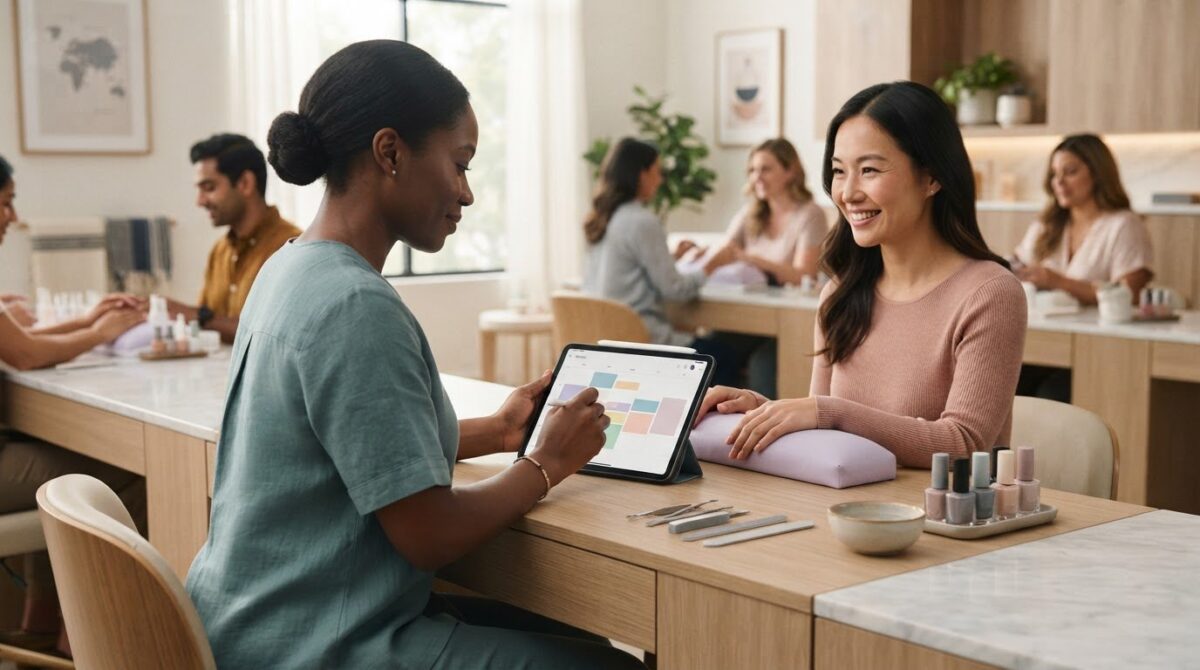
Categories
Uncategorized

How to Make My Salon Look More Professional: The 2026 Front Desk Guide

Imagine a client walks through your doors, ready for a luxury experience, but they’re greeted by a ringing phone, a desk buried in sticky notes, and a "just a minute" finger. It isn’t the high-end vibe you worked so hard to create. You’ve likely felt that sinking feeling when a cluttered desk or a missed call makes your business look disorganized. It’s frustrating because your talent is world-class, but your administrative setup is holding you back. You know that the first thirty seconds of a visit define your brand’s value. When you implement modern salon front desk software, you replace that chaos with a sense of calm and professional confidence.

This guide will show you how to flip the script and transform your entryway into a polished, world-class experience. We’ll explore the 2026 strategies that replace paper clutter with sleek automation and manual scheduling with seamless online booking. You’ll learn how to build deep client trust through reliable communication while reclaiming your time. By the end of this article, you’ll have a clear roadmap to a more professional salon that lets you focus on your craft instead of your calendar. It’s time to let your front desk reflect the high quality of the services you provide every day.

Key Takeaways

  • Discover how to use the “Peak-End Rule” to ensure your clients leave with a world-class impression. Your front desk sets the tone for every visit.
  • Learn why upgrading to modern salon front desk software is the fastest way to replace bulky hardware and messy paperwork. It creates a sleek, digital experience that builds immediate trust.
  • Master the art of consistent communication by automating your reminders and aftercare messages. This removes the risk of human error and keeps your brand looking reliable.
  • Build elite-level loyalty by using detailed client histories to personalize every interaction. When you remember their preferences and formulas, you prove your professionalism.
  • Streamline your entire operation by bringing booking, POS, and marketing into one unified system. This allows you to step away from the admin desk and focus on your artistry.

Defining Professionalism: Why Your Front Desk is the Face of Your Brand

Professionalism isn’t just about a clean floor or a polite greeting. In 2026, it’s the perfect intersection of aesthetics, efficiency, and deep-seated trust. Think of your front desk as the physical handshake of your brand. If that handshake feels cluttered, slow, or disorganized, the client’s perception of your skill drops before they even sit in the chair. This is where the "Peak-End Rule" comes into play. Psychologists suggest that people judge an experience largely based on how they felt at its peak and its end. In a salon setting, the "end" is the checkout and rebooking process. If that final moment is a clumsy fumble through a paper diary, it erases the magic of the service provided. Simply put, salon front desk software is the nervous system of a modern beauty business, ensuring every pulse of your operation is steady, professional, and reliable.

The Psychology of Client Trust in 2026

Efficiency is the modern language of respect. When you use digital systems, you signal to your clients that you value their time as much as your own. There’s a direct, psychological link between how organized your systems appear and how high a client perceives your technical service quality to be. If a stylist can’t find a client’s history or a receptionist struggles with a calendar, the client might wonder if the same lack of care applies to their hair color formula. Today’s clients also crave a sense of control and autonomy. They expect "self-service" options, such as online booking portals, that let them manage their appointments on their own terms at any hour. It isn’t just a convenience anymore; it’s a standard of elite-level service that builds lasting confidence.

Physical vs. Digital Decor: What Matters More?

You might spend thousands on a designer velvet sofa or high-end lighting, but that luxury feeling vanishes if the booking experience is a mess. A $5,000 sofa won’t fix a $0 booking experience. In the modern era, digital decor is just as vital as physical paint and furniture. A minimalist, tech-forward reception area with a sleek tablet looks more expensive and capable than a desk overflowing with pens, post-its, and tangled cords. Modern point-of-sale systems allow you to clear the visual clutter while creating a cohesive brand identity through every digital touchpoint. By focusing on modern features and clean interfaces, you ensure your salon feels like a world-class destination from the first click to the final payment. This digital presence becomes a seamless extension of your physical space, reinforcing your status as a top-tier professional.

2 Steps to Modernizing Your Salon Front Desk Experience

Modernizing your salon starts with a simple audit of your current client flow. Walk through your front door as if you’re a guest for the first time. If you’re met with a bulky computer monitor that blocks your view of the receptionist or a desk buried in paper files, the professional illusion breaks. High-end spaces in 2026 prioritize open, clean lines. By replacing outdated towers with slim tablets or laptops, you create a reception area that feels like a concierge desk rather than a cubicle. This physical shift, powered by the right salon front desk software, immediately signals to your clients that they’ve entered a premium space.

To keep the atmosphere calm, you need to reduce the constant "white noise" of a busy salon. One of the most effective ways to do this is to implement a salon client booking portal. This allows your phone to stop ringing every five minutes, giving your front desk team the freedom to focus entirely on the guest standing in front of them. When your staff isn’t distracted by holding a handset, they can provide the undivided attention that defines world-class service.

Step 1: Digitizing the Intake Process

Clipboards and pens are relics of the past. Using digital waivers and consultation forms makes your business look high-end and technologically savvy. When guests fill out their information on a tablet, or better yet, via a link sent before they arrive, you eliminate the awkward waiting room congestion. Pre-filled client profiles allow your team to greet guests by name and verify details in seconds. This streamlined approach ensures that the transition from the front door to the stylist’s chair is fast and flawless. If you’re looking for a way to simplify this transition, you can explore a modern setup today to see how it fits your workflow.

Step 2: Mastering the Seamless Checkout

Checkout friction is a silent killer of client retention. If a guest has to wait for a slow printer or deal with a glitchy card reader, that’s the last thing they’ll remember. Using integrated credit card processing ensures that the final step of the visit is as smooth as the service itself. It allows for contactless payments and digital receipts sent directly to their phone, which is a much more professional look than crumpled thermal paper. This level of organization is also essential for managing your small business finances because it syncs your sales data automatically. During this seamless flow, your salon front desk software can prompt for tips and re-booking, ensuring your stylists stay busy without any awkward "salesy" pressure at the desk.

Consistency is Key: Professionalism via Automated Communication

Consistency is the secret sauce of elite branding. When your communication is hit or miss, your business feels amateur. Manual appointment reminders are a gamble; they’re prone to human error and often get forgotten during a busy shift. One missed text or a late phone call can make your brand look unreliable. By using salon front desk software, you ensure that every client receives the same "white glove" treatment every single time. This automation doesn’t just save you time; it builds a reputation for being organized and dependable. From automated "Thank You" notes to detailed "Aftercare" instructions, these touchpoints keep your brand at the front of your client’s mind long after they leave the salon.

Your brand voice should remain steady across every message. Whether it’s a booking confirmation or a holiday greeting, the tone should reflect the warm, professional atmosphere of your physical space. Offering professional retail options, such as integrated gift cards, further cements this high-end image. It shows that your business is a complete, well-oiled machine capable of handling more than just the service in the chair.

The Power of Automated Reminders

Professionalism means respecting your client’s schedule as much as your own. Automated reminders are the most effective way to reduce no-shows while appearing "on top of it." In 2026, the timing of these messages is crucial. A good rule of thumb is an email confirmation at the time of booking, followed by an SMS reminder 24 to 48 hours before the appointment. Salon front desk software allows you to personalize these alerts with the client’s name and specific service details. This makes the automation feel human and thoughtful rather than cold or robotic. It’s a simple way to provide a premium experience without adding a single task to your to-do list.

Professional Marketing and Loyalty Programs

It’s time to move beyond the tattered paper punch cards. Digital loyalty tracking is the modern standard for elite salons. It allows you to reward your best guests automatically, without anyone having to dig through a wallet for a card. You can set up automated birthday greetings or "we miss you" campaigns that trigger when a client hasn’t visited in a few months. These proactive moves prove you value the relationship. Using specialized salon software features from Encore Salon & Spa Software ensures these programs run smoothly in the background. This level of data-driven care is what separates a basic shop from a world-class brand that clients trust and recommend to others.

How to Make My Salon Look More Professional: The 2026 Front Desk Guide

Behind the Scenes: Data-Driven Professionalism

True professionalism isn’t just about what your clients see. It’s about what you know. When you have the right data at your fingertips, you can anticipate a client’s needs before they even speak. This level of preparation is what separates a good salon from a world-class brand. By using salon front desk software to track every detail, you create an environment where nothing falls through the cracks. It’s about building a foundation of reliability that your clients can feel in every interaction. You’re not just guessing; you’re operating with certainty.

Data security is a critical part of this foundation. In 2026, clients are more aware of their digital privacy than ever. Protecting their contact information and payment details isn’t just a legal requirement. It’s an elite-level trust builder. When you can confidently tell a guest that their information is secure in a professional system, you reinforce your status as a serious business owner. Additionally, calculating salon staff utilization allows you to manage your team’s time effectively, projecting an image of a busy, successful, and high-demand studio.

Client Notes and Formula History

There is a specific kind of magic in remembering the small details. Maybe it’s a client’s favorite beverage or the fact that they prefer a specific chair. A digital CRM allows you to store these "wow" moments so they’re ready for every visit. For your service providers, this data is even more vital. Professional stylists never have to ask, "What did we do last time?" Instead, they can pull up a complete formula history and service record in seconds. This standardizes the experience across your entire team. Even if a client sees a different stylist, the transition is seamless because the knowledge stays with the house, not just the individual.

Inventory Management as a Professional Standard

Few things break the professional spell faster than an "out of stock" apology. If a stylist realizes halfway through a service that they’re out of a specific toner, it creates unnecessary stress for everyone. Real-time inventory tracking ensures you always have professional-grade products ready for use and for sale. Your retail displays should be backed by data, showing you exactly what’s moving and what needs a restock. Automated ordering systems keep your front desk stocked and ready, so you never have to scramble at the last minute. It’s a simple way to maintain high-end standards without the headache of manual counting.

Upgrade your salon management today

Transform Your Salon with Encore Salon Front Desk Software

Transitioning to a world-class image doesn’t happen by accident. It requires a partner that understands the heartbeat of your business. Encore Salon & Spa Software is built to be that partner, guiding you through every step of your professionalism journey. By bringing your online booking, point-of-sale, client management, and marketing into one unified system, you eliminate the friction that often holds salon owners back. You don’t need to be a tech expert to look like an industry leader. We’ve designed our platform to be intuitive and accessible, ensuring that your transition to a digital front desk is a relief, not a burden.

Professionalism should feel effortless. When your salon front desk software handles the heavy lifting of reminders and inventory, you gain the freedom to focus on your clients. It’s about moving from a state of constant admin stress to a feeling of organized, calm control. This shift doesn’t just improve your workflow; it completely transforms how the world sees your brand. You’re invited to take this next step toward a world-class salon image, knowing you have a reliable system supporting every move you make.

Specialized Solutions for Every Professional

No two beauty businesses are exactly alike. Whether you run a high-end medical spa or one of the busiest tattoo studios in the city, you need tools that fit your specific craft. Encore Salon & Spa Software offers specialized modules that cater to the unique needs of different industry niches. We even support independent booth renters, giving them the digital power to look like a full-scale business with a dedicated reception team. This flexibility comes from 35 years of industry experience. We’ve spent over three decades listening to owners and refining our features to solve real-world problems. When you choose Encore Salon & Spa Software, you’re choosing a seasoned mentor that’s deeply invested in your individual success.

Get Started Today

The impact of switching to modern salon front desk software is immediate. You’ll notice the silence that comes with fewer phone calls and the pride that comes with a clean, paperless desk. Our transition process is designed to be simple, guided, and fully supportive. You won’t have to figure it out on your own. We’re here to help you set up your systems so you can start impressing clients from day one. It’s time to stop letting administrative chaos dim your artistic talent. Take the next step toward the world-class image you deserve and see the difference that reliable, human-centric technology can make.

Try Encore now and elevate your salon’s professional image

Step Into Your Most Professional Era Yet

Your salon’s first impression is the physical handshake that defines your brand’s value. By moving away from paper clutter and embracing digital efficiency, you ensure every client feels prioritized from the moment they book. Professionalism in 2026 is the intersection of aesthetics and reliable systems. When you choose an all-in-one management tool, you simplify everything from booking to payroll. This allows your team to focus on their artistry while the technology handles the administrative heavy lifting.

Implementing the right salon front desk software is the final piece of the puzzle for a truly elite brand image. With over 35 years of beauty industry expertise, Encore is trusted by salons, spas, and tattoo studios worldwide to remove administrative chaos. You don’t have to handle the transition alone. You have a partner ready to help you grow every step of the way.

Elevate your brand image and try Encore now
It’s time to let your front desk reflect the world-class talent you bring to every service. You’ve built something incredible, and now you have the tools to make sure every guest sees it the moment they walk through your doors.

Frequently Asked Questions

How does salon front desk software make me look more professional?

It replaces manual, error-prone tasks with sleek, digital precision. Clients see an organized environment where their appointments are confirmed instantly and their preferences are remembered. This technology removes the visible clutter of paper books and sticky notes, replacing it with a modern interface that signals your business is forward-thinking. Using salon front desk software proves you value their time and manage your business with elite-level care.

Is professional salon software hard to set up for a small business?

Modern systems are designed specifically to be intuitive and user-friendly for businesses of all sizes. While switching systems might feel intimidating at first, a supportive partner will guide you through every step. Most owners find that the initial setup pays off almost immediately by removing daily administrative frustrations. It is about simplifying your life, not adding more technical hurdles to your already busy to-do list.

Can I use salon software on a tablet to save space at my front desk?

Yes, using a tablet is one of the best ways to create a minimalist, high-end reception area. By removing bulky computer towers and monitors, you open up the physical space and create a more welcoming environment for guests. A sleek tablet running your salon front desk software allows for a concierge-style check-in experience. This feels far more professional and modern than a traditional office-style desk setup.

What is the most important feature for a professional salon front desk?

An integrated system that connects your booking, client records, and payments is the most vital feature. When these elements talk to each other, you avoid the awkwardness of asking a client for information you should already have. This seamless flow ensures that checkout is fast and that every guest receives consistent communication. It is the true hallmark of a world-class beauty business that values efficiency and trust.

How much does salon management software typically cost in 2026?

Pricing varies based on the specific features and the number of service providers in your business. Most providers offer tiered plans so you only pay for what you actually need. Instead of looking at it as a flat expense, many owners view it as an investment that pays for itself by reducing no-shows and increasing retail sales. It is best to check current plans to find the right fit for your budget.

Does using software take away the personal touch from my salon?

It actually enhances the personal touch by giving you more time to focus on the human connection. When you aren’t stuck on the phone or buried in paperwork, you can engage more deeply with the guest in front of you. The software stores small details like their favorite beverage or previous formulas. This allows you to provide a tailored experience that feels deeply personal, thoughtful, and professional.

How do I handle client data security to look more professional?

Protecting client information is an elite-level trust builder in the digital age. Professional software uses secure encryption to store contact details and payment history safely. By moving away from paper files that anyone could see, you prove to your clients that you take their privacy seriously. This commitment to security shows that you are a seasoned professional who respects their guests’ boundaries and sensitive data.

What is the best alternative to using a paper appointment book?

A cloud-based digital system is the most reliable alternative to paper. Unlike a physical book, digital calendars can be accessed from anywhere and are protected against loss or damage. They also allow for automatic updates and online booking, which paper simply cannot do. This transition ensures your schedule is always accurate and gives your business a much more polished, tech-forward image that clients expect.

Disclaimer

This article is general in nature and may contain errors, please verify all claims with your sales rep
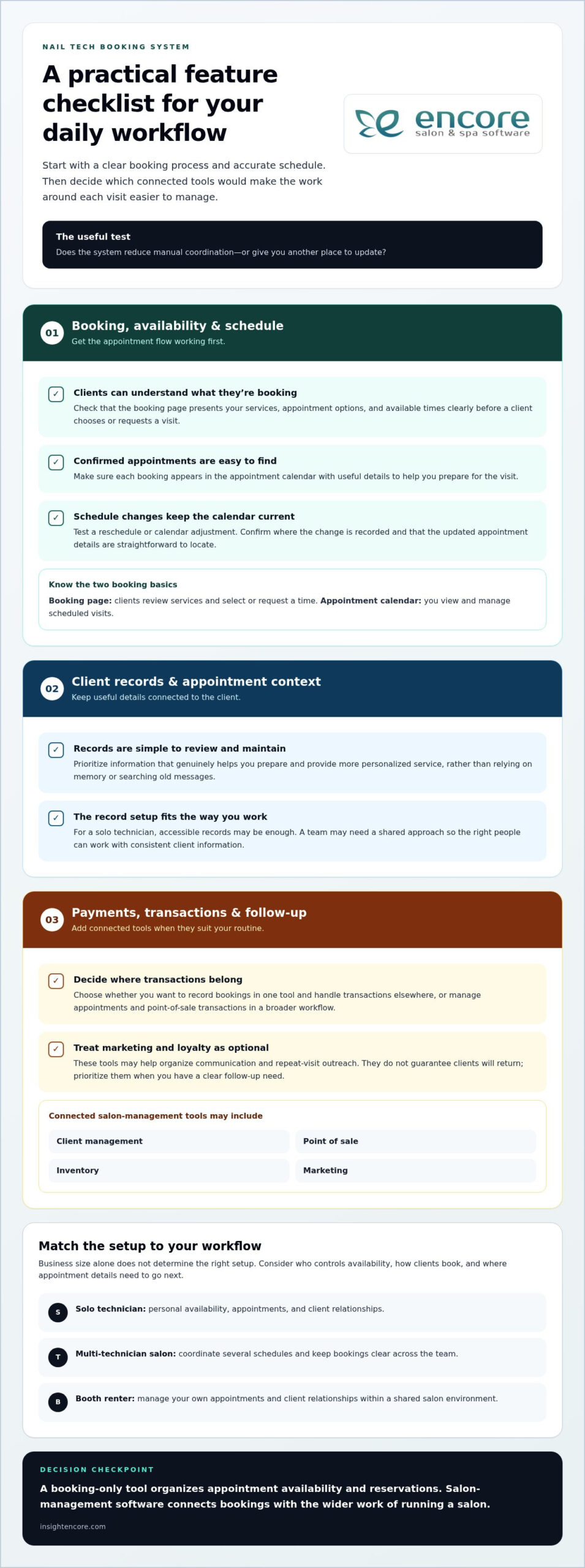
Categories
Uncategorized

Best POS for Small Barber Shops: 2026 Buyer’s Guide

What if the most expensive chair in your shop isn’t the one with a client in it, but the one sitting empty because of a last-minute no-show? With new guest visits in the industry dropping by 17 percent recently, finding the best pos system for a small barber shop is no longer just about taking payments. It’s about survival and growth. It is frustrating to watch your revenue slip away while you’re stuck juggling complex booth rentals and high credit card fees. You started barbering to master the craft, not to become a full-time software troubleshooter or a manual bookkeeper.

We know you need a partner, not just a product. This guide promises to help you discover a system that streamlines your chair rentals, automates your booking, and grows your business without the technical stress. We’ll walk you through the top 2026 options, comparing everything from processing rates to specialized features like automated commission tracking. You’ll learn how to turn your shop into a well-oiled machine that handles the back-office work silently. By the end, you’ll have the clarity to choose a system that keeps your chairs full and gives you the peace of mind you deserve.

Key Takeaways

  • Modern systems do more than swipe cards; they act as a silent mentor to help you retain clients and grow memberships in a competitive market.
  • Finding the best pos system for a small barber shop requires prioritizing specialized tools like automated chair rental management and 24/7 online booking.
  • We break down the true cost of ownership by comparing subscription fees, hardware options, and the impact of payment processing on your bottom line.
  • Moving your business to a new platform doesn’t have to be a nightmare if you follow a logical path for client data migration and service menu setup.
  • Learn why choosing a partner with decades of industry experience ensures your software is built to handle the unique rhythm of a busy shop.

Beyond the Cash Register: Why Small Barber Shops Need a Dedicated POS in 2026

Your barber shop is a place of craft, conversation, and community. However, beneath the hum of clippers, it’s also a business that requires precise management to thrive. While many people think of a point-of-sale terminal as a simple tool for swiping cards, the definition of what a POS system is has evolved significantly. In 2026, it serves as the central nervous system for your shop. It’s no longer just about the transaction at the end of a cut. It’s about everything that happens before a client sits in your chair and long after they walk out the door.

A generic retail POS often fails because it’s built for selling hardware or clothing, not for the unique rhythm of a barber shop. Retail systems don’t understand that you don’t just sell products; you sell time, expertise, and relationships. They lack the built-in logic for booth rentals, commission splits, and the specific scheduling needs of a 1-5 chair shop. The best pos system for a small barber shop acts as a silent partner. It handles the “back-office” noise so you can focus on the fade. This shift from simple payment processing to total business management is what separates growing shops from those that struggle to keep up.

The Hidden Cost of Manual Management

Relying on a paper book or a basic digital calendar might feel “simple,” but it carries a heavy price tag. Every minute you spend on the phone confirming an appointment is a minute you aren’t cutting hair. Manual systems also leave you vulnerable to the financial sting of no-shows. When a client misses a slot and you have no way to enforce a cancellation policy, that’s pure profit out the window. Beyond the money, paper ledgers are a significant security risk. Keeping client phone numbers and notes in an unsecured book isn’t just old-school; it’s a liability in a world where data privacy matters more than ever.

Modernizing My Barbershop Operations

Stepping away from a “cash-only” mindset is about more than just convenience. It’s about professional trust. Modern clients expect a digital-first experience, from the moment they book on their phone to the moment they receive a digital receipt. A dedicated system shows your regulars and new guests alike that you run a serious, organized business. If you are looking for more ways to level up, modernizing my barbershop operations is the first step toward long-term stability. By adopting the best pos system for a small barber shop, you create a seamless flow that makes life easier for both you and your clients. It’s an investment in your peace of mind.

Core Features That Make a POS System ‘Barber-Friendly’

The best pos system for a small barber shop should feel like an extra set of hands in the shop. It isn’t just about the hardware on your counter. It’s about the software’s ability to handle the specific, often messy, details of a service-based business. While a retail store tracks barcodes, you track people, time, and preferences. You need a system that offers 24/7 online booking so clients can grab a slot while you’re focused on a fade. It should also act as a digital memory, storing client history so you know exactly which blade size or pomade a regular prefers without having to ask.

Inventory management is another essential piece of the puzzle. If you sell beard oils or high-end styling creams, your system should alert you before your shelves are empty. When you’re learning how to choose a POS system, look for a platform that integrates these retail sales directly with your service menu. This creates a single, clear picture of your shop’s health. It’s about making the business side as sharp as the cuts you provide. If you’re ready to see how these features work together, you can explore our specialized barber tools today.

Managing Chair and Booth Renters Efficiently

In many small shops, managing independent contractors is the biggest administrative headache. Generic systems often lump all revenue together, leaving you to untangle commissions and rental fees in a spreadsheet at the end of the week. A barber-specific system solves this by automatically separating business revenue from independent barber earnings. This transparency builds trust and saves hours of manual math. Using a dedicated booth renter client management app ensures everyone gets paid accurately and on time.

Client Retention Tools That Drive Loyalty

Keeping your chairs full is a constant priority. Automated reminders are a simple but powerful way to protect your time. Some industry professionals report that automated SMS and email reminders can reduce no-shows by up to 40 percent. This is a massive win for a 1-5 chair shop where every missed appointment hurts. Beyond reminders, look for loyalty programs that reward frequent visits. These barbershop client retention ideas turn one-time walk-ins into lifelong regulars. To take your retention strategy even further, exploring creative barbershop loyalty program ideas can help you build a structured rewards system that keeps clients coming back consistently. When the best pos system for a small barber shop handles the follow-up, you can stay focused on the craft.

The True Cost of a POS: Evaluating Fees, Hardware, and Hidden Contracts

Cost is often the biggest hurdle when you’re looking for the best pos system for a small barber shop. It’s easy to get distracted by a low monthly price while ignoring the “hidden” numbers that eat into your profit. To understand the real price, you have to look at the combination of software subscriptions, hardware investments, and transaction fees. A low sticker price on software doesn’t mean much if the processing rates are sky-high.

Many “free” software options appear attractive at first glance. However, these providers often recover their costs by charging significantly higher processing rates on every transaction. Over a year, those extra fractions of a percentage can cost you thousands. It’s usually better to pay a fair, transparent subscription fee for quality software than to be nickeled and dimed on every haircut. Transparency is key to maintaining your peace of mind.

Integrated Credit Card Processing Explained

One of the smartest moves you can make is choosing integrated credit card processing. When your payments and software talk to each other, you eliminate manual entry errors. You won’t have to worry about accidentally typing $5.00 instead of $50.00 during a busy rush. Plus, if there’s ever a technical glitch, you have one point of contact to call. You don’t want to get stuck in a loop between a software company and a bank, each blaming the other while your shop sits at a standstill.

Long-term contracts are another red flag to watch out for. In a fast-moving industry, you need the freedom to adapt. Avoid being locked into three-year agreements that make it impossible to switch if your needs change or if the service quality drops. You deserve a partner that earns your business every single month.

Hardware vs. Software: Finding the Right Balance

You don’t necessarily need a $1,000 all-in-one terminal for a 2-chair shop. In 2026, cloud-based systems are the industry standard. They allow you to use existing hardware, like an iPad or a tablet, which keeps your initial costs manageable. This flexibility is perfect for small shops that want to grow without a massive upfront investment.

Proprietary hardware can look sleek, but it often locks you into a specific ecosystem. If that proprietary terminal breaks, you’re forced to buy another expensive unit from the same vendor. Tablets offer more flexibility and are much easier to replace. The best pos system for a small barber shop should be accessible on any device. This gives you the power to check your schedule or run reports from home or on the go. Focus on finding a balance that gives you a professional look without the unnecessary technical headache.

Best POS for Small Barber Shops: 2026 Buyer’s Guide

Setting Up for Success: Transitioning to Your New Barbershop POS

Switching your management software can feel like trying to change a tire while the car is moving. We understand the hesitation. You’ve spent years building a loyal client list, and the thought of losing even one contact or service history note is stressful. However, the transition to a professional system shouldn’t be a technical nightmare. The best pos system for a small barber shop is designed to make this move feel like a natural extension of your daily workflow. It’s about moving from “organized chaos” to a state of complete control without the typical software headache.

Data migration is the first priority. Most modern systems allow you to import your existing client list from a spreadsheet or even directly from another app. Once your names and numbers are in, you can begin setting up your service menu. This is where you define exactly how your shop runs. You can set specific time blocks for fades, beard trims, or luxury shaves, ensuring your online booking portal reflects the reality of your chair time. By the time you launch the portal to your clients, every detail will be polished and professional.

The 3-Day Implementation Plan

A structured approach removes the guesswork from your launch and keeps your stress levels low. On Day 1, focus on the foundation. Set up your hardware and enter your basic business information. Day 2 is for the heart of your business: importing clients and setting up those automated reminders that protect your revenue. Finally, Day 3 is for practice. Run a few test transactions to get comfortable with the interface. By the afternoon, you’ll be ready to go live with total confidence and a clear mind.

Overcoming the ‘Tech Anxiety’ Hurdle

Many barbers worry that new software will be too complex for their team to master. The truth is that the best pos system for a small barber shop is built with the same logic as the smartphone apps you already use every day. If you can navigate a social media feed, you can manage your shop’s schedule. The learning curve is intentionally short, often taking less than an hour for you or your team to master the basics. Having a human support line to call during your first week ensures you never feel stuck. Exploring the Encore Salon Software features will show you just how intuitive a professional system can be.

Start your stress-free transition today

Encore: The Professional Choice for Streamlined Barbershop Management

Choosing the best pos system for a small barber shop is about more than just picking software. It’s about choosing who you want in your corner when your shop gets busy. At Encore, we’ve been helping shops thrive since 1991. That is over three decades of industry expertise built directly into our platform. We didn’t just build a generic tool; we developed the Encore Barber Software module to handle the specific needs of barbers. From the perfect fade to the final checkout, our system is designed to mirror the way you actually work.

Our approach is different from the big, impersonal tech giants. We see ourselves as your friendly guide. We know that when you have a question, you don’t want to talk to an AI bot or wait 48 hours for an email response. You want a human being who understands your business. Our human-centric support means you get experts who are ready to help you overcome hurdles in real-time. Whether you’re running a single chair or managing a multi-location franchise, our solution scales with you. We grow as you grow. Pairing your POS with the right barbershop appointment scheduling software gives you a complete performance dashboard so you can track revenue trends and make data-driven decisions with confidence.

A Supportive Partner for Your Growth

We focus on removing the friction that slows you down. Frustrations like manual payroll calculations and messy inventory tracking should be a thing of the past. Our specialized modules for chair and booth renters ensure that everyone in your shop stays organized and motivated. This level of detail gives you the peace of mind to stay behind the chair while the business side runs smoothly. It is about creating a professional environment where you can focus on your craft. If you’re ready to see how a dedicated partner can change your daily workflow, you can contact Encore for a demo and experience the difference yourself.

Transparent Pricing for Small Businesses

We believe in transparency. Many providers lure you in with “free” plans only to trap you with predatory contracts or hidden processing fees. We reject that model entirely. Our goal is to provide value-based pricing that fits the budget of a small shop without any “gotcha” moments. You get professional-grade tools like integrated credit card processing and automated marketing without the fear of a surprise bill. You can view our straightforward Encore pricing to see exactly how we support your bottom line. We are here to help you grow, not to hold you back with red tape. Finding the best pos system for a small barber shop shouldn’t be a gamble; it should be the smartest investment you make this year.

Level Up Your Shop with Confidence

Choosing the best pos system for a small barber shop is a decision that impacts every cut and every client interaction. You’ve seen how the right technology acts as a silent mentor, handling the heavy lifting of booth rentals and automated reminders while you stay focused on your craft. It is about moving away from manual stress and toward a future where your business runs as smoothly as a fresh shave. Since 1991, we’ve dedicated ourselves to helping professionals grow through reliable software and specialized modules for chair renters.

You don’t have to navigate this transition alone. With dedicated human support and a system built by industry experts, the technical headaches of the past are over. You deserve the peace of mind that comes with knowing the business side is handled by a partner who truly cares about your individual success.

Ready to streamline your shop? Explore Encore Barber Software today.

Your shop is more than just a business; it’s a staple of your community. We’re here to help you keep those chairs full and your operations sharp for years to come.

Frequently Asked Questions

What is the best POS system for a small barber shop with only two chairs?

The best pos system for a small barber shop with two chairs is one that offers professional features without overwhelming a small team. Encore Barber Software is specifically designed for this scale. It provides all-in-one management that handles booking and payments seamlessly. Because it’s scalable, you don’t have to pay for enterprise-level features you won’t use, yet it grows with you if you decide to add more chairs later.

How much does a barbershop POS system usually cost in 2026?

In 2026, subscription costs for barbershop software generally range from $20 to over $150 per month depending on your staff size. You should also account for payment processing fees, which often hover around 2.4 percent to 2.7 percent per transaction. While some providers offer “free” plans, these often come with higher processing rates. It is usually more cost-effective to choose a value-based subscription that offers transparent pricing and integrated features.

Can a POS system help me manage independent booth renters?

Yes, a dedicated system is essential for managing independent contractors. Encore offers specialized Chair/Booth Renter Software that tracks individual sales and calculates commissions automatically. This eliminates the need for manual spreadsheets or messy end-of-week math. By separating business revenue from independent barber earnings, you create a transparent environment that builds trust. Each renter can manage their own schedule while you maintain oversight of the shop’s total performance.

Do I need to buy expensive hardware to use a modern POS?

You don’t need to invest in proprietary $1,000 terminals to run a modern shop. Most 2026 systems are cloud-based and compatible with standard tablets or iPads. This allows you to use hardware you might already own, keeping your initial setup costs low. Using a tablet also gives you the flexibility to check your schedule or run reports from home. You only need a reliable internet connection and a compatible card reader to get started.

Will a POS system really help reduce my no-shows?

Automated reminders can significantly protect your bottom line. Industry data shows that sending SMS and email confirmations can reduce no-shows by up to 40 percent. By using the best pos system for a small barber shop, you can set these reminders to go out automatically 24 or 48 hours before an appointment. This gives clients a chance to reschedule and allows you to fill the empty slot before it’s too late.

How hard is it to move my client list from a paper book to a POS?

Moving from a paper book to a digital system is a straightforward process that usually takes less than a day. You can manually enter your core client list or import a spreadsheet if you have one. Modern interfaces are designed to be as intuitive as smartphone apps, so the learning curve is very short. Once your data is in, you’ll never have to worry about losing a phone number or a client’s formula notes again.

Is credit card processing integrated into the software?

Integrated credit card processing is a core feature of the Encore platform. This means your payment terminal talks directly to your software, eliminating the risk of manual entry errors at checkout. When a service is finished, the total is automatically sent to the reader. This creates a faster experience for your clients and ensures your daily sales reports are always 100 percent accurate. You won’t have to spend hours reconciling bank statements.

What kind of support should I expect if my system goes down?

You should expect responsive, human-centric support from experts who understand the beauty industry. At Encore, we reject the use of automated bots or delayed email tickets. Our team provides accessible help to ensure your shop stays up and running. Having a dedicated partner who has been serving the industry since 1991 means you get reliable advice and quick solutions. Your peace of mind is prioritized alongside your business growth.

Disclaimer

This article is general in nature and may contain errors, please verify all claims with your sales rep

Categories
Uncategorized

The Hidden Costs of “Free” Salon Online Booking Systems: A 2026 Myth-Busting Guide

The most expensive piece of equipment in your salon might be the one you aren’t paying for. While a “free” salon online booking system sounds like a win for your bottom line, the reality in 2026 is often a complex web of hidden transaction fees and lost opportunities. You’ve worked hard to build your brand; you shouldn’t have to sacrifice your professional image or your profit margins just to avoid a monthly subscription fee.

It’s completely understandable why you’d look for a budget-friendly way to manage your calendar. You want to spend your time behind the chair, not chasing no-shows or troubleshooting software glitches alone. This guide busts the common myths surrounding free tools and reveals how they can quietly drain your revenue. We’ll explore the true cost of ownership, from marketplace commissions to the lack of human support when things break. By the end, you’ll know exactly how to choose a platform that streamlines your schedule and empowers your business to grow without falling into financial traps.

Key Takeaways

  • Identify the hidden financial leaks in “free” tools, from high transaction markups to commissions that penalize your success.
  • See why your salon online booking system needs to do more than just schedule appointments to keep your business profitable in 2026.
  • Gain peace of mind by understanding the critical security and support standards required to protect your client data and your reputation.
  • Learn how to swap a generic booking link for a professional portal that builds trust and reflects the high quality of your services.
  • Discover how specialized management tools can replace “app fatigue” with a single, supportive system designed to grow alongside your salon.

The “Free” Online Booking Myth: Why $0 Often Costs the Most

The “freemium” trap is real. It’s easy to feel like you’ve found a shortcut when you see a $0 price tag on a salon online booking system. This psychological hook works because it removes the immediate pain of a monthly bill. However, that lack of a bill often masks deep operational friction. If you aren’t paying with a subscription, you might be paying with your data. Many “free” systems monetize your business by selling insights or showing third-party ads to your clients. We define the Hidden Cost of Ownership as the total sum of processing fees, lost time, and missed revenue caused by system limitations.

The Hidden Reality of Transaction Fees

If a service is free, the provider usually makes their money through payment processing. Professional appointment scheduling software typically offers transparent, competitive rates. In contrast, “free” platforms often inflate these fees by 1% or more. This creates what we call an “Invisible Subscription.” If your salon generates $30,000 in monthly revenue, an extra 1% in fees costs you $300 every single month. That’s significantly more than the cost of a premium management suite. You also have to consider the impact of delayed payouts. Some free tools hold your funds for several days; this can cripple your ability to pay staff or restock inventory on time.

When “Free” Features Hit the Paywall

Growth eventually forces you into a corner with limited software. You might start with a basic salon online booking system, but you’ll quickly realize that essential tools are locked away. Automated appointment reminders, loyalty programs, and detailed reporting often require expensive upgrades. This leads to “App Fatigue,” where you juggle multiple disconnected tools to run your business. It’s a frustrating cycle. One tool handles your calendar, another does your marketing, and a third tracks your retail. They don’t communicate; you end up spending hours manually syncing data. This lack of integration prevents you from creating a professional, cohesive brand identity that your clients can trust. When your tools don’t talk to each other, your business stops moving forward. If you’re tired of this cycle, learning how to streamline your business with salon scheduling software can help you move from manual chaos to a system that actually works for you.

Beyond the Calendar: Why Booking is Only 10% of Your Business

It’s easy to think of your salon online booking system as a simple digital planner. You see a slot, you fill it, and you move on. But that narrow view is exactly what keeps many owners stuck in a cycle of low margins. In 2026, the calendar is just the starting point. If your software doesn’t handle your retail sales, track your back-bar usage, or remember that a client prefers a specific color formula, it’s not actually helping you run a business. It’s just managing a list.

The Missing Link: Inventory and POS Integration

Manual inventory counts are a drain on your energy. They’re prone to error and often lead to “Retail Leakage,” where products disappear or are sold without being tracked. An integrated system ensures that every time a bottle of shampoo leaves the shelf, your stock levels update instantly. This level of control is essential for staying profitable. To see how this looks in practice, you can Master Your Business with Encore Salon Software through our detailed 2026 guide. Automated tracking at the point of sale means you spend less time in the storage room and more time focusing on your guests.

Client Relationship Management (CRM) vs. Basic Scheduling

There is a massive difference between a name in a slot and a comprehensive client profile. When you have detailed notes and a full service history at your fingertips, you can provide a personalized experience that naturally increases your Average Ticket Value. You aren’t just guessing; you’re recommending the right add-on service or retail product based on facts. Plus, with automated marketing, you can target those specific clients to fill “dead zones” in your schedule before they even happen. This transforms your business from a reactive shop into a proactive brand. Loyalty programs further cement this bond, turning one-time visitors into lifelong guests who feel truly seen.

Generic tools often fail specialized professionals. If you run a tattoo studio, a nail salon, or a pet grooming business, your needs for waivers, breed-specific notes, or deposit handling are unique. A one-size-fits-all salon online booking system won’t understand the nuances of your craft. You deserve a partner that understands the daily hurdles of your specific industry. If you’re ready to stop juggling five different apps, you might want to explore a system designed for growth.

Security and Support: The High Price of Being on Your Own

Many owners assume that every salon online booking system follows the same rigorous security standards. This is a dangerous myth. While professional platforms invest heavily in PCI compliance to protect your clients’ sensitive credit card data, free tools often cut corners to keep their own costs down. A security breach doesn’t just cost money; it destroys the trust you’ve spent years building with your community. In 2026, clients are more aware of data privacy than ever before. They expect their information to be handled with professional care, not left on an unmonitored server. Professionalism starts with keeping your guests safe.

Data Ownership and Portability Risks

What happens if you decide to switch providers? This is where the “Hostage Scenario” begins. Many free software companies bury clauses in their fine print that make it nearly impossible to export your client list. You might find that you don’t actually own your data. If you can’t take your history, notes, and contact info with you, you’re trapped. A professional system ensures your business records are audit-ready and securely backed up. This gives you total control over your own information. You should never feel like a guest in your own business database; your data is your most valuable asset.

The “No-Support” Nightmare During Peak Hours

Imagine it’s a busy Saturday morning. Your lobby is full. Suddenly, your system glitches and you can’t check anyone in. If you’re using a free tool, your only “help” might be a generic chatbot or a support ticket that won’t be answered for 48 hours. The true cost of that downtime is measured in stressed staff and frustrated clients. At Encore, we believe you deserve better than a cold, automated response. We prioritize personal, empathetic support because we know your business depends on it. We position ourselves as your supportive partner, ready to help when things get complicated.

Whether you are looking for specific advice in our Nail Salon Client Management Software Guide or need a human expert on the phone, having a dedicated mentor makes all the difference. Reliability isn’t just a technical feature; it’s your peace of mind. Investing in professional software means you are never truly on your own when a challenge arises. You get to focus on your craft while we handle the technical heavy lifting behind the scenes.

The Hidden Costs of "Free" Salon Online Booking Systems: A 2026 Myth-Busting Guide

Scalability: Why “Good Enough for Now” Stunts Your Growth

Ambitious salon owners often fall into the “good enough for now” trap. You might think a basic salon online booking system is fine while you’re small, but limited software eventually creates a growth ceiling. As you add more stylists, chairs, or even a second location, the friction of a “free” tool starts to pull you back. Switching systems later is often ten times harder than starting with the right partner. You have to retrain your team and migrate sensitive data; this often leads to frustrating downtime. It’s better to build your house on a solid foundation from day one.

Professionalism and the Client’s First Impression

Your booking page is often the first interaction a client has with your brand. If they click a link and see third-party ads or a clunky, outdated interface, it devalues your luxury services. A professional image requires a seamless experience. By using the ultimate guide to setting up a salon client booking portal in 2026, you can ensure your digital front door reflects the high quality of your work. Professional systems also offer automated SMS and email confirmations. These aren’t just polite; they are essential for reducing no-shows and protecting your daily profit.

Automated Marketing: The Revenue You’re Leaving on the Table

Many “free” systems lack the intelligence to help you grow your income. They don’t have the tools to re-engage “lost” clients who haven’t visited in several months. A professional salon scheduling software solution pays for itself by increasing your chair occupancy through automated marketing. Think about the impact of birthday rewards or loyalty points on your repeat visit frequency. These small touches make clients feel valued and keep them coming back. When your software handles the follow-ups, you stop leaving money on the table and start seeing a real return on your investment.

Think about the ROI of your own time. How much is an hour of your life worth? If you spend five hours a week manually fixing schedule errors or chasing unconfirmed appointments, that’s time you aren’t spending with clients. Automation isn’t just a luxury; it’s a tool that buys your freedom back. Choosing a professional salon online booking system that grows with you is the smartest move you can make for your future success.

Start growing your business with a professional partner

Investing in Your Encore: The Transition to Professional Management

Choosing a professional salon online booking system is a significant step toward reclaiming your time and your profit. It’s about more than just software; it’s about finding a dedicated mentor that understands the daily hurdles of your industry. If you’ve been struggling with the limitations and hidden fees of a “free” tool, the transition to Encore is designed to be a moment of genuine relief. We help you move away from messy, disconnected systems so you can finally focus on your craft. You handle the artistry and the client experience. We handle the technical heavy lifting and the “business of the business.”

Tailored Solutions for Niche Studios

Generic platforms often overlook the specific needs of specialized studios, creating friction where there should be flow. For instance, tattoo studio software requires robust waiver management and deposit handling that a standard hair salon tool simply doesn’t offer. If you manage chair or booth renters, you need a system that supports independent accounts while keeping your overall salon operations integrated. Even pet groomers have unique requirements, such as tracking breed-specific notes, pet temperaments, and medical alerts. Our specialized modules for tattoo, nail, and pet grooming ensure that your software fits your business perfectly. We don’t believe in forcing your creative process to adapt to rigid, one-size-fits-all limitations.

The Encore Difference: Reliability and Integrated Growth

The real “Encore difference” lies in our commitment to all-in-one support and total transparency. We combine your POS, client management, and automated marketing into one powerful, supportive platform. This eliminates the “app fatigue” caused by juggling multiple free tools and ensures your data is always accurate and actionable. With 35 years of industry-leading expertise since our founding in 1991, we provide the stability and reliability you need to grow with confidence. You aren’t just buying a tool; you’re gaining a responsive and hands-on ally that has seen the industry evolve. This level of professional confidence allows you to lead your team with a clear vision, knowing your backend operations are secure and scalable.

Ready to stop settling for “free” and start investing in your growth? Start your stress-free trial with Encore now!

Ready to Reclaim Your Profit and Peace of Mind?

You deserve a business that rewards your hard work instead of draining it through hidden fees and technical gaps. Transitioning to a professional salon online booking system is the first step toward building a brand that can scale without limits. By moving beyond the “freemium” trap, you gain access to an all-in-one dashboard that integrates your POS, inventory, and marketing seamlessly.

Since 1991, we’ve spent over three decades helping beauty professionals replace cold, automated tools with human-centric support and reliable expertise. You don’t have to navigate the complexities of PCI compliance or “app fatigue” alone. With a supportive partner by your side, you can finally focus on the artistry you love while your software handles the rest.

Master your business and see the Encore difference; try it today!

Your future growth starts with a single, confident decision to prioritize your peace of mind. We’re here to help you every step of the way.

Frequently Asked Questions

Is there really such a thing as a 100% free salon online booking system?

No, there is no such thing as a truly 100% free salon online booking system in the 2026 market. While you might not see a monthly subscription bill, these companies cover their costs through inflated payment processing rates or by charging commissions on every new client you gain. You’re often paying a “hidden tax” on every transaction that can quickly exceed the price of a professional management suite.

How do “free” booking apps make money if they don’t charge a subscription?

“Free” apps typically monetize your business through high transaction fees, often ranging between 2.6% and 3.5% per swipe. They also frequently act as a middleman, taking a percentage of your revenue for clients who find you through their marketplace. Some platforms even sell your business data or show third-party ads to your clients, which can devalue your professional brand image and guest experience.

Can I switch from a free booking system to Encore without losing my client data?

Yes, you can transition to Encore without losing your valuable client history or contact lists. We understand that your data is your most important asset, so we act as your supportive partner during the migration process. Our team helps you move away from messy, limited tools and ensures your records are securely imported into our professional platform so you can start fresh without losing your history.

Does Encore offer specialized features for independent booth renters?

Encore provides specialized Chair/Booth Renter Software designed specifically for independent professionals. This module allows you to manage your own schedule and clients while still having access to integrated credit card processing and marketing tools. It is the perfect balance of independence and professional power, ensuring you have the exact tools needed for your specific business model without the “app fatigue” of multiple tools.

Will using a professional booking system really reduce my no-show rate?

A professional salon online booking system significantly reduces no-shows by using automated, personalized SMS and email confirmations. These reminders are much more effective than manual calls because they reach clients where they are most active. By requiring deposits or keeping cards on file through integrated processing, you create a layer of financial protection and client accountability that basic “free” tools often lack.

Is automated marketing included in professional salon management software?

Automated marketing is a core feature of Encore’s all-in-one management platform. Unlike free apps that require third-party integrations, our system includes loyalty programs and re-engagement tools directly in your dashboard. You can automatically send birthday rewards or “we miss you” emails to fill dead zones in your schedule without spending hours on manual outreach, ensuring your chairs stay occupied and profitable.

What is the most important feature to look for in a salon booking system in 2026?

In 2026, the most important feature is deep integration across your entire business operations. You need a system that connects your calendar to your inventory and POS in real time. This prevents errors and ensures you have a single source of truth for your salon’s health. Data ownership is equally vital; you must ensure you have total control and can export your records at any time.

How much time can I expect to save by switching from a manual or free system to Encore?

Most owners save several hours every week by switching to Encore. You will stop wasting time manually syncing data between different apps or chasing unconfirmed appointments. By automating your inventory tracking and marketing follow-ups, you buy back your freedom to focus on your clients. This professional efficiency transforms your daily workflow from a state of constant stress to one of organized control.

Disclaimer

This article is general in nature and may contain errors, please verify all claims with your sales rep
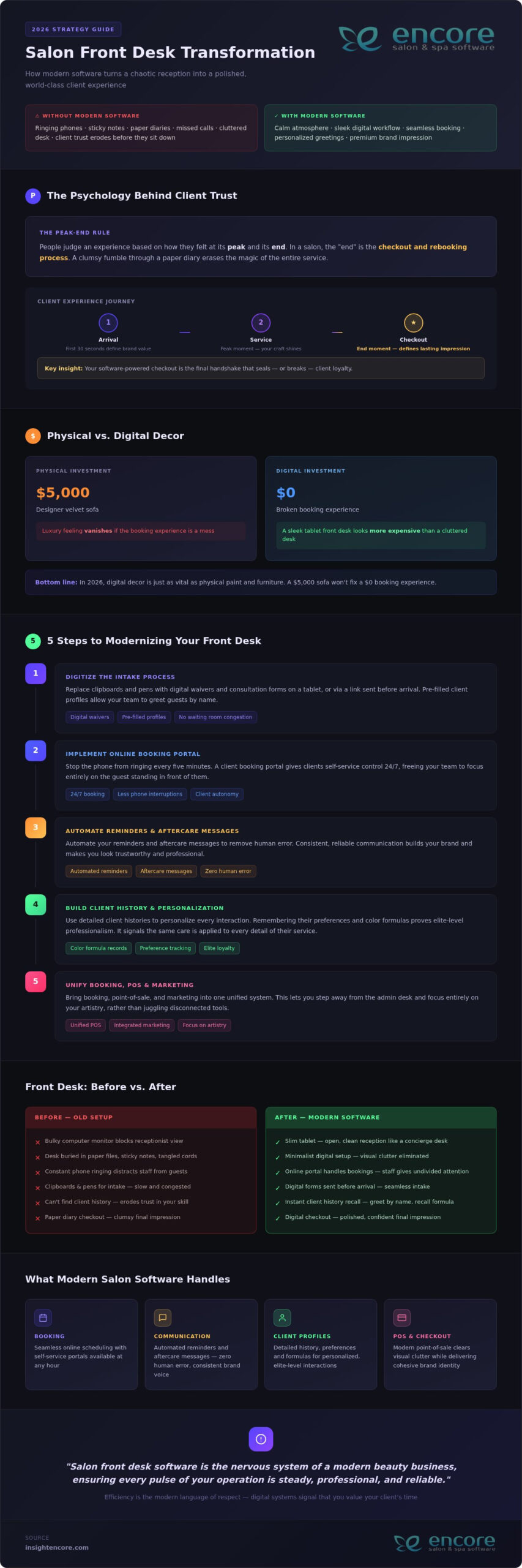
Categories
Uncategorized

2026 Nail Salon Client Management Software Guide

Imagine it’s a frantic Saturday morning and your star technician is staring at a double-booked chair while your most loyal client waits, visibly annoyed. You’ve worked too hard on your craft to let administrative tangles dim your salon’s reputation. It’s frustrating when last-minute no-shows ruin your daily revenue or when you realize you’ve forgotten a regular’s specific allergy between visits. Choosing the right nail salon client management software is about more than just digital filing; it’s about building a relationship engine that handles the stressful backend tasks so you can focus on your art.

We understand that the daily hurdles of running a shop are real, but they don’t have to be your permanent reality. This guide will show you how to transform your busy shop into a streamlined, high-growth business using modern tools. You’ll discover how to create a full, organized calendar with zero double-bookings and automated reminders that stop no-shows before they happen. We’ll walk through the essential features for 2026, from easy-to-access client histories to personalized service tools that make every guest feel like your only priority. It’s time to trade the stress of a messy desk for the confidence of organized control.

Key Takeaways

  • Transition from messy paper logs to a digital hub that acts as your shop’s “business brain,” keeping every detail organized and accessible in the cloud.
  • Set up a 24/7 online booking portal that manages technician schedules and booth availability automatically, so you never have to worry about a double-booking again.
  • Master the use of nail salon client management software to store technical notes like favorite polish brands, allergy alerts, and nail health history for a deeply personalized guest experience.
  • Protect your daily revenue by automating confirmation texts and implementing secure “card-on-file” policies to reduce no-shows by up to 50%.
  • Explore how specialized modules from Encore support your professional growth as you transition from a solo booth renter to a thriving, multi-tech studio.

What is Nail Salon Client Management Software?

Your nail salon is more than just a place for manicures; it’s a hub of creativity and personal connection. However, managing that hub requires a "business brain" that never sleeps. In 2026, nail salon client management software has evolved from a simple digital calendar into a central nervous system for your studio. It’s the shift from old "Nail Depot" paper logs and messy spreadsheets to a sophisticated, cloud-based Customer Relationship Management (CRM) system. This technology remembers every client’s favorite gel shade, their specific allergies, and your technicians’ precise availability so you don’t have to carry that mental load alone.

Moving beyond manual tracking is no longer optional for growth-minded owners. The modern client expects a seamless, tech-forward experience from the moment they book. A dedicated system integrates three core components: 24/7 online booking, detailed profile management, and automated communication. By housing these features in one place, you ensure your business runs smoothly even when you aren’t standing at the front desk.

The Problem with Manual Client Tracking

Relying on physical books or basic spreadsheets is a recipe for daily stress. Paper logs are fragile. One spilled coffee or a misplaced binder can wipe out your entire week’s schedule, leading to lost revenue and embarrassing phone calls. Beyond physical damage, manual systems create dangerous "blind spots." You might forget a client’s specific acrylic sensitivity or miss a double-booking until two people walk through the door at once. Managing walk-ins alongside appointments becomes a guessing game that often results in long wait times and frustrated guests. There’s also the critical issue of security. Physical records are vulnerable to theft or prying eyes, whereas encrypted software ensures your clients’ personal data remains private and compliant with current privacy laws.

The ROI of Digital Management

Switching to a professional system is a strategic investment that pays off in both time and reputation. Think about the hours you spend every week playing phone tag or manually typing out reminder texts. Automation handles these tasks instantly. When a client sees you pull up their detailed history on a tablet, the perceived value of your services immediately rises. It signals that you run a high-end, professional operation that cares about the details. Digital tools reduce operational overhead by 15-20% through smart automation and better resource allocation. By leveraging modern software features, you stop chasing appointments and start focusing on the art and relationships that build a loyal following.

How to Streamline Your Booking and Appointment Flow

Moving your salon from a chaotic paper book to an organized digital workflow doesn’t have to be intimidating. It’s about creating a system that works for you while you’re busy with a client or resting at home. The process begins with five clear steps to regain control of your time. Implementing a robust nail salon client management software is the most effective way to handle this transition smoothly.

  • Step 1: Launch Your Portal. Set up your online booking portal. This gives clients 24/7 access to your services without needing a phone call.
  • Step 2: Define Availability. Configure individual technician schedules and specific booth availability. This ensures you never promise a chair that’s already occupied.
  • Step 3: Connect Socials. Integrate your "Book Now" button directly with Instagram and Facebook. Since many clients find inspiration on social media, this lets them book the moment they see a design they love.
  • Step 4: Sync Walk-ins. Train your team to enter walk-in clients into the dashboard immediately. This keeps your live availability accurate for online users.
  • Step 5: Monitor the Dashboard. Review your "Master Your Business" dashboard daily. It provides a bird’s-eye view of your revenue, busy hours, and staff performance.

Empowering Clients with Self-Service

Modern clients value convenience above almost everything else. Many prefer booking their appointments at 10 PM after work, a time when your salon is likely closed. By providing a self-service option, you capture these bookings that might otherwise go to a competitor. This transition also significantly reduces front-desk friction. When the phone stops ringing every five minutes, your technicians can stay focused on providing a high-quality service. Following best practices for salon booking software allows you to automate the "boring stuff" and reclaim hours of your week.

Optimizing Technician Productivity

A well-organized nail salon client management software does more than just fill seats; it protects your team. Using color-coded calendars helps you visualize the day at a glance, preventing technician burnout by ensuring breaks are actually taken. You can also manage complex "add-on" services, such as gel soak-offs or intricate nail art, within the initial booking. This ensures the system allocates enough time so your techs never feel rushed or behind schedule. For a deeper dive into the setup, check out The Ultimate Guide to Setting Up a Salon Client Booking Portal. If you’re ready to see these tools in action, you can explore a personalized demo of our system today.

Managing Client Profiles for Personalized Service

Imagine a client walks in and you already know they prefer a specific gel brand or have a latex allergy. That’s the power of a "Digital Client Card." Specialized nail salon client management software creates a detailed map of every guest’s journey. It moves beyond basic contact info to store technical notes that protect both the client and your business. You can track nail health history, such as previous thinning or fungal concerns, ensuring every technician provides safe, informed care. This level of detail builds a foundation of trust that generic systems simply can’t match.

Visuals are everything in the nail industry. Modern systems allow you to upload photos directly to a profile. This helps you document nail art progress or save inspiration photos for a future "luxury nails" set. When a client returns months later asking for "that one blue design," you won’t have to scroll through your personal phone gallery. It’s all right there. These small touches turn a one-time walk-in into a loyal regular who feels truly seen and understood. You aren’t just providing a service; you’re maintaining a relationship.

The "Nail Depot" of Client Preferences

Think of your digital profiles as a "Nail Depot" for preferences. You can store specific polish brands and shades used in previous sessions to ensure consistency. The system can even trigger automated alerts for birthdays or anniversaries. This allows you to send a personalized greeting or a small gift card without lifting a finger. This data also fuels your retail sales. If a client frequently gets gel extensions, the software can prompt your team to suggest a specific cuticle oil or strengthening treatment during checkout. It’s about making every interaction feel custom-tailored.

Privacy and Data Security

Handling sensitive health information and personal contact details comes with a major responsibility. As of January 1, 2026, several states have implemented stricter consumer data privacy laws. Your software must do more than just store data; it must protect it. You should look for systems that offer encrypted storage and customizable access levels. This ensures your junior technicians can see the technical notes they need without accessing private financial data or full client lists. You can explore Encore’s security features to see how we prioritize your peace of mind while keeping your shop compliant.

2026 Nail Salon Client Management Software Guide

Reducing No-Shows and Driving Repeat Business

Empty chairs are the enemy of a profitable studio. It’s heartbreaking to watch a technician sit idle because a client simply forgot their appointment. By using nail salon client management software, you can automate your confirmation texts and reduce no-shows by up to 50%. This isn’t just about sending a notification; it’s about creating a professional boundary that respects your time and your team’s talent. When you combine these reminders with "card-on-file" policies or small deposits for high-value bookings, you build a financial safety net for your business.

Beyond preventing losses, your software should actively drive growth. Automated marketing tools allow you to "re-fill" your chairs during slow periods by identifying clients who are overdue for a fill or a fresh set. Instead of waiting for the phone to ring, you can send a friendly nudge that encourages them to book. For more strategies on scaling your studio, you can read our guide to Master Your Business with Encore Salon Software.

The Art of the Appointment Confirmation

Timing is everything when it comes to reminders. Sending a text exactly 24 hours before the service is the "sweet spot" for most clients. It’s close enough to ensure they don’t forget, but far enough away to allow for rescheduling if an emergency arises. The tone of these messages matters too. Instead of a cold, robotic alert, use friendly templates that sound like a helpful partner. A simple message like, "We’re so excited to see you tomorrow for your luxury nails! Need to change something? Use this link to reschedule easily," makes the process feel supportive rather than demanding. Understanding exactly what it means when an appointment is confirmed — and how that digital handshake builds client trust — can help you craft messages that feel professional and reassuring rather than transactional. These automated links save your front desk from hours of phone tag and keep your calendar fluid.

Incentivizing Loyalty

Keeping your current clients is much more cost-effective than constantly hunting for new ones. A point-based loyalty system integrated into your nail salon client management software encourages guests to return more frequently. They love watching their points grow toward a free paraffin treatment or a discount on their tenth pedicure. Digital gift cards also play a massive role in retention. They’re an easy way for your fans to refer friends and family, especially during the holiday season. By rewarding repeat visits, you turn casual walk-ins into a community of regulars who sustain your business year-round. If you’re ready to stop the cycle of no-shows and start building a more predictable income, you can start your free trial of Encore today.

Scaling Your Studio with Encore’s Specialized Tools

Growing your nail business is an exciting journey, but it comes with a new set of challenges. Whether you’re moving from a single booth to a full studio or adding your fifth technician, you need a partner that understands the specific rhythm of a nail salon. Encore isn’t just a software provider; we’re a dedicated mentor for your business. Our nail salon client management software is built to handle the complexities of scaling without adding unnecessary technical stress to your day.

Transitioning from a solo booth renter to a multi-tech studio requires clear organization. You need to manage different personalities, varying skill levels, and complex schedules. Our system makes this shift feel natural. You can easily add new staff profiles, set individual commission rates, and monitor performance from a single dashboard. We also offer Integrated Credit Card Processing to make the checkout experience as polished as the sets you create. This reduces friction at the front desk and ensures you get paid quickly and securely.

Specialized Features for Nail Professionals

We know that nail salons have unique operational needs that generic booking tools often ignore. If you work with independent contractors, our booth renter management module allows you to handle multiple businesses under one roof while keeping finances separate and organized. You can also take advantage of our inventory management system to track your stock of polishes, gels, and essential supplies. No more running out of a popular shade mid-service. Just as a well-designed spa inventory management system protects profit margins from shrinkage and ensures your team has exactly what they need, the right nail salon tools keep your supplies organized and your services running without interruption. Pairing your client management tools with a robust nail salon POS system ensures your checkout process, commission tracking, and inventory are all working together seamlessly. You can view Encore pricing plans for nail salons to find the right fit for your current team size and future goals.

Your Success is Our Mission

At Encore, we reject the cold, impersonal feel of traditional tech companies. We believe in a human-centric approach where your peace of mind is the priority. Our support team brings a "can-do" attitude to every interaction, helping you migrate your data and set up your systems with total confidence. We treat your business like our own because we’ve been helping salons succeed since 1991. You’ll never be stuck talking to a bot or waiting days for a response. We’re here to be your reassuring partner in every step of your growth. Ready to streamline your studio? Try Encore now!

Take Control of Your Salon’s Future

You’ve seen how the right digital tools can turn a hectic shop into a streamlined, high-growth studio. By automating your booking flow and using digital profiles to personalize every guest’s visit, you reclaim your time and protect your daily revenue. Implementing modern nail salon client management software is the most effective way to eliminate the stress of double-bookings and last-minute no-shows. It’s about moving away from the mental load of manual logs and toward a system that supports your art and your team.

Syntec Business Systems was founded in 1991, and we bring over 30 years of beauty industry expertise to help you succeed. We provide integrated credit card processing for faster checkouts and human-centric support that truly understands your daily salon hurdles. We don’t just offer software; we offer a partnership that prioritizes your peace of mind alongside your business growth. Your talent deserves a backend system that works as hard as you do.

Ready to trade the administrative chaos for organized control? Get Started with Your Stress-Free Nail Salon Management Today. We’re excited to help you build the thriving business you’ve always imagined.

Frequently Asked Questions

How much does nail salon client management software typically cost?

Pricing for these systems varies based on the specific features and the number of technicians you need to support. Most providers offer tiered monthly plans that grow alongside your business. We suggest reviewing our current options to find a plan that fits your studio’s unique needs without paying for unnecessary extras.

Can I use this software if I am just a booth renter?

Yes, you can absolutely use these tools as an independent professional. We offer a specialized Chair/Booth Renter Software module designed specifically for solo technicians. This allows you to manage your own schedule, track your personal client history, and process payments with the same level of professionalism as a large-scale studio.

What happens if my internet goes out during a busy day?

You can still access your business data through mobile devices if your salon’s Wi-Fi goes down. Because modern systems are cloud-based, you can simply use the data connection on your smartphone or tablet to view your calendar. This ensures you never miss an appointment or lose access to vital client notes during a temporary outage.

Is it difficult to move my client list from my current paper book to Encore?

The transition is a smooth and supported process thanks to our dedicated human-centric support team. We understand that moving away from paper logs can feel intimidating, so we help you migrate your information into the system. Our goal is to remove the frustration of manual data entry so you can start enjoying an organized desk immediately.

Does the software work on both iPads and desktop computers?

Yes, the platform is designed to be fully responsive on both tablets and desktop computers. You can use a desktop at your front reception for check-ins and switch to an iPad at the manicure station to update technical notes. This flexibility ensures that your nail salon client management software is always right where you need it.

Can I manage multiple salon locations from one account?

Managing multiple locations is simple and centralized within a single dashboard. You can quickly toggle between different shops to monitor staff performance, view schedules, and track total revenue across your entire brand. This high-level overview is essential for owners who want to scale their business while maintaining consistent service standards at every site.

How do automated reminders help prevent no-shows?

Automated reminders prevent no-shows by sending a friendly confirmation text or email to your clients 24 hours before their visit. This nail salon client management software feature gives guests a helpful nudge to confirm their spot or reschedule if something has come up. It significantly reduces empty chairs and saves your team from the stress of last-minute cancellations.

Is my client data safe and backed up in the cloud?

Your client data is protected by professional-grade encryption and automatic cloud backups. Unlike a physical appointment book that can be lost or damaged, your digital records are stored securely and remain accessible from any authorized device. We prioritize your peace of mind by ensuring all personal information and business records are safe, private, and compliant with modern standards.

Disclaimer

This article is general in nature and may contain errors, please verify all claims with your sales rep
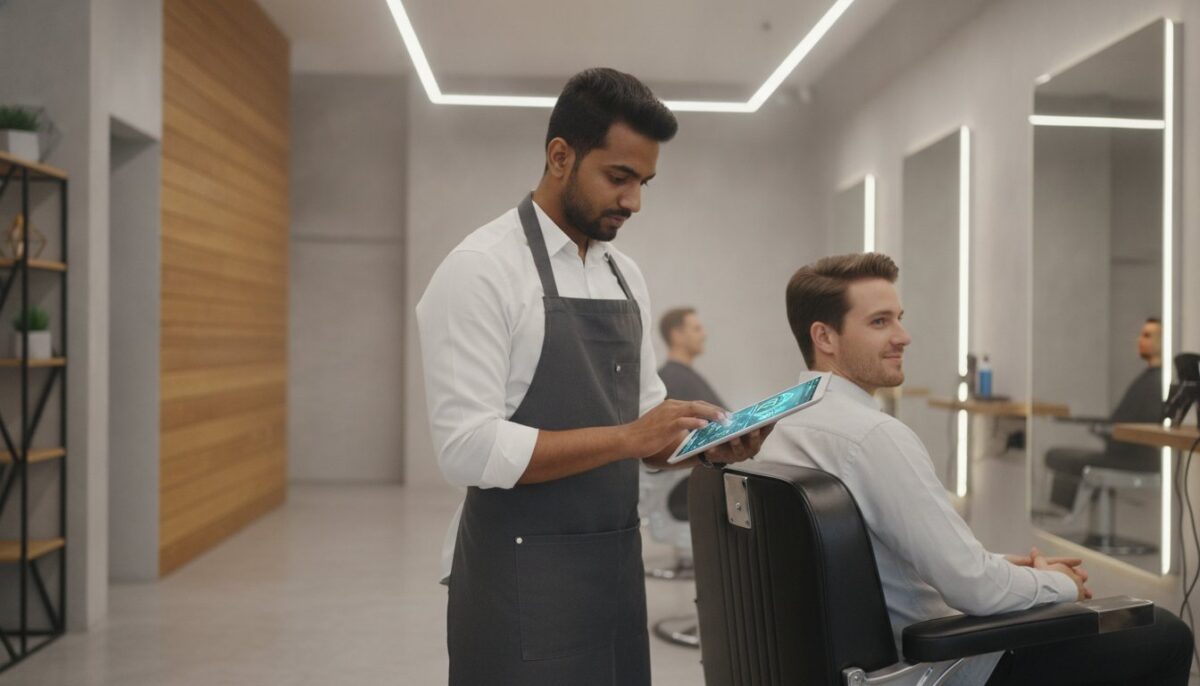
Categories
Uncategorized

Barber Shop POS System: The Ultimate 2026 Guide to Modern Management

Did you know that 74% of Gen Z men will skip your shop entirely if they can’t book their fade online? It’s a staggering reality in 2026. If you’re still relying on a paper ledger or a basic cash drawer, you aren’t just losing time; you’re losing the next generation of loyal clients. Finding the right barber shop POS system is no longer about just swiping cards. It’s about building a digital foundation that works while you’re behind the chair.

We understand the frustration of balancing a straight razor in one hand and a ringing phone in the other. It’s exhausting to manage a busy floor while worrying about manual commission errors or hardware that freezes during the Saturday rush. You deserve a system that acts as a supportive partner rather than a source of stress. This guide will show you how to turn your shop into a high-growth, automated grooming empire where the chairs stay full and the payouts happen on autopilot.

We will explore the essential management features for 2026, from handling booth renters to seamless inventory tracking, so you can finally trade your spreadsheets for peace of mind.

Key Takeaways

  • Reclaim your time and stop answering the phone with 24/7 online booking that meets the high expectations of today’s clients.
  • See how a modern barber shop POS system acts as your digital manager by tracking client history, loyalty rewards, and retail inventory automatically.
  • Remove the stress of payday with automated tools that calculate complex commission splits and booth rental fees accurately for every team member.
  • Learn the simple steps to audit your current hardware and transition to a system that supports both walk-ins and scheduled appointments.
  • Discover how to transform your shop from a manual business into a scalable empire that grows even when you aren’t behind the chair.

Why Your Barber Shop POS System is the Heart of Your Business

Your shop is more than just a place for a fresh fade. It’s a sanctuary for style and community. However, behind the scenes, the daily logistics can quickly become a headache if you don’t have the right tools. A modern barber shop POS system is no longer just a digital cash drawer; it is the central nervous system of your entire operation. By 2026, the most successful shops have moved toward cloud-based management. This technology allows you to oversee scheduling, payments, and staff performance from any device, whether you’re at the shop or taking a well-deserved day off.

Moving away from the traditional pen and paper model is about more than just looking high-tech. It’s about data and efficiency. When you digitize your workflow, you eliminate the scheduling bottlenecks that leave chairs empty and clients frustrated. Integrated payments also have a massive impact on your daily cash flow. Instead of manual reconciliations that take hours at the end of a long shift, your system handles the math instantly. It’s a supportive partner that lets you focus on your craft while it manages the numbers.

The Death of the Manual Cash Register

Manual entry is a silent profit killer. Many shop owners discover that manual processes lead to roughly 5% to 10% in revenue leakage every single month. These small errors in math, missed product sales, or forgotten add-ons like beard trims add up quickly. Beyond the math, traditional cash-heavy operations carry significant security risks. A digital system provides a transparent paper trail for every transaction. Plus, every time you send a digital receipt, you’re building a client email list automatically. This makes it easier to reach out with loyalty rewards or automated marketing programs that keep your chairs full.

Bridging the Gap Between Booking and Billing

Think about the Saturday morning rush. The shop is buzzing, the music is up, and your lobby is full. The last thing you want is a bottleneck at the front desk while a client tries to pay. A specialized barber shop POS system links your online appointments directly to the final checkout screen. This means your staff doesn’t have to re-enter service details or prices manually. We define a seamless checkout as the perfect union of scheduling and payment data; it ensures that what was booked is exactly what is billed. This reduces friction for your clients and keeps the energy in your shop positive and professional. It’s about creating a smooth experience from the moment they book until they walk out the door looking their best.

Essential Features Every Barber Shop Needs in 2026

Running a shop in 2026 means being available even when you’re asleep. With 74% of Gen Z males refusing to visit shops without online booking, your digital presence is your new storefront. A robust barber shop POS system handles these bookings 24/7, ensuring your calendar stays full without you ever picking up the phone. It’s about giving your clients the convenience they crave while protecting your personal time. You can focus on the fade while your software manages the queue.

Beyond the calendar, your software should act as a detailed memory for your business. Client Management (CRM) tools allow you to track specific hair preferences, past services, and even birthday rewards. When a client walks in, you already know exactly how they like their taper. Pair this with automated inventory tracking that alerts you when beard oils or pomades run low. You’ll never have to tell a customer you’re out of their favorite product again. This level of organization transforms a simple visit into a premium experience. The same principle applies across the grooming industry — for example, pet grooming appointment software uses identical logic to track animal health notes and client preferences so groomers can stay focused on their craft rather than their calendar.

Integrated Credit Card Processing

One of the biggest drains on a barber’s income is the dreaded no-show. By using Integrated Credit Card Processing, you can implement no-show protection that requires deposits or cancellation fees. This ensures your time is respected and your income is protected. Look for transparent processing rates rather than just chasing “free” hardware. While typical fees range from 2.3% to 3.5%, knowing exactly what you pay per transaction provides the peace of mind you need to manage your margins effectively. Reliable systems keep the checkout fast so the next client can get in the chair on time.

Automated Marketing and Loyalty

Slow Tuesday mornings don’t have to be the norm. Your POS data is a goldmine for filling those gaps. You can set up automated “We Miss You” texts for clients who haven’t visited in four weeks, offering a small incentive to get them back in the chair. Digital punch cards are another great way to build loyalty without the hassle of physical cards that clients always lose. These tools work in the background to ensure your retention rates stay high without extra effort on your part.

Surprisingly, these features also boost your local visibility. When your system consistently captures client data and encourages reviews, it signals to search engines that your business is active and trusted. This helps you rank higher when locals search for a “barber near me.” If you want to see how these tools can work for your specific shop layout, feel free to reach out to our team for a chat about your goals.

Managing the Team: Commission vs. Booth Renters

Managing a talented team of barbers is often more about people than hair. Whether you run a commission-based shop or lease out chairs to independent contractors, your barber shop POS system must act as a neutral third party. It isn’t just about collecting money; it’s about maintaining trust. Hybrid shops that combine both models under one roof are becoming more common in 2026, but they require software that can keep these distinct financial worlds separate. Automated math for splits, product deductions, and tips ensures that every Saturday night doesn’t end with a stack of receipts and a headache.

Giving your barbers individual logins is a game changer for retention. When staff can track their own performance, they feel empowered and motivated. They can see their service totals and retail sales in real-time, which encourages them to upsell that extra beard oil or pomade. From a legal standpoint, keeping shop finances and renter income distinct is vital for tax compliance. For booth renters, who often face a 15.3% self-employment tax on net earnings, this separation is the difference between being a true business owner and a misclassified employee.

Specialized Tools for Booth Renters

Independent contractors are essentially running a small business within your four walls. They need their own mini-management system to handle their specific clients and track their expenses. By providing them with professional tools, you help them manage their own “barber shop near me” presence more effectively. For a deeper look at how this works, check out our Independent Stylist’s Guide. It explains why a dedicated app is essential for staying organized and professional in 2026.

Commission Tracking Without the Headache

If you’re still using spreadsheets or paper to calculate weekly payouts, you’re likely spending hours on tasks that should take seconds. Manual entry often leads to disputes and staff distrust. Modern barber shop POS system software provides real-time reporting on service versus retail commissions, including automated deductions for backbar products. Shop owners report that automating these payouts can reduce back-office hours by as much as 75%. This transparency doesn’t just save you time; it keeps your best barbers from looking for a chair elsewhere. They know their pay is accurate, and they can see exactly how they earned it.

Barber Shop POS System: The Ultimate 2026 Guide to Modern Management

How to Choose the Best POS System for Your Shop

Selecting your next management tool is a big step for your business. It isn’t just about picking software; it’s about finding a partner that understands the unique rhythm of a busy shop. Start by evaluating your primary model. While 57% of visits are still walk-ins according to 2026 industry data, the shift toward pre-booking is growing fast. Your barber shop POS system must handle both hybrid models and pure appointment schedules without missing a beat. It should feel like a natural extension of your front desk, not a technical hurdle.

Next, audit what you already own. There is no need to throw away perfectly good iPads or tablets if you don’t have to. Many modern systems are flexible enough to work with your current setup. Once you’ve checked the gear, do the real math on costs. A mid-tier software plan often costs between $50 and $100 per month. Don’t just look at the subscription fee; look at the transaction rates too. Typical processing fees range from 2.3% to 3.5%. You want a transparent structure that doesn’t eat into your margins with hidden costs.

Test the mobile experience before you commit. You shouldn’t be chained to the front desk all day. You need the ability to check your shop’s performance or adjust the schedule from your phone while you’re grabbing lunch or at home. Finally, check the human support factor. If your system goes down during the Saturday rush, will a real person answer the phone? You deserve an ally who is as invested in your success as you are, not an automated ticket system that leaves you hanging.

Avoiding the “Free” Hardware Trap

“Free” hardware is often a bait-and-switch. These deals usually come with much higher transaction fees or long, restrictive contracts that are difficult to break. Your data is your property. Make sure you can export your client lists and sales history whenever you need. In 2026, your hardware must meet modern standards, including NFC tap-to-pay, EMV chips, and a reliable offline mode. This ensures you can keep taking payments even if the shop’s Wi-Fi blinks out during a peak hour.

Scalability: Planning for Shop Number Two

If you’re planning for shop number two, you need a system that thinks big. Multi-location reporting is vital for seeing the whole picture across different neighborhoods. Encore Barber Software is built to grow with you. It provides the high-level oversight you need without the technical headaches. Your POS should be the engine that drives your expansion, not the anchor that holds you back. It’s about building a foundation that stays strong as your empire grows.

Ready to see a system that actually fits your workflow? Schedule a personalized demo today and let’s talk about how to future-proof your business.

The Encore Advantage: Professional Management for Modern Barbers

Choosing a barber shop POS system is a decision that impacts every chair in your shop. At Encore, we bring 35 years of industry experience to the table. We’ve seen this industry evolve from basic paper ledgers to the high-tech, automated environment of 2026. Our goal is to act as your friendly guide. We help you navigate the complexities of modern management with software that feels like a supportive partner. We don’t just provide code; we provide a foundation for your professional growth.

Our system streamlines your entire backend so you can focus on your craft. It handles everything from tracking pomade inventory to launching automated marketing campaigns that fill slow mornings. Thousands of independent professionals trust our specialized modules because they’re built for the reality of a busy shop floor. We focus on the small details that keep your business running smoothly. This ensures you have the peace of mind to focus on the craftsmanship that keeps your clients coming back for every fresh fade.

A Partner in Your Success

We’re deeply committed to removing the common industry frustrations that keep shop owners up at night. Whether it’s preventing last-minute cancellations with our Online Booking Module or ensuring your booth renters have clear financial records, we’re here to help. Transparency is at the core of what we do. You won’t find hidden fees or confusing contracts here. We want to empower you to level up your operation. You can explore our features to see how we help you master your business and scale effectively.

Next Steps for Your Shop

Making the switch to a new system might feel intimidating, but it doesn’t have to be. We’ve helped countless shops transition their data without losing a single client record. The process is straightforward and designed to minimize downtime. You don’t have to figure it out alone. Our team is ready to walk you through every step of the setup.

The first step is simple. Book a personalized demo to see our features in action and ask questions specific to your shop’s layout. You can also explore our Pricing page to see our transparent options. Let’s work together to turn your shop into the automated grooming empire you’ve always envisioned. We’re excited to help you build a more organized, profitable, and stress-free business.

Build Your Modern Barbering Empire

The transition from a traditional walk-in shop to a high-growth, automated business doesn’t happen by accident. It requires a foundation that handles the heavy lifting of scheduling, staff payouts, and client retention while you focus on the chair. By choosing a barber shop POS system that prioritizes both human connection and technical reliability, you’re investing in your own peace of mind. You’ve seen how the right tools can eliminate no-shows and turn manual commission math into a few simple clicks.

At Encore, we bring over 35 years of beauty and wellness expertise to your front desk. Our dedicated booth renter and commission modules are designed to handle the unique hurdles of the barbering industry without the headache of hidden fees. We’re here to be your friendly guide as you scale your business and reclaim your time. It’s time to stop managing spreadsheets and start mastering your craft with a partner that understands your vision. Upgrade your shop with Encore Barber Software today and take the first step toward a more organized, profitable future. You’ve built the brand; now let’s build the system that helps it thrive.

Frequently Asked Questions

What is the best POS system for a small barber shop with only two chairs?

The best system for a two-chair shop is one that balances powerful features with simplicity. You need online booking and basic client tracking to keep those chairs full without spending all day on the phone. Look for a solution that lets you start with the essentials and add more advanced tools as you expand your business.

Can I use a barber shop POS system on an iPad or tablet?

You can absolutely use your barber shop POS system on an iPad or most standard tablets. Cloud-based software is designed for flexibility, so you aren’t tied to a bulky counter setup. This allows you to check clients in or process payments right from your station, which keeps the flow of the shop moving smoothly.

How do POS systems handle booth rental payments and taxes?

Specialized software handles booth rentals by automating the math for weekly fees and keeping those payments distinct from shop revenue. This is crucial for tax compliance, especially since independent contractors face specific self-employment tax obligations. Integrated modules ensure that both the shop owner and the renter have clear, accurate records of every transaction.

Is it possible to switch POS systems without losing my client history?

Switching systems is a straightforward process that shouldn’t result in lost client data. Most professional software providers offer data migration services to help you move your history, notes, and contact lists over safely. We recommend looking for a partner that offers human support to guide you through the transition so you don’t miss a single appointment.

Do I need a separate merchant account for my barber shop POS?

You don’t usually need a separate merchant account when you choose a system with integrated credit card processing. This setup is often more efficient because it links your sales data directly to your billing reports. It simplifies your daily reconciliation and ensures that your processing rates are transparent and easy to track.

How much does a typical barber shop POS system cost in 2026?

In 2026, a mid-tier barber shop POS system typically costs between $50 and $100 per month for the software subscription. You should also budget for one-time hardware costs, which can range from $300 for a basic setup to $1,500 for a full counter system. Processing fees are an ongoing cost, generally falling between 2.3% and 3.5% per transaction.

Can a POS system help me rank higher for “barber shop near me” on Google?

Your POS system helps you rank for “barber shop near me” by capturing client data that fuels your local SEO. When your software encourages automated reviews and keeps your business information consistent across the web, search engines see you as a trusted local authority. It’s a smart way to turn your daily operations into a marketing engine.

Disclaimer

This article is general in nature and may contain errors, please verify all claims with your sales rep
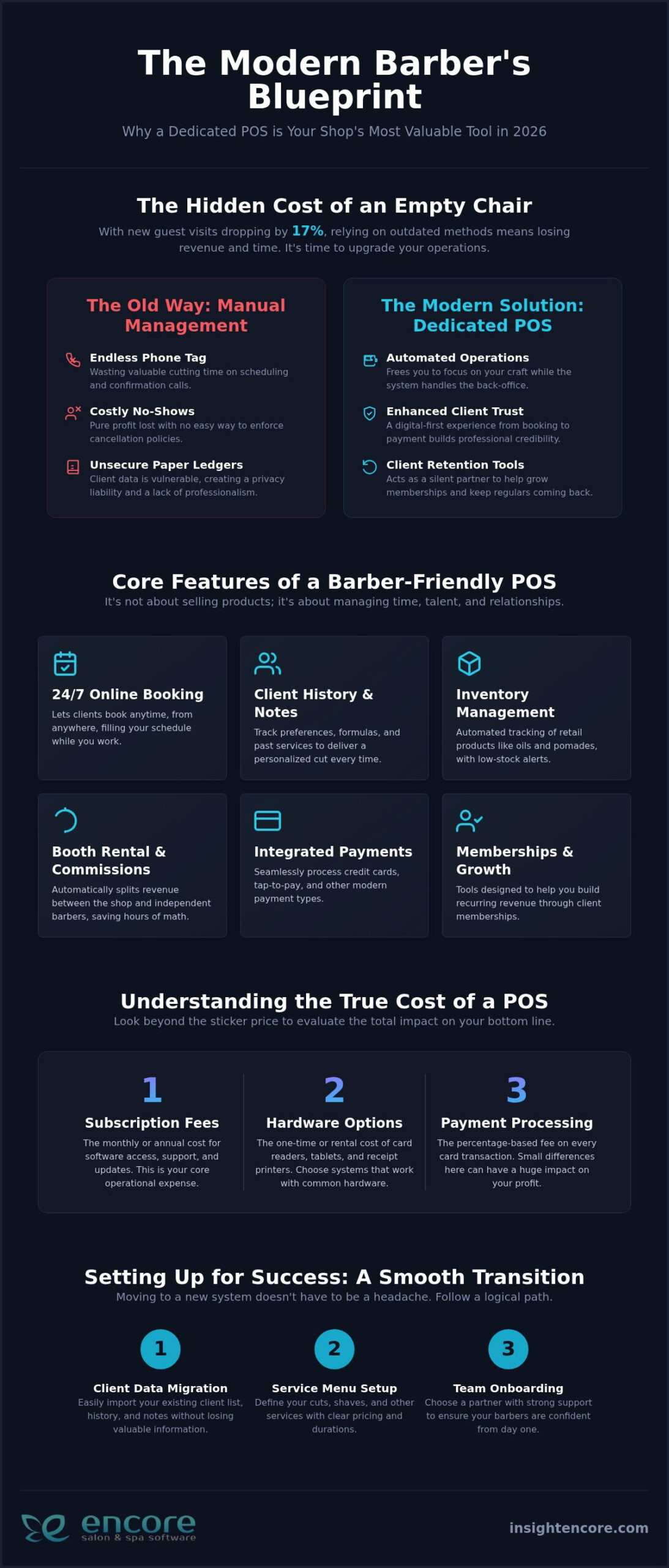
Categories
Uncategorized

Tattoo Shop Booking Software: The 2026 Guide to Streamlining Your Studio

What if your phone stopped buzzing with 2 AM booking inquiries, yet your calendar stayed full and your deposits were already paid? For most artists, the reality is much noisier. You’re likely juggling a flooded inbox, chasing down no-shows, and trying to manage your schedule across three different apps. It’s exhausting. You didn’t pick up a machine to spend half your day acting as a receptionist, which is why the right tattoo shop booking software is no longer a luxury; it’s a necessity.

We believe your focus should stay on the skin, not the screen. This guide will show you how to reclaim your time and protect your paycheck. We’ll explore how to eliminate the “DM chaos” and secure your income with automated deposits that stop no-shows in their tracks. We’ll also walk through how to centralize your communications and create a professional booking portal that matches your studio’s vibe. It’s time to silence the administrative noise and get back to the art.

Key Takeaways

  • Stop losing up to 10 hours every week to manual messages by moving your studio to a 24/7 online booking portal that handles the heavy lifting for you.
  • Protect your income and eliminate no-shows by implementing automated deposit collection directly through your tattoo shop booking software.
  • Streamline your “day-of” process with digital consent forms and intake paperwork that keep your shop organized, professional, and legally compliant.
  • Learn why choosing a stable, established platform with decades of experience is a smarter long-term investment than switching between unproven niche apps.
  • Identify and fix the specific “booking leaks” in your current process to ensure you never lose a potential client to a missed message or a slow response again.

Beyond the DM: Why Tattoo Shop Booking Software is Essential in 2026

Think about the last time you sat down to draw, only to be interrupted by three Instagram notifications and a text message asking for a price quote. It’s a constant cycle. Managing a studio through direct messages isn’t just annoying; it’s a “DM trap” that swallows your productivity. Many artists find themselves losing up to 10 hours every week just on back-and-forth scheduling. By 2026, clients won’t just appreciate 24/7 online booking; they’ll expect it as a standard part of a professional experience.

Relying on manual messages creates a barrier between a client’s excitement and their commitment. When you use tattoo shop booking software, you remove that friction. Instead of waiting for you to finish a session to reply, a client can see your availability, upload their reference art, and pay a deposit instantly. This shift moves your business from “hope-based” booking to a model built on guaranteed income and clear boundaries. It’s about reclaiming your time so you can stay in the creative zone.

The Real Cost of Manual Scheduling

Every uncollected deposit is a “ghosting tax” on your business. Without a financial commitment upfront, a last-minute no-show doesn’t just leave an empty chair. It wastes your preparation time and potential earnings. This manual overhead adds to a heavy mental load. Artist burnout often stems from the administrative noise of chasing people for information rather than the actual tattooing. If a client says, “I’ll book tomorrow,” without an immediate way to pay, there’s a high chance they’ll never book at all. Automation ensures that the moment of inspiration leads directly to a confirmed appointment.

Transitioning from Paper to Digital Management

Moving away from a physical calendar or a fragmented system of notes is about more than just saving space. It’s about centralizing your studio’s brain. When your client history, reference images, and notes are stored in one secure place, your workflow becomes seamless. You can see exactly what a client wanted six months ago without digging through old DM threads or paper folders. This transition is becoming the standard for studios that want to scale without the chaos. The same demand for streamlined digital scheduling is transforming other appointment-based service businesses as well — for example, pet grooming appointment software is helping groomers eliminate missed calls and fractured schedules in exactly the same way.

  • Accessibility: Access your schedule from any device with cloud sync.
  • Organization: Keep reference images linked directly to the appointment.
  • Trust: Present a professional, branded interface that builds confidence before the needle touches skin.

Adopting tattoo shop booking software is a clear signal to your clients that you value their time as much as your own. It transforms the studio from a chaotic inbox into a streamlined environment where the art always comes first. You aren’t just buying a tool; you’re investing in the peace of mind that comes with an organized business.

Core Features of High-Performance Tattoo Studio Software

Choosing the right tools for your studio isn’t just about finding a calendar. It’s about building a system that protects your time and your income. High-performance tattoo shop booking software acts like a digital studio manager, handling the logistical heavy lifting so you can stay focused on your clients. From the moment someone discovers your work to the final healing stages of their new piece, every touchpoint should feel professional and effortless.

One of the most critical components is automated deposit collection. By integrating credit card processing directly into your booking flow, you secure a financial commitment before the appointment is even confirmed. This simple shift transforms your business from a “handshake” model to a professional service. When a client puts money down, they’re far more likely to show up. If they don’t, your time is still compensated. It’s a fair way to respect both your craft and your schedule.

Beyond payments, modern systems handle the “day-of” chaos with digital consent forms and intake paperwork. Instead of scrambling for a clipboard while your client waits, you can have everything signed and stored before they even walk through the door. This creates a cleaner, more organized workflow that lets you get straight to the stencil. The same principles that drive efficiency in a modern barber shop POS system — integrated payments, digital intake, and automated reminders — apply equally to running a high-performance tattoo studio.

Automated Reminders and No-Show Protection

The psychology of a timely reminder is powerful. Life gets busy, and sometimes a client simply forgets. Sending an automated SMS or email 24 hours before a session drastically reduces ghosting. It gives the client a chance to confirm or reach out if something has changed. You can also customize your cancellation policy within the software, ensuring everyone is on the same page regarding late arrivals or rescheduling. For a deeper look at how to optimize this process, you can explore a professional appointment confirmation strategy to keep your chair full.

Client Relationship Management (CRM) for Artists

A great tattoo is a shared experience. Storing reference art, medical history, and specific ink preferences in a secure tattoo shop booking software database allows you to provide a personalized experience every time. You won’t have to scroll through months of DMs to find that one reference photo they sent. After the session, the system can even trigger automated aftercare follow-ups, showing your clients that you’re invested in their healing process.

You can also use Automated Marketing & Loyalty Programs to reward your regulars or fill those rare last-minute cancellations with a quick blast to your most loyal clients. If you’re ready to see how these features can transform your daily grind, you might want to explore a more streamlined way to work.

Evaluating Your Options: Niche Tattoo Apps vs. Comprehensive Systems

Choosing the right tattoo shop booking software often feels like a choice between two extremes. On one side, you have sleek “niche” apps that look great but often lack the backbone to handle real business growth. On the other, you find generic corporate tools that don’t understand why a deposit for a multi-session sleeve is different from a simple haircut. You need a system that offers the best of both: the specialized features of the tattoo world backed by decades of technical stability.

Reliability is the silent partner every artist needs. Since 1991, we’ve seen software startups come and go. A “v1.0” app might be trendy, but it can’t match over 30 years of refined code and industry experience. If your system goes down on a busy Saturday, you don’t want to wait for an automated chatbot response. You want a human ally with a “can-do” attitude to get you back on track immediately. Your software should scale with you naturally, whether you’re a solo artist today or managing a 10-chair studio tomorrow. The same logic applies across grooming and body art businesses — operators evaluating a barber shop POS system face identical decisions between niche tools and proven comprehensive platforms.

Managing Booth and Chair Renters

Many modern studios operate as a collective of independent contractors. This creates a unique management challenge. You need to balance individual artist autonomy with studio-wide reporting. Using specialized chair/booth renter software allows each artist to manage their own clients and schedules while the studio maintains a professional, unified front. It handles separate payment processing seamlessly. This ensures that funds go exactly where they belong without the manual accounting headaches that often lead to friction between artists and owners.

The “Built for Tattoo” Myth vs. Reality

There is a common myth that only “tattoo-only” apps can handle your specific workflow. In reality, the most important features are often shared with other high-end service industries that require precision and client care. You need robust inventory management for your inks and needles, a reliable POS system, and deep customizability. Our specialized industry solutions bridge this gap perfectly. We provide the enterprise-level reliability of a comprehensive system while allowing you to tailor the experience to your specific artistic process. It’s about avoiding “feature bloat” and focusing on the tools that actually keep your chair full and your business secure.

Tattoo Shop Booking Software: The 2026 Guide to Streamlining Your Studio

Implementation Guide: Setting Up Your Booking Flow for Success

Moving your studio to a new system is a big step toward a more organized life. It’s not just about installing a tool; it’s about building a foundation that supports your art. While the transition might feel daunting, a clear plan makes the process smooth and rewarding. By following a logical setup, you can ensure your tattoo shop booking software works for you from day one.

  • Step 1: Audit your booking leaks. Look at where you currently lose potential clients. Is it a slow reply to a DM? A lack of a clear deposit link? Identifying these gaps helps you configure your new system to catch every lead.
  • Step 2: Configure your digital forms. Set up your intake and consent forms to be legally compliant and easy to sign on a phone. This removes the “paperwork hurdle” when the client arrives.
  • Step 3: Set your deposit requirements. Decide on your deposit amounts and link your Integrated Credit Card Processing. This ensures you get paid before you ever pick up a machine.
  • Step 4: Promote your “Book Now” link. Put your new booking portal link in your Instagram bio, TikTok profile, and website. Make it the only way people can secure a spot.
  • Step 5: Train your team. Show your artists how to use the POS and CRM. When everyone knows how to capture data at every session, the whole studio grows together.

Optimizing Your Online Booking Portal

Branding matters. Your booking portal shouldn’t look like a generic medical form; it should reflect your studio’s unique aesthetic. Use high-quality images of your best work to inspire clients as they choose their service. Writing clear, friendly instructions reduces the “back-and-forth” questions that clutter your inbox. When a client knows exactly what to expect, they feel more confident in their choice to book with you. A professional portal builds trust before the needle even touches the skin.

Automating the Intake-to-Aftercare Lifecycle

The relationship doesn’t end when the tattoo is finished. You can set up an automated “Thank You” email that triggers right after the session, complete with detailed aftercare instructions. This ensures your work heals perfectly without you having to repeat the same advice ten times a day. After a few weeks, your system can automatically request a review or a social media share. Using a robust Client Management System lets you track long-term project progress, making it easy to pick up exactly where you left off on that large-scale sleeve. Ready to stop the leaks and start growing? See how Encore streamlines your studio today.

Securing Your Studio’s Future with Encore Tattoo Software

Your studio is more than just a business; it’s a reflection of your creative vision and years of dedication. To protect that vision, you need a foundation that won’t crumble when your schedule gets packed or your team expands. Choosing the right tattoo shop booking software is about finding a partner that understands your unique hurdles. Here at Encore Salon & Spa Software, we’ve spent decades refining our systems to ensure they provide the stability you need to grow without the stress of administrative chaos. We don’t just provide a tool; we provide the peace of mind that comes with knowing your business is in safe hands.

Since 1991, we’ve been helping service professionals reclaim their time and secure their income. We’ve seen tech trends and “v1.0” apps come and go, but our commitment to reliable, human-centric support remains the same. When you choose our Tattoo Studio Software, you aren’t just getting a digital planner. You’re getting a comprehensive system designed to handle everything from automated deposits to long-term client management. We’re here to help you move away from the “hope-based” booking model and toward a future of guaranteed growth.

The Encore Salon & Spa Software Difference: More Than Just a Calendar

Our specialized industry solutions are built specifically for the way you work. We believe in total transparency, which is why you’ll never find hidden fees or confusing pricing structures here. We approach every challenge with a “can-do” attitude, focusing on the individual success of each artist in your shop. Whether you’re managing a solo booth or a multi-location studio, our software adapts to your needs rather than forcing you to change your workflow. You can explore our full range of studio management features to see how we tailor our tools to the tattoo industry.

Ready to Eliminate the Admin Noise?

Imagine waking up to a calendar that’s already organized, with deposits secured and intake forms completed before you even finish your first coffee. That level of organization isn’t a dream; it’s what happens when you let tattoo shop booking software handle the heavy lifting. By automating the repetitive tasks that drain your energy, you can finally focus on what matters most: the art on the skin.

Taking the first step toward a more organized studio is easier than you think. Our team is here to guide you through the transition, ensuring you feel confident and supported every step of the way. It’s time to stop chasing messages and start focusing on your craft. You’ve worked hard to build your reputation; let us help you protect it with a system that works as hard as you do. Try Encore Salon & Spa Software Now and Transform Your Studio.

Reclaim Your Creative Freedom

You didn’t start tattooing to spend your life managing an inbox. Moving away from the DM trap and implementing a professional tattoo shop booking software means you’re choosing to put your art first. We’ve explored how automated deposits protect your paycheck and how digital forms clean up your daily workflow. It’s about building a business that works for you, not the other way around. You deserve a schedule that respects your time and a system that secures your income.

Since 1991, we’ve helped studios transition from chaotic paper trails to streamlined digital success. With integrated credit card processing and dedicated support for every step of your transition, we ensure you never have to navigate the tech side alone. We’re here to help you eliminate the administrative noise so you can get back to what you do best. Your studio deserves the stability of a seasoned partner. Let’s build something great together.

Secure Your Studio’s Future – Try Encore Now

Common Questions About Tattoo Studio Management

How much does tattoo shop booking software typically cost?

Costs for professional software vary based on the number of artists in your shop and the specific features you require. Most systems offer tiered plans so you can scale as your studio grows. It is best to view the software as an investment that pays for itself by eliminating no-shows and reclaiming hours of administrative time every week.

Can I collect non-refundable deposits through the software?

Yes, you can easily set up and collect non-refundable deposits during the booking process. By using integrated credit card processing, you ensure that a client makes a financial commitment before their spot is confirmed. This professional boundary protects your income and compensates you for your time if a client fails to show up.

Do I need a separate app for digital consent forms?

You don’t need a separate application for your paperwork. High-performance tattoo shop booking software includes digital consent forms and intake as part of its specialized industry solutions. This keeps your client history, medical notes, and signed waivers in one secure digital folder, making your “day-of” workflow much cleaner and more organized.

Is the software compatible with both iPad and desktop?

The system is fully compatible with iPads, tablets, and desktop computers. Because it utilizes cloud synchronization, you can check your schedule at your station on a tablet or manage studio-wide reporting from a desktop at the front desk. This flexibility ensures you always have access to your data wherever you are in the shop.

Can I manage multiple artists with different schedules and rates?

You can manage a full team of artists with completely different schedules, services, and pricing tiers. Our booth renter software modules are specifically designed to handle the complexity of independent contractors within a single studio. This allows each artist to maintain their autonomy while the studio keeps a unified and professional booking portal.

Will the software help me reduce no-shows and last-minute cancellations?

This tattoo shop booking software is designed specifically to stop no-shows in their tracks. It uses a combination of automated SMS reminders and required deposits to ensure clients stay committed to their appointments. By keeping the session top-of-mind and requiring a financial stake, you’ll see a significant decrease in empty chairs and lost revenue.

Is my client data and portfolio art stored securely in the cloud?

All your client data and reference images are stored using secure, industry-standard cloud encryption. This protects sensitive information like medical history and contact details from being lost or accessed by unauthorized users. Digital storage also means you can ditch the physical folders and access your portfolio and notes from any authorized device instantly.

Can I integrate my Instagram “Book Now” button with the software?

You can integrate your “Book Now” link directly into your Instagram and TikTok profiles. This allows potential clients to move from admiring your art to paying a deposit in just a few clicks. It eliminates the need for manual DMs and ensures that your social media presence is constantly working to fill your calendar while you focus on tattooing.

Disclaimer

This article is general in nature and may contain errors, please verify all claims with your sales rep