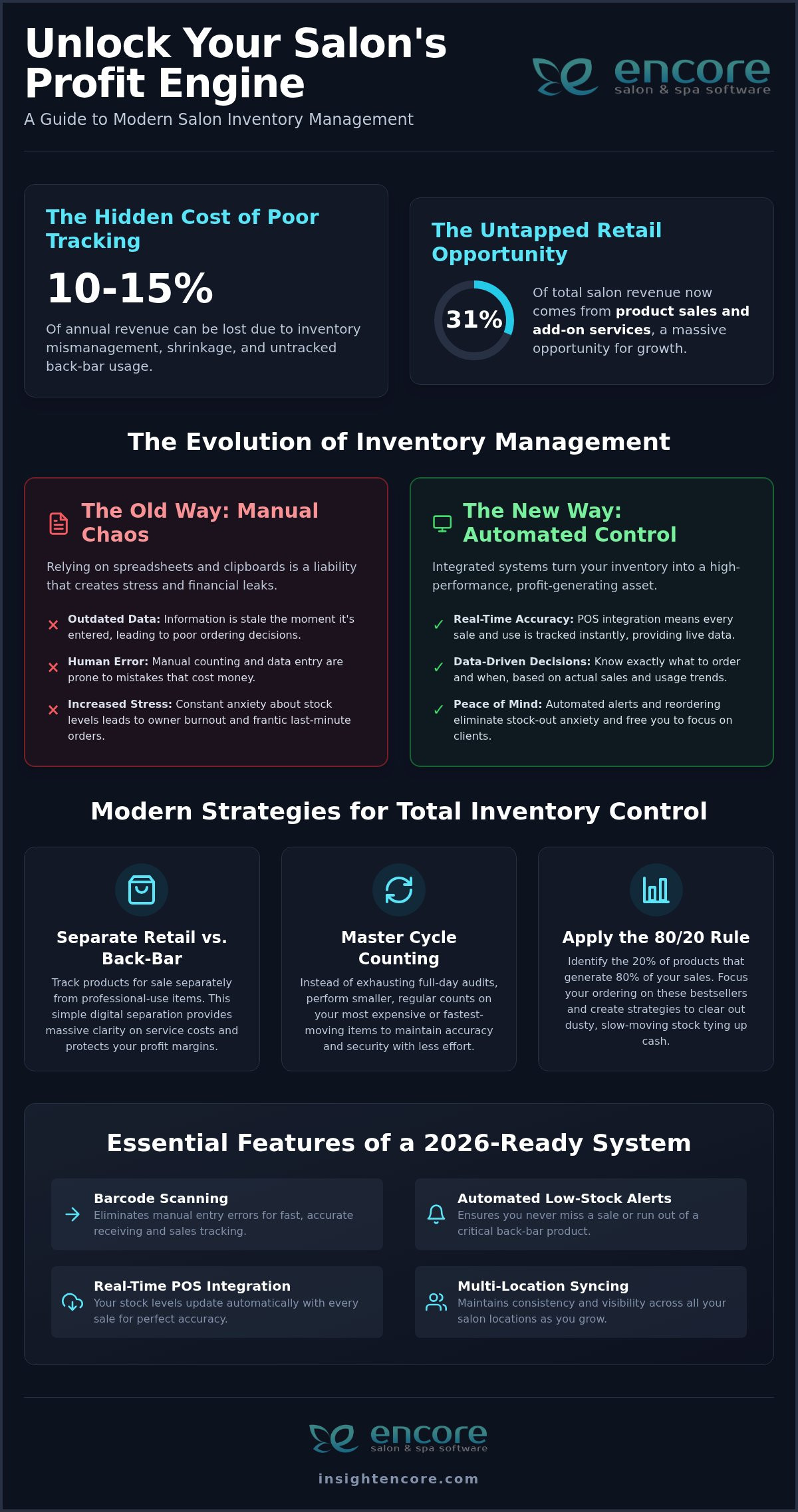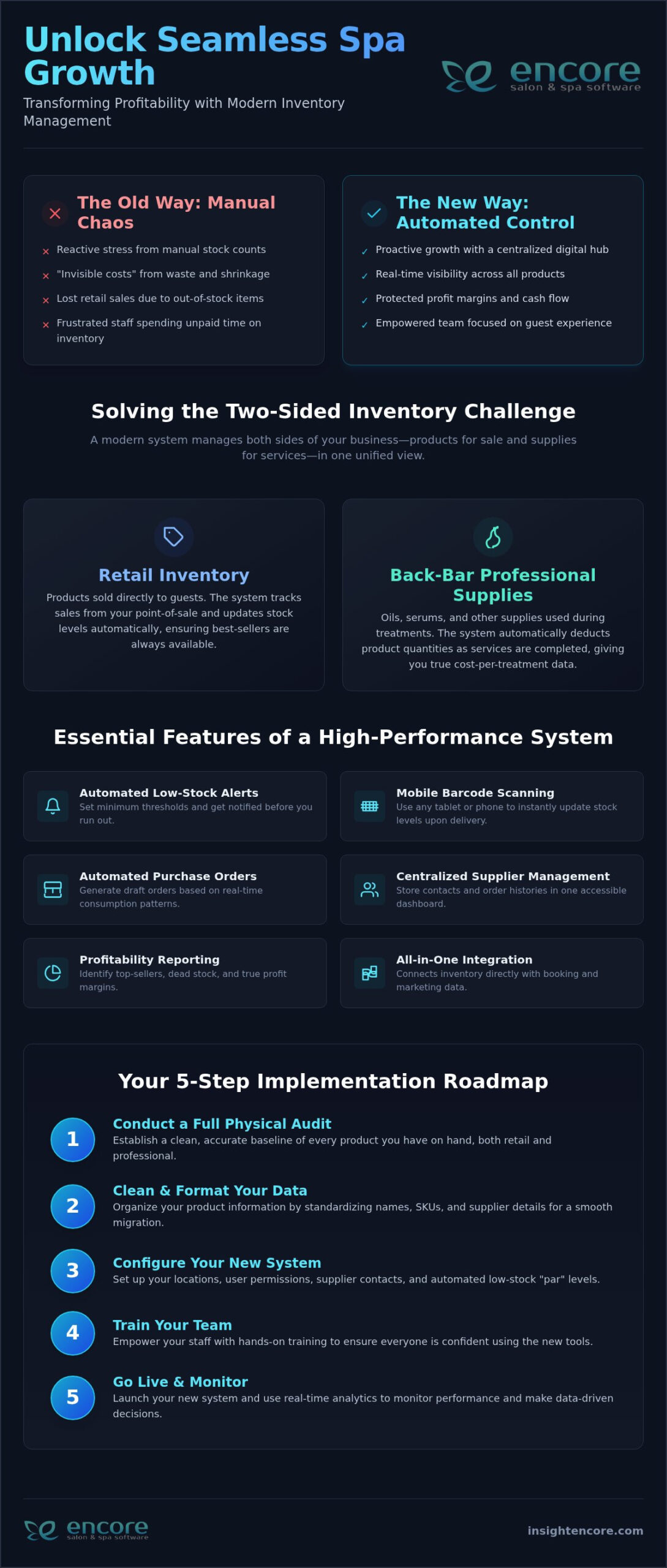

Inventory can appear full in your records while products are missing from the shelf. That gap between recorded stock and what you can physically count is inventory shrinkage, often estimated at 1-2% of sales. Effective salon inventory shrinkage control starts with comparing those two totals, then tracing the difference to its cause.
When products go missing, arrive damaged, expire, or aren’t recorded correctly, the result is the same: less stock available when you need it. Learn why shrinkage happens and how staff training, regular physical counts, and inventory automation can help you spot discrepancies sooner and manage stock with more confidence. Consistent tracking also turns inventory records into a practical tool for everyday salon operations.
Key Takeaways
- Compare the stock on hand with your inventory records to spot shrinkage and understand its impact on salon operations.
- Look beyond theft: spoilage, damage, receiving mistakes, and recording errors can all explain missing products.
- Train staff to handle, record, and store products consistently so small process gaps are easier to prevent.
- Use regular physical counts to find discrepancies, then investigate and correct the underlying cause.
- Inventory management software can help keep stock records current and make patterns easier to notice.
1. What is inventory shrinkage?
Inventory shrinkage is the difference between the stock your records show and what you can physically count. Your records may show shampoo, colour, or skincare products as available even when the shelf is empty. That mismatch can delay appointments, interrupt retail sales, or lead to replacement orders. A stock audit can help determine whether the gap came from product use, damage, spoilage, a recording mistake, or an unexplained loss.
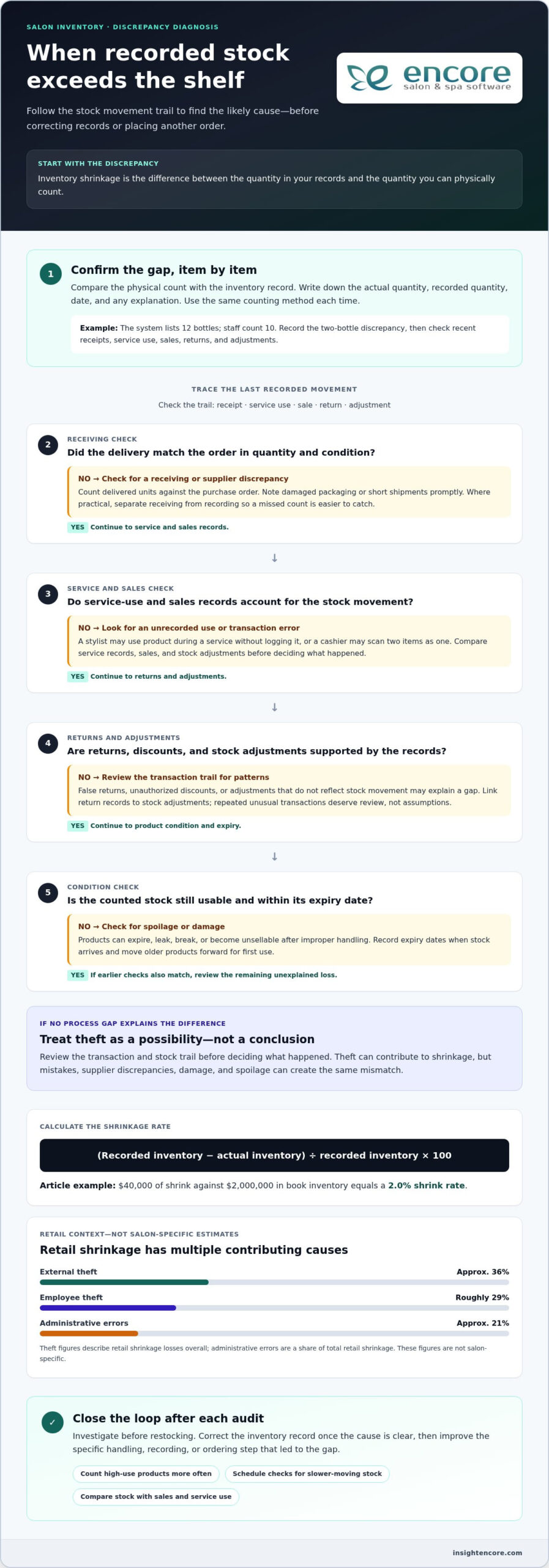
To calculate the salon inventory shrinkage rate, subtract actual inventory from recorded inventory, divide the difference by recorded inventory, then multiply by 100. For example, $40,000 of shrink against $2,000,000 in book inventory equals a 2.0% shrink rate.
Use an inventory system to keep a running record of products received, sold, used for services, returned, and adjusted. During an audit, compare that record with physical counts, item by item. If the system lists 12 bottles of a treatment product but staff count 10, record the discrepancy and check recent sales, service usage, returns, and stock adjustments. This creates a trail for investigation instead of relying on memory.
Regular audits show whether discrepancies are isolated or recurring. Count high-use products more often, and check slower-moving stock on a planned schedule. Surprise counts can also help deter theft because staff can’t predict exactly when checks will happen. After each count, record the actual and recorded quantities, the date, and any explanation. Use the same method each time so differences reflect stock movement, not changes in counting habits.
Inventory records can guide restocking. Before ordering, review recent sales and service use, then compare the proposed order with stock on hand and incoming deliveries. This helps limit over-ordering. For products with expiry dates, note the dates when stock arrives and move older items forward for first use. Review slow-moving or soon-to-expire items regularly, then adjust future orders to match demand. These steps turn audit findings into practical purchasing decisions.
For salon inventory shrinkage control, review stock and sales data together after each audit. A recurring shortage of one product may point to missed usage entries, while expired stock may indicate that orders exceed demand. Investigate discrepancies before restocking. When the cause is clear, correct the inventory record and use what you learned to improve ordering or handling. This cycle helps prevent both shortages and waste.
2. Inventory shrinkage causes
Salons lose inventory through theft, employee mistakes, damaged goods, spoilage, fraud, or supplier discrepancies. Each cause creates the same accounting problem: physical stock falls short of the recorded amount. The reason matters, though. A missing retail product may call for a different response than colour used for a service but never logged.
Theft can contribute to inventory shrinkage, but its role varies by business. Retail figures break this down further: external theft accounts for approximately 36% of retail shrinkage losses, while employee theft accounts for roughly 29%. These figures describe retail overall, not salons specifically, but they show why both customer-facing displays and staff handling deserve attention.
Employee theft can involve products taken without recording, unauthorized discounts, or items rung through incorrectly. Don’t assume every discrepancy signals theft. A stylist may use a product during a service and forget to record it; a cashier may scan two items as one. Administrative errors contribute approximately 21% of total retail shrinkage, so accurate entries matter alongside access controls. Compare sales, service records, discounts, and stock adjustments before deciding what happened.
Receiving and vendor issues create another route to inventory loss. A delivery may contain fewer units than the invoice states, or products may arrive damaged and be shelved before anyone records their condition. When stock arrives, check quantities and packaging against the purchase order. If one person both receives goods and records them, a missed count can go unnoticed. Where practical, separate these tasks and document short shipments or damage promptly.
Spoilage and damage also reduce usable stock. A product may expire in storage, leak, break, or become unsellable after improper handling. For example, placing new stock in front of older bottles can leave the older items unused until they expire. Check expiry dates when restocking and move older products forward. The loss affects profit twice: the salon loses the product and may need to replace it to serve clients.
Fraud may involve false returns, price-tag swapping, or discounts that bypass normal procedures. Look for patterns rather than treating one unusual transaction as proof. Repeated returns without matching receipts or unexplained discounts tied to specific transactions deserve review. Link return records to stock adjustments so accounting reflects what physically came back. Clear records help explain losses and protect the bottom line without prematurely blaming staff or customers.
When a discrepancy appears, trace the stock’s last recorded movement: receipt, service use, sale, return, or adjustment. This can help distinguish a process gap from theft or a vendor error. Effective salon inventory shrinkage control starts with identifying the cause, then improving the specific step where stock went missing.
3. Employee training on inventory handling
Training turns inventory procedures into consistent daily habits. Show each employee how to record product use, sales, returns, damage, and stock transfers, then have them practise with a sample service transaction. For example, after using a colour product, a stylist records the amount used before closing the client’s ticket. Linking the service record to stock movement helps prevent inaccurate balances.
Keep instructions short and accessible where the work happens. A receiving checklist can remind staff to match delivered products against the order, note damaged packaging, and record accepted quantities. A separate usage guide can explain how to log back-bar products used during services. When a process changes, explain the new steps and let employees practise them before relying on them during a busy appointment schedule.
Accountability works best when expectations are clear and applied consistently. Assign responsibility for receiving, adjustments, and closing checks, and record who completed each task. Where practical, separate receiving products from entering their quantities into the inventory record. This adds a second review point without treating every discrepancy as misconduct. Managers should review unusual adjustments with the employee who entered them and document the explanation.
Training also supports customer service. When retail stock is reserved, sold, or used for a client, staff should update the record promptly. Then other employees can check whether an item is available before recommending it. For example, a receptionist checking a product balance can avoid promising a take-home item that a stylist has already used. Accurate tracking keeps client conversations informed and salon operations coordinated.
Build security into routine instruction. Explain how to secure stock, limit access to storage areas, and report damaged or missing products without delay. Teach employees to follow the same process for discounts and returns, then review transaction records when an exception appears. Frequent, brief refreshers can reinforce these steps, especially after procedures change or a review reveals repeated entry errors. Connect the rules to inventory loss and the salon’s bottom line, not suspicion about a particular person.
For U.S. salons, employee searches and theft investigations must follow applicable federal and state requirements. There isn’t one salon-specific rule for every situation. Use documented procedures that are applied consistently, preserve relevant inventory and transaction records, and don’t treat a discrepancy alone as proof of theft. Before conducting a physical search or taking employment action, seek advice from qualified employment counsel about the specific circumstances.
Finish each training cycle with a practical check: ask staff to demonstrate a receipt, service-use entry, and return adjustment. Record who completed the steps and correct misunderstandings right away. This makes salon inventory shrinkage control part of everyday work, rather than a reminder delivered only after stock goes missing.
4. Physical inventory counts
Physical counts test whether recorded stock matches what the salon can actually use or sell. Choose a consistent counting method, count items in their usual storage locations, and record quantities before making adjustments. For example, count sealed retail bottles separately from open back-bar products. This distinction helps identify errors without treating partially used supplies as saleable units.
For salons, an inventory tracking system works best when it records product receipts, sales, returns, service use, and adjustments. Pair those records with regular physical counts, then investigate discrepancies instead of simply overwriting them. Inventory management software can help you compare counted quantities with recorded balances and review stock trends.
How often should a salon conduct inventory counts? Use cycle counts throughout the year rather than relying only on one annual count. A practical schedule is weekly counts for A-class inventory, monthly counts for B-class items, and quarterly counts for C-class items.
Apply different tracking rules to retail products and professional-use supplies. Record retail items when they arrive, sell, or are returned, then count the units available for purchase. For back-bar supplies, log product use during services and count remaining usable stock separately. This prevents service consumption from appearing as an unexplained retail shortage.
During each count, use a simple sequence: select the area, count each product, enter the physical quantity, and compare it with the system balance. For instance, $100,000 in recorded inventory and $97,000 in physical inventory produce a $3,000 variance and a 3% shrinkage rate. Recount the affected items before treating the difference as confirmed.
Variance management starts by tracing each mismatch to its last valid movement. Review recent receipts, sales, service-use entries, returns, and adjustments. If the count still differs, record the variance and investigate its likely cause before changing the balance. This preserves a useful account of what happened and helps distinguish a counting mistake from a process issue.
Cycle counting checks a small portion of stock at a time, so salon operations can continue without a full inventory shutdown. Prioritize higher-value or fast-moving items, then rotate through other products according to your schedule. Reconcile each completed count with inventory management records promptly. Repeated variances in one location or product category can show where handling or recording needs attention.
Keep counts consistent across staff by using the same item names, units, and storage map. One person might count individual bottles while another records full cases, creating avoidable discrepancies. Clear counting instructions and timely reconciliation make physical checks more useful for everyday inventory management.
5. Inventory management automation
Automation connects stock changes to the transactions that cause them. When a retail product is sold, the system should reduce its recorded quantity; when a delivery is entered, it should increase it. For a salon, this creates a clearer movement history than a spreadsheet updated only occasionally. The key is to record each event promptly, including service use, returns, damage, and corrections.
Start by creating a reliable product record for every item. Give similar products distinct identifiers, such as barcodes or GTINs, so staff can select the correct size or type. For example, two shampoos with similar packaging shouldn’t share one inventory entry. Use consistent names and units, and review the setup when products or vendor packs change.
Automation can also make internal controls easier to follow. Assign access according to staff roles, and require a reason whenever someone adjusts recorded inventory. A manager can review unusual changes against sales, returns, and receiving records. This doesn’t replace physical counts; it helps focus investigations on a specific product, transaction, or stock movement.
Use reports to spot patterns, not just current balances. Compare sales with product use, returns, adjustments, and count results. If a product repeatedly shows a shortage after a particular type of transaction, review that workflow first. Some retail businesses target shrinkage of 1% or less, but that figure isn’t a universal salon benchmark. Track your own trends consistently before setting an internal goal.
Automation can support stock rotation, too. Record expiry dates where relevant, review products approaching them, and move older stock forward for use. The U.S. Environmental Protection Agency notes that improving inventory management can help prevent product expiration and damage. Clear records help staff spot items that need attention before ordering more or leaving stock unused.
Keep the process practical: choose a few key product categories, enter accurate opening quantities, and record each movement. Compare system balances with physical counts, then correct the underlying process when discrepancies appear. Retail sales and professional-use supplies may need different transaction steps, so configure each to reflect how products move through your salon.
Automation works when the team follows consistent steps and managers review exceptions. Use inventory reports to guide purchasing, investigate recurring discrepancies, and identify items that need closer attention. This makes salon inventory shrinkage control repeatable, with recorded information supporting decisions rather than replacing staff judgment.
Encore Salon & Spa Software: Encore Salon Software
Encore Salon & Spa Software offers Encore Salon Software for salons looking to manage inventory alongside everyday business operations. Its inventory management tools help organize stock records and track product movement as your team sells retail items or uses supplies during services. This makes it easier to review discrepancies and connect inventory routines with the rest of salon operations.
If your business is a spa, Encore Spa Software is another salon-industry option. Chair and booth renters, as well as tattoo studios, can explore software designed for their business types. Choose a system when manual records make it difficult to keep stock information current or coordinate inventory with transactions. To discuss your salon’s needs, contact Encore Salon & Spa Software.
Make inventory decisions part of the daily rhythm
Lasting salon inventory shrinkage control comes from making stock visibility part of everyday business decisions. Use discrepancy patterns to refine purchasing, clarify responsibilities, and decide which products need closer review. As these routines become familiar, you can spend less time guessing about stock and more time making informed choices for your salon.
Choose a next step that fits your current workflow. You could start by improving how staff record product use or by connecting inventory records more closely with sales and service activity. The goal is steady progress: clearer information, more consistent decisions, and a process your team can maintain.
With a practical routine and the right tools, you can manage salon stock with greater confidence, one thoughtful improvement at a time.
Frequently Asked Questions
What is inventory shrinkage?
Inventory shrinkage is stock recorded in business records that can’t be accounted for physically. At month-end, that mismatch can affect stock decisions and accounting reports. For example, if a salon records a product sale but forgets to update a return, its balance may misstate what remains. Separate count differences from timing errors before changing the books, so any adjustment reflects what happened rather than concealing an unresolved discrepancy.
How Do You Control Shrinkage?
Control shrinkage by combining consistent transaction records with regular reviews of unusual stock movements. A practical step is to run a 30-day report of negative inventory balances and trace each entry to its last valid movement. Check for duplicate sales, late service-use entries, or unrecorded deliveries. Correct the process that caused each repeated issue, then review later records to see whether the same type of discrepancy continues.
How Does Shrinkage Affect Retail Profits?
Shrinkage can reduce retail profit because the salon loses stock it expected to sell while still carrying the product’s purchase cost. Replacing missing items adds another expense, and an empty shelf can mean a missed sale when a client wants that product. For example, a salon that regularly loses track of a popular take-home product may need to reorder sooner and have fewer units available for clients.
How Much Is Lost to Shrinkage Annually?
U.S. retailers lost $112.1 billion to inventory shrink in 2022. That national figure covers retail overall, not salon losses alone, so it shouldn’t be used as a salon budget estimate. For an individual business, calculate the value of missing stock from its own recorded and counted inventory. Tracking the result over time helps show whether losses are rising, falling, or concentrated in particular products.
Should You Outsource Inventory Counting?
Outsourcing may make sense if internal counts repeatedly disrupt appointments or staff can’t complete them consistently. The salon should still keep clear product records and review count results, since an outside counter can identify discrepancies but may not know whether a product was used during a service. If the team can count in sections and document differences accurately, keeping the process internal may provide more useful day-to-day context.
What Are the Causes of Shrinkage?
Common causes include theft, recording mistakes, damaged or expired products, and differences between ordered and delivered quantities. To narrow down the cause, trace a missing item through its last recorded sale, service use, return, delivery, or adjustment. For example, a shortage found after receiving stock may point to a delivery or entry issue rather than a retail sales problem.
What is the average inventory shrinkage rate for salons?
There isn’t one rate that fits every salon, because results depend on retail volume, product use, and how consistently stock movements are recorded. General estimates place inventory shrinkage at 1-2% of sales, but that range isn’t a salon-specific benchmark. Calculate your own rate using the same method for each review period, then compare your results with your salon’s earlier counts.
How can salons prevent employee theft and product loss?
Use clear, consistently applied procedures for product access, service-use entries, discounts, returns, and stock adjustments. Assign responsibility for key inventory steps, keep transaction records, and review exceptions without treating a single mismatch as proof of theft. For example, require a reason for an unusual adjustment and have a manager compare it with the related sale or service record. Train staff to report damage and missing items promptly.
Disclaimer
This article is general in nature and may contain errors, please verify all claims with your sales rep