Did you know that roughly 60% of small merchants pay monthly non-compliance fees simply because they haven’t checked the right boxes? It’s a frustrating reality for many owners who would rather focus on their clients than on technical manuals. Managing pci compliance for small business salons often feels like a full-time job involving endless paperwork and the constant fear of a surprise fine. You’ve worked hard to build a reputation of trust. A single data breach shouldn’t be allowed to put that relationship at risk.
We understand that keeping up with the transition to PCI DSS 4.0 can feel overwhelming, especially when you’re trying to decipher complex security requirements. This guide is here to remove that stress. You’ll learn exactly how to protect your salon from data breaches and meet modern security standards without the usual technical headache. We’ll provide a clear checklist of actions and show you how the right software can automate the most difficult parts of the process. You deserve the confidence that comes with knowing your client data is safe and your business is fully protected.
Key Takeaways
- Identify why Level 4 is the standard tier for pci compliance for small business salons and how to meet these requirements with minimal paperwork.
- Learn how to avoid monthly non-compliance fees and protect your salon from the devastating “hidden” costs of a data breach.
- Discover why never storing sensitive card data on your local devices is the most important step in protecting your clients’ trust.
- Follow a practical 2026 checklist that focuses on using PCI-validated hardware and modern EMV chip technology.
- See how integrated software can automate your security by moving sensitive information to a secure, off-site cloud vault.
What is PCI Compliance and Why Does Your Salon Need It?
PCI DSS might sound like a mouthful of technical jargon, but it’s actually quite simple. At its core, the Payment Card Industry Data Security Standard (PCI DSS) is a set of common-sense safety rules for digital money. If your salon accepts credit or debit cards, whether through a physical terminal or an online booking system, you’re required to follow these rules. It doesn’t matter if you’re a single-chair studio or a multi-location spa; the standards apply to everyone who touches cardholder data.
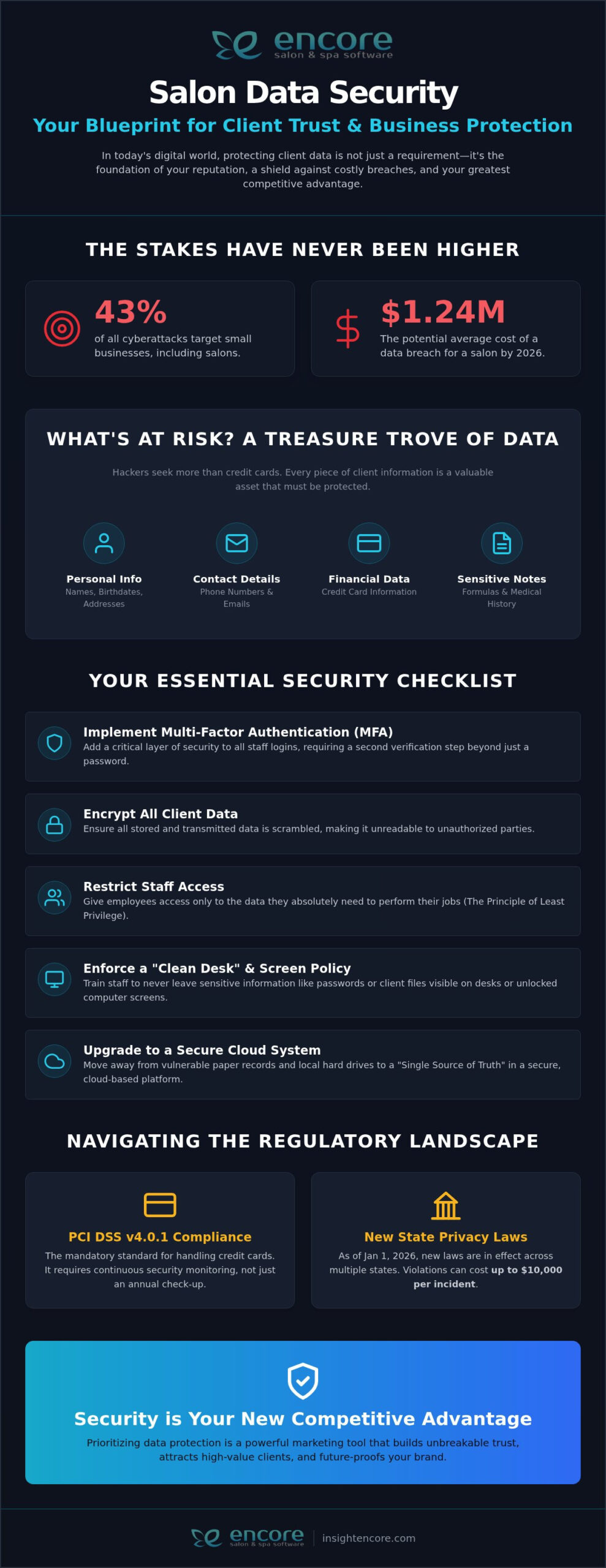
In 2026, the digital landscape has shifted significantly. While big-box retailers used to be the main targets for hackers, cybercriminals have turned their attention toward smaller targets. They’ve found that pci compliance for small business salons is often overlooked, making local businesses the “low-hanging fruit” for small-scale breaches. Protecting your business isn’t just a legal hoop to jump through. It’s a fundamental part of your daily operations that keeps your doors open and your reputation intact.
The Link Between Security and Client Trust
Think about the relationship you have with your guests. They trust you with their hair, their skin, and their personal stories. When they hand over a credit card, they’re also trusting you with their financial livelihood. A data breach at a massive corporation is just a headline. A data breach at a local salon is a personal betrayal that can end a stylist’s career.
The emotional impact of identity theft lingers far longer than a bad haircut. If a client’s information is compromised through your system, that hard-earned trust evaporates instantly. By prioritizing security, you’re positioning yourself as a professional who cares about the “behind-the-scenes” details just as much as the final look. Treating data protection as an extension of your high-quality customer service is a smart way to build long-term loyalty.
Common Salon Payment Scenarios
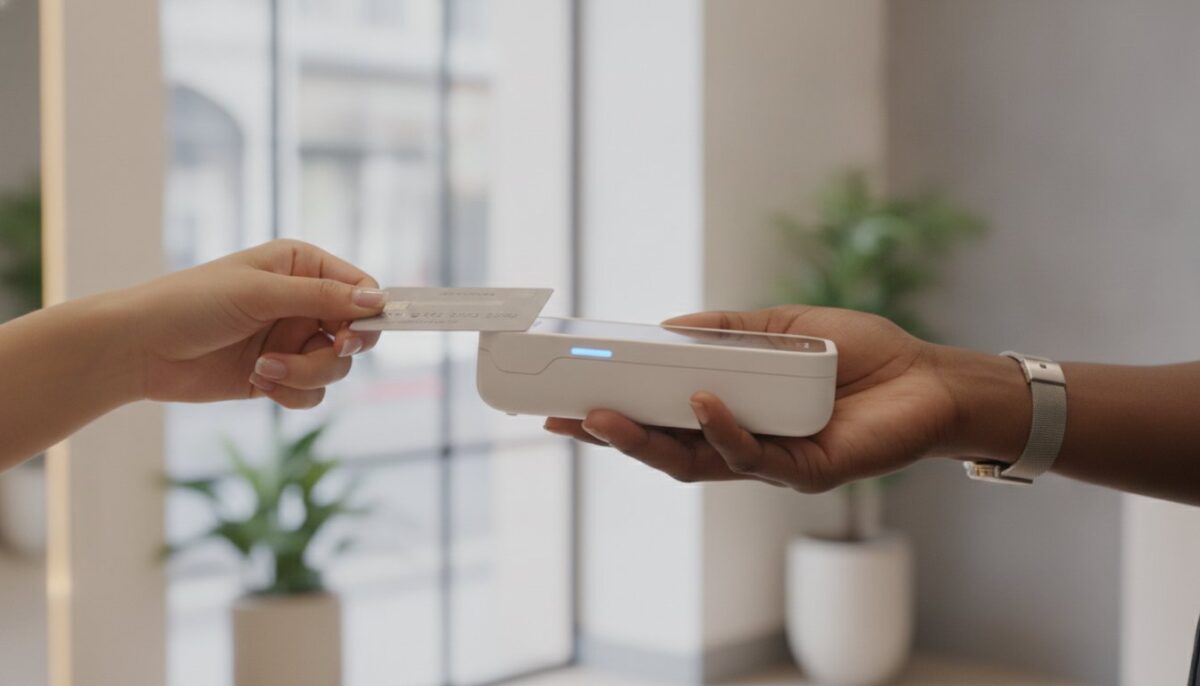
Many owners don’t realize how many touchpoints their data actually has. Whether you’re swiping a card in person or taking a deposit through an online booking module, sensitive data is moving through your network. Each of these scenarios requires specific protections to stay compliant.
Things get even more complex if you have booth renters or independent contractors. If they’re using your Wi-Fi or your software, their security habits directly affect your salon’s compliance profile. One of the biggest risks remains “old school” habits. Writing down a client’s card number on a piece of paper or a sticky note is a major security violation. Digital security starts with moving away from these physical vulnerabilities and using integrated tools like Encore Salon Software to handle the heavy lifting for you.
Understanding the 4 PCI Compliance Levels for Small Businesses
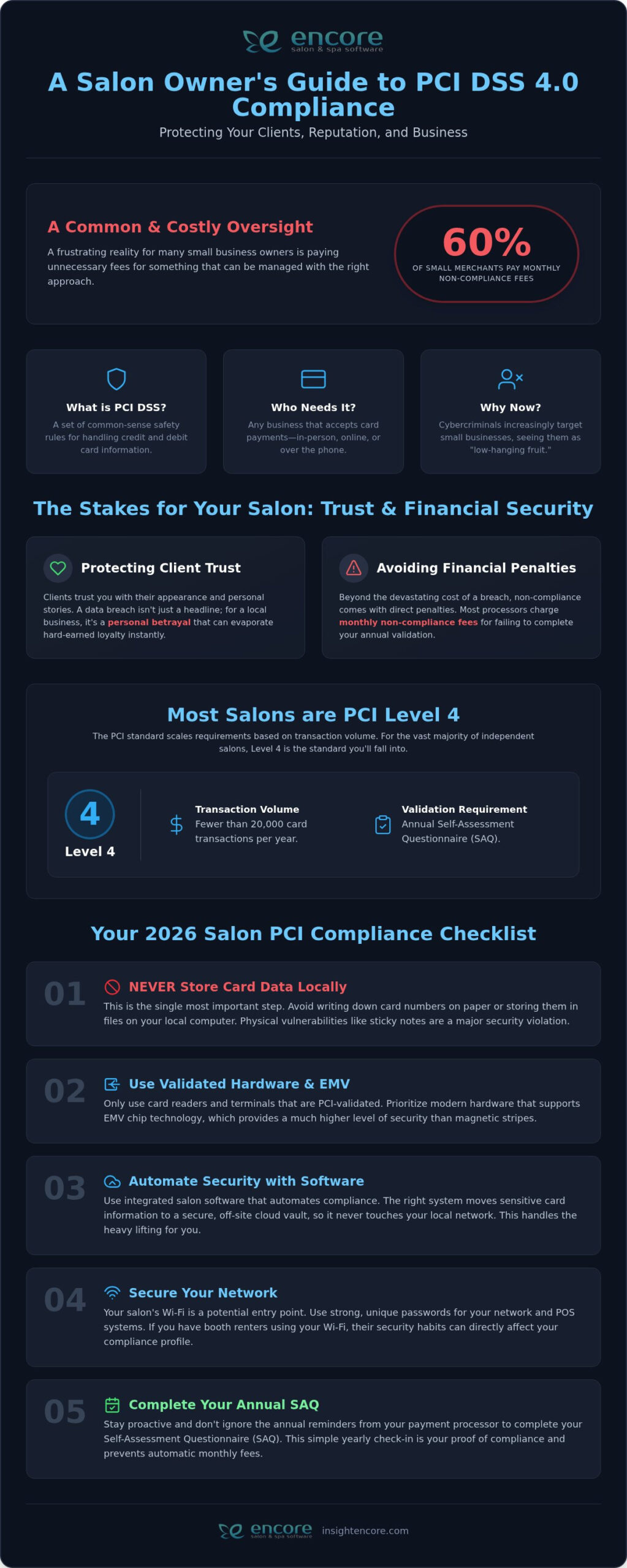
Not every business faces the same level of security scrutiny. The payment card industry divides merchants into four distinct levels based on their annual transaction volume. While it’s tempting to think that being a local shop makes you exempt from these rules, that isn’t the case. Every business that accepts credit cards must validate their compliance. The industry simply scales the proof required so you aren’t stuck with the same audit burden as a global retailer. Understanding pci compliance for small business salons starts with knowing where you fit on this scale.
Level 4: The Small Salon Standard
Level 4 is the standard home for any business processing fewer than 20,000 card transactions per year. For the vast majority of independent salon owners, this is the category where you’ll stay. To maintain your status, you’ll need to complete a yearly self-certification process. This isn’t a physical inspection of your styling stations. Instead, it’s a digital questionnaire where you confirm your security habits and hardware. Your payment processor plays a central role here. They track your volume and send out the annual reminders to stay compliant. Ignoring these requests often leads to automatic monthly non-compliance fees, so it’s best to stay proactive.
The SAQ: Which Version Do You Need?
The Self-Assessment Questionnaire, or SAQ, is the specific document you’ll use to certify your compliance. There are different versions tailored to how you handle client data. SAQ-A is often used when you fully outsource your payments, such as through an online booking portal that handles the transaction entirely off-site. SAQ-B is typically for those using standalone terminals that connect via a phone line or the internet. Choosing the right version is vital because it determines exactly which security questions you have to answer.
Using an integrated system like Encore credit card processing makes this choice much easier. When your point-of-sale software and hardware are designed to work together from the start, they often reduce the scope of your compliance. This means you have fewer technical hurdles to clear and fewer boxes to check on your annual form. It turns a confusing chore into a simple, manageable task. If you’re tired of guessing which forms apply to your business, you can contact our team for a friendly chat about simplifying your setup.
The High Cost of Non-Compliance in the Beauty Industry
Ignoring pci compliance for small business salons isn’t just a security risk; it’s a direct leak in your business bucket. Most payment processors don’t wait for a breach to penalize you. They charge monthly non-compliance fees that typically range from $10 to $100. Over a single year, that is up to $1,200 of your hard-earned money vanishing for no reason other than a missing certificate. This is money that could be spent on better backbar supplies or team education.
If a breach does occur, the situation escalates rapidly. You might be on the hook for forensic audits, which are mandatory investigations that can cost thousands of dollars. You’ll also face card replacement fees for every client affected and potential legal expenses. Many stylists believe they’re too small to be a target, but this is a dangerous misconception. Modern hackers use automated bots that scan the internet for weak spots. These bots don’t care if you have two chairs or twenty; they only care about finding an open door. If you’re found to be at fault during a breach, you could even lose your ability to accept credit cards entirely. That is a death sentence for a modern beauty business.
Fines vs. Fees: What You’ll Actually Pay
It’s vital to distinguish between bank-imposed fees and industry fines. Fees are the monthly charges you pay for simply not being certified. Fines, however, are the massive penalties handed down after a security failure. These can range from $5,000 to $100,000 per month for prolonged periods of non-compliance. This recurring drain on your resources makes it much harder to maintain a healthy business. Learning how to increase salon profit margin starts with plugging these unnecessary financial leaks and protecting what you’ve already built.
The ‘Ghosting’ Effect: Reputation Damage
In 2026, consumers are more sensitive to data privacy than ever before. We live in an “instant cancel” culture where a single security notice can cause your books to empty overnight. If a client receives a letter saying their financial info was compromised at your salon, they won’t just be angry; they’ll feel unsafe. Rebuilding a local brand after a security scandal is incredibly difficult and often more expensive than the fines themselves. Prevention is significantly cheaper than a cure. Taking small steps now to secure pci compliance for small business salons ensures that your reputation for excellence remains untarnished.
Your 2026 Salon PCI Compliance Checklist: 5 Essential Steps
Securing pci compliance for small business salons isn’t about becoming a tech expert. It’s about building a protective bubble around your daily routine. When you follow these five essential steps, you’re doing more than just following rules; you’re protecting your livelihood and the trust of every guest who walks through your door.
- Step 1: Use only PCI-validated hardware and software. Ensure your terminals support EMV chip technology and modern contactless payments.
- Step 2: Never store sensitive card data. This includes CVV codes or full track data on any device, including your salon’s computer or a stylist’s phone. If you don’t have the data, hackers have nothing to steal.
- Step 3: Secure your salon’s Wi-Fi. Modern salons often run on tablets and mobile devices. You must set up a private network for your business operations and a completely separate guest network for your clients.
- Step 4: Train your staff on basic hygiene. Ensure everyone has their own unique login and understands that sharing passwords or texting card details is a major risk.
- Step 5: Complete your annual Self-Assessment Questionnaire (SAQ). This yearly check-in with your payment processor confirms you’re still following best practices and helps you avoid non-compliance fees.
Modern Hardware and the 2026 Standard
In 2026, the old swipe-only machines are more than just slow; they’re a massive liability. Modern terminals now use Point-to-Point Encryption (P2PE) to protect data from the second a card touches the machine. This ensures that sensitive info is unreadable to anyone trying to intercept it. As we move toward more mobile-first and biometric payments, having hardware that supports these secure, modern methods is vital. You can find more details in our guide on Salon client data security best practices.
Staff Training and Human Error
The most common security leak isn’t a high-tech hack. It’s often a busy stylist texting a client’s card info to the front desk to speed up a checkout. This creates a permanent, unencrypted record of sensitive data on multiple devices. Use your next team meeting to establish simple “dos and don’ts”. For example, never write down card numbers and always use your integrated POS for transactions. Training your team doesn’t have to be a lecture. It’s an opportunity to empower them as protectors of the salon’s reputation. If you have booth renters, make sure your software allows for specific access levels to keep their data separate and secure.
Simplifying Compliance with Encore Salon & Spa Software
Managing pci compliance for small business salons doesn’t have to be a solo mission. While the technical requirements of 2026 might seem daunting, the right tools can handle the heavy lifting for you. Encore Salon & Spa Software is designed to act as your reassuring partner, ensuring you meet every security standard without needing a degree in computer science. By using an all-in-one platform, you significantly reduce the scope of your compliance. This means there are fewer areas of your business that require rigorous auditing because the software manages the most sensitive tasks behind the scenes.
One of the most effective ways we protect your business is through our “Vault” approach. When a client pays, their sensitive card information never actually touches your local computer or salon network. Instead, it’s sent directly to a secure, off-site cloud vault using advanced tokenization and encrypted hardware. This ensures that even if your local hardware is compromised, there is no sensitive data for anyone to find. Additionally, our system features automatic updates. You won’t have to worry about manual downloads or checking for patches; we ensure your software always meets the current 2026 standards so you can stay focused on your guests.
Integrated Processing vs. Third-Party Add-ons
When your point-of-sale and your credit card processor speak the same language, security naturally improves. Using third-party add-ons often creates “seams” or gaps in your data flow where information can be vulnerable. By consolidating your tools through Encore features, you reduce the number of vendors you have to manage. This not only closes potential security holes but also simplifies your annual paperwork. One integrated system means one clear path to safety and a much lighter administrative load for you.
Peace of Mind for Every Niche
Every beauty and wellness business has unique needs. For tattoo studios and high-end spas, where client privacy is paramount, our software provides specialized modules that keep records secure and organized. We also offer dedicated support for independent booth renters, helping them maintain their own pci compliance for small business salons without complicating the salon’s overall network. Our goal is simple: you focus on the art of your craft, and we’ll focus on the security of your business. You’ve built a brand your clients love; let’s work together to keep it protected.
Secure Your Salon’s Future and Client Trust
Protecting your business from data breaches isn’t just a legal requirement; it’s a promise to your clients that their financial safety is as important as their style. By following the 2026 checklist and moving away from outdated hardware, you’re building a foundation of trust that keeps guests coming back. You don’t have to face these technical hurdles alone. Modern pci compliance for small business salons is much simpler when you have a partner that handles the encryption and updates for you.
Since 1991, we’ve focused on providing reliable tools for the beauty industry. Our integrated POS and credit card processing are built to meet the highest security standards, ensuring sensitive data stays off your local network. You’ll also have access to dedicated human support to guide you through every step of the setup process.
You’ve worked hard to build your brand. Let’s make sure it’s protected so you can get back to what you love doing most.
Frequently Asked Questions
Is PCI compliance a law or just a guideline?
PCI compliance is a mandatory contractual requirement rather than a federal law. Major credit card brands like Visa and Mastercard require every merchant who accepts their cards to follow these security rules. If you don’t comply, you aren’t just ignoring a suggestion; you are breaching your merchant agreement. This can lead to heavy monthly penalties or the total loss of your ability to process card payments in 2026.
How much does it cost for a small salon to become PCI compliant?
The cost of pci compliance for small business salons depends on your processor and specific hardware. Many banks charge a monthly non-compliance fee if you haven’t certified, which typically ranges from $19.95 to $39.95. You might also pay for annual certification or updated EMV hardware. Choosing an integrated software partner often removes these extra costs by including security features as part of your standard monthly service.
Do I still need to be compliant if I only use a mobile card reader?
Yes, you must remain compliant even if you only use a mobile reader or a tablet based system. Any device that accepts, transmits, or stores cardholder data falls under these security rules. Using a mobile reader doesn’t exempt you from the annual Self-Assessment Questionnaire. It’s vital to ensure your mobile hardware is PCI-validated to protect your business and your clients from potential data theft or unencrypted leaks.
What happens if my salon has a data breach but I am PCI compliant?
If a breach occurs while you are fully compliant, your liability and potential fines are significantly lower. Being compliant proves that you took the necessary steps to protect your data according to industry standards. While you might still face a forensic audit, you won’t be penalized for negligence. Think of it as a solid insurance policy; it provides your best defense against the devastating financial costs of a security incident.
Does PCI compliance cover client contact info like phone numbers and emails?
PCI compliance specifically focuses on protecting cardholder data, such as card numbers and CVV codes. It doesn’t cover personal information like phone numbers or email addresses. However, protecting client contact info is still essential for maintaining trust and professional reputation. While PCI doesn’t mandate its protection, other privacy standards require that you handle all client data with the same level of care you give to their credit cards.
How often do I need to renew my PCI certification?
You are required to renew your PCI certification every year. For most small salons, this involves completing the Self-Assessment Questionnaire to confirm your security practices are up to date. It isn’t a “one and done” task because security threats evolve constantly. Staying on top of this annual requirement is the best way to avoid surprise non-compliance fees from your payment processor throughout the year and keep your business safe.
Can my salon be fined even if we haven’t had a data breach?
Yes, your salon can be fined even if you have never experienced a security breach. Most payment processors charge automatic monthly fees to any merchant who hasn’t validated their pci compliance for small business salons. These are essentially penalties for the risk you represent to the network. By completing your annual certification, you stop these unnecessary financial leaks and prove to your bank that your business follows the current security standards.
Is there a difference between PCI compliance and HIPAA for spas?
There is a major difference between these two standards. PCI compliance focuses entirely on the security of credit card payments and financial data. HIPAA deals with the protection of sensitive health information. If your spa offers medical treatments or keeps detailed health records, you may need to follow both sets of rules. Using a secure management system helps you keep all types of sensitive client data organized and protected without the technical headache. For spas managing health intake forms alongside payment data, transitioning to client waiver forms for spas digital is an important step toward meeting both PCI and HIPAA requirements in a single streamlined workflow.
Disclaimer
This article is general in nature and may contain errors, please verify all claims with your sales rep