
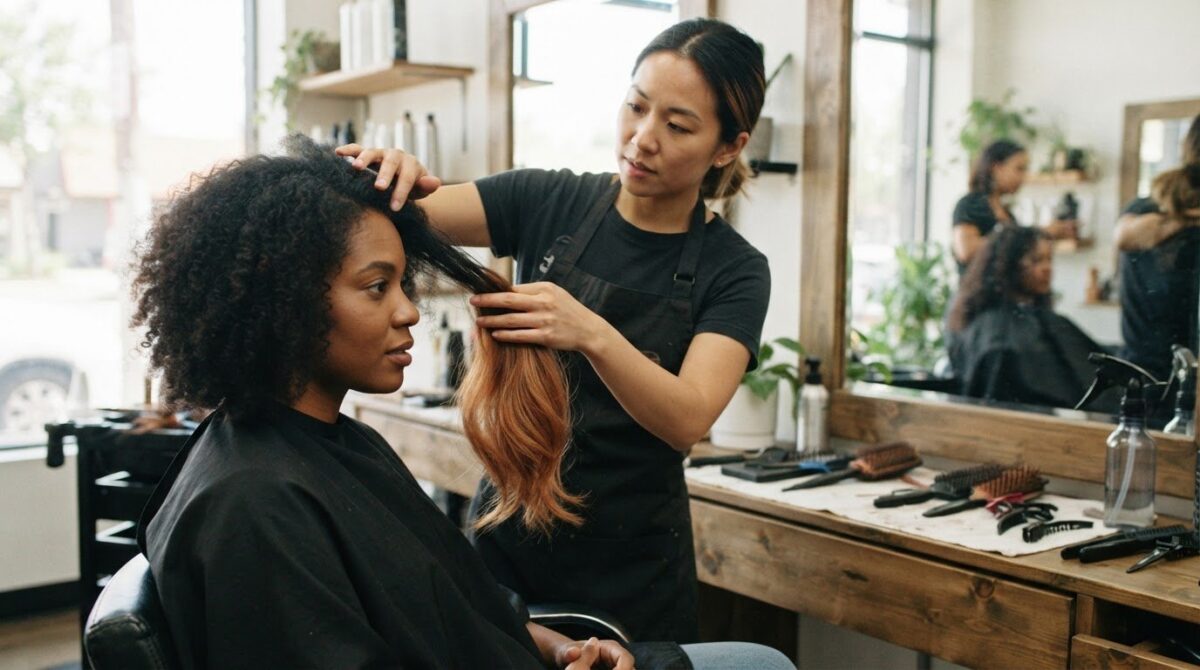
Clear expectations are part of good service, not an extra. The best salon client communication practices help clients know what to expect and help professionals keep conversations respectful, consistent, and focused. A thoughtful consultation can prevent misunderstandings before an appointment begins.
Clients want to feel heard, while you also need to protect your time and keep the day running smoothly. This guide covers how to discuss service expectations, explain policies and response times, manage appointment messages, set professional boundaries, and listen closely. Use these practical approaches to make every interaction clearer, from the first booking message to the final follow-up, without making communication feel scripted or impersonal.
Key Takeaways
- Use consultations to clarify the client’s goals, upkeep preferences, service steps, and realistic results before work begins.
- Set clear communication policies so clients know which channels to use and when to expect a reply.
- Organize appointment confirmations, reminders, and follow-ups to keep clients informed without overwhelming them with messages.
- Use a dedicated business number and consistent boundaries to keep client communication professional and manageable.
- Listen to clients’ words and observe their cues so you can adjust the conversation and help them feel comfortable.
1. Consultations and setting realistic service expectations
A clear consultation turns a client’s idea into a workable service plan. It’s also one of the salon client communication best practices that helps prevent misunderstandings before an appointment. Ask what the client wants, how they style their hair, and how much upkeep suits their routine. Then explain the steps, likely timing, and what the result can involve. A salon service may last from 30 to 90 minutes, while balayage, color correction, or extension installation can take several hours. Discuss the expected appointment length before booking, especially when the client has a special event coming up.
Set a specific goal before starting. If a client is unsure about a color or style, compare photographs of finished looks or color swatches. Ask what they like in each example, then explain which details may differ with their hair. A client working toward a highlighted look may need several services to achieve the intended result. Describe the stages plainly rather than making one appointment sound like a promise of the final look. Before agreeing on a plan, confirm that the client understands it.
Ask about upkeep before recommending a change. Find out how often the client is willing to style, maintain, or refresh the look at home. Their answer helps shape the service discussion and makes expectations realistic. For example, a client who wants a low-maintenance result can discuss options that suit their routine. Ask what they liked or disliked about previous services, then use those details to guide your recommendation.
For pet grooming, assess the animal rather than assuming every pet has the same needs. Ask about health, temperament, grooming history, injuries, and reactions to tools. Discuss visible concerns, such as matting, skin sensitivities, or signs of stress, before grooming begins. This conversation helps the groomer explain the approach and decide whether the pet needs breaks or a different plan. If the animal becomes stressed, explain what happened and how the team responded.
Nonverbal cues add context to a client’s words. Notice posture, facial expressions, and whether the client seems comfortable with close contact. You can discreetly mirror their posture to show attention, without forcing eye contact. If someone leans away or becomes quiet, pause and give them room to respond. Treat these observations as cues, not conclusions, and ask a simple question to clarify what the client needs.
Explain each step before treatment starts, especially if the process may feel unfamiliar. Ask permission before beginning treatment in intimate areas, and invite the client to speak up if they feel uncomfortable. Before applying a product, perform a patch test. During processing or dryer time, check in while respecting the client’s preference for quiet.
Finish the consultation by repeating the agreed plan: the service, its stages, timing, and relevant aftercare. At the end, explain which products you used and offer practical styling or home-care tips. Record client interests and relevant conversation notes in the salon software, including anything that caused discomfort. These salon client communication best practices give future visits a useful starting point and help keep each interaction personal.
2. Salon communication policies and response times
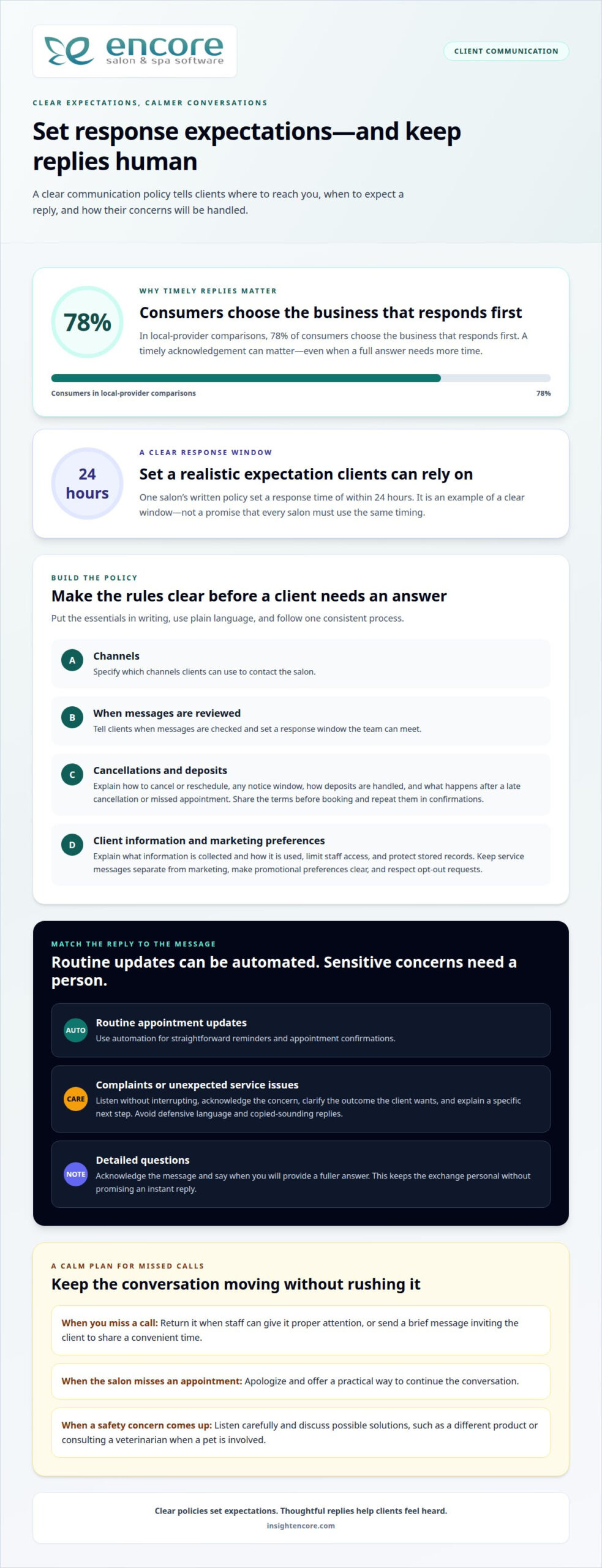
A written communication policy helps salon owners set expectations before a client needs an answer. Choose the channels clients can use, explain when messages are reviewed, and set a realistic response window. Marchelle’s previous salon set a policy to respond within 24 hours. That example gives clients a clear expectation, while staff can follow one consistent process instead of making individual promises.
Respond to concerns by listening and offering a specific next step. Let the client explain what happened without interrupting. Acknowledge the concern, clarify the outcome they want, and explain what you can do next. For example, if a client raises a safety concern about a product, listen carefully and discuss possible solutions, such as a different product or consulting a veterinarian when a pet is involved. Avoid defensive language and replies that sound copied and pasted.
Automation can organize routine updates, but sensitive concerns benefit from a human response. A reminder may confirm an appointment, while a staff member should handle a complaint or an unexpected service issue. If a client asks a detailed question, acknowledge the message and explain when you’ll provide a fuller answer. This keeps the customer experience personal without suggesting that beauty professionals can respond instantly at every moment. In local-provider comparisons, 78% of consumers choose the business that responds first, so a timely acknowledgement matters.
Have a clear plan for missed calls. Return the call when staff can give it proper attention, or send a brief message inviting the client to share a convenient time. If the salon missed an appointment, apologize and offer a practical way to continue the conversation. A calm, direct response reduces confusion and helps the client feel heard.
For U.S. client records, treat personal details as confidential. Explain what information you collect and how you use it, limit staff access, and protect stored records. Marketing requirements can depend on state law and the message channel, so make promotional preferences clear and respect opt-out requests. Keep service communications separate from marketing so clients understand why they received each message.
A cancellation and deposit policy should explain how clients cancel or reschedule, any notice window, how deposits are handled, and what happens after a late cancellation or missed appointment. State the terms before booking and repeat them in confirmations, using plain language. Apply the policy consistently, and explain exceptions directly rather than leaving clients to interpret them.
Salon owners can turn these practices into a reliable routine by assigning message review, documenting unresolved concerns, and using consistent wording. A focused salon communication workflow can help keep client conversations organized as the day gets busy.
3. Appointment confirmations, reminders, and follow-ups
Make confirmations easy to remember and manage. Include the appointment date, start time, service, and salon contact details. Explain how to change the booking in the same message. A clear confirmation also gives clients a chance to spot a scheduling mistake before they arrive.
Salon software can send appointment reminders, booking notifications, and follow-up messages. These tools keep appointment details and client updates together, supporting a more convenient booking process. Choose a system that fits how your salon handles bookings, then review its message templates so automated notes sound clear and welcoming.
Reminders should help, not crowd a client’s inbox. Set a consistent schedule for confirmations and reminders, and avoid sending too many texts, emails, or notifications. Make each message useful: confirm the service, share relevant arrival information, and provide a straightforward way to respond. A short reminder can help clients remember appointments without creating extra conversations.
Clients may request appointments outside your available work schedule. Set clear booking hours and explain how you handle last-minute requests instead of accepting a time you can’t reliably keep. For example, offer the next suitable opening or invite the client to join a waitlist. A realistic answer protects the schedule and gives the client a concrete option.
If a client cancels, notify the next waitlist client when an opening becomes available. One salon software workflow offers an available appointment to the next waitlist client after 15 minutes. When the salon must cancel, contact the client and reschedule as early as possible. Clear updates help clients adjust their plans and prevent confusion about whether an appointment is still booked.
Follow up after the visit through the client’s preferred channel, such as email, text, or a call. A brief message can thank them, invite feedback, or ask whether they have questions about the service. Keep post-appointment messages relevant to the visit. For example, share a care tip related to the service instead of sending a broad message that feels unrelated.
Before sending marketing texts or emails, explain what clients will receive and ask for permission. Make it easy to stop promotional messages, and honor opt-out requests promptly. Keep appointment updates separate from promotional campaigns so clients can tell whether a message is about a booking or an offer.
Give each message a clear purpose and a human review where personal attention matters. A minute spent checking the recipient, appointment details, and tone can prevent an avoidable mix-up. An organized appointment messaging workflow can help keep confirmations, reminders, and follow-ups coordinated.
4. Professional boundaries and business phone numbers
A dedicated business phone number helps separate client conversations from personal time. Share it on booking confirmations, salon profiles, and printed appointment cards, then use it consistently for service messages. If a client texts your personal number about a late arrival, reply through the business channel and remind them where to send future appointment questions. One clear route makes communication easier to manage.
Tell clients when the salon checks messages and when they can expect a reply. For example, a voicemail greeting can say, “Please leave your name, appointment date, and reason for calling. We’ll respond during business hours.” Don’t promise an immediate answer if staff are serving clients. Explain in your policy when messages received outside business hours will be reviewed.
Boundaries also protect the workday. Set a time to stop checking routine texts, and use a consistent after-hours reply explaining when messages will be reviewed. For an urgent booking change, direct clients to the appropriate business channel rather than inviting them to contact a stylist privately. Salon software can organize appointment conversations, while clear staff practices keep personal numbers from becoming the default inbox.
A boundary can still feel respectful. If a client asks for a response outside the salon’s stated hours, acknowledge the request at the next review and address their specific need. For example, confirm whether they want to change an upcoming appointment before suggesting another opening. A steady process helps clients feel heard without requiring beauty professionals to be available at all times.
Respect clients’ personal boundaries during in-person conversations, too. Ask before discussing a sensitive topic, and don’t press when someone gives a brief answer or changes the subject. If a client seems uncomfortable with close contact, pause and ask what would help them feel at ease. Record relevant preferences in the client file so another staff member can approach the next visit thoughtfully.
Keep business calls discreet and focused. Before leaving a voicemail, make sure the number belongs to the client, and avoid sharing private service details in a message others might hear. If the client calls while you’re with someone else, return the call when you can give it proper attention. A clear greeting, brief explanation, and specific next step keep the conversation professional.
Boundaries support a healthy business as well as considerate service. A salon owner who protects time for appointments, administration, and rest can make decisions with greater focus, including decisions that affect revenue. Set a consistent approach to personal contact, missed calls, and message review, then explain it through the channels clients already use. Consistency matters more than a complicated set of rules.
5. Active listening and reading nonverbal cues
Give each client your attention before offering a recommendation. Put your phone away, pause other tasks, and let the client finish explaining what they want. Listen to their words, tone, and body language, then reflect the main point: “You want a softer shape, but don’t want extra styling each morning.” This gives the client a chance to correct any misunderstanding before the service begins.
Ask one focused follow-up question at a time. If a client says their last haircut felt too short, ask which area concerned them and what they’d prefer today. Don’t jump straight to a solution. Once you understand the concern, explain suitable options and agree on a clear direction with the client.
Notice nonverbal signals without treating them as certain proof. A client who leans away, goes quiet, or looks tense may want more space or a slower explanation. Pause and ask, “Would you like me to explain this step before we continue?” Avoid forced eye contact. Comfortable eye contact can show engagement, while still allowing the client to look away naturally.
Some clients enjoy conversation during a beauty service; others prefer quiet. Let the client set the pace instead of filling every pause. If they give short answers or return to a book, allow them to relax. If they start a conversation, respond naturally and avoid sensitive topics such as politics, religion, or money.
Check in during longer appointments, including processing or dryer time. A simple “Are you comfortable?” gives the client an easy opening to mention heat, positioning, or another concern. Respect their answer. If they ask for quiet, give them time alone; if they raise an issue, pause and address it before continuing.
Good listening also means remembering relevant preferences. After a conversation, record useful details in the client’s file, such as their preferred level of conversation or a topic that made them uncomfortable. Keep notes professional and focused on future service. At the next visit, use the information thoughtfully rather than repeating personal questions. Consistent attention can strengthen relationships and encourage loyalty over time.
Staff can practise these skills through role-play at team meetings. One person can act as a client who changes their request while the stylist practises listening, summarizing, and confirming the plan. Then switch roles and discuss which responses felt attentive. These practical exercises help beauty professionals handle real conversations with more confidence and create a positive experience without relying on a script.
Encore Salon and Spa Software: Client Management System
Encore Salon & Spa Software’s Client Management System helps salons organize client relationships alongside daily operations. With appointment details, service history, and client preferences easier to manage, staff can communicate more consistently and personally. It’s a practical next step when messages and client information are scattered across separate processes.
Choose Encore Salon Software or Encore Spa Software for a salon or spa, or Chair/Booth Renter Software for an independent rental business. These options connect communication needs with day-to-day operations and help keep client management organized.
Contact Encore Salon & Spa Software to discuss your salon’s client management needs.
Make clearer communication part of your salon’s next step
Strong salon client communication best practices grow from habits your team can sustain. Choose one improvement to put into practice, then review its effect on the client experience. A consistent approach makes expectations easier to understand and helps staff feel more prepared for each interaction. Build on what works and adjust your process as your salon’s needs change.
When you’re ready to bring client management into a more organized workflow, Encore Salon and Spa Software offers Encore Salon Software, Encore Spa Software, and Chair/Booth Renter Software. Choose the option that fits your business and the way you serve clients.
Every clear interaction is a step toward stronger client relationships. Start with the next conversation and keep improving from there.
Frequently Asked Questions
What are best practices for communicating with salon clients before, during, and after an appointment?
Keep each conversation focused on the client’s next decision. Before the visit, clarify the service request and invite them to share relevant preferences. During the appointment, explain changes before proceeding and pause if the client raises a concern. Afterward, share care guidance related to the service they received. For example, a client who chose a new styling technique can leave knowing what to try at home and when to ask for help.
How should salons handle appointment confirmations, reminders, cancellations, and no-shows?
Use a consistent process that tells clients what to do next. Confirm the booking details and provide a simple way to report a change. If a cancellation opens a slot, contact someone on the waitlist with the available service and time. For a no-show, follow the salon’s published policy, document the outcome, and keep the message factual. A brief, respectful note can invite the client to arrange another visit.
How can salon staff consult clients about their goals, hair or skin history, and service expectations?
Start with open questions, then clarify details that could affect the service plan. Ask what the client wants to change, what they want to keep, and which past results they liked or disliked. For hair or skin services, invite them to mention relevant product reactions or prior treatments. Summarize the key details back to them so both client and professional can correct misunderstandings before choosing an approach.
How should salons communicate service options, timing, and pricing before starting?
Describe the recommended service and practical alternatives, then explain what each option involves. Give the expected duration and price before beginning, and clarify what could change the total, such as additional work or a different service choice. If a client’s request requires a longer appointment than planned, for example, pause to discuss the revised plan and cost before proceeding. Clear agreement helps prevent surprises at checkout.
What are effective ways for salons to handle client complaints and service corrections?
Let the client explain the issue, then restate what you heard to confirm the concern. Ask what outcome they want and review the service details together. If a correction is appropriate, explain the proposed steps and relevant timing before arranging it. For example, a client unhappy with how a style sits can show you the area that feels wrong. Keep the discussion calm, specific, and focused on a practical resolution.
How should salons follow up after appointments and recommend maintenance or rebooking?
Make follow-up useful to that client, not a generic request to book again. Share a relevant maintenance suggestion and explain when another visit may help maintain the result. Invite the client to reply with questions or to plan ahead. For example, after a shape change, ask how the style feels at home before suggesting a suitable next service. Keep recommendations relevant to their goals and preferences.
Disclaimer
This article is general in nature and may contain errors, please verify all claims with your sales rep