

You spend three hours on a custom neo-traditional design, prep your station, and decline a walk-in, only to have your 2:00 PM client ghost you without a word. It’s more than just a missed connection. It’s a direct hit to your livelihood and a gap in your schedule that you can’t get back. Every artist understands the frustration of unpaid labor and the awkwardness of telling a regular they’ve lost their deposit. Implementing a clear tattoo appointment no-show policy isn’t about being mean. It’s about respecting your craft and ensuring your studio stays profitable.
We know you’d rather be tattooing than chasing down deposits or sending manual “where are you” texts. That’s why we’ve built this guide to help you create a professional framework that protects your time and your revenue. You’ll learn how to set up a consistent deposit system and use automated tools to handle reminders so you never have to play the role of the debt collector. We’re going to walk through the essential elements of a 2026-ready policy and the simple tech that makes enforcement feel like a breeze. Let’s turn those empty chairs into a reliable income stream once and for all.
Key Takeaways
- Calculate the hidden costs of missed sessions, including the invisible labor of custom design and station setup.
- Draft a professional tattoo appointment no-show policy that clearly defines cancellation windows and late arrival consequences.
- Secure your income by using integrated credit card processing to collect non-refundable deposits during the booking process.
- Reduce flake rates through automated SMS and email reminder sequences that keep your studio top-of-mind for clients.
- Master re-engagement strategies to fill last-minute gaps and turn a missed appointment into a future booking.
The True Cost of a Tattoo No-Show in 2026
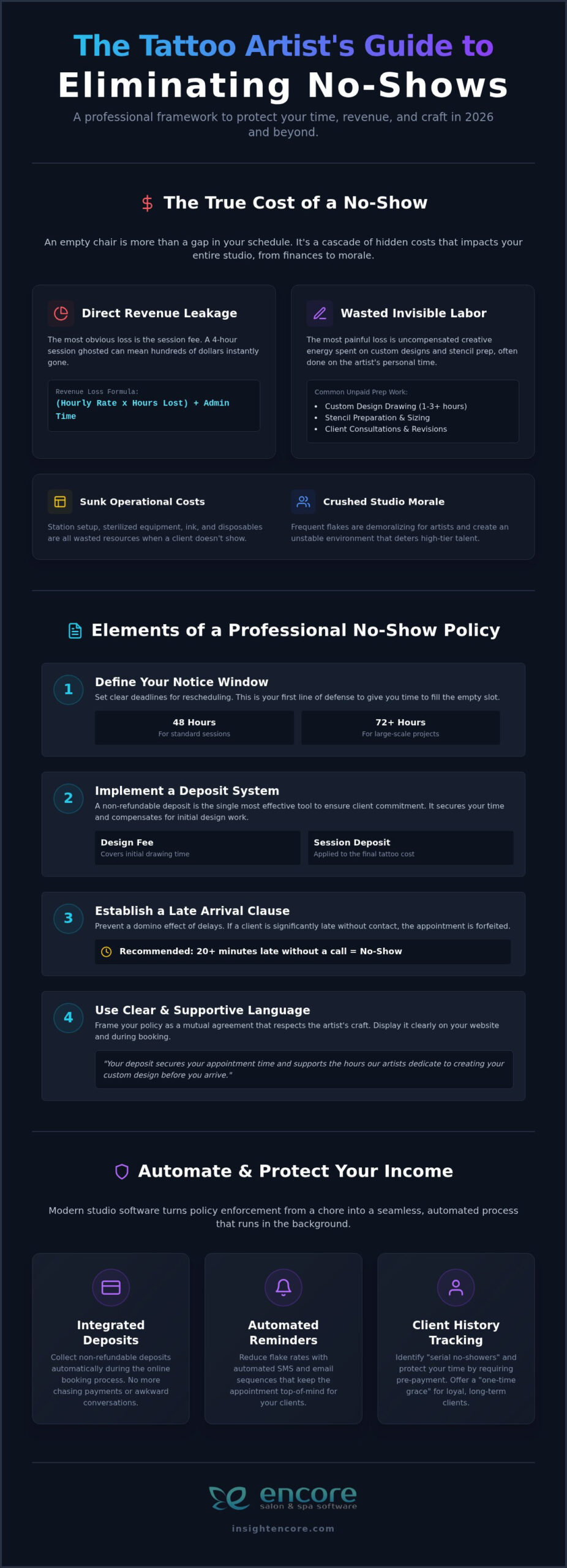
When a client ghosts a four hour session, the financial sting goes far beyond a few hundred dollars in lost shop time. You’ve already invested hours into that appointment before the client even walks through the door. There’s the station setup, the sterilized equipment, and the specialized lighting that’s been running in anticipation. An empty chair represents a total loss of overhead recovery. It’s a gap in your day that could’ve been filled by a dedicated collector who respects your craft.
Beyond the immediate revenue dip, frequent flakes crush studio morale. It’s demoralizing for artists to sit idle while surrounded by the buzz of other machines. If you’re looking to scale your business or bring on new residents, consistency is your best recruitment tool. High tier talent won’t stay in a shop where their income is unpredictable. Establishing a firm tattoo appointment no-show policy is a professional necessity. Within the Legal Framework for Tattoo Policies, you have the authority to set boundaries that protect your livelihood and your team’s passion.
Calculating Your Studio’s Revenue Leakage
To stop the bleed, you first have to measure it. Many shop owners find it helpful to use a simple formula: (Hourly Rate x Hours Lost) + Admin Time. Don’t forget to account for the 15 to 30 minutes spent chasing the client via phone or DM. When you look at the total monthly loss, the numbers are often eye opening. You can easily spot “Serial No-Showers” by checking history logs in your Client Management System. This data allows you to set a “Risk Threshold,” requiring higher deposits or even pre-payment for clients with a history of disappearing.
The Prep-Time Trap: Why Drawing Time Must Be Protected
The most painful part of a no-show is the “invisible labor.” Artists often spend their evenings drawing custom pieces or preparing complex stencils. This creative energy is finite. When that work goes uncompensated, it leads to burnout and resentment. To combat this, many studios now separate their deposit into a “Design Fee” and a “Session Deposit.” By using Encore Tattoo Studio Software, you can track exactly how much time is spent on client files. This ensures your artists feel valued for every minute of work, whether the needle hits the skin or not.
Elements of a Professional Tattoo No-Show Policy
A solid tattoo appointment no-show policy is the backbone of a stress-free studio. It sets clear expectations before the needle ever touches the skin. Your policy should act as a mutual agreement that respects both your time and the client’s commitment. Without this structure, you’re left guessing how to handle cancellations, which often leads to inconsistent enforcement and lost revenue. Clear rules remove the “gray areas” that cause awkward conversations at the front desk.
Defining your “Notice Window” is your first line of defense. For standard sessions, a 48 hour window is often sufficient to find a replacement from your waitlist. However, for large scale projects like sleeves or backpieces, a 72 hour window is more realistic. This gives you enough time to offer the slot to another dedicated collector. You should also include a “Late Arrival” clause. If a client is more than 20 minutes late without a phone call, the session should be considered a no-show. This prevents their delay from causing a domino effect that ruins the rest of your day. These boundaries align with professional tattoo industry standards for safety and business ethics.
Drafting Your Policy Template
Use direct, supportive language in your template. Avoid cold, legalistic phrasing. Instead, use sentences like, “Your deposit secures your time and supports the hours spent on your custom design.” This reminds the client that your work starts long before they arrive. Display this policy prominently on your website and within your tattoo studio software booking portal. When clients see the rules during the booking process, they’re much more likely to take their commitment seriously. You can see how Encore helps you automate these agreements during every new booking.
The ‘One-Time Grace’ Rule for VIP Clients
Loyalty is a two way street. If a long term regular who has never missed a session has a genuine emergency, a one-time grace period can strengthen that relationship. Use the “Notes” feature in your CRM to track these instances. It’s helpful to see at a glance if a client is habitually “forgetful” or if they’ve had a rare stroke of bad luck. If a client ghosts twice, it’s time to move them to a “Prepayment Only” status. This protects your income while still giving them a path to get their work finished. Professionalism doesn’t mean being rigid; it means being fair while protecting your business.
Financial Safeguards: Deposits and Integrated Payments
A deposit is more than just a down payment. It is a psychological anchor that creates “skin in the game” for the client. When someone has already committed a portion of the session cost, the likelihood of them simply forgetting or deciding to skip out drops significantly. This financial commitment shifts the dynamic from a casual inquiry to a professional contract. By establishing a firm tattoo appointment no-show policy backed by a deposit, you’re teaching your clients to value your time as much as you do.
Choosing between a percentage based deposit and a flat fee often depends on the project scale. For small flash pieces, a flat fee is simple and easy to communicate. For multi session sleeves or backpieces, a percentage helps cover the extensive prep work and drawing time. Regardless of the amount, the process must be frictionless. If a client has to call the shop or send a separate e-transfer, they might stall. Using integrated credit card processing allows you to collect these funds instantly during the booking flow, which is a key part of creating a fair cancellation policy that works for everyone. This removes the “I’ll pay it later” hurdle that often leads to empty chairs.
Comparing Payment Models for Tattoo Artists
Different projects require different levels of security. Here is how the most common models stack up for modern studios:
- Non-refundable Deposit: Best for custom work. It covers drawing time and ensures the artist is paid for prep even if the client ghosts.
- Full Prepayment: Ideal for guest spots or high demand flash events where every minute of the day is accounted for.
- Card on File: Great for long term regulars. It offers convenience while still allowing you to charge a fee if they miss their window.
Managing Finances for Independent Booth Renters
In many studios, the line between shop policy and artist policy gets blurry. For chair and booth renters, protecting personal income is vital because they often operate as their own micro businesses. You need a system that can split payments automatically, sending the deposit directly to the artist while keeping the shop’s cut separate. This setup ensures that if a no-show occurs, the person who did the drawing work is the one who keeps the safeguard. Managing this through a centralized system also ensures PCI compliance. It keeps sensitive client data secure without the artist having to manage complex legal requirements themselves, allowing them to focus entirely on the art.
Communication Strategy: Reminders and Enforcement
Clear communication bridges the gap between a written tattoo appointment no-show policy and actual client behavior. It isn’t enough to have a policy buried on a website; you need to actively guide your clients through the booking process. When you stay top-of-mind, you significantly reduce the chances of a client simply forgetting their commitment. Effective communication turns a cold set of rules into a supportive partnership that respects everyone’s time.
A successful strategy relies on a 3-touch reminder sequence. First, send a confirmation immediately upon booking to provide a digital paper trail. Second, a 48 hour reminder serves as the final window for penalty free changes. Finally, a day-of text builds excitement and reminds them of essential prep steps. Text messages are the gold standard for artists because they offer much higher open rates compared to email. A quick SMS feels like a message from a professional partner, making it much harder for a client to ignore or overlook.
Automating the Reminder Workflow
You shouldn’t have to spend your lunch break sending manual “where are you” texts. Setting up automated triggers in your Encore software takes the manual labor out of the equation. The Confirmation Loop is the key to 2026 scheduling. You can even personalize these messages with the artist’s name and specific instructions like “Remember to hydrate and eat a full meal before you arrive!” This keeps the interaction feeling human and helpful rather than automated and cold.
Scripts for Policy Enforcement
Enforcement doesn’t have to feel corporate or mean. If a client misses their slot, lead with empathy while standing your ground. They might have had a genuine crisis, and how you handle the follow up determines if they’ll ever come back. Use a script like: “Hey [Name], we missed you at the studio today! We hope everything is alright on your end. Since we weren’t able to fill your spot on short notice, your deposit has been applied as a no-show fee per our policy. We’re still excited about your piece, so let us know when you’d like to look at the calendar again.”
If a client asks “Why was I charged?”, be transparent. You might say: “I totally hear you, and I’m sorry the timing didn’t work out. To be fair to our artists, the deposit covers the custom drawing time and the dedicated block of shop time that was reserved just for you. We’d love to get you back on the books; would you like to see what [Artist] has available next month?” This “Soft Pivot” technique acknowledges the loss while immediately offering a re-booking opportunity. It preserves the relationship without sacrificing your studio’s revenue.
Winning Back No-Shows: Re-Engagement Tactics
A missed appointment shouldn’t be the end of your relationship with a client. While your tattoo appointment no-show policy protects your immediate income, re-engagement tactics help you recover the long term value of that client. Life happens. Sometimes a “We Missed You” message is all it takes to turn a forgetful mistake into a lifelong collector. By approaching these situations with empathy instead of anger, you keep the door open for future bookings while still upholding your studio’s professional standards.
Marketing automation is your best friend when an empty chair appears. If a cancellation happens at the last minute, you can blast a “Flash Slot Available” message to your most active clients. This turns a potential revenue gap into a surprise opportunity for someone else. Over time, you’ll start to see trends in your no-show data. You might find that specific days or late afternoon slots have higher flake rates. Armed with this knowledge, you can refine your tattoo appointment no-show policy by requiring higher deposits for those high risk times or sending extra reminders to ensure your day stays on track.
Automated Win-Back Campaigns
Setting up a win-back trigger is a smart move for any growing studio. A few days after a missed session, your system can automatically send a polite nudge with a rebooking incentive. You might suggest they purchase Gift Cards to prepay for their future work, which secures the revenue upfront. This keeps the momentum going without you having to lift a finger. For more tips on scaling your operations, check out our guide on mastering your business with Encore Salon Software.
Protecting Your Bottom Line for the Long Term
Consistency is the secret to a profitable shop. Use your Encore reports to track the ROI of your policy enforcement and see exactly how much revenue you’ve saved. You’ll likely find that a firm policy actually increases client respect and reduces overall flake rates over time. Don’t be afraid to adjust your deposit amounts based on seasonal demand. If you’re fully booked three months out during the summer, a higher deposit ensures only the most committed clients take those prime spots. Scaling your studio is about plugging these small revenue leaks so you can focus on the art you love.
Secure Your Studio’s Future and Focus on Your Art
Protecting your time isn’t just about saving money. It’s about preserving the creative energy you need to produce your best work. By implementing a firm tattoo appointment no-show policy, you set a professional standard that clients will respect. We’ve covered how to quantify the true cost of missed sessions and how to use automated reminders to keep your schedule full. These tools act as your silent partner, handling the logistics while you focus on the needle. You deserve a studio environment where your prep work is valued and your income is predictable.
We’ve been a trusted industry partner since 1991, providing specialized management tools and integrated payments designed for the unique needs of tattoo artists. You don’t have to manage the stress of empty chairs or awkward deposit conversations alone. With the right systems in place, you can eliminate revenue leaks and build a reliable income stream that supports your long term passion. It’s time to take control of your calendar and get back to the art you love.
Frequently Asked Questions
Is it legal for a tattoo artist to keep a non-refundable deposit?
Yes, it’s generally legal as long as you clearly outline the terms in a written agreement that the client signs or clicks to accept. This payment serves as compensation for the artist’s preparation and the reserved time that can’t be easily rebooked. Ensure your tattoo appointment no-show policy is visible on your website and booking portal to avoid confusion. Clear communication at the start prevents most disputes before they happen.
What is a standard deposit amount for a tattoo appointment?
Standard deposits vary based on the complexity of the piece, but they usually range from a small flat fee for flash to a percentage of the total for larger custom work. This amount should be enough to cover your drawing time and setup costs if the client doesn’t show. Some artists use the deposit as a design fee that isn’t applied to the tattoo price, while others deduct it from the final session cost.
How do I ask a regular client for a deposit without it being awkward?
Frame the deposit as a standard studio requirement that applies to everyone, regardless of how long they’ve been coming to you. You can say, “We’ve updated our booking system to keep our schedule organized, and it now requires a deposit for all sessions.” Most regulars will respect your professionalism and understand that it’s a tool to keep the studio running smoothly. It actually makes their booking feel more secure and confirmed.
What should my tattoo studio’s cancellation window be?
A 48 hour window is the most common choice for standard appointments, while 72 hours is better for large scale projects. This timeframe gives you a realistic chance to offer the spot to someone on your waitlist or fill it via social media. If a client cancels outside of this window, the deposit is forfeited to cover the lost opportunity. Your policy should clearly define these hours so there’s no room for debate.
Can I charge a no-show fee if I don’t have a credit card on file?
It’s nearly impossible to enforce a fee after a client ghosts if you don’t already have their payment information. Without a deposit or a card on file, you’re essentially asking for a donation for your lost time. This is why a firm tattoo appointment no-show policy requires a financial commitment upfront. Using integrated payments ensures you’re protected the moment the booking is made, so you never have to chase down unpaid fees.
How many reminders should I send before a tattoo appointment?
A 3-touch sequence is the most effective way to prevent forgetfulness. Send an immediate confirmation, a 48 hour reminder, and a final day-of text. This rhythm keeps the appointment on the client’s radar without feeling like you’re pestering them. SMS reminders are particularly powerful because they have much higher open rates than email. This consistent communication shows that you’re prepared and expect them to be ready for their session as well.
Should I allow a one-time reschedule without losing the deposit?
Allowing one reschedule is a great way to show flexibility, provided the client gives you enough notice within your policy window. It keeps the relationship positive while ensuring the work eventually gets done. However, you should make it clear that a second reschedule or a last-minute change will result in a forfeited deposit. This prevents your calendar from becoming unstable and ensures that you’re only booking clients who are serious about their ink.
How do I handle a client who has a genuine emergency?
Handle genuine emergencies with a mix of empathy and professional boundaries. You might offer a one-time courtesy to move the deposit to a new date if the situation was truly unavoidable. This preserves the client relationship without you losing the booking entirely. Make sure to document the event in your client notes so you can track if a pattern of “emergencies” starts to emerge with that specific individual over time.
Disclaimer
This article is general in nature and may contain errors, please verify all claims with your sales rep